Siberian Husky: Temperament, Size, Blue Eyes, Care & Health
- Husky ancestors were bred by the Chukchi people of the Chukchi Peninsula to pull light loads over vast distances in freezing temperatures.
- Brought to Nome, Alaska, in 1908, Huskies gained worldwide fame in 1925 when Leonhard Seppala's relay team delivered life-saving diphtheria antitoxin.
- Males stand 21–23.5 inches and weigh 45–60 lbs; females are 20–22 inches and 35–50 lbs. Their coat can withstand temperatures down to -58 °F.
- Huskies are incredibly friendly, making them poor guard dogs, but their high energy and urge to run mean a leash or securely fenced yard is mandatory.
- They blow their undercoat twice a year, but Huskies are naturally clean dogs with virtually no doggy odor.
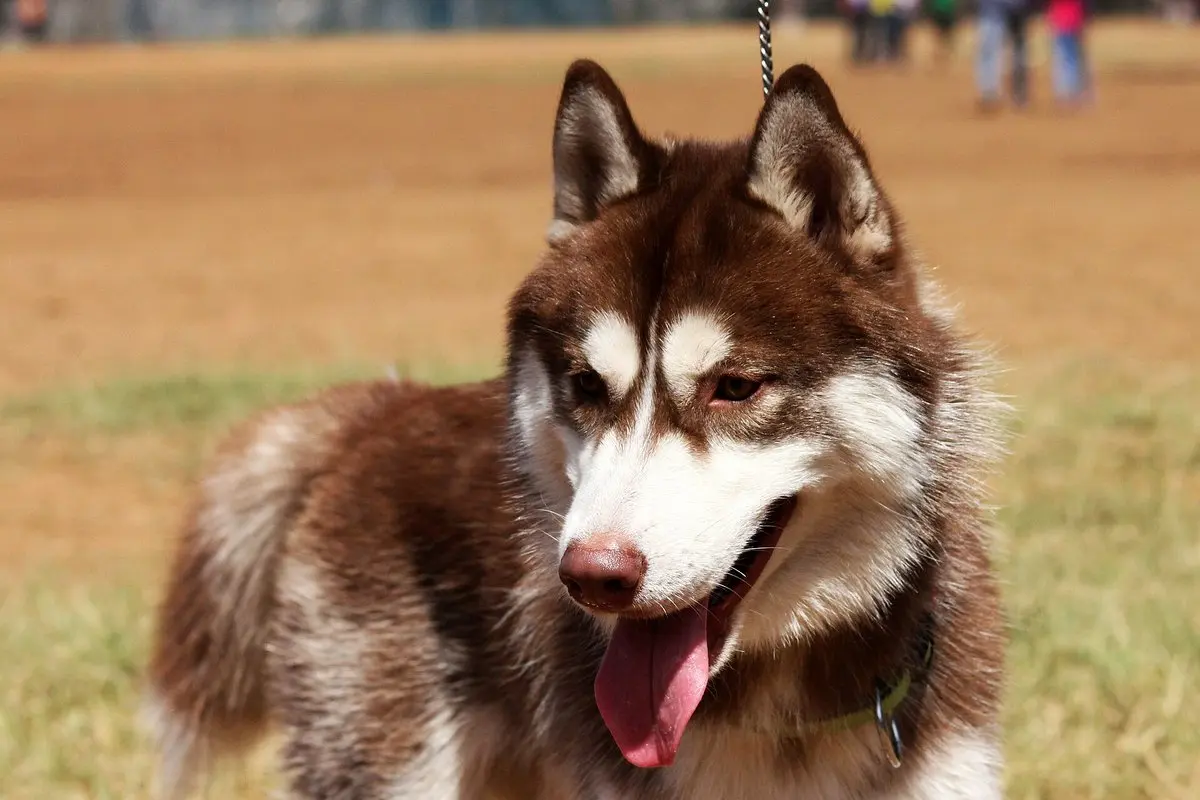
This article is part of the 77.today dog breeds guide, prepared by the 77.today editors from the sources listed at the end.
The Siberian Husky is a dog recognized even by those who have no interest in dogs: a thick gray, black, or red coat with a white "mask," erect triangular ears, a sickle-shaped tail, and piercing blue or heterochromatic eyes. This is a lightly built, enduring sled dog, created to run hundreds of miles in the Arctic cold. At home, they are friendly and clean, but they have more energy than most owners expect. In our dog breed directory, you will find the history, appearance, temperament, care, and health of the Siberian Husky.
| Origin | Russian Far East (Chukotka); FCI lists the US as the country of origin |
|---|---|
| FCI Group | Group 5 – Spitz and primitive types, Nordic Sled Dogs (No. 270) |
| Height | males 21–23.5 inches, females 20–22 inches |
| Weight | males 45–60 lbs, females 35–50 lbs |
| Coat | thick double coat: dense undercoat and straight guard hairs |
| Colors | from black to pure white, with various facial markings |
| Eyes | brown, blue, or heterochromatic (one of each) |
| Lifespan | 12–14 years |
| Temperament | friendly, energetic, independent, clean |
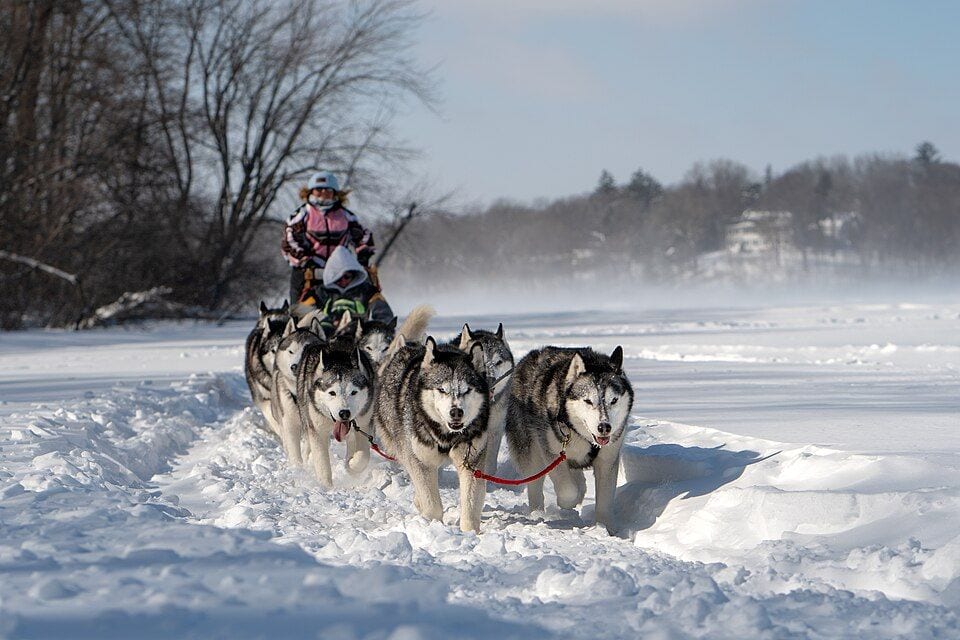
The Siberian Husky – The Chukchi Sled Dog
The ancestors of the Husky were bred by the Chukchi people in the Chukchi Peninsula of eastern Siberia. When climate changes forced these semi-nomadic people to expand their hunting grounds, they needed a dog that could pull light loads over vast distances in freezing temperatures on a minimal amount of food. Because the dogs were relatively small, they would hitch 15 to 17 dogs to a single sled. The Chukchi kept their dogs inside their homes, which is why Huskies were bred to be non-aggressive toward humans and exceptionally good with children. A 2015 DNA study revealed that the Siberian Husky, Alaskan Malamute, and Alaskan Husky are close relatives descended from Chukotka sled dogs, with a lineage dating back over 9,500 years.
Russian fur trader William Goosak brought Huskies to Alaska during the Nome Gold Rush, and in 1908, they began competing in sled dog races. The breed gained worldwide fame in 1925 when a diphtheria epidemic struck Nome: musher Leonhard Seppala's relay team of Huskies delivered the life-saving serum over approximately 650 miles in just five and a half days. Balto, the lead dog on the final leg, became one of the most famous dogs in history. At that time, Huskies nearly went extinct in the Soviet Union, so the breed survived and was refined in the United States—which is why the FCI lists the US as the breed's country of origin. The FCI officially recognized the breed in 1966, while the AKC recognized them much earlier as part of the Working Group.
Appearance: A Compact Runner with a "Mask"
The Husky is a medium-sized, compact, well-furred dog with erect triangular ears and a thick, sickle-shaped tail. Their movements are light, quick, and seemingly effortless. The AKC emphasizes that a male Husky weighs no more than about 60 lbs and is significantly smaller and lighter than the Alaskan Malamute, a breed with which it is frequently confused.
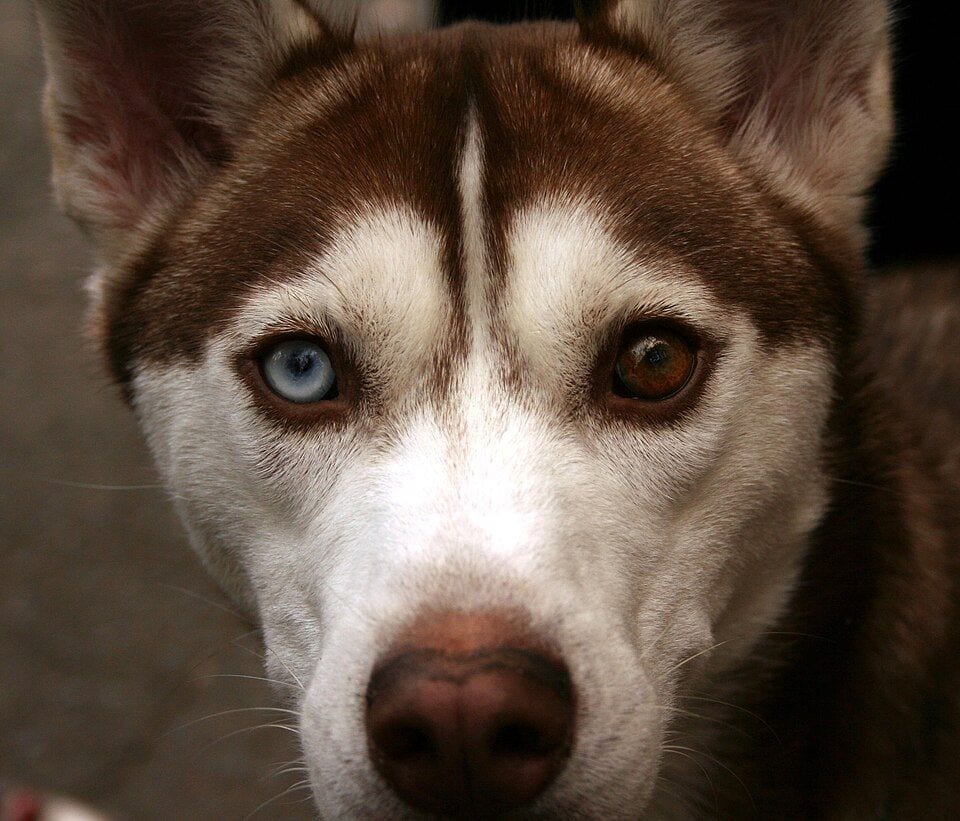
Their coat is thicker than that of most breeds, featuring a dense, finely crimped undercoat and longer, straight guard hairs. It protects them from temperatures dropping to -58 °F and below, while also reflecting heat in the summer. An overly long, "woolly" coat is considered a fault because it lacks the protective guard hairs. Coat colors range from black to pure white, often featuring the breed's characteristic facial markings. The eyes are almond-shaped and can be brown, blue, or heterochromatic (one of each color).
Temperament: Friendly to All, Loyal to the Pack
The AKC describes Huskies as friendly, gentle, and dignified dogs. Born as pack animals, they thrive on family life and generally get along well with other dogs. Because of their innate friendliness, Huskies make terrible guard dogs—they are far more likely to greet an intruder than to protect the house. However, they are highly energetic and fiercely independent, meaning obedience training requires immense patience, and commands are not always followed immediately.
Huskies simply cannot resist the urge to chase small animals, so cats and other small pets in the home may be at risk if the dog is not properly socialized with them from a young age. The AKC stresses that the Husky is a working dog that is happiest when given a job to do: a busy, active Husky is a happy and healthy dog, while one lacking physical and mental stimulation will find its own (often destructive) entertainment.
Health: A Robust and Long-Lived Breed
The AKC considers Huskies to be a healthy and relatively long-lived breed that remains active well into their senior years. The incidence of hip dysplasia and eye diseases in the breed is comparatively low, though cancer, arthritis, and certain eye conditions can occur, so it is always wise to ask breeders for the parents' OFA eye and hip evaluations. Huskies were bred to pull loads while consuming very little food, so they require fewer calories than other dogs of their size. It is crucial not to overfeed them and to choose a high-quality, protein-rich diet. A 2024 genomic study indicated that show-line Huskies have the lowest genetic diversity within the breed.
Care: Brushes, Leashes, and Many Miles
- Coat. Brush them once a week. Twice a year, when they blow their undercoat, you will need to thoroughly rake out the old hair with an undercoat rake and slicker brush.
- Bathing. Huskies are fastidious about keeping themselves clean and have virtually no doggy odor, so bathing them just a few times a year is usually sufficient.
- Exercise. Running, hiking, canicross, sled dog sports, or vigorous play with other dogs is required every single day.
- Safety. Always use a leash or harness when out, and ensure your yard has a high, deeply buried fence to prevent escapes.
- Heat. During the summer, walk them during the coolest parts of the day and always provide plenty of shade and fresh water.
Husky vs. Alaskan Malamute
| Trait | Siberian Husky | Alaskan Malamute | Samoyed |
|---|---|---|---|
| Weight (males) | 45–60 lbs | around 85 lbs | 45–65 lbs |
| Purpose | speed and endurance | strength, heavy freight | herding and sledding |
| Eyes | brown, blue, heterochromatic | brown | brown |
| Coat color | various with a mask | gray, black, red with white | white, biscuit/cream |
What to Know Before Getting a Husky Puppy
The Husky is best suited for highly active people who love running, hiking, or dog sledding sports, and who can dedicate significant time to daily exercise. Before bringing one home, evaluate whether your yard is truly secure against escapes, and be prepared for plenty of dog hair around the house. When looking for a puppy, seek out a reputable breeder who registers their litters with the AKC and provides verifiable health clearances (like OFA hip and eye exams) for both parents. Ask whether the parents come from show, working, or sledding lines, as this will impact the puppy's energy levels. Remember that puppies should always be microchipped and cleared by a veterinarian before coming home; for more tips on finding an ethical breeder or adopting through a breed rescue, check our dog breed directory introduction.
You can find related Nordic dogs in the profiles for the Alaskan Malamute and the Samoyed, and an Eastern sled and hunting dog in the West Siberian Laika guide.
Frequently asked questions
How much does a Siberian Husky weigh?
According to the AKC, males weigh 45–60 lbs and stand 21–23.5 inches tall, while females weigh 35–50 lbs and are 20–22 inches tall. The Husky is noticeably smaller and lighter than the Alaskan Malamute.
What color are a Husky's eyes?
Husky eyes can be brown, blue, or one of each color (heterochromia). This is one of the few breeds where the standard allows all of these variations.
Can a Husky be let off the leash?
The AKC emphasizes that Huskies were bred to run and will do so at every opportunity. They must always be walked on a leash or harness, or kept in a securely fenced yard. They also have a strong prey drive to chase small animals.
Is a Husky a good apartment dog?
They can live in a city apartment if they get plenty of daily exercise, such as long walks, running, playing with other dogs, or dog sports. Without enough physical and mental stimulation, a Husky will become bored, howl, and destroy belongings.
What is the lifespan of a Siberian Husky?
The AKC lists their lifespan as 12–14 years. Huskies are considered a healthy and long-lived breed that often remains active well into their senior years.
Sources
- Wikipedia: Siberian Husky
- AKC (American Kennel Club): Siberian Husky breed profile
- FCI (Fédération Cynologique Internationale): Siberian Husky breed standard (No. 270)
- Cover photo: Red and white Siberian Husky with open mouth (by localpups, CC BY 2.0)
- Wikimedia Commons photo: Husky sled team pulling a sled through snow (by Lorie Shaull, CC BY 2.0)
- Wikimedia Commons photo: Husky head with heterochromatic eyes (by user:Przykuta, CC BY-SA 3.0)
Log in to comment
No comments yet. Be the first.