Samoyed Dog: Temperament, Size, Coat Care & Health
- The Samoyed descends from the Nenets herding laika; DNA shows it is a basal breed, one of the oldest in the world.
- British zoologist Ernest Kilburn-Scott brought a puppy from a Samoyedic camp near Archangel in 1889 and is considered the breed's founder.
- Samoyeds participated in the famous polar expeditions of Nansen, Borchgrevink, and Scott.
- Males stand 21–23.5 inches and weigh 45–65 lbs, while females are 19–21 inches and 35–50 lbs; they live 12–14 years.
- Their coat sheds constantly and "blows" heavily once or twice a year; the breed dislikes being alone and has a tendency to roam.
This article is part of the 77.today dog breeds guide, prepared by the 77.today editors from the sources listed at the end.
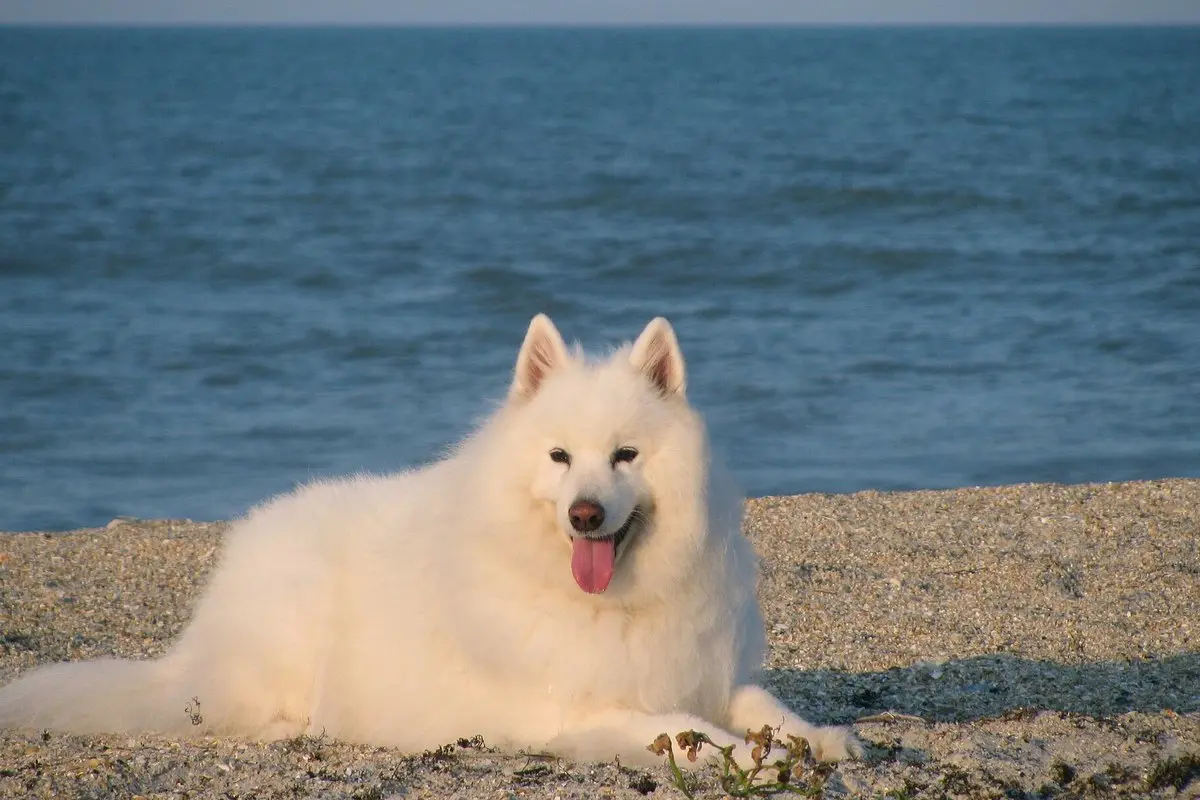
The Samoyed is a dog whose permanent "smile" and snow-white coat captivate almost everyone. But this appearance is not just about beauty: the thick coat protects against Siberian cold, and the upturned corners of the mouth prevent drool from freezing on the face. The AKC describes Samoyeds as powerful, tireless working dogs impervious to cold, yet intelligent, social, and mischievous. In this dog breed guide profile, you will find the history, appearance, temperament, and care needs of the Samoyed.
| Origin | Northern Russia, Siberia (Patron: Nordic Kennel Union) |
|---|---|
| FCI Group | Group 5 – Nordic Sledge Dogs (No. 212) |
| Height | males 21–23.5 inches, females 19–21 inches (AKC) |
| Weight | males 45–65 lbs, females 35–50 lbs |
| Coat | profuse double coat: harsh outer hair and soft wooly undercoat |
| Colors | white, sometimes with a biscuit tint |
| Lifespan | 12–14 years |
| Temperament | friendly, intelligent, social, mischievous |
| Suitable for | active families in cooler climates |
Samoyed – Descendant of Nenets Herding Laikas
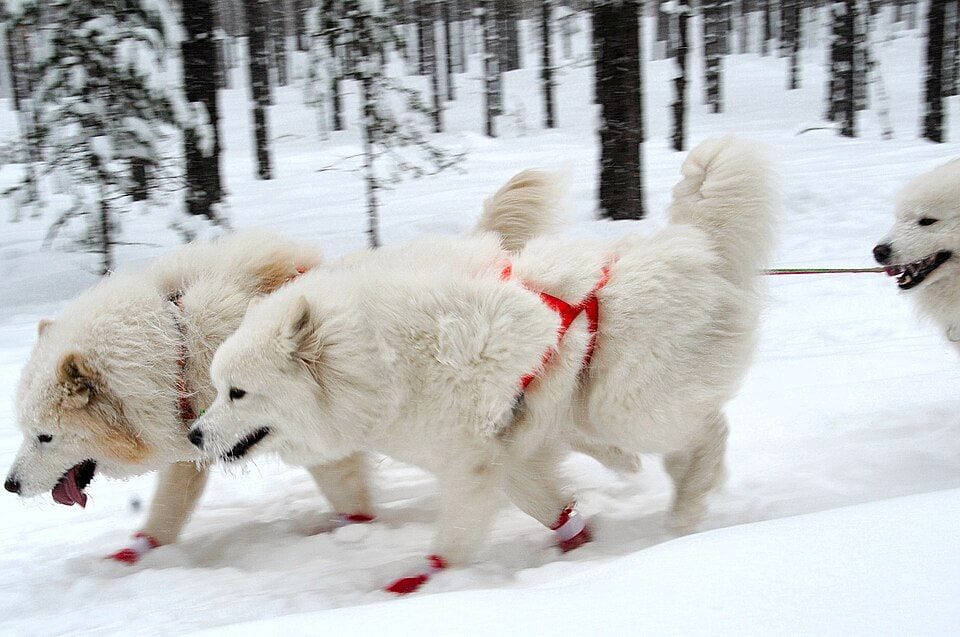
The ancestor of the Samoyed is the Nenets herding laika, a spitz-type dog widely used in the Arctic, especially by the Nenets people, who were historically referred to by the somewhat derogatory term "Samoyeds." The AKC notes that Samoyeds lived in tents and kept their humans warm during Arctic nights—this close cohabitation led to a strong bond with people. The dogs pulled sleds, guarded camps, and hunted, and when the tribes transitioned from hunting reindeer to herding them, the dogs became flock herders and guardians. DNA studies show that the Samoyed is a basal breed, and the genome of Nenets dogs from the Yamal Peninsula is linked to 2,000- and 850-year-old dog remains.
Samoyeds participated in famous polar expeditions. For Fridtjof Nansen's Fram expedition to the North Pole (1893–1896), 33 dogs were purchased from the Nenets. Carsten Borchgrevink took 90 Samoyeds on the Southern Cross expedition to Antarctica from 1898 to 1900—the first dogs in the history of Antarctic exploration; some of them were later acquired by Ernest Shackleton. British zoologist Ernest Kilburn-Scott, considered the founder of the breed, brought a puppy back to England from a Samoyedic camp near Archangel in 1889. Initially, the imported dogs came in various colors, but it was eventually decided that "true" Samoyeds were white. The first standard was approved in England in 1909, the breed was popularized by Queen Alexandra, and the FCI recognized it in 1959.
Appearance: A White Cloud with a Smile
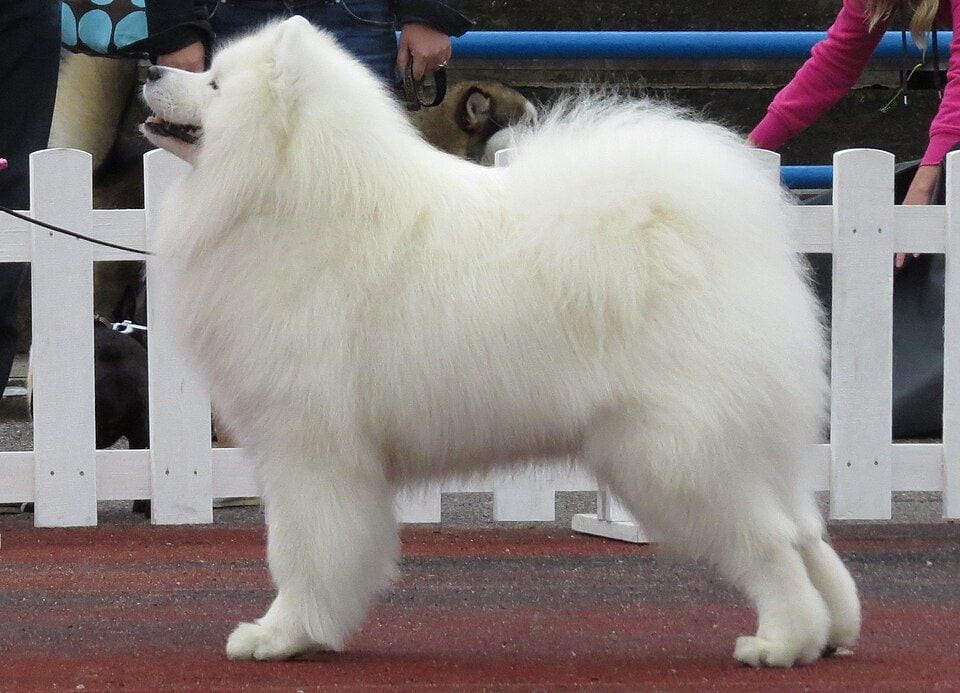
The Samoyed is a sturdy yet graceful dog, powerful and enduring. The ears are thick, covered with fur, triangular, and erect. The tail is one of the breed's hallmarks: it is carried curled over the back and usually touches it (unlike the Alaskan Malamute), most often falling to one side. In cold weather, Samoyeds sleep with their tails covering their noses. The corners of the lips curl upward, creating the famous "Samoyed smile."
The coat is profuse and double-layered: longer, harsh outer hairs and a soft, dense, wooly undercoat that naturally repels dirt. The color is almost always pure white, sometimes with a light or dark tan "biscuit" tint, most commonly seen on the ears. The AKC reminds us that Samoyeds were bred to work in some of the coldest habitable places on earth, such as Oymyakon in Siberia, where temperatures routinely drop below -60 °F.
Temperament: Social and Mischievous
The AKC describes Samoyeds as intelligent, social, and mischievous dogs that demand love and attention. They love being with their people and participating in family life, and if left alone in the yard, they become miserable and destructive. Samoyeds need structure in their training: what is expected of them must be taught early and reinforced consistently, with a firm but loving hand.
These dogs are friendly and agreeable, having shared both harsh expeditions and cozy family lives. However, they have a strong urge to run and roam—an unleashed Samoyed can travel for miles and put themselves in danger. Therefore, they require a securely fenced yard or long walks on a leash.
Health
- Hip dysplasia – requires parental X-ray evaluations.
- Eye conditions – progressive retinal atrophy (X-linked, XLPRA1) and retinal dysplasia/skeletal dysplasia (OSD2) – DNA tests are available.
- Heart disease – requires clearance by a veterinary cardiologist.
- Teeth – brush frequently using dog-safe toothpaste.
Care: Daily Brushing
- Coat. Brush daily; detangle mats with a slicker brush or metal comb.
- Nails. Trim every 3 to 4 weeks.
- Exercise. Daily play sessions in a fenced yard and long walks on a leash.
- Heat. In summer, provide shade, fresh water, and limit activity to the coolest parts of the day.
The Samoyed and Other Nordic Dogs
| Trait | Samoyed | Siberian Husky | Alaskan Malamute |
|---|---|---|---|
| Weight (males) | 45–65 lbs | 45–60 lbs | around 85 lbs |
| Color | white | various with mask | gray, black, red with white |
| Primary purpose | reindeer herding, sledding | fast sledding | heavy freight |
| Shedding | very heavy | heavy | heavy |
The Samoyed is Suited for Cold Climates and Highly Social Families
For a Samoyed, a cold winter is a joy, while loneliness is the ultimate punishment. They want to be involved in every aspect of family life.
- Good fit for: families with children, active people who enjoy hiking and dog sledding sports, and homes with a securely fenced yard.
- Not a good fit for: those who are away from home for long hours, do not want to brush a coat daily, dislike noise, or live in very hot climates.
The most work with the coat happens during shedding season when the undercoat falls out in clumps—daily brushing is mandatory then, and you will need a powerful vacuum cleaner for your home. In the summer, the thick coat protects against the sun, so a Samoyed should never be shaved; instead, they must have a cool place to rest and plenty of water.
How to Choose a Samoyed Puppy
Ask the breeder for the parents' hip, heart, and eye clearances, as well as XLPRA1 and OSD2 DNA test results. Prepare for hair around the house and daily brushing—it is an inseparable part of life with a Samoyed. Observe the parents' temperaments: they should be friendly and calm. When buying a puppy, ensure you work with a reputable breeder who prioritizes health and temperament over profit, or consider adopting through a breed-specific rescue. Vets strongly recommend microchipping your new dog, and you should check local ordinances regarding pet registration and licensing. Read more about finding a responsible breeder in the guide introduction.
You can find other Nordic dogs in the profiles for the Siberian Husky, Alaskan Malamute, and West Siberian Laika.
Frequently asked questions
Why does the Samoyed "smile"?
The upturned corners of the Samoyed's mouth are not just an adorable trait but a practical adaptation: it keeps the dog from drooling, preventing icicles from forming on the face in freezing temperatures.
How much does a Samoyed weigh?
Under the AKC standard, males weigh 45–65 lbs and stand 21–23.5 inches, while females weigh 35–50 lbs and stand 19–21 inches. The UK Kennel Club sets slightly different height ranges.
Do Samoyeds shed a lot?
Yes. Their profuse double coat sheds continuously, and they "blow" their coat very heavily once or twice a year. The AKC recommends daily brushing to remove dirt and loose hair.
Can a Samoyed be left alone in the yard?
No. The AKC warns that a Samoyed "sentenced to solitary confinement" in the yard will become miserable and destructive. They are social, intelligent, and mischievous dogs that need love and attention; they also tend to roam, so the yard must be securely fenced.
What colors do Samoyeds come in?
Samoyeds are almost always pure white, but their coat can have a light or dark tan tint known as "biscuit," most commonly found on the ears.
Sources
- Wikipedia: Samoyed (dog)
- AKC (American Kennel Club): Samoyed breed profile
- FCI (Fédération Cynologique Internationale): Samoyed breed standard (No. 212)
- Cover photo: White Samoyed lying on the beach (by Appleinfl, public domain)
- Wikimedia Commons photo: Samoyed standing in profile at a dog show (by Tomasina, CC BY-SA 3.0)
- Wikimedia Commons photo: Samoyeds pulling a sled in the snow (by camilla nystrom, CC BY-SA 3.0)
Log in to comment
No comments yet. Be the first.