Pug: Temperament, Size, Care & Health Guide
- The Pug's ancestor is the Chinese Lo-sze; Dutch traders brought them to Europe in the 16th century.
- Legend says a Pug saved the Prince of Orange by barking, becoming the mascot of the House of Orange.
- The breed's motto is "multum in parvo" (a lot in a little); Pugs weigh 14–18 lbs.
- Recognized colors include silver, apricot, fawn, and black.
- Like all flat-faced breeds, Pugs struggle with heat and face specific eye and respiratory risks.
This article is part of the 77.today dog breeds guide, prepared by the 77.today editors from the sources listed at the end.
The Pug is a small but stocky and muscular dog with a large round head, large sparkling eyes, and a wrinkled brow that allows their face to express surprise, joy, or curiosity just like a human. The AKC highlights the breed's motto, the Latin multum in parvo, meaning "a lot in a little." Pugs live to love and be loved, but their flat faces require responsible care. In our dog breeds guide, you will find the history, appearance, temperament, and health tips for the Pug.
| Origin | China; developed in Great Britain |
|---|---|
| AKC/FCI Group | AKC Toy Group; FCI Group 9 (Companion and Toy Dogs) |
| Height | 10–13 inches |
| Weight | 14–18 lbs |
| Coat | short, fine, smooth, glossy |
| Colors | silver, apricot, fawn, black |
| Lifespan | 13–15 years |
| Temperament | even-tempered, charming, affectionate, playful |
| Suitable for | apartments, families, seniors; not suited for heat |
The Pug – A Dog of Emperors and Kings
The AKC notes that the Pug's history goes back about 2,000 years. Ancient Chinese emperors favored flat-faced toy dogs—Pekingese, Shih Tzu, and Pugs—which were bred as pets for the imperial family and court, and outsiders only received them as gifts. The Pug's ancestor was called the Lo-Chiang-Sze or Lo-sze for short. This name emphasized their short legs, short muzzle, and most importantly, their short coat, which distinguished them from the similarly built Pekingese. The Lo-sze was highly popular in the court of the Song dynasty.
In the 16th century, the Dutch East India Company brought Pugs to Europe. Legend has it that a Pug warned the Prince of Orange of an attack by Spanish troops by barking, saving his life and becoming the official mascot of the House of Orange. When William and Mary of Orange became the monarchs of England, their Pugs sparked a breed craze in Britain. In the 19th century, Queen Victoria fell in love with Pugs. The first Pug enthusiast club was founded in England in 1884, and the FCI recognized the breed in 1966, listing China as the country of origin and Great Britain as the patron.
Appearance: A Square with Wrinkles
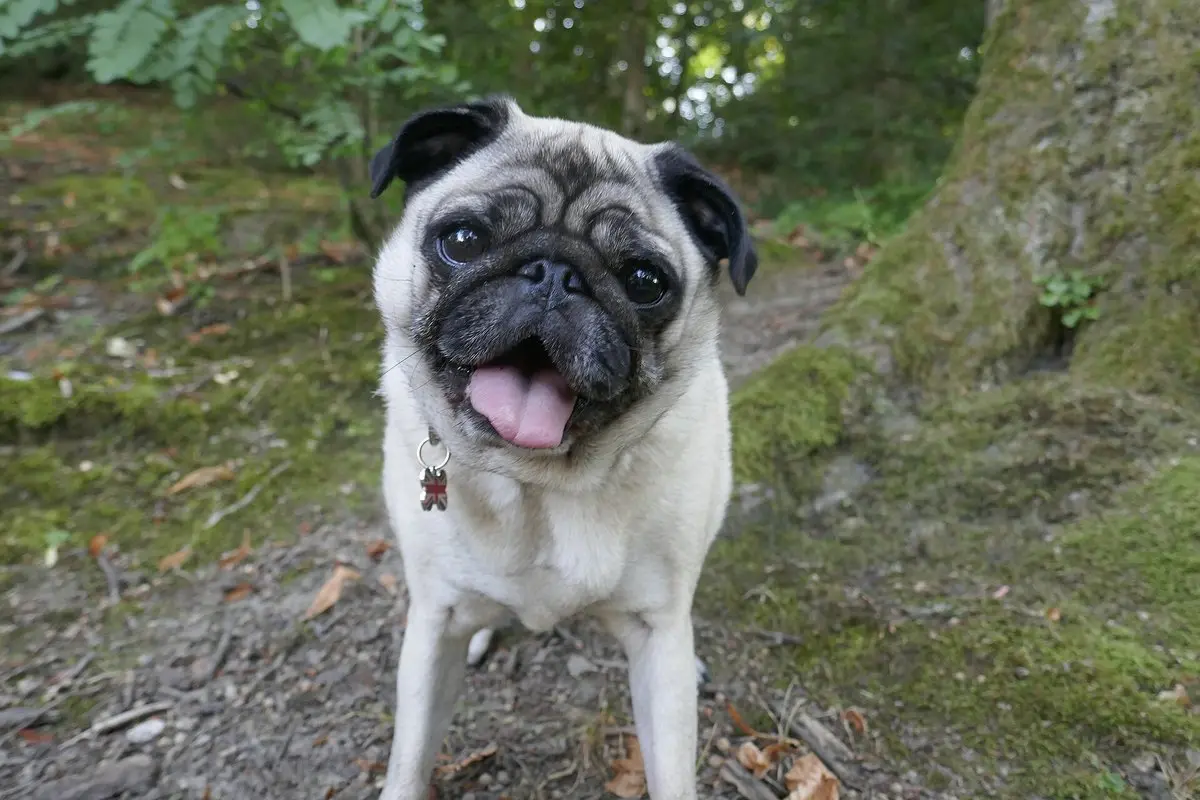
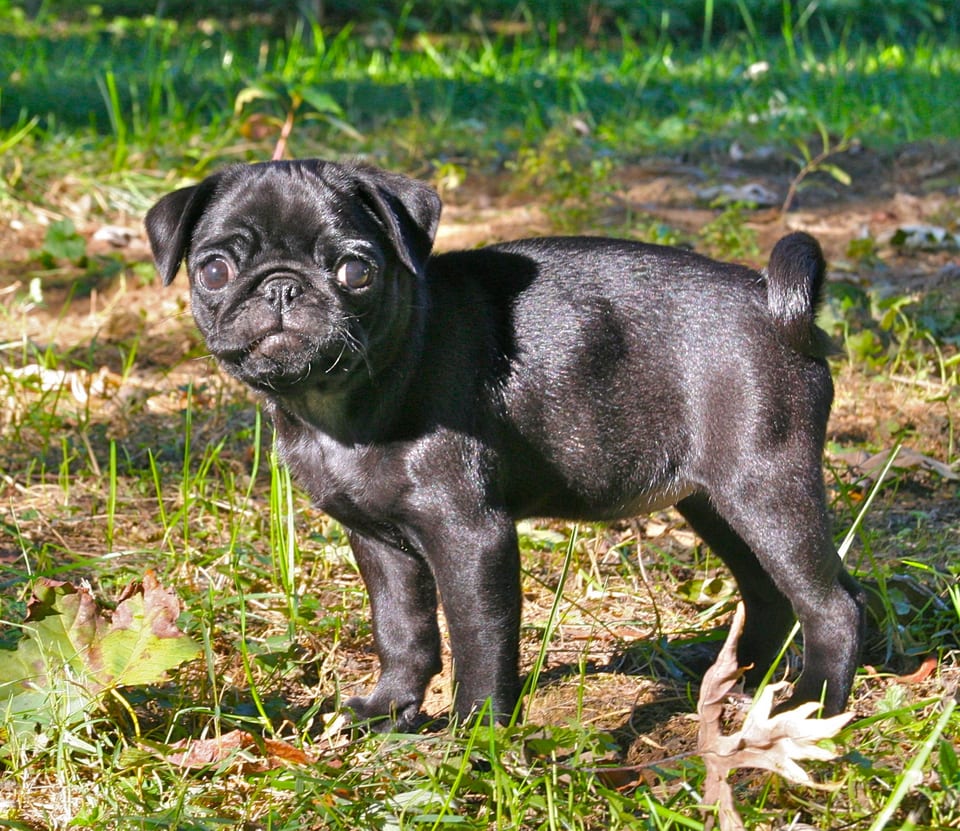
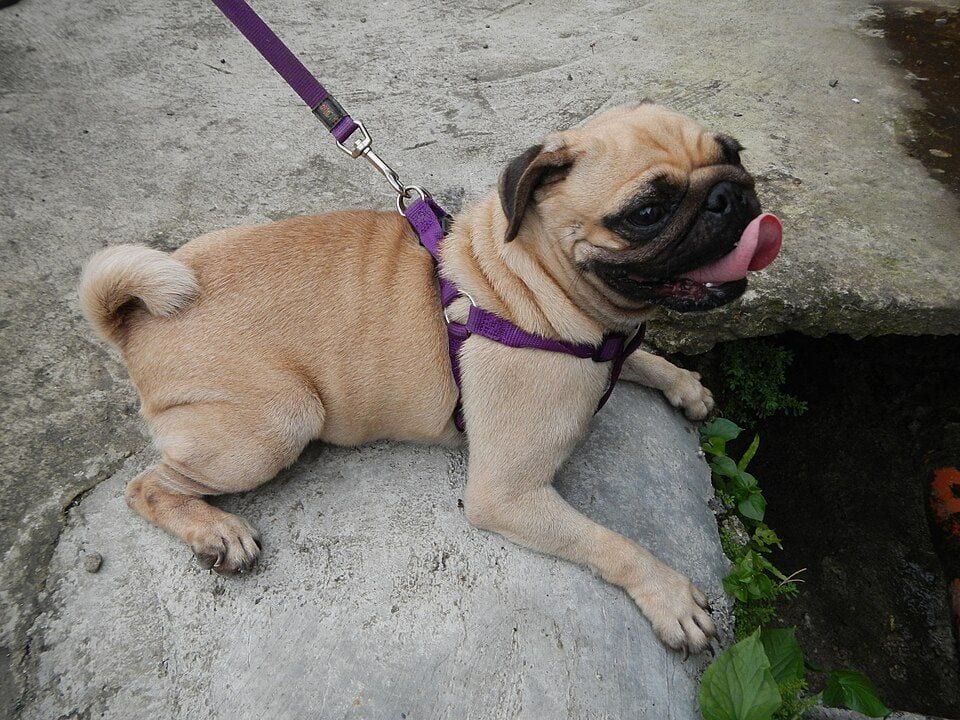
The modern Pug is square and compact, with a deep chest and well-developed muscles, although 18th-century engravings depicted them as longer and leaner. The head is large and round, the muzzle is very short, blunt, and square, and there are deep wrinkles on the forehead. The eyes are large, dark, and sparkling. The ears are small, thin, and velvety—either "rose" or "button" shaped (the latter being preferred). The tail is usually curled tightly over the hip, and the lower teeth often protrude slightly.
The coat is fine, smooth, soft, short, and glossy. Recognized colors include silver, apricot, fawn, and black. Light-colored Pugs have a black mask and ears, and a dark trace line is often visible running down the back from the occiput to the tail.
Temperament: The Owner's Shadow
The AKC describes the Pug as having an even and stable temperament, being highly charming, outgoing, and affectionate dogs that live to please their people. They are sensitive to their owner's moods, playful, and crave human company, which is why they are often called shadows—they follow their owner everywhere. Unlike most breeds, Pugs were not bred for hunting, herding, or guarding; they have been companions from the very beginning.
Pugs thrive in the city and the country, with kids and seniors, as an only pet or in a pack. They are easy to train, but their feelings are easily hurt, so harsh methods do not work. A Pug left alone for long periods on a regular basis will be miserable. They successfully participate in agility, obedience, and rally trials.
Health: Eyes, Breathing, and Weight
- Eyes. Large eyes are both a charm and a vulnerability: corneal ulcers and dry eye can occur.
- Breathing. Like all flat-faced breeds, Pugs struggle to breathe efficiently and tolerate sun, heat, and humidity poorly.
- Obesity. They love to eat and lounge on the couch, so portions must be weighed and daily exercise is required.
- Pug Dog Encephalitis (PDE). An inflammatory brain disease for which a DNA test is available.
- Hips and patellas. The AKC recommends health screenings for the parents.
In the US, veterinary organizations and breed clubs are increasingly focused on the health of brachycephalic (flat-faced) dogs. Responsible breeders are working to select for moderate physical traits and open nostrils to reduce the risk of severe airway issues, ensuring a better quality of life for these beloved companions.
Care
- Coat. Short but sheds—brush once a week with a rubber brush or hound glove.
- Wrinkles and eyes. Clean facial wrinkles regularly and monitor the eyes.
- Exercise. Daily walks and playtime, but never in the heat.
- Climate. Pugs do best in moderate climates—neither too hot nor too cold.
The Pug and Other Chinese Companions
| Trait | Pug | Pekingese | Shih Tzu |
|---|---|---|---|
| Weight | 14–18 lbs | up to 14 lbs | 9–16 lbs |
| Coat | short | long, profuse | long |
| Muzzle | very short | very short | short |
| Origin | China | China | China / Tibet |
The Pug is Perfect for Almost Anyone Who Spends Time at Home
The Pug was bred solely as a companion, so they feel best right next to their people, whether in an apartment or a house, in the city or the country.
- Suitable for: families with children, seniors, people working from home, and first-time dog owners.
- Not suitable for: athletes looking for a running partner, those who are away from home for long hours, and hot, unventilated homes.
The Pug loves to eat, and excess weight makes breathing even more difficult, so portions must be measured and treats factored into the daily allowance. In the summer, walks should be scheduled for early morning or late evening.
How to Choose a Healthy Pug Puppy
Meet the parents and evaluate their breathing—loud snoring at rest and quick exhaustion are serious red flags. Ask the breeder for proof of ophthalmologist eye exams, hip and patella evaluations, and a PDE DNA test. Look for a puppy with wider, more open nostrils. In the US, reputable breeders will also ensure puppies are microchipped and registered with the AKC before going to their new homes, and they will never sell through pet stores or puppy mills; we discuss more tips in our guide introduction.
You can find other small companions in the profiles for the Pekingese, Shih Tzu, and French Bulldog.
Frequently asked questions
How much does a Pug weigh?
According to the AKC, a Pug weighs 14–18 lbs and stands 10–13 inches tall at the shoulder. Pugs love to eat, so their weight must be carefully monitored.
What colors do Pugs come in?
Recognized colors include silver, apricot, fawn, and black. Light-colored Pugs have a black mask and ears, and often feature a dark trace line running down the back from the occiput to the tail.
Is a Pug a good apartment dog?
Yes, Pugs are considered ideal house dogs. They thrive in the city or country, with kids or seniors, and alone or with other pets. However, they dislike long periods of isolation and cannot tolerate heat.
What health issues are common in Pugs?
The AKC notes eye conditions (corneal ulcers, dry eye) and brachycephalic airway syndrome. Recommended tests include hip, patella, and ophthalmologist evaluations, plus a DNA test for Pug Dog Encephalitis (PDE).
Where does the name Pug come from?
There are a few theories. One suggests it comes from the popular 18th-century marmosets known as "pug-monkeys" because the dog's face resembles a primate's. Another theory links it to the Latin word "pugnus" (fist).
Sources
- Wikipedia: Pug
- AKC (American Kennel Club): Pug breed profile
- FCI: Pug breed standard (No. 253)
- Cover photo: Light Pug with a black mask standing in the forest (Photo: Pugpugthepug, CC BY-SA 4.0)
- Wikimedia Commons: Black Pug standing in the grass (Photo: Snottywong, CC BY-SA 3.0)
- Wikimedia Commons: Pug with a leash lying on a rock (Photo: Ramon FVelasquez, CC BY-SA 3.0)
Log in to comment
No comments yet. Be the first.