Bull Terrier: Temperament, Size, Care & Health
- Developed in mid-19th century England by James Hinks, who crossed "bull and terrier" dogs with White English Terriers.
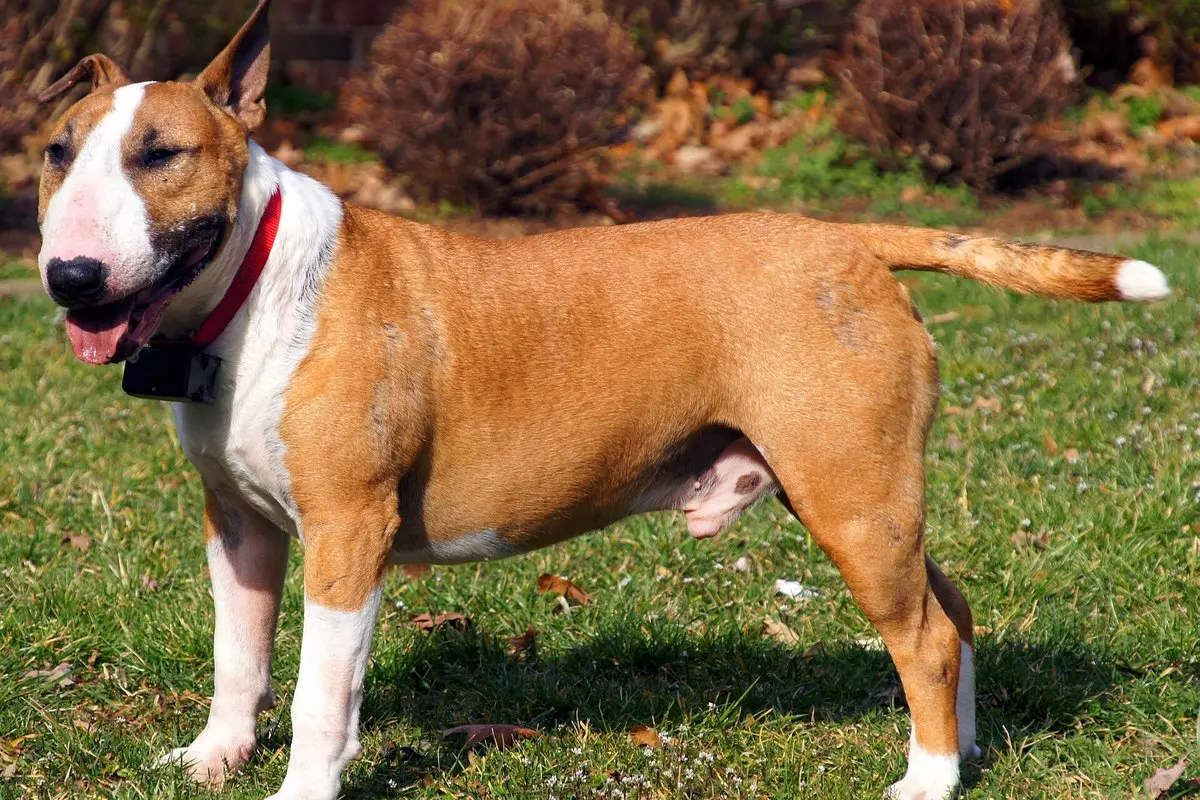
- The breed's hallmark is a long, egg-shaped head with an almost flat top and small, triangular eyes.
- AKC standards: 21–22 inches tall and 50–70 lbs; there is also a Miniature Bull Terrier (up to 14 inches).
- Deafness affects 20.4% of white Bull Terriers and 1.3% of colored ones; puppies should have their hearing tested before going home.
- Independent and stubborn, they are not ideal for novice owners; training must be playful and engaging.
This article is part of the 77.today dog breeds guide, prepared by the 77.today editors from the sources listed at the end.
The Bull Terrier is one of the most easily recognizable dogs in the world, featuring a long, egg-shaped head, erect pointed ears, and small, triangular, mischievously gleaming eyes. The AKC calls them one of the most comical and mischievous dogs—playful and sweet, sometimes stubborn, but always devoted. Beneath that muscular physique lies a former gladiator turned true "personality dog." In this dog breed guide profile, you will find the history, appearance, temperament, and health tips for the Bull Terrier.
| Origin | Great Britain |
|---|---|
| FCI Group | Group 3 - Bull type Terriers (No. 11) |
| Height | 21–22 inches (AKC); Miniature - up to 14 inches |
| Weight | 50–70 lbs; Miniature - up to 18–20 lbs |
| Coat | Short, flat, harsh, and glossy |
| Colors | White; Colored - red, fawn, black, brindle, and combinations |
| Lifespan | 12–13 years |
| Temperament | Playful, courageous, stubborn, devoted |
| Best for | Experienced, active owners |

The Bull Terrier: From the Fighting Pit to the "White Cavalier"
When bull-baiting was outlawed in England in the early 19th century, fans of the cruel blood sport moved into cellars to host dog fights. Bulldogs were too slow for this, so they were crossed with terriers, creating "bull and terrier" dogs that combined the Bulldog's strength with the terrier's agility. Historical records indicate that the Bull Terrier was developed by crossing the English Bulldog, the White English Terrier, and the Dalmatian, and traits from these foundation breeds can still be seen today.
In the mid-19th century, James Hinks began crossing "bull and terrier" dogs with White English Terriers, creating the modern Bull Terrier, which earned the nickname the "White Cavalier." Fans of the older type remained loyal to their dogs, which eventually evolved into the Staffordshire Bull Terrier. Once dog fighting was also banned, the Bull Terrier became a fashionable gentleman's companion, leaving its fighting heritage firmly in the past. The breed was fully recognized by the AKC in 1885 and later by the FCI in 1993.
Appearance: The Egg Head and Triangular Eyes
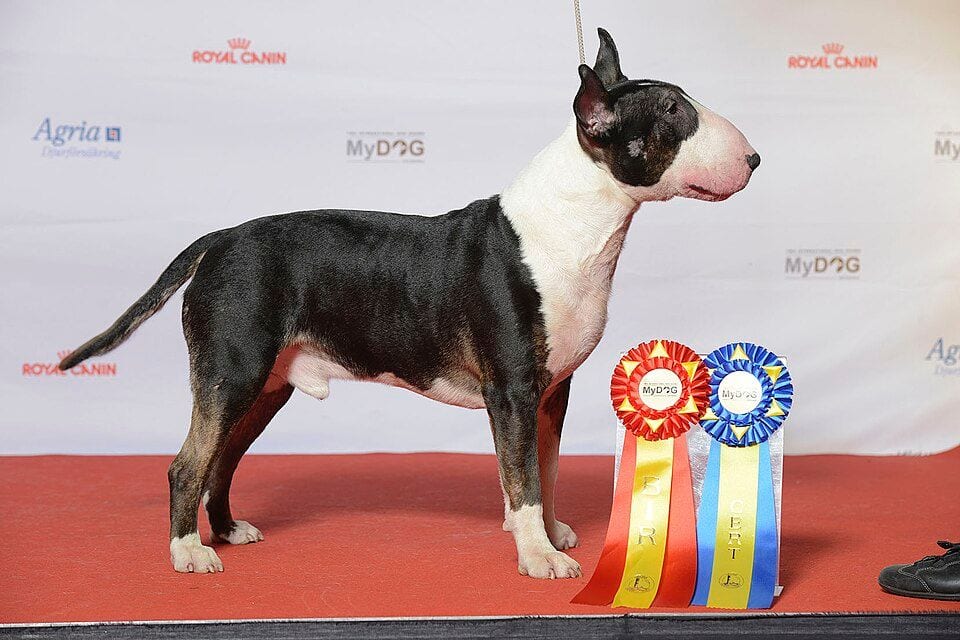
The Bull Terrier's most striking feature is its head, which appears egg-shaped from the front, with an almost flat top and a profile that curves gently downwards from the top of the skull to the tip of the nose. The nose is black and bends slightly downward at the tip, while the lower jaw is deep and powerful. Their small, dark, deep-set triangular eyes are a rare trait among dogs. The body is full and round, with strong, muscular shoulders, and the tail is carried horizontally.
The AKC divides the breed into two color varieties: White (white dogs may have colored markings on the head only) and Colored (red, fawn, black, brindle, or combinations of these, either solid or with white markings). The breed standard does not dictate strict size limits; the most important factor is that the body is well-proportioned. There is also a separate breed, the Miniature Bull Terrier, which stands up to 14 inches tall.
Temperament: "If It's Fun, They'll Do It"
Bull Terriers can be independent and stubborn, which is why they are generally not recommended for novice owners. At the same time, they are even-tempered, amenable to discipline, and the Bull Terrier Club describes them as exceptionally good with people. Their character is courageous, full of a zest for life, and driven by a desire to have fun. The AKC jokes that Bull Terriers operate on the principle of "if it's fun, I'll do it; if not, why bother?", meaning training must be playful and heavily reliant on treats or toys.
The AKC highlights four keys to a Bull Terrier's happiness: early socialization with dogs and people, firm but loving training, adequate exercise, and plenty of quality time with their owners. Breed experts note that Bull Terriers are alert, fearless, bark very little, and suffer when left alone for long periods, while an untrained dog's behavior can become impulsive. Interestingly, a 2008 German study found no significant temperament differences between Bull Terriers and Golden Retrievers, even though the breed faces import restrictions in some countries like Germany.
Health
- Deafness. Affects 20.4% of pure white Bull Terriers and 1.3% of colored ones; puppies should have their hearing tested (BAER test) before going to their new homes.
- Kidney and heart disease. The AKC strongly recommends that breeding dogs be screened for these conditions.
- Skin allergies. Bites from fleas, mosquitoes, or ticks can cause hives and severe itching.
- Lethal Acrodermatitis (LAD). A rare inherited disease found primarily in Bull Terriers; most affected puppies do not survive past 2 years of age.
Care
- Coat. Brush once a week with a soft-bristle brush or a hound glove.
- Exercise. Long daily walks with the family are essential; they also excel in obedience, tracking, agility, flyball, and weight-pulling sports.
- Ears and nails. Check ears regularly and trim nails as needed.
| Trait | Bull Terrier | Staffordshire Bull Terrier | English Bulldog |
|---|---|---|---|
| Weight | 50–70 lbs | 24–38 lbs | 40–55 lbs |
| Head | Egg-shaped | Broad and short | Broad, flat muzzle |
| US Legal/Insurance Status | Often restricted by BSL/insurance | Often restricted by BSL/insurance | Rarely restricted |
| FCI Recognition | Recognized in 1993 | Recognized in 1954 | Recognized in 1955 |
The Bull Terrier is Best for an Experienced, Fun-Loving Owner
The Bull Terrier is playful, deeply attached to its people, and full of energy, but can be quite stubborn. They are best suited for owners who have plenty of patience and a good sense of humor.
- Good fit for: Active individuals, families with older children, and owners who have previous experience raising a strong-willed dog.
- Not a good fit for: Multi-pet households with other dogs or cats (unless socialized very early), people who work long hours away from home, and first-time dog owners.
In the US, while the Bull Terrier is a beloved companion, they can sometimes be subject to breed-specific legislation (BSL) or homeowners insurance restrictions depending on your city and state. Regardless of local ordinances, a strong dog should always be kept on a leash in public areas, and socialization with other dogs should be a lifelong commitment.
How to Choose a Bull Terrier Puppy
Ask the breeder for the parents' kidney and heart health screening results, as well as the puppies' BAER hearing test results, especially if you are choosing a white puppy. Meet the parents to observe their temperament—they should be cheerful and friendly. Be prepared for consistent yet playful training from day one. Remember that a reputable breeder will never sell to pet stores or puppy mills, and they will ensure the puppy is microchipped and registered with the AKC before going home; for more tips on finding a responsible breeder or adopting through a rescue, check out our breed guide introduction.
You can find related breeds in our profiles for the Staffordshire Bull Terrier, the American Pit Bull Terrier, and the English Bulldog.
Frequently asked questions
How much does a Bull Terrier weigh?
According to the AKC, a Bull Terrier weighs 50–70 lbs and stands 21–22 inches tall. The standard emphasizes proportions rather than a specific size. The Miniature Bull Terrier stands up to 14 inches tall and weighs up to 18–20 lbs.
Are Bull Terriers considered dangerous?
While a 2008 German study found no significant temperament differences between Bull Terriers and Golden Retrievers, an untrained dog can be impulsive, making socialization and training essential. In the US, they are sometimes subject to breed-specific legislation (BSL) or homeowners insurance restrictions depending on the city and state, though they are generally affectionate family dogs when properly raised.
Why are white Bull Terriers often deaf?
Deafness is linked to the white coat color: studies show it affects 20.4% of pure white Bull Terriers and 1.3% of colored ones. The AKC recommends that puppies have their hearing tested (BAER test) before leaving the breeder.
Are Bull Terriers good family dogs?
The Bull Terrier Club describes the breed as exceptionally good with people. These dogs are even-tempered, fun-loving, and devoted, but their independent and stubborn nature means they are generally not recommended for novice owners.
What is the lifespan of a Bull Terrier?
The AKC notes a lifespan of 12–13 years, and a 2024 UK study found their average life expectancy to be around 12 years.
Sources
- Wikipedia: Bull Terrier
- AKC (American Kennel Club): Bull Terrier Breed Profile
- FCI: Bull Terrier Breed Standard (No. 11)
- Cover Photo: Red and white Bull Terrier standing in a meadow (Photo: DangerousBob, CC BY-SA 3.0)
- Wikimedia Commons Photo: Black and white Bull Terrier in profile (Photo: Goldmull, CC BY-SA 4.0)
- Wikimedia Commons Photo: Brindle Bull Terrier at a show with prize ribbons (Photo: Svenska Mässan from Sweden, CC BY 2.0)
Log in to comment
No comments yet. Be the first.