German Shepherd: Temperament, Size, Care & Health
- The breed was developed starting in 1899 by former cavalry captain Max von Stephanitz; the first registered dog was Horand von Grafrath.
- Under the FCI standard, males stand 23.5–25.5 inches at the withers and females 21.5–23.5 inches; males weigh about 65–90 lbs, and females 50–70 lbs.
- The FCI recognizes two coat varieties: a double-coated short-haired and a long-haired with an undercoat.
- The biggest health risks include hip and elbow dysplasia, degenerative myelopathy, and gastric dilatation-volvulus (bloat).
- The German Shepherd is devoted to its family but can be aloof with strangers; consistent training and mental stimulation are essential.
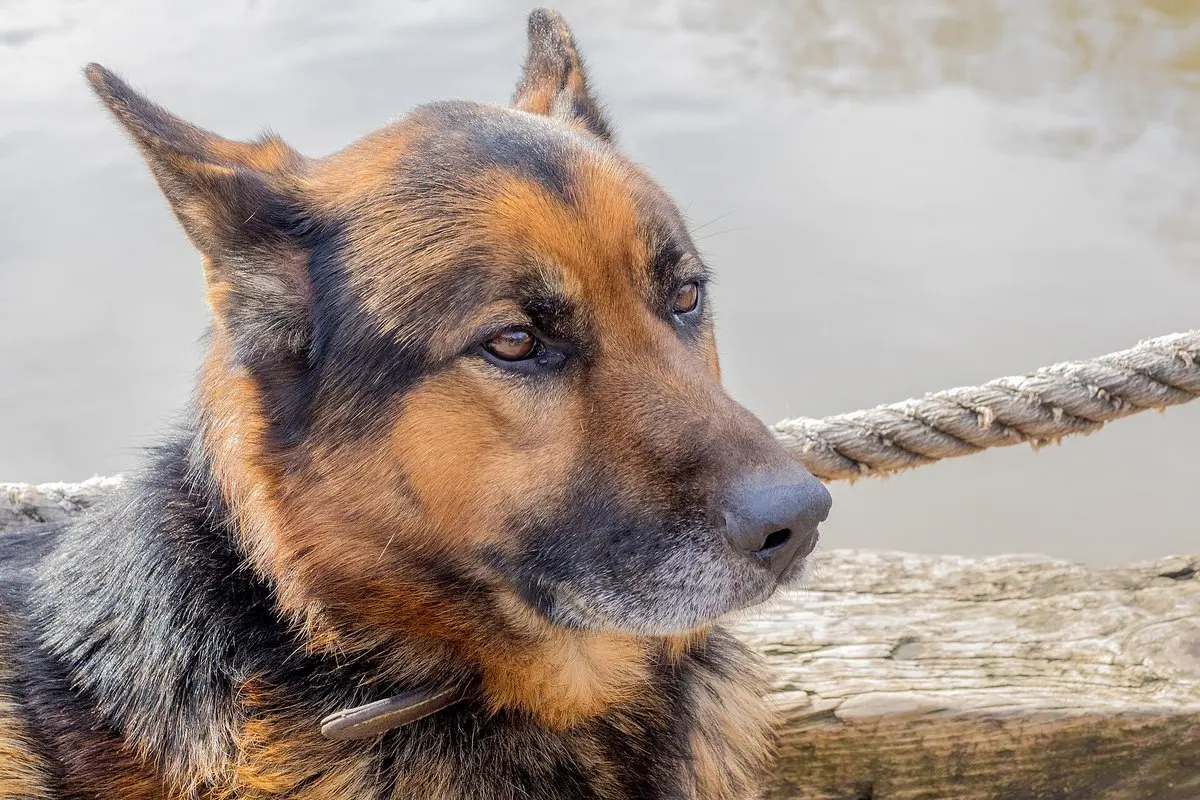
This article is part of the 77.today dog breeds guide, prepared by the 77.today editors from the sources listed at the end.
The German Shepherd is a dog that transitioned from sheep pastures a century ago to police, military, and rescue services, and today lives in thousands of family homes. It is valued for its intelligence, loyalty, courage, and ability to learn countless tasks. At the same time, it is a demanding dog: without a job and clear rules, its energy can turn into behavioral problems. In the dog breeds guide, you will find the history, appearance, temperament, health, and tips on how to choose a German Shepherd puppy.
| Origin | Germany |
|---|---|
| FCI Group | Group 1 – Sheepdogs and Cattle Dogs (No. 166) |
| Height | males 23.5–25.5 inches, females 21.5–23.5 inches |
| Weight | males 65–90 lbs, females 50–70 lbs |
| Coat | double-coated short or long with an undercoat |
| Colors | black with reddish-brown, brown, yellow, or light gray markings; solid black; sable (gray) |
| Lifespan | 12–14 years |
| Temperament | intelligent, courageous, devoted, aloof with strangers |
| Purpose | working, service, guard, and family dog |
The German Shepherd was created by Max von Stephanitz
In the late 19th century, every region in Germany had its own type of herding dog—they differed in both appearance and abilities. The Phylax Society, founded in 1891, attempted to create standards for native breeds but disbanded after three years due to disputes over whether dogs should be bred for work or for show. One of its former members, cavalry captain and Berlin Veterinary College student Max von Stephanitz, firmly believed that dogs should be bred for work.
At a dog show in 1899, he saw a dog named Hektor Linksrhein that fit his ideal. The captain immediately purchased him, renamed him Horand von Grafrath, and founded the Society for the German Shepherd Dog (Verein für Deutsche Schäferhunde, SV) that same year. Horand became the first German Shepherd added to the breed registry, and his descendants formed the core of the breeding program. Von Stephanitz refined and promoted the breed for 35 years. As herding work began to decline, he introduced the shepherd as the ideal service dog for the police and military. By 1923, the SV had about 50,000 members and more than 500 branches in Germany alone.
After World War I, the breed gained worldwide fame: returning soldiers praised these dogs, and movie stars Rin Tin Tin and Strongheart made them incredibly popular in the US. In Britain, due to anti-German sentiment, the breed was long known as the Alsatian. The FCI fully recognized the breed in 1955, and it has been a staple of the AKC Herding Group since 1908.
Appearance: elegant lines and a trotter's gait
The German Shepherd is a medium to large, slightly elongated dog: its body is 10–17% longer than its height at the withers. The head is wedge-shaped, with the skull and muzzle being roughly equal in length, and the ears are erect, medium-sized, and point forward. The eyes are almond-shaped and as dark as possible. The natural gait is a free, sweeping trot, where the hind legs provide strong drive while the backline remains level. During a sprint, a German Shepherd can reach speeds of about 30 mph.
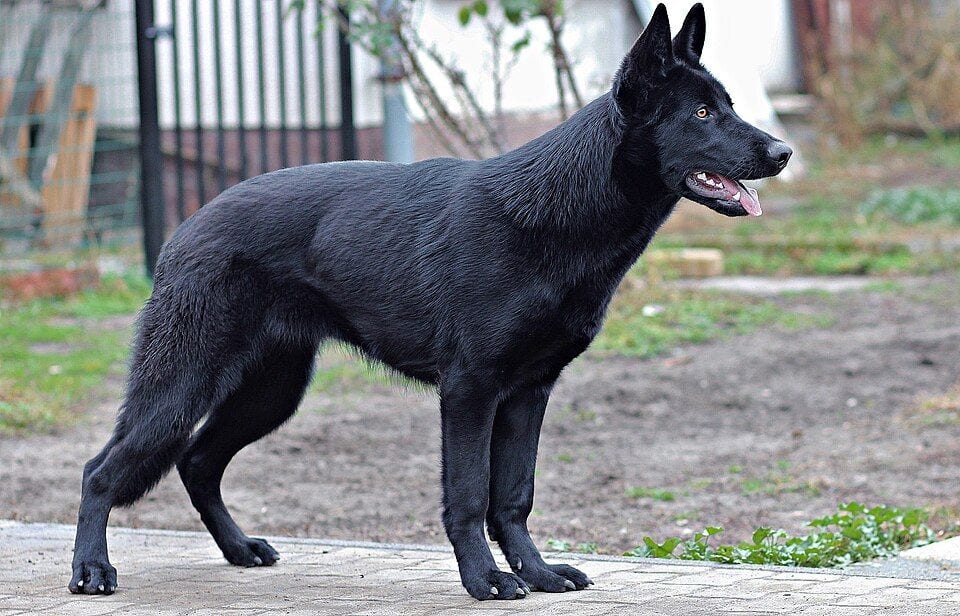
The FCI recognizes two coat varieties: a dense, harsh, close-lying double coat and a longer, softer coat with an undercoat. The most common color is black with reddish-brown, brown, yellow, or light gray markings, though solid black and sable dogs are also standard. White is not permitted under the standard—white shepherds were developed into a separate breed known as the White Swiss Shepherd Dog.
Temperament: a loyal worker that needs a job
The standard describes the German Shepherd as well-balanced, self-confident, attentive, and obedient, with a strong character and a natural protective instinct. The AKC notes that the breed has a distinct personality marked by a certain aloofness—the German Shepherd does not make friends with everyone it meets, but it is fiercely devoted to its family. This makes it an excellent guard dog, but without proper socialization, it can become overly suspicious or overprotective.
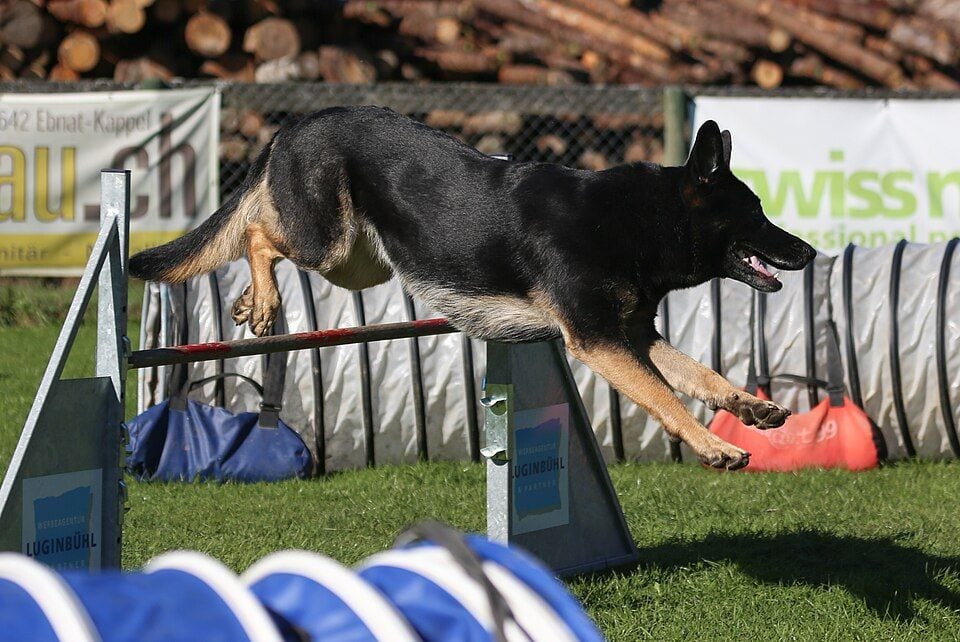
This is a highly intelligent dog that learns commands quickly and loves working alongside its humans. It excels in tracking, obedience, protection sports, herding, and agility. Without adequate physical and mental exercise, a German Shepherd will get bored, which can lead to barking, destructive chewing, or finding things to guard on its own. It thrives best when living indoors as part of the family, rather than isolated in a kennel.
Health: joints and the spinal cord
- Hip and elbow dysplasia – the most significant health risk for the breed; the standard considers severe hip dysplasia a disqualifying fault, and breeding dogs should have their hips and elbows evaluated via X-ray.
- Degenerative myelopathy – a progressive disease of the spinal cord that causes weakness in the hind legs; a DNA test is available.
- Gastric dilatation-volvulus (bloat) – a sudden, life-threatening condition; it is crucial to know the symptoms and avoid feeding right before intense exercise.
- Temperament testing – the AKC includes a temperament evaluation among its recommended tests for the breed.
Care and training
- Coat. Brushing every few days is usually enough, but the German Shepherd sheds heavily twice a year—during these times, daily brushing is necessary.
- Nails. If they do not wear down naturally, trim them monthly.
- Exercise. Long walks, playtime in a securely fenced area, and dog sports.
- Training. Puppy classes, consistent training using positive reinforcement, and early socialization with a wide variety of people.
The German Shepherd and similar breeds
| Trait | German Shepherd | Belgian Malinois | White Swiss Shepherd Dog |
|---|---|---|---|
| Weight (males) | 65–90 lbs | 60–80 lbs | 65–90 lbs |
| Coat | short or long | short | white, short or long |
| Energy | high | very high | medium–high |
| Origin | Germany | Belgium | Switzerland |
What to check before buying a German Shepherd puppy
Choose a reputable breeder whose dogs are registered with a recognized club like the AKC and have official hip and elbow dysplasia evaluations, and ideally, working titles. Ask whether the puppy comes from working or show lines: working German Shepherds typically have higher energy levels and stronger protective instincts. Ask to meet the mother—her calmness and confidence will tell you a lot about the puppy's future temperament. A responsible breeder will provide a clear contract, ensure puppies are microchipped and vaccinated, and will never sell through pet stores or puppy mills. Local ordinances and homeowners insurance policies sometimes have breed-specific restrictions regarding German Shepherds, so be sure to check your local laws and lease or insurance terms before bringing one home. For more general rules on finding a good breeder or adopting through a breed rescue, see the guide introduction.
You can find related dogs in the Belgian Malinois and Caucasian Shepherd Dog profiles, or if you are looking for a more universally friendly family dog, check out the Labrador Retriever description.
Frequently asked questions
How much does a German Shepherd weigh?
Under the standard, males weigh about 65–90 lbs, and females 50–70 lbs. Male height at the withers is 23.5–25.5 inches, and females are 21.5–23.5 inches. Their body length is 10–17% longer than their height.
How long do German Shepherds live?
The AKC lists a life expectancy of 12–14 years. Joint health and weight play a major role, so it is worth choosing a puppy from parents with excellent hip and elbow evaluations.
Is a German Shepherd a good family dog for those with children?
Yes, if the dog is well-socialized and trained. German Shepherds become very attached to their families and are naturally protective, but the standard mentions a certain aloofness toward strangers, so early socialization is a must.
What is the difference between a short-haired and long-haired German Shepherd?
The FCI recognizes both varieties as the same breed. The short-haired coat is dense, harsh, and close-lying, while the long-haired coat is longer, softer, with tufts behind the ears and 'trousers' on the hind legs, but both must have an undercoat.
Why is the German Shepherd sometimes called an Alsatian?
After World War I, the word 'German' was unpopular in Great Britain, so the Kennel Club renamed the breed the 'Alsatian Wolf Dog'. The name 'German Shepherd' was restored in 1977, and the word 'Alsatian' was only dropped from the official name in 2010.
Sources
- Wikipedia: German Shepherd
- AKC (American Kennel Club): German Shepherd Dog breed profile
- FCI (Fédération Cynologique Internationale): German Shepherd Dog breed standard (No. 166)
- Cover photo: Close-up of an older German Shepherd's head (Photo: Esin Üstün from Istanbul, Turkey, CC BY 2.0)
- Wikimedia Commons photo: German Shepherd jumping an obstacle in an agility competition (Photo: A. Buser, CC BY-SA 3.0 ch)
- Wikimedia Commons photo: Black German Shepherd standing in a yard (Photo: Yama Zsuzsanna Márkus, CC0)
Log in to comment
No comments yet. Be the first.