Boxer Dog: Temperament, Size, Care & Health
- The Boxer was developed in Germany in the late 19th century from the Bullenbeisser and the English Bulldog.
- The first Boxer club was founded in 1895, and the breed was first exhibited at a Munich dog show the following year.
- Males stand up to 25 inches and weigh 65–80 lbs; females stand up to 23.5 inches and weigh about 15 lbs less. Colors are fawn or brindle.
- Patient with children and an alert family guardian, but highly energetic and prone to jumping.
- Health risks include heart conditions (aortic stenosis, cardiomyopathy), thyroid issues, degenerative myelopathy, and cancer.
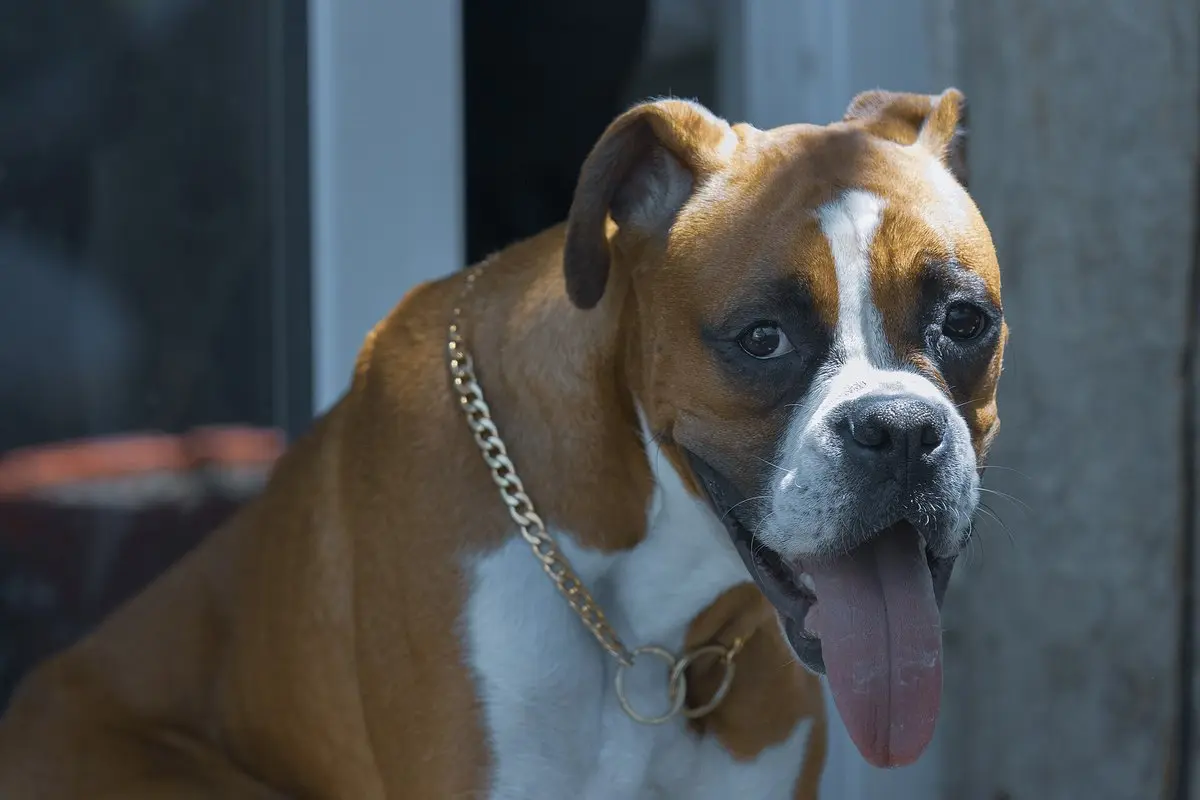
This article is part of the 77.today dog breeds guide, prepared by the 77.today editors from the sources listed at the end.
The Boxer is a muscular, athletic dog with a wrinkled forehead, dark brown eyes, and a short, tight-fitting coat under which, according to the AKC, "muscles ripple." Loyalty, affection, intelligence, work ethic, and good looks—the AKC calls the Boxer everything one could want in a dog. They are cheerful and sometimes silly, but always courageous and serious about protecting their family. In our dog breed directory, you will find the Boxer's history, appearance, temperament, and health advice.
| Origin | Germany |
|---|---|
| FCI Group | Group 2 – Molossoid, Mastiff type (No. 144) |
| Height | males up to 25 inches, females up to 23.5 inches |
| Weight | males 65–80 lbs, females 50–65 lbs |
| Coat | short, smooth, tight-fitting |
| Colors | fawn or brindle, with or without white markings |
| Lifespan | 10–12 years |
| Temperament | playful, loyal, alert, patient with children |
| Working Trial | yes – working trial required under the FCI standard |
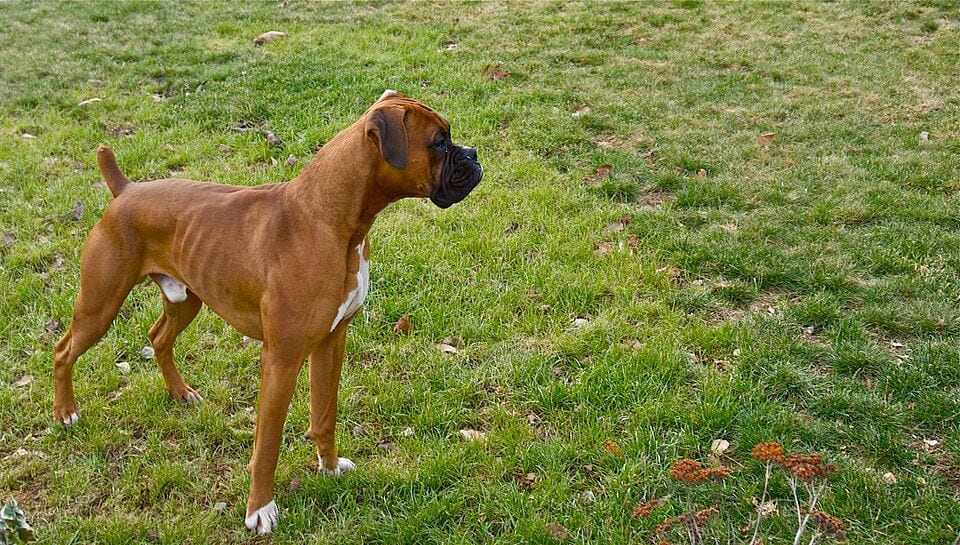
The Boxer – Descendant of the Bullenbeisser
The AKC notes that the Boxer's ancestors can be traced back as far as the war dogs of the Assyrian empire, but the breed as we know it today was developed in Germany during the late 19th and early 20th centuries. It is believed that German fanciers created the breed by downsizing a larger, heavier German dog known as the Bullenbeisser ("bull biter"). During the Middle Ages, the Bullenbeisser was Germany's premier big-game hunting dog: nobles used them to chase, catch, and hold bears, bison, and wild boars in vast estate forests.
When the political landscape in the German states changed in the early 19th century, the noble estates were broken up, the lavish boar hunts ended, and by 1865, the Bullenbeisser was out of a job. By crossing them with a smaller, mastiff-type dog from England—the Old English Bulldog—a more elegant, lighter Boxer was born. Historical records indicate that the foundation of the breed began with a Bullenbeisser female named Flora brought from France, three other Bullenbeissers, and an English Bulldog. The breed standard, established in 1920, remains largely in effect today. The first Boxer club was founded in 1895, and in 1896, Boxers were exhibited for the first time at a St. Bernard show in Munich. The FCI officially recognized the breed in 1955.
Appearance: Square Muzzle and "Boxer" Movements
The most important feature of the Boxer is the head, which must be perfectly proportioned to the body: the muzzle length is one-third the length of the head, wrinkles run down both sides of the muzzle from the root of the nose, and the lower jaw slightly protrudes and curves upward. Boxers are brachycephalic—featuring a broad, short skull and a square muzzle. The chest reaches down to the elbows, the back is straight, broad, and muscular, and their movements are lively and powerful. According to the AKC, the English name is linked to the way the dog uses its front paws while playing.
The coat is short, smooth, and tight-fitting. The FCI and AKC recognize two primary colors: fawn (ranging from light tan to dark mahogany) and brindle (dark stripes on a fawn background, parallel to the ribs). White markings on the muzzle, chest, and paws are allowed, but should not cover more than one-third of the body. Historically, Boxers had their ears cropped and tails docked; while this is still permitted by the AKC standard and seen in the US, the practice is becoming less common and is restricted in many other countries. Under the FCI standard, a naturally short tail is considered a disqualifying fault.
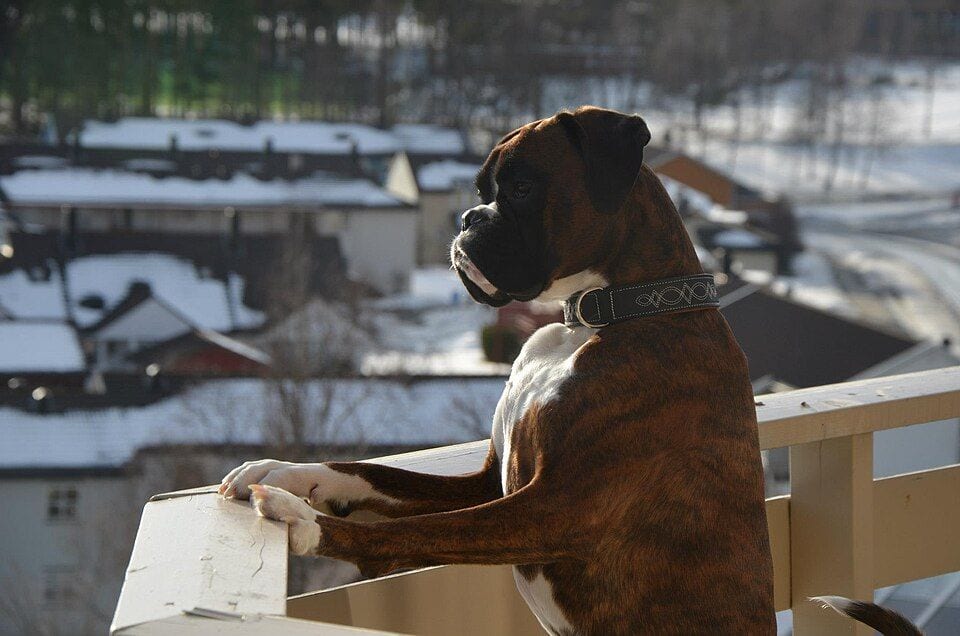
Temperament: A Playful Guardian
The AKC describes Boxers as upbeat and playful, and thanks to their patience and protective nature, they make excellent dogs for children. They take their job as a watchdog and family guardian seriously and will fearlessly face any threat. Boxers are known to be affectionate, devoted, non-aggressive, and loyal, remaining playful even into their senior years. However, a poorly socialized Boxer may try to assert dominance over other large dogs.
Boxers are highly intelligent but can quickly become bored with repetitive tasks; they have a mind of their own and are excellent problem solvers. They are not always tolerant of dogs of the same sex. Because they are powerful, active, and prone to jumping, the AKC notes that they might not be the best fit for frail adults or small children, who could be knocked over by a well-meaning but boisterous puppy. Boxers excel in service, therapy, drug detection, and search-and-rescue work.
Health
- Heart issues. Aortic stenosis, cardiomyopathy, and arrhythmogenic right ventricular cardiomyopathy (ARVC – a DNA test is available); an annual Holter monitor test is recommended.
- Hip and elbow dysplasia, hypothyroidism.
- Degenerative myelopathy – a DNA test is available.
- Cancer – certain forms are more common in the breed.
- Temperature sensitivity. Boxers do not tolerate extreme heat or cold well—they must live indoors.
Care
- Exercise. Plenty of daily activity on a leash or in a safely fenced area; they should not be allowed to roam off-leash unattended.
- Training. Early socialization and puppy training classes are essential to channel their energy.
- Grooming. Brush once a week with a rubber grooming mitt or brush.
- Dog sports. Obedience, agility, and herding.
| Trait | Boxer | Rottweiler | French Bulldog |
|---|---|---|---|
| Weight (males) | 65–80 lbs | about 110 lbs | up to 28 lbs |
| Origin | Germany | Germany | France |
| Energy level | very high | medium to high | medium |
| With children | patient but jumps | requires socialization | excellent |
The Boxer is Great for an Active Family with Children
The Boxer is energetic, playful, and patient with children, making them a popular choice as a family dog. However, they require plenty of exercise and consistent training.
- Good fit for: active families with older children, runners, and people interested in obedience or agility sports.
- Not a good fit for: very small children and frail seniors (due to the Boxer's tendency to jump), sedentary individuals, or anyone looking for an outdoor-only dog.
Boxers mature slowly and act like puppies for a long time, so you will need patience for the first few years. Their short coat provides little insulation, and their short muzzle makes panting and cooling down difficult, meaning both cold and hot weather are uncomfortable for them.
How to Choose a Boxer Puppy
Ask the breeder for the parents' health test results, including heart evaluations (like a Holter monitor), ARVC and degenerative myelopathy DNA tests, as well as hip, elbow, and thyroid screenings. A reputable breeder will prioritize health and temperament over cosmetic procedures. Ask to meet the parents—they should be playful yet stable. Before bringing a Boxer puppy home, ensure they have been examined by a veterinarian, vaccinated, and microchipped, as recommended by the AKC. Avoid pet stores or puppy mills, and always review the purchase contract carefully; you can read more in our guide introduction.
You can find other German Molossoid breeds in the Rottweiler and Great Dane profiles, and the Boxer's relative, the English Bulldog, in the English Bulldog guide.
Frequently asked questions
How much does a Boxer weigh?
Under the AKC standard, male Boxers weigh between 65 and 80 lbs and stand 23 to 25 inches tall. Females are typically about 15 lbs lighter and stand 21.5 to 23.5 inches tall.
Are Boxer ears cropped and tails docked?
Historically, Boxers had their ears cropped and tails docked. While this is still seen in the US and permitted by the AKC standard, the practice is becoming less common and is restricted by some local ordinances or veterinary clinic policies. Under the FCI standard, a naturally short tail is considered a disqualifying fault.
Is a Boxer a good family dog?
Yes. The AKC notes that Boxers are renowned as excellent dogs for families with children due to their patience and protective nature. However, they are strong and prone to jumping, so they might not be the best fit for very small toddlers or frail older adults.
What health issues are common in Boxers?
The AKC lists hip dysplasia, heart conditions (aortic stenosis, cardiomyopathy), hypothyroidism, degenerative myelopathy, and certain cancers. An annual Holter monitor test for Boxer cardiomyopathy and an ARVC DNA test are highly recommended.
Where does the name 'Boxer' come from?
The AKC suggests the English name is related to the way the breed uses its front paws while playing—much like a boxer sparring in the ring.
Sources
- Wikipedia: Boxer (dog)
- AKC: Boxer breed profile
- FCI: Boxer breed standard (No. 144)
- Cover photo: Fawn Boxer with white markings looking at the camera (Photo: Mostafameraji, CC0)
- Wikimedia Commons photo: Fawn Boxer standing in a meadow (Photo: Coalsi, CC BY-SA 3.0)
- Wikimedia Commons photo: Brindle Boxer standing on a balcony (Photo: JosefSthe2nd, CC BY-SA 4.0)
Log in to comment
No comments yet. Be the first.