West Siberian Laika: Temperament, Size, Care & Health
- The word 'laika' comes from the Russian 'layat' (to bark); a laika is a hunting dog that points out game by barking.
- Ancestors of the West Siberian Laika include the hunting dogs of the Mansi and Khanty people; registration began in 1930, with systematic breeding starting in 1946.
- There are four recognized Russian Laika breeds: Karelo-Finnish, Russo-European, West Siberian, and East Siberian.
- Males stand 22–24 inches tall, females 20–23 inches; common colors include wolf gray, pale red, and white.
- The FCI recognized the breed in 1980; under the FCI standard, a working trial is required.
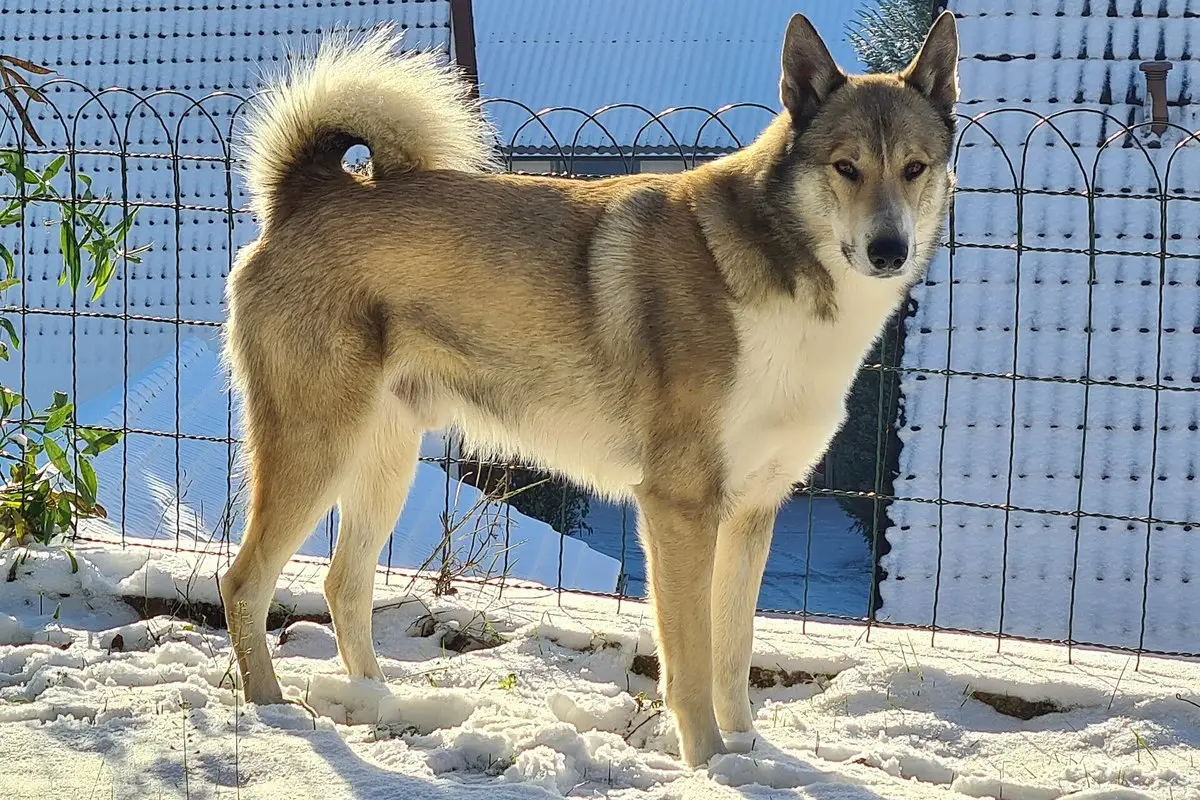
This article is part of the 77.today dog breeds guide, prepared by the 77.today editors from the sources listed at the end.
The West Siberian Laika is a wolf-like hunting spitz with a pointed snout, prick ears, and a tail curled over its back. Laikas belong to the primitive northern breeds, which have retained many physical and behavioral traits from their wild ancestors. For centuries, they helped Siberian peoples hunt, and today the West Siberian Laika is the most numerous laika, widespread far beyond its homeland. In this dog breed guide profile, you will find the West Siberian Laika's origins, appearance, temperament, and advice on who this breed is best suited for.
| Origin | Russia (Urals and West Siberia) |
|---|---|
| FCI Group | Group 5 – Spitz and primitive types (No. 306) |
| Height | males 22–24 inches (56–61 cm), females 20–23 inches (51–58 cm) |
| Coat | double coat: harsh guard hairs and dense undercoat, with a ruff |
| Colors | wolf gray, pale red, white, or with white patches |
| Purpose | hunting by barking to point out game or birds |
| Temperament | energetic, independent, resilient |
| Working Trial | yes – FCI requires a working trial |
| Suited for | hunters and highly active owners |
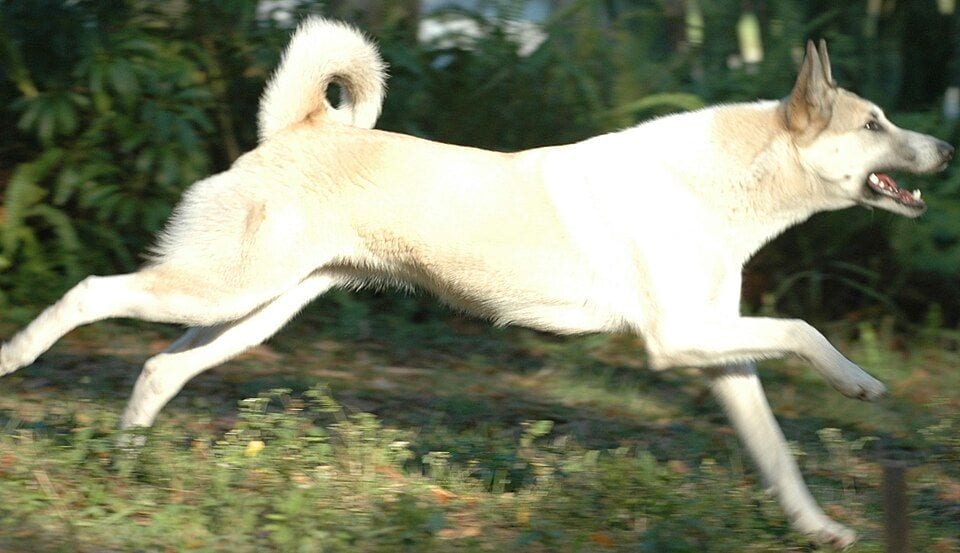
Laikas: Heirs to the Oldest Hunting Dogs
Laikas resemble the dogs that accompanied humans worldwide since prehistoric times, before they were replaced in many regions by drop-eared and highly specialized "cultural" breeds. In the vast, sparsely populated expanses of Russia, this process happened much later, allowing primitive laika types to survive in remote northern and northeastern provinces to this day. By the late 19th century, Russian experts distinguished dozens of local laika varieties, each associated with a specific northeastern European or Siberian ethnic group, though none were considered purebred.
Deforestation for agriculture and industry in the late 19th and early 20th centuries accelerated the decline of laikas. To save these hunting dogs, Russian enthusiasts began bringing them from the provinces to cities in European Russia to breed them pure. Starting in the 1930s, and especially after World War II, four purebred lines were established: the Karelo-Finnish, Russo-European, West Siberian, and East Siberian Laikas. The ancestors of the West Siberian Laika were the hunting dogs of the Mansi and Khanty people from the Urals and West Siberia. Registration began in 1930, and systematic breeding resumed after the war in 1946. Even into the early 1960s, many Ural hunters still called this dog the Mansi Laika. The FCI officially recognized the breed in 1980.
Appearance: A Wolf-Colored Spitz
The West Siberian Laika is a medium-to-large dog with a slightly elongated or nearly square build. Males stand 22–24 inches (56–61 cm) at the withers, while females are 20–23 inches (51–58 cm). The head is wedge-shaped and triangular, flat on top, with a pointed muzzle and erect ears. The tail curls tightly over the back and features longer, denser hair than the rest of the body.
The double coat consists of harsh, straight guard hairs and a very dense, soft undercoat. The hair around the neck, head, and shoulders is particularly long and stiff, forming a distinct ruff that frames the face. In cold climates, hair grows between their toes during the winter. The most common colors are wolf gray (ranging from almost white to nearly black), pale red, and white, with or without white patches. Agouti (banded) pigmentation is a hallmark of the breed: each guard hair has alternating bands of white and black, brown, or red. Solid, evenly pigmented hair usually indicates crossbreeding with other breeds.
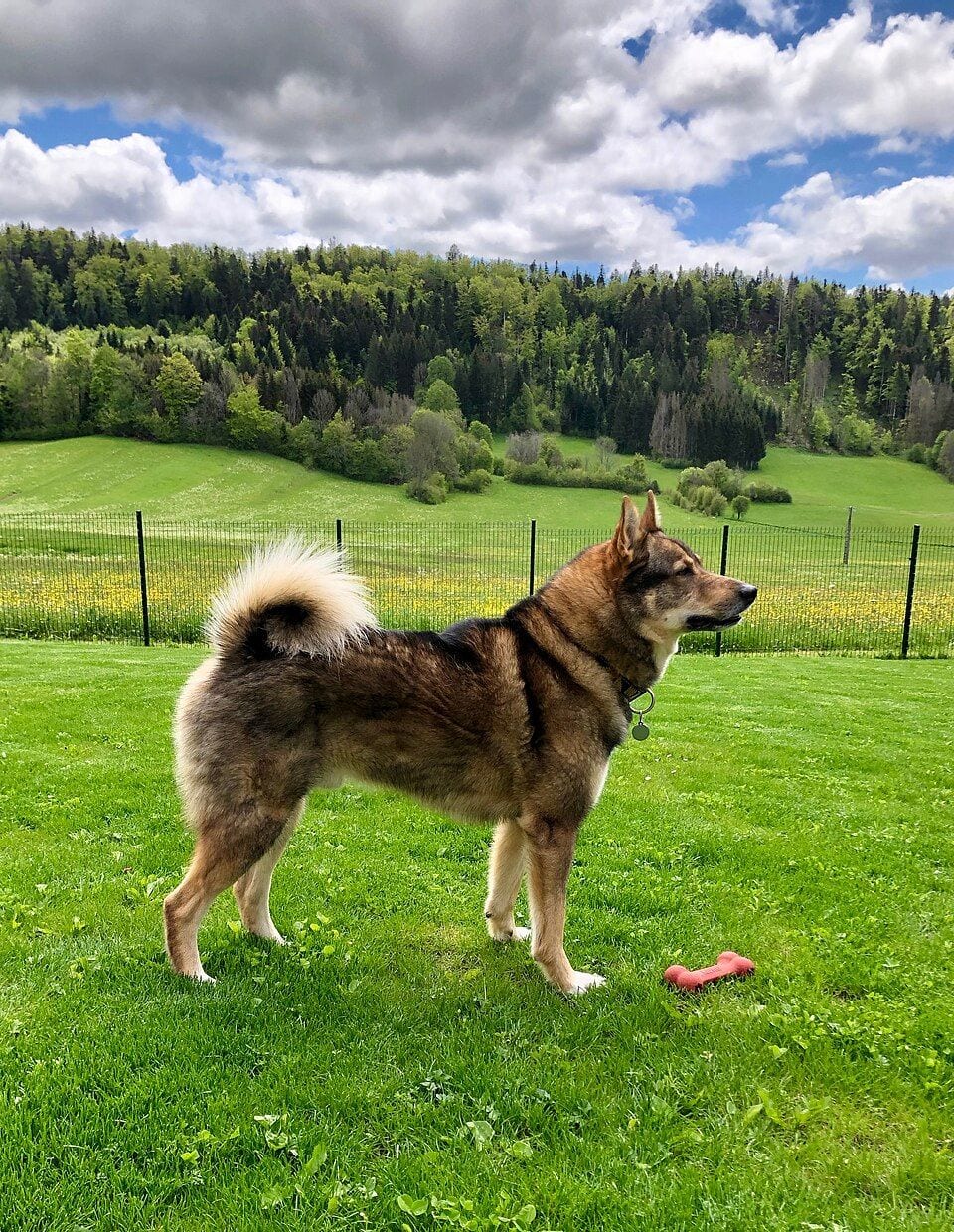
Temperament: A Barking Hunting Partner
The Russian word "laika" comes from the verb layat (to bark), so laika literally means "barker." All hunting laikas are bark-pointing dogs: once they locate an animal or bird, they stay near it and bark continuously until the hunter arrives. The hunting behavior is similar across all four Russian Laika breeds. The West Siberian Laika is highly versatile, though depending on the region and how it is used, it has sometimes become more specialized for specific game.
As a primitive breed, the Laika is independent, resilient, and highly energetic. They require a massive amount of outdoor exercise and mental stimulation. Because their prey drive is incredibly strong, it is highly recommended to keep them on a leash in areas where wild animals or domestic birds might be present. Consistent training and early socialization are essential to help a Laika become a reliable partner.
Care
- Coat. Brush once a week, and more frequently during seasonal shedding periods when they blow their undercoat.
- Exercise. Requires hours of outdoor activity, long hikes, hunting work, or tracking.
- Climate. Laikas handle extreme cold exceptionally well; dogs kept in warmer climates or mostly indoors will naturally develop a thinner coat.
- Safety. A securely fenced yard and a leash are mandatory in areas with wildlife.
The Four Russian Laikas
| Breed | Region of Origin |
|---|---|
| West Siberian Laika | Urals, West Siberia (Mansi and Khanty dogs) |
| Russo-European Laika | European Russia |
| Karelo-Finnish Laika | Karelia |
| East Siberian Laika | East Siberia |
The West Siberian Laika is a Hunter, Not an Apartment Companion
The Laika lives to work in the woods, so they thrive best with a hunter or someone who spends a significant amount of time in nature.
- Suited for: Hunters, rural or homestead residents, and active people who enjoy long hikes or skijoring with their dog.
- Not suited for: Apartment living, neighbors sensitive to noise, or homes with poultry or cats (unless heavily socialized from a very young age).
The Laika's coat is highly weather-resistant, allowing the dog to live outdoors in a proper kennel setup, but they still require daily interaction with their owner. Barking is the Laika's primary working tool, so you will never be able to completely suppress this instinct.
How to Get a West Siberian Laika Puppy
Choose a reputable breeder whose dogs are registered (such as with the UKC, which recognizes the breed in the US, or FCI) and, ideally, have proven hunting trial results. Ask what type of game the parents were used for and ask to meet them to evaluate their temperament. Laikas are best suited for hunters and families who live close to nature and can provide them with plenty of vigorous activity. Before bringing a West Siberian Laika puppy home, ensure you receive a clear contract, health guarantees, and proof of veterinary care. Vets highly recommend microchipping your new puppy to ensure they can be safely returned if they ever get lost while tracking a scent; read more in our guide introduction.
You can find other northern dogs in the Siberian Husky and Samoyed profiles, and learn about another hunting breed in the Lithuanian Hound description.
Frequently asked questions
What does the word 'laika' mean?
In Russian, the word 'laika' comes from the verb 'layat'—to bark—and translates to 'barker.' All hunting laikas are bark-pointing dogs: once they find an animal or bird, they stay with it and bark until the hunter arrives.
What are the different Laika breeds?
In the 20th century, four purebred lines were developed in Russia from native primitive laikas: the Karelo-Finnish Laika, Russo-European Laika, West Siberian Laika, and East Siberian Laika. The West Siberian Laika is the most popular and numerous.
How big is a West Siberian Laika?
Males stand 22–24 inches at the withers, while females are 20–23 inches. It is a medium-to-large dog with a slightly elongated or nearly square build.
What colors do West Siberian Laikas come in?
The most common colors are wolf gray, pale red, and white. The gray can range from almost white to nearly black, sometimes mixed with red. All colored laikas feature agouti (banded) hair pigmentation, meaning each guard hair has alternating bands of color.
Is the West Siberian Laika a good city family dog?
The Laika is a working hunting dog with strong instincts and high energy needs. They do best with a hunter or a highly active family that can provide them with plenty of outdoor exercise and a job to do, making them poorly suited for typical city living.
Sources
- Wikipedia: West Siberian Laika
- FCI: West Siberian Laika breed standard (No. 306)
- Cover photo: West Siberian Laika standing in the snow (Photo: LS, CC BY-SA 4.0)
- Wikimedia Commons photo: Light-colored West Siberian Laika running through a meadow (Photo: English Wikipedia user Madmadamim, CC BY-SA 3.0)
- Wikimedia Commons photo: West Siberian Laika standing in a meadow (Photo: Jswinkelman, CC BY-SA 4.0)
Log in to comment
No comments yet. Be the first.