Bichon Frise: Temperament, Size, Grooming & Health
- Bichons belong to the Barbichon family of small white dogs, alongside the Bolognese, Havanese, and Maltese.
- The breed's ancestor is the Tenerife Bichon; they have lived in Spanish, Italian, and French royal courts since the 13th century.
- The French Kennel Club recognized the breed in 1933, and the FCI followed in 1959.
- They stand 9–12 inches tall and weigh about 11 lbs, with a coat that is always pure white.
- Their coat barely sheds but requires daily brushing and professional grooming every 4–6 weeks.
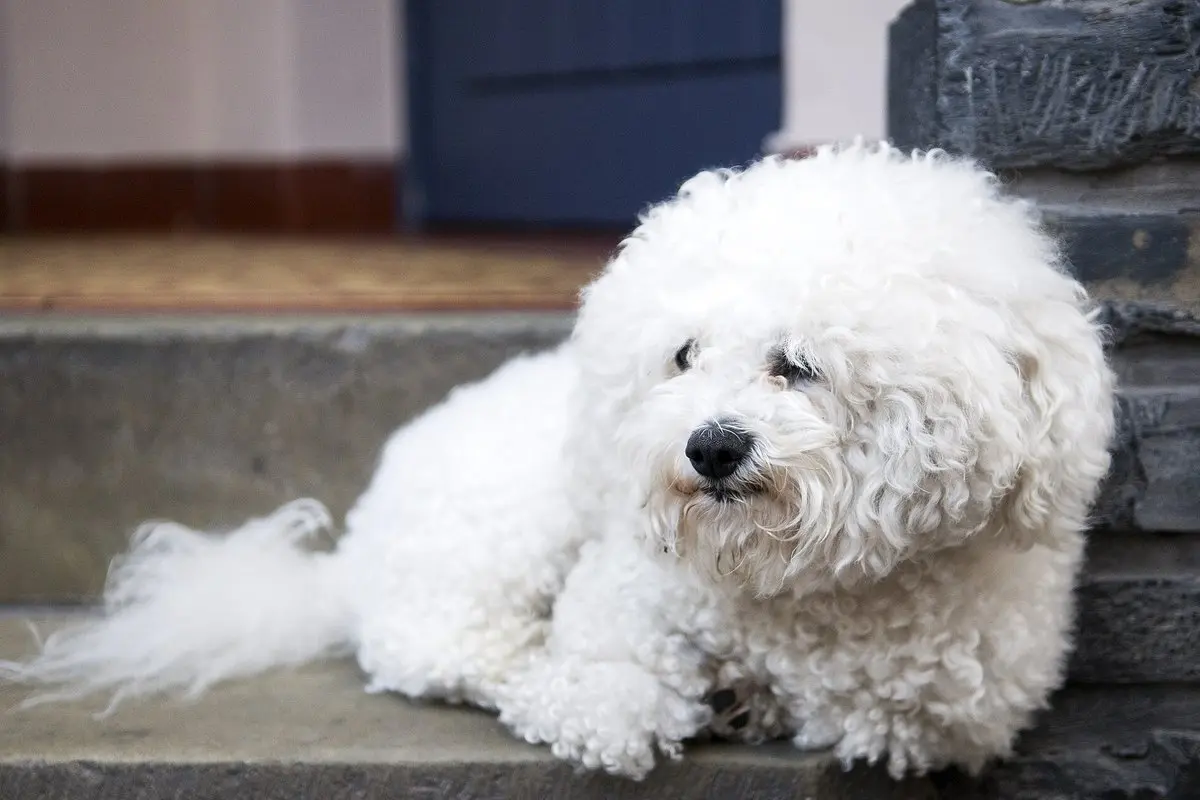
- The Bichon – From Tenerife to Royal Courts and the Circus
- Appearance: A White Cloud with a "Powder-Puff" Head
- Temperament: A Cheerful Prankster
- Health
- Grooming: Brushes and the Grooming Salon
- Bichons and Other White Companions
- The Bichon Frise is Perfect for Apartments and Homebodies
- How to Choose a Bichon Frise Puppy
This article is part of the 77.today dog breeds guide, prepared by the 77.today editors from the sources listed at the end.
The Bichon Frise is a small, sturdy, and resilient dog that the AKC ranks among the world's great "personalities." Its crowning glory is a white, fluffy, velvety coat that frames large dark eyes and a black nose with a signature round haircut. Bichons operate under the assumption that there are no strangers—only friends they haven't met yet. They are adaptable, cheerful, and love showing off for their people. In this dog breed guide profile, you will find the history, appearance, temperament, and grooming needs of the Bichon Frise (French: Bichon à poil frisé).
| Origin | Belgium and France (FCI) |
|---|---|
| FCI Group | Group 9 – Companion and Toy Dogs, Bichons (No. 215) |
| Height | 9–12 inches |
| Weight | about 11 lbs; proportionate to height |
| Coat | loosely curled, with a dense soft undercoat; barely sheds |
| Color | pure white |
| Lifespan | 14–15 years |
| Temperament | cheerful, friendly, curious, playful |
| Suitable for | apartments, city living, families with children |
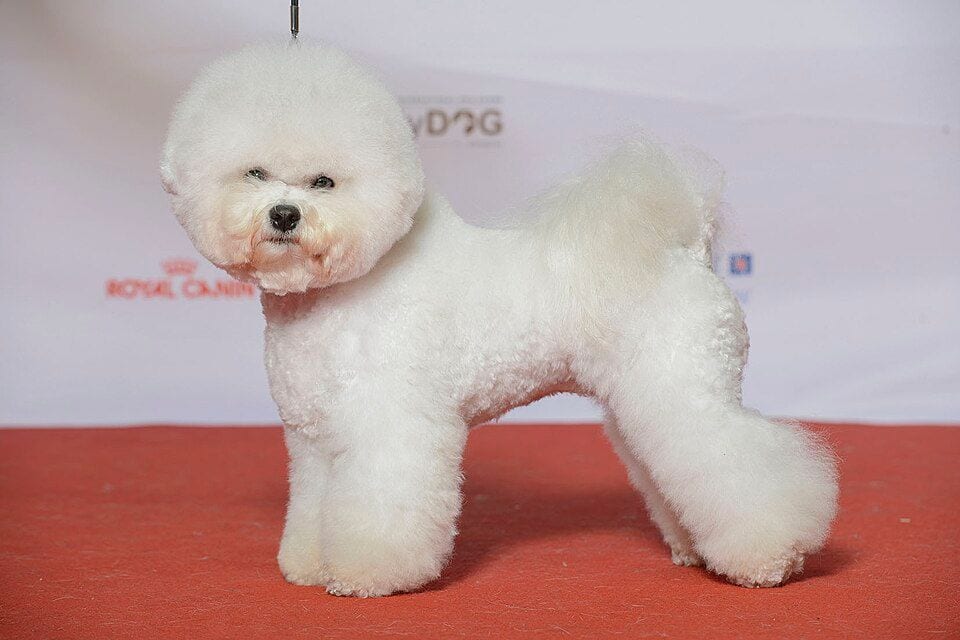
The Bichon – From Tenerife to Royal Courts and the Circus
Bichons belong to a family of small white dogs known as Barbichons, which also includes the Bolognese, Havanese, and Maltese. It is believed that the modern development of this ancient breed began on Tenerife, the largest of the Canary Islands. One of these dogs was so popular among sailors that it became known as the Tenerife Bichon—widely considered the primary ancestor of the Bichon Frise. It is thought that Spanish sailors first brought these dogs to the island, and in the 14th century, Italian sailors brought them back to the mainland.
From the 13th century onward, Bichons lived in the royal courts of Spain, Italy, and France, becoming the darlings of aristocrats during the Renaissance. The French Revolution in 1789 brought an abrupt end to their life of luxury: many owners ended up in prison or under the guillotine, and their Bichons were left on the streets. They were taken in by street performers who taught them tricks to earn coins, and the Bichons soon became circus performers. The French Kennel Club (Société Centrale Canine) recognized the breed in 1933, and the FCI followed in October 1959. Bichons were brought to the US in 1955 and to Great Britain in 1973.
Appearance: A White Cloud with a "Powder-Puff" Head
The Bichon Frise is a small dog, standing 9–12 inches tall and weighing about 11 lbs. The skull is relatively flat but can appear round, and the muzzle tapers slightly, making up two-fifths of the head's length. The nose is black, and the eyes are dark and round. The head and legs are proportionate to the body.
The coat falls in loose spiral curls or "corkscrews," supported by a dense, soft undercoat. On the head, it is typically trimmed into a round shape resembling a full moon or powder puff. The color is always pure white—only dogs under a year old may have a slight beige or apricot tint covering no more than 10% of their body.
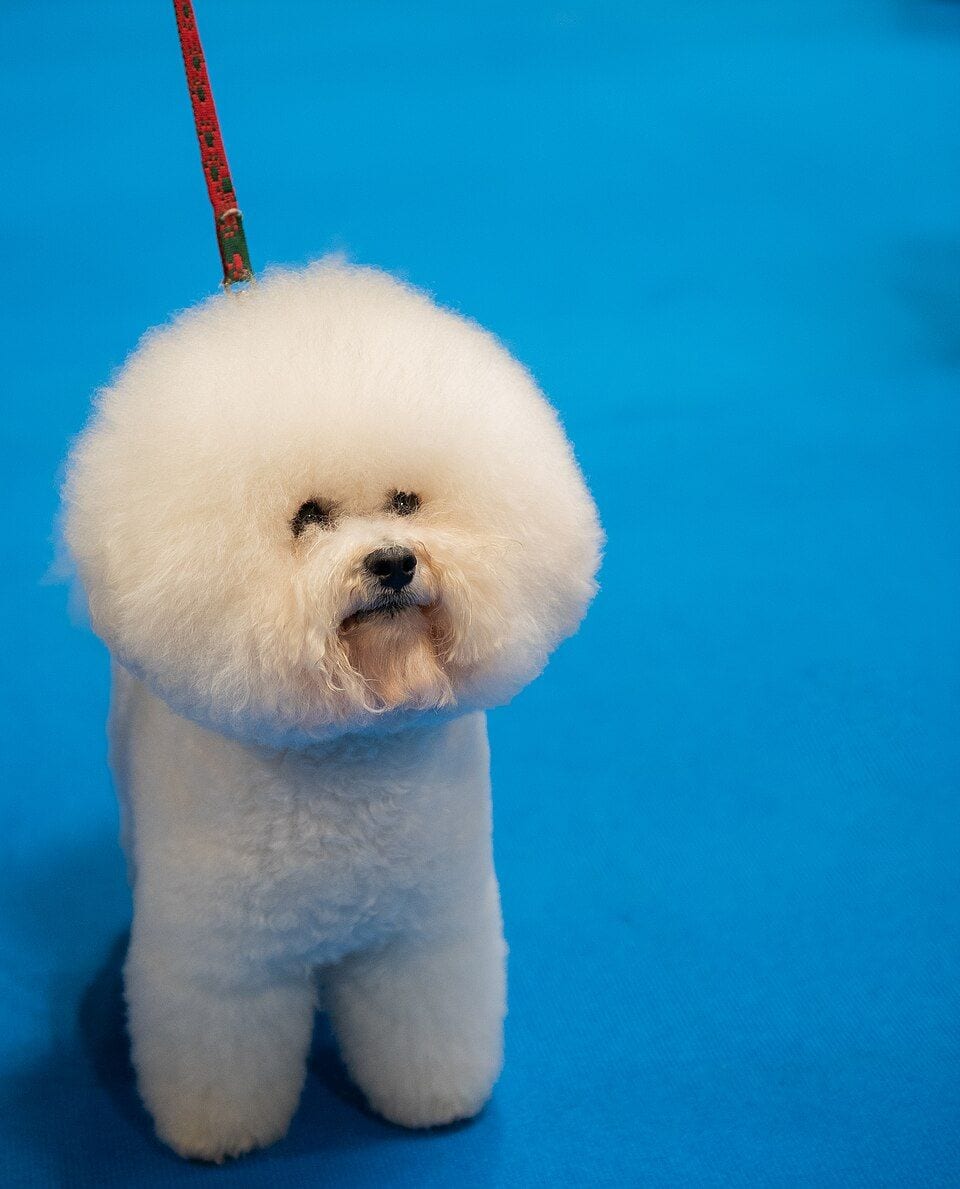
Temperament: A Cheerful Prankster
The AKC describes Bichons as adaptable companions who get along well with other dogs and children. They are alert and curious, making them excellent little watchdogs, but at heart, they are "lovers, not fighters." Their confidence and compact size make them ideal city dogs. Bichons love learning tricks and showing off, responding well to positive reinforcement training, though they are notoriously difficult to housebreak.
Bichons are considered "somewhat active" dogs: long periods of rest are punctuated by short bursts of energy where they zoom around the house or yard. They need daily playtime and walks. A fenced yard is highly recommended—Bichons are surprisingly fast, and a loose one can be very hard to catch. If left alone for long periods regularly, they may develop undesirable behaviors.
Health
- Allergies and bladder infections.
- Luxating patella, requiring joint evaluations.
- Cataracts and other eye diseases—regular screening by a veterinary ophthalmologist is recommended.
- Dental issues—without regular brushing, they are prone to early tooth loss and gum disease.
- Immune-mediated hemolytic anemia and gallbladder diseases—studies show a breed predisposition.
In a 2024 UK study, the average lifespan of a Bichon was 12.5 years, while the AKC lists their life expectancy at 14–15 years.
Grooming: Brushes and the Grooming Salon
- Brushing. At least 2–3 times a week, but ideally daily—loose hairs get trapped in the undercoat and form mats.
- Clipping and bathing. At least once a month; most owners visit a professional groomer every 4–6 weeks.
- Ears. Clean regularly to prevent infections.
- Teeth. Brush regularly.
Bichons and Other White Companions
| Trait | Bichon Frise | Maltese | Poodle (Toy) |
|---|---|---|---|
| Weight | about 11 lbs | up to 7 lbs | 4–6 lbs |
| Coat | curly, with undercoat | long, straight, silky | curly |
| Color | white only | white only | various |
| Shedding | very low | low | very low |
The Bichon Frise is Perfect for Apartments and Homebodies
The Bichon is cheerful, friendly to everyone, and low-shedding, making it a popular choice for city apartments or families with children. Its greatest need is human companionship.
- Suitable for: families with kids, seniors, first-time owners, and people bothered by shedding hair.
- Not suitable for: those who are away from home for long hours, and owners who do not want to visit a groomer every few weeks.
A Bichon's coat grows continuously and mats quickly, so daily brushing down to the skin is essential. It is highly recommended to get a puppy used to the brush, bath, and blow-dryer from its first weeks—this way, grooming becomes a routine rather than a frightening ordeal.
How to Choose a Bichon Frise Puppy
Ask the breeder for the parents' patella, hip, and eye health screening results, and inquire about any history of allergies in the bloodline. Be prepared for regular grooming appointments—this is a recurring expense. Meet the parents to observe their temperament: they should be cheerful and friendly. Remember that a reputable breeder will never sell puppies through pet stores or puppy mills, and will provide a clear contract. Vets highly recommend microchipping your new puppy, and you can find more general rules on finding a responsible breeder or adopting through a breed rescue in our guide introduction.
You can find other low-shedding dogs in our Poodle, Maltese, and Shih Tzu profiles.
Frequently asked questions
Are Bichon Frises hypoallergenic?
The AKC considers the Bichon Frise relatively hypoallergenic. They shed very little because loose hairs get caught in the undercoat. However, this hair must be brushed out, and allergens are also present in dander and saliva, so it is highly recommended to spend time with the breed before getting one.
How much does a Bichon Frise weigh?
A Bichon Frise stands 9–12 inches tall and weighs about 11 lbs; the AKC specifies a range of 12–18 lbs. Their weight should always be proportionate to their height.
How often does a Bichon Frise need grooming?
The AKC recommends brushing at least two or three times a week, but ideally every day, along with a bath and a haircut at least once a month. Most owners take their Bichon to a professional groomer every 4–6 weeks.
Are Bichon Frises hard to potty train?
The AKC notes that Bichons are notoriously difficult to housebreak, though they are very easy to train in other respects. They love performing tricks and pick up new commands quickly.
What health issues are common in Bichon Frises?
The AKC lists allergies, bladder infections, luxating patella, cataracts and other eye diseases, as well as early tooth loss. Studies also show a breed predisposition to immune-mediated hemolytic anemia and gallbladder diseases.
Sources
- Wikipedia: Bichon Frise
- AKC (American Kennel Club): Bichon Frise breed profile
- FCI (Fédération Cynologique Internationale): Bichon Frise breed standard (No. 215)
- Cover photo: A white Bichon Frise lying on steps (Photo: Michal Osmenda from Brussels, Belgium, CC BY-SA 2.0)
- Wikimedia Commons: Bichon Frise standing in profile at a dog show (Photo: Svenska Mässan from Sweden, CC BY 2.0)
- Wikimedia Commons: Bichon Frise with a round show clip on a blue background (Photo: Adrian Betteridge, CC BY 2.0)
Log in to comment
No comments yet. Be the first.