Central Asian Shepherd Dog (Alabai): Size, Temperament & Care
- The Central Asian Shepherd Dog developed across a vast region between the Urals, the Caspian Sea, Asia Minor, and the northwestern border of China.
- According to the AKC, the history of these dogs spans over 5,000 years, with the breed shaped by climate and culture rather than a specific breeder.
- In 2025, UNESCO added the Alabai breeding tradition in Turkmenistan to its intangible cultural heritage list, the first dog breeding tradition included.
- Males stand at least 27.5 inches tall and females 25.5 inches; they have a long or short coat that comes in many colors.
- A highly independent territorial guardian that requires a large fenced yard and an experienced owner.
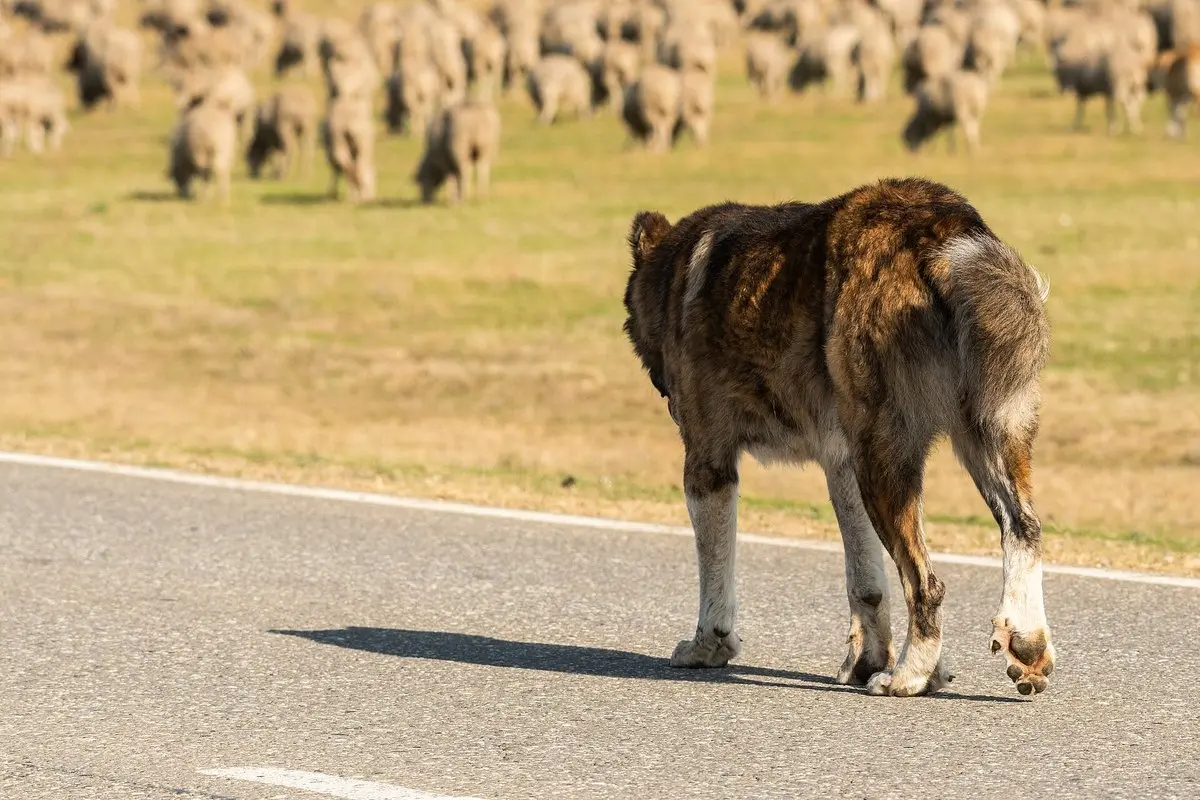
- The Alabai – Guardian of Silk Road Nomads
- A National Symbol of Turkmenistan
- Appearance: A Massive Mountain and Steppe Guardian
- Temperament: An Independent-Thinking Guardian
- Health and Care
- The Alabai vs. Other Large Guardian Breeds
- The Central Asian Shepherd Dog Needs Space, a Fence, and an Experienced Owner
- What to Know Before Getting a Central Asian Shepherd Dog
This article is part of the 77.today dog breeds guide, prepared by the 77.today editors from the sources listed at the end.
The Alabai, or Central Asian Shepherd Dog, is one of the oldest and most independent guardian dogs in the world. The AKC describes it as self-assured, balanced, quiet, proud, and independent, highly courageous, resilient, and possessing a natural territorial instinct—it is renowned for its fearlessness against large predators. This is not a dog for everyone: it requires space, experience, and constant attention. In our dog breeds guide, you will find the origins, appearance, temperament, and owner tips for the Central Asian Shepherd Dog (Turkmen: Alabaý, Kazakh: Töbet).
| Origin | Central Asia (FCI country of patronage: Russia) |
|---|---|
| FCI Group | Group 2 – Molossoid breeds, Mountain type (No. 335) |
| Height | Males at least 27.5 inches, females 25.5 inches |
| Build | Tall, massive, heavy-boned |
| Coat | Long or short; straight, coarse, dense |
| Colors | White, black, gray, fawn, red, brindle, piebald, spotted |
| Temperament | Calm, independent, stubborn, protective |
| Legal Status in US | May be subject to local breed-specific legislation |
| Suitable for | Experienced owners with a fenced property only |
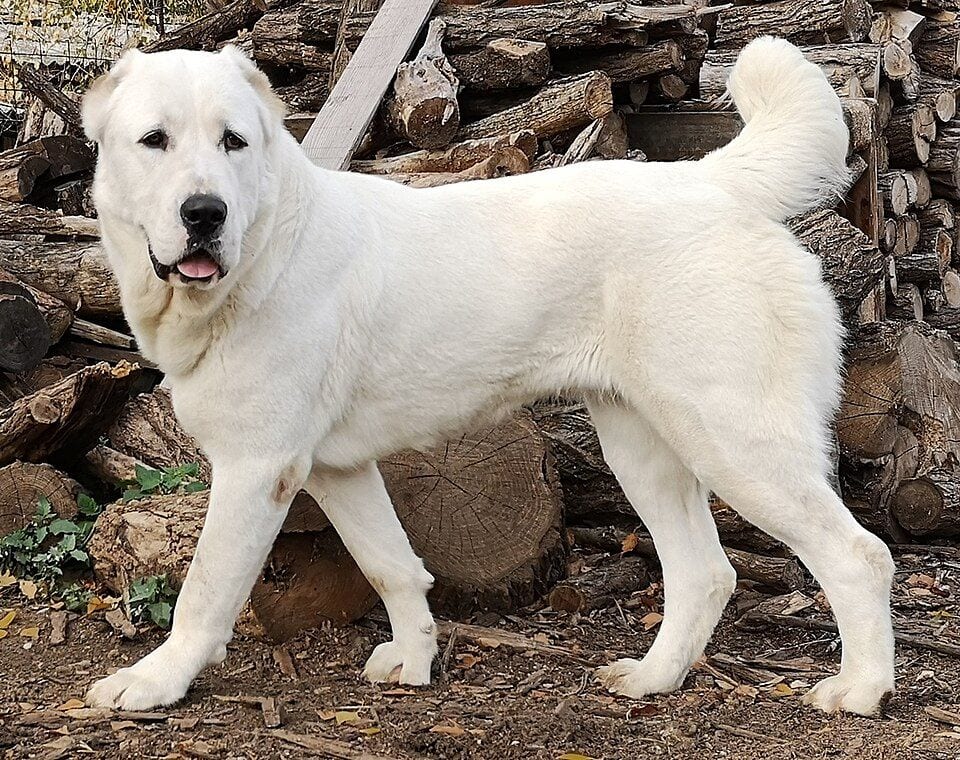
The Alabai – Guardian of Silk Road Nomads
The ancestors of the Central Asian Shepherd Dog developed over a vast territory between the Ural Mountains, the Caspian Sea, Asia Minor, and the northwestern border of China. According to the AKC, dogs of this group are among the oldest in existence today—archaeological findings trace their history back more than 5,000 years, and their development can be followed along the ancient Silk Road. These dogs were not created by any specific person or country; they were shaped by the harsh climate, predators, and nomadic culture. Different types emerged in various regions, from the mountains of Mongolia to the Karakum Desert.
For centuries, Alabais guarded shepherds, their flocks of sheep and goats, camels, and horses in Turkmenistan, Uzbekistan, Tajikistan, Kazakhstan, Kyrgyzstan, and Afghanistan. Historical records suggest that similar dogs may have accompanied Mongol campaigns into Europe, potentially becoming the ancestors of European livestock guardian breeds, and the Central Asian Shepherd Dog is closely related to the Caucasian Shepherd Dog. After the revolution, Soviet authorities often took the best dogs to Russia for military use, and the introduction of new breeds encouraged crossbreeding, meaning purebred dogs survived primarily with shepherds and enthusiasts. In 1990, Turkmenistan approved the standard for the Turkmen Wolfhound, and the FCI fully recognized the breed in 1989.
A National Symbol of Turkmenistan
In Turkmenistan, the Alabai is considered a point of national pride and heritage—in 2020, a golden statue of an Alabai was unveiled there. In 2025, UNESCO added the Alabai breeding tradition in Turkmenistan to its Intangible Cultural Heritage list, making it the first dog breeding tradition to be included. Traditional tests of strength for these dogs are also held in the region, though historical accounts emphasize that these traditional contests were meant to establish dominance rather than to injure the opponent.
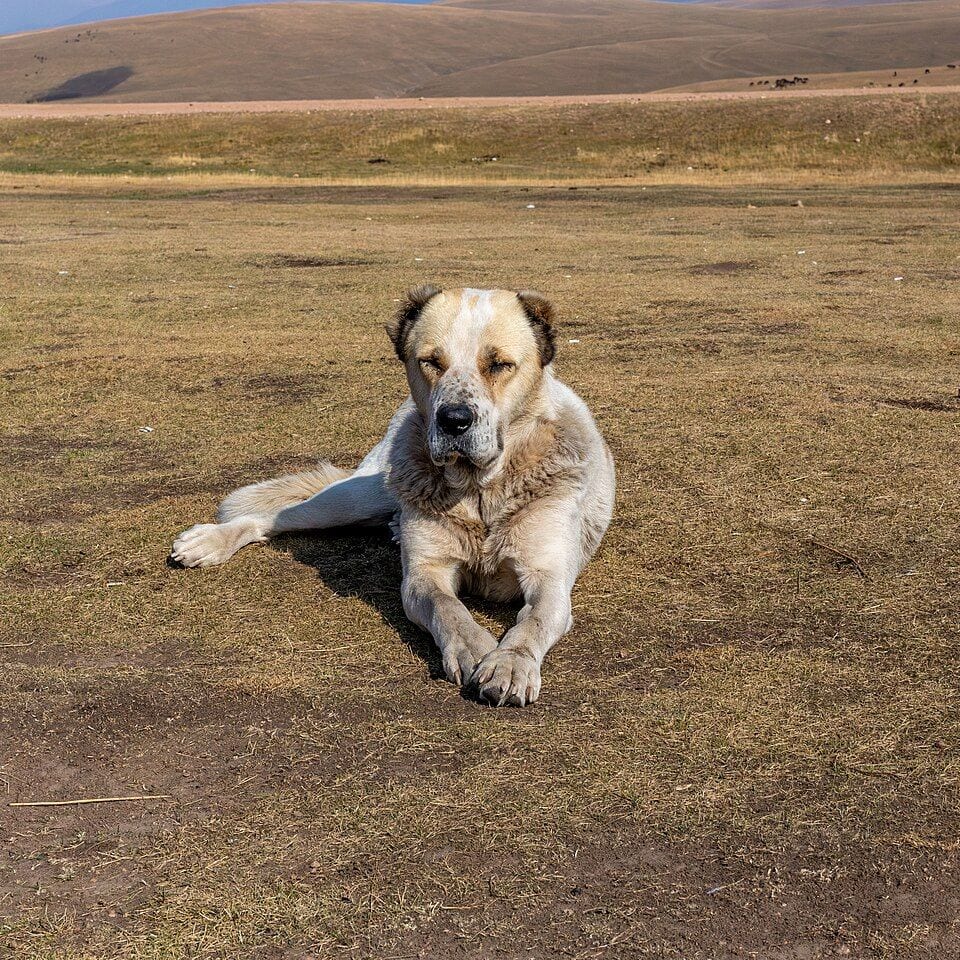
Appearance: A Massive Mountain and Steppe Guardian
Central Asian Shepherd Dogs are tall, massive, ruggedly built dogs with heavy bones and powerful muscles, making them incredibly resilient. Their skin is thick and elastic. The head is massive and broad, the forehead is flat with a barely noticeable stop, and the eyes are dark and set wide apart. The neck is short and muscular, featuring a pronounced dewlap, the chest is broad and deep, and the back is straight and broad. There are many types within the breed, varying in size, color, head shape, and coat type.
The coat comes in two types—long-haired or short-haired. The hair is straight, coarse, and dense, with a well-developed undercoat. Colors are highly varied: white, black, gray, fawn, red, brindle, piebald, and spotted. Historically, Alabais had their ears and tails cropped, but many modern veterinary associations and local laws now discourage or restrict these procedures unless medically necessary.
Temperament: An Independent-Thinking Guardian
Central Asian Shepherd Dogs are described as very calm, intelligent, and mentally stable, but highly stubborn and independent dogs that only respect a strong owner and will constantly test their boundaries. In difficult situations, they think for themselves and are hard to control if they believe their own judgment is better.
The AKC notes that Central Asian Shepherd Dogs are not so much herding dogs as they are territorial guardians that protect people and their property: they bond primarily with their human family and guard everything they consider their own. As a result, letting guests into the house can be challenging. They are active outdoors but relatively quiet indoors. Obedience training is difficult but possible, and early socialization is absolutely essential.
Health and Care
- Health. According to the AKC, they have fewer hereditary diseases than many artificially created breeds, but hip dysplasia evaluations of the parents are essential.
- Coat. Low maintenance, but once a year they experience a "coat storm" where the undercoat sheds profusely.
- Nails. They grow fast and strong, so they need to be trimmed or ground regularly.
- Exercise. Low energy but high endurance—they need daily leash walks and a large, securely fenced yard.
The Alabai vs. Other Large Guardian Breeds
| Trait | Central Asian Shepherd Dog | Caucasian Shepherd Dog | Tibetan Mastiff |
|---|---|---|---|
| Origin | Central Asia | Caucasus | Tibet |
| Male Height | 27.5+ inches | 28–29.5 inches | 26+ inches |
| Restricted in US | Varies by local laws | Varies by local laws | Rarely restricted |
| Shedding | Once a year "coat storm" | Seasonal | Heavily in spring, less in fall |
The Central Asian Shepherd Dog Needs Space, a Fence, and an Experienced Owner
The Central Asian Shepherd Dog is not an indoor pet. It was bred to guard territory and people, so it thrives on a large property where it has something to protect.
- Must have: A fenced homestead or farm, socialization from the first weeks, consistent training, and an owner who has previously raised large guardian dogs.
- Not suitable for: Apartments, city homes with small yards, families that frequently host guests, and people who cannot physically handle a giant dog.
While raising a Central Asian Shepherd Dog, it is crucial to maintain calm but firm communication and never let the dog decide what is allowed in the house. If the dog is kept outdoors, it still needs daily interaction with its owner—otherwise, it can become unmanageable and suspicious of all people.
What to Know Before Getting a Central Asian Shepherd Dog
Evaluate whether you have a large, well-fenced yard, experience with guardian breeds, and the time for ongoing training. Choose a reputable breeder whose dogs have pedigrees and health clearances for hips, and ask to meet the parents—they should be calm and stable. While not universally banned, always check your local ordinances, breed-specific legislation, and homeowner's insurance policies, as giant guardian breeds are sometimes restricted. Puppies should be microchipped and registered with a reputable kennel club or local registry. For more on finding a responsible breeder, see our guide introduction.
You can find other large guardians in the Caucasian Shepherd Dog, Tibetan Mastiff, and Cane Corso profiles.
Frequently asked questions
Are the Alabai and the Central Asian Shepherd Dog the same breed?
Yes. The Alabai (Turkmen: Alabaý), also known as the Tobet in Kazakhstan or the Turkmen Wolfhound, is the Central Asian Shepherd Dog. The FCI registers the breed as the Central Asia Shepherd Dog (No. 335).
Are Central Asian Shepherd Dogs restricted or banned in the US?
While not universally banned, they may be subject to local breed-specific legislation (BSL) or homeowner's insurance restrictions depending on your city and state. Because they are incredibly strong and protective, owning one requires immense responsibility, a securely fenced property, and extensive experience.
How big does a Central Asian Shepherd Dog get?
Under the breed standard, males stand at least 27.5 inches at the shoulder, and females are at least 25.5 inches tall. They are tall, massive dogs with heavy bone structure and powerful muscles.
Is the Central Asian Shepherd Dog a good first dog?
No. The AKC emphasizes that Central Asian Shepherd Dogs are natural guardians requiring lifelong management and are not suitable for first-time owners. They are highly protective of their family and property, which can make having guests over a challenge.
Does the Central Asian Shepherd Dog shed a lot?
For most of the year, they require minimal grooming, but once a year they blow their undercoat so heavily that the AKC refers to it as a "coat storm."
Sources
- Wikipedia: Central Asian Shepherd Dog
- AKC: Central Asian Shepherd Dog breed profile
- FCI: Central Asia Shepherd Dog breed standard (No. 335)
- Cover photo: Alabai guarding a flock of sheep (Photo: M. S. Gorbunova, CC BY-SA 4.0)
- Wikimedia Commons photo: White Central Asian Shepherd Dog standing by firewood (Photo: Halalosirambankiskecskek, CC BY-SA 4.0)
- Wikimedia Commons photo: Central Asian Shepherd Dog lying on the Assy Plateau (Photo: Nikolai Bulykin, CC BY-SA 4.0)
Log in to comment
No comments yet. Be the first.