St. Bernard: Temperament, Size, Care & Health
- St. Bernards originated at the Great St. Bernard Pass hospice on the Swiss-Italian border, with the first dogs appearing between 1660 and 1670.
- The most famous rescuer, Barry, reportedly saved 40 to 100 people; his preserved body is on display at the Natural History Museum in Bern.
- The Swiss St. Bernard Club was founded in 1884, and the breed is recognized as the national dog of Switzerland.
- According to the AKC, males stand 28–30 inches and weigh 140–180 lbs, while females are 26–28 inches and 120–140 lbs. They come in shorthaired and longhaired varieties.
- The brandy keg around the neck is a myth. St. Bernards typically live 8 to 10 years.
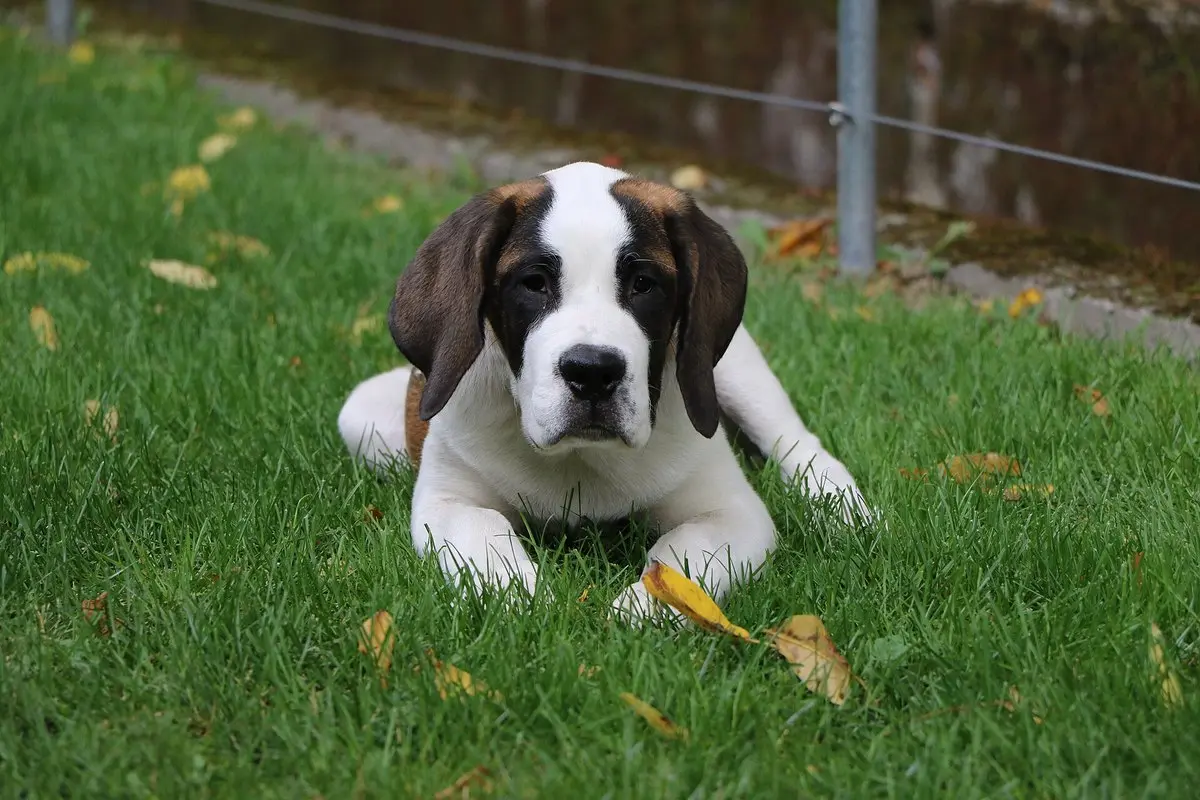
This article is part of the 77.today dog breeds guide, prepared by the 77.today editors from the sources listed at the end.
The St. Bernard is one of the most famous dogs in the world: massive, powerful, with a wrinkled brow, short muzzle, and dark eyes whose intelligent and friendly expression, according to the AKC, was a welcome sight to snowbound Alpine travelers. This gentle giant became a rescue legend, though today they are primarily beloved family dogs. In our dog breed directory, you will find the history, appearance, temperament, and care requirements of the St. Bernard.
| Origin | Switzerland (Great St. Bernard Pass) |
|---|---|
| FCI Group | Group 2 – Molossoid breeds, Mountain type (No. 61) |
| Height | males 28–30 inches, females 26–28 inches (AKC) |
| Weight | males 140–180 lbs, females 120–140 lbs (AKC) |
| Coat | shorthaired or longhaired |
| Colors | white with red markings or a red "mantle" |
| Lifespan | 8–10 years |
| Temperament | gentile, patient, watchful, loves children |
| Status | National dog of Switzerland |
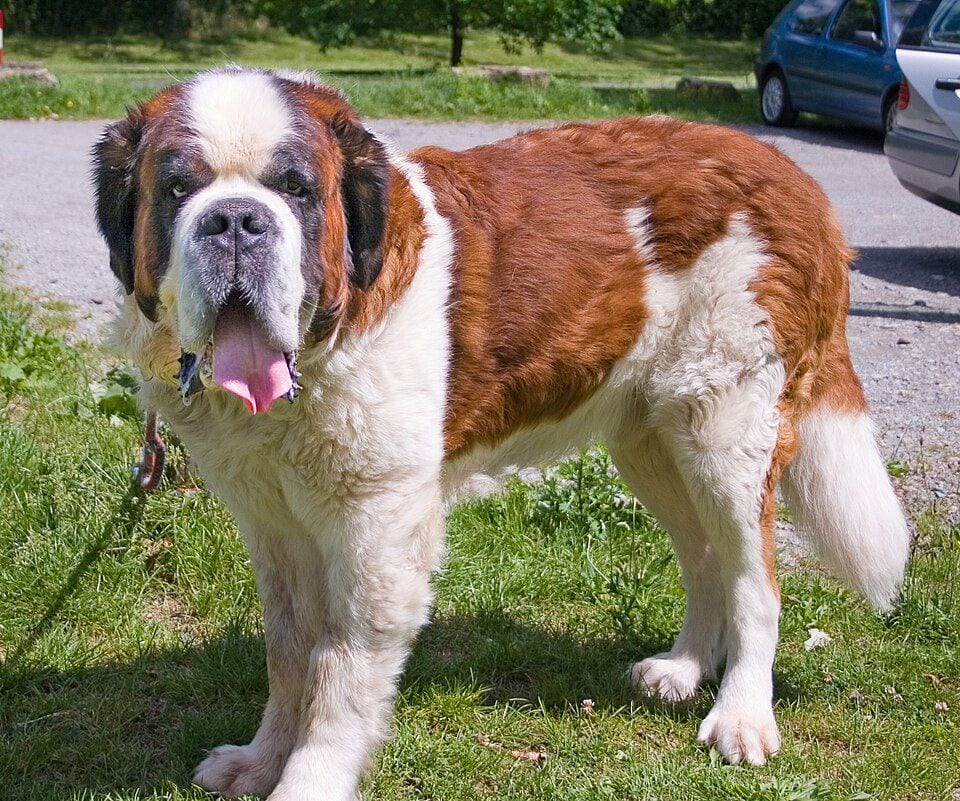
The St. Bernard: Rescuer of the Alpine Pass
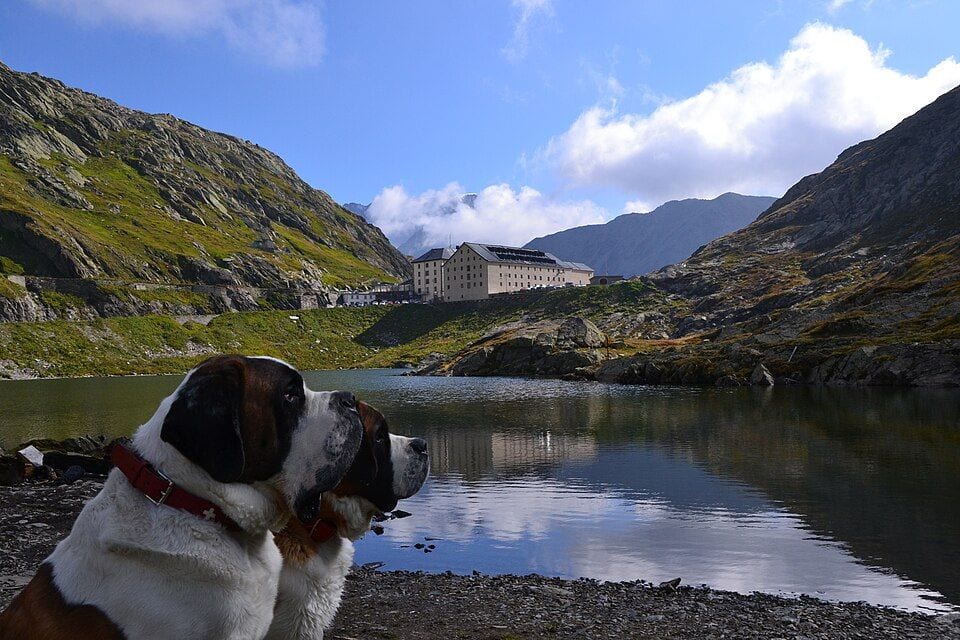
The AKC notes that in 1050, the monk Bernard of Menthon (later canonized as a saint) established a hospice in an Alpine pass at an altitude of about 8,000 feet to aid pilgrims traveling to Rome. The pass was treacherous, with snowdrifts reaching up to 40 feet. The first dogs arrived at the hospice between 1660 and 1670, and over several centuries, the monks developed powerful working dogs capable of locating and rescuing travelers buried by snowdrifts and avalanches. The earliest written records of dogs at the hospice date back to 1707, and the oldest depictions are two 1690 paintings by Italian artist Salvator Rosa. The monks did not formally train the dogs—younger ones learned by following the older ones.
The most famous rescuer was Barry, who reportedly saved between 40 and 100 people. His preserved body is kept at the Natural History Museum in Bern. Severe winters and avalanches between 1816 and 1818 killed many of the breeding dogs, so in the mid-19th century, the remaining dogs were crossed with Newfoundlands and other breeds. This changed the St. Bernard's appearance, and the resulting long coat proved impractical for rescue work, as it would freeze in the Alpine snow. The name "St. Bernard" only became widespread in the mid-19th century; before that, they were called "Sacred Dogs" or "Barry Dogs." On March 15, 1884, the Swiss St. Bernard Club was founded in Basel. The St. Bernard became the first breed entered into the Swiss Stud Book, and the breed standard was approved in 1888.
Appearance: Massive and Dignified
The St. Bernard is a giant Molossoid-type dog whose breed standard is filled with words like "very powerful," "extraordinarily muscular," "imposing," and "massive." A male's height must be at least 27.5 inches, while females are smaller and more delicately built. The head is enormous, the brow is wrinkled, the muzzle is short, and the eyes are dark and intelligent. The tail is long and heavy.
There are two coat varieties—shorthaired and longhaired—both requiring similar care. The color is white with smaller or larger red patches, or a red or reddish-brown "mantle," which is highly prized. Interestingly, the old working dogs of the hospice were smaller than today's show St. Bernards—roughly the size of a German Shepherd; they evolved into giants when appearance began to outweigh working ability in the show ring.
Temperament: A Patient Giant
The AKC describes St. Bernards as gentle giants and watchful, patient companions who are especially fond of children. They are good-natured and eager to please, often beginning to obey commands as soon as they understand what is expected of them. However, early socialization and puppy training classes are absolutely essential for such a large and powerful dog. Obedience training teaches them not to jump on people, knock over small children, or steal food from the table.
A St. Bernard only needs moderate exercise—one long walk or half an hour of playtime a day is usually enough. They gladly accompany their owners on hikes or camping trips, and some St. Bernards even pull carts with children or participate in weight-pulling competitions. They are happiest when participating in family activities, and if left alone for long periods regularly, they may develop destructive behaviors.
Health and Care
- Gastric dilatation-volvulus (bloat) – a life-threatening risk for large, deep-chested dogs; owners must know the symptoms.
- Hip and elbow dysplasia, eye conditions, cardiac exams, and a DNA test for degenerative myelopathy are highly recommended.
- Heat sensitivity. A St. Bernard can handle warm weather if they have a cool place to rest and plenty of water, but a sudden transition from a cool, air-conditioned room into extreme heat can be dangerous.
- Coat. Brush once a week, and daily during shedding seasons (twice a year).
- Drool and nails. Keep a drool towel handy and trim their nails regularly.
The St. Bernard and Other Large Mountain Dogs
| Trait | St. Bernard | Bernese Mountain Dog | Newfoundland |
|---|---|---|---|
| Weight (males) | 140–180 lbs | 80–115 lbs | 130–150 lbs |
| Origin | Switzerland | Switzerland | Canada |
| Coat | short or long | long, tricolor | long, water-resistant |
| Lifespan | 8–10 years | 7–10 years | 9–10 years |
The St. Bernard Needs a Spacious Home and a Patient Family
The St. Bernard is calm, good-natured, and loves children, but their massive size and heavy drooling aren't for everyone.
- Best for: Families with children, homes with a fenced yard, and people who live in cooler climates and enjoy leisurely walks.
- Not ideal for: Small apartments, those who dislike drool and dog hair, or owners who lack the physical strength to handle a powerful dog.
A St. Bernard puppy grows incredibly fast, so long runs, jumping, and climbing stairs should be avoided during their first year to protect their developing joints. Heat is dangerous for them: in the summer, they need shade, fresh water, and a cool spot indoors.
How to Choose a St. Bernard Puppy
Ask the breeder for the parents' health clearances, including hip, elbow, cardiac, and eye exams, as well as a DNA test for degenerative myelopathy. Consider whether you have enough space, time, and budget for such a giant—food, medications, and veterinary care cost significantly more for a dog of this size. Meet the parents to ensure they have a calm and friendly temperament. Remember that a reputable breeder will provide a contract, and puppies should be microchipped and registered with a major kennel club like the AKC. For more tips on finding a responsible breeder or adopting through a breed rescue, check out our dog breed guide introduction.
You can find other large family dogs in the Bernese Mountain Dog, Newfoundland, and Great Dane profiles.
Frequently asked questions
Did St. Bernards really carry brandy around their necks?
No. The AKC confirms this is a myth: the dogs at the Great St. Bernard Pass never actually carried small brandy kegs on their collars.
How much does a St. Bernard weigh?
According to the AKC, males weigh 140–180 lbs (64–82 kg) and stand 28–30 inches tall, while females weigh 120–140 lbs (54–64 kg) and are 26–28 inches tall. A male's height must be at least 27.5 inches.
Who was Barry?
Barry is the most famous rescue dog from the Great St. Bernard Pass, credited with saving between 40 and 100 people. He has a monument at the Cimetière des Chiens in Paris, and his preserved body is displayed at the Natural History Museum in Bern.
Do St. Bernards still rescue people in the Alps?
Not anymore. The last recorded rescue at the pass took place in 1955. However, as recently as 2004, the hospice still kept 18 St. Bernards for tradition.
Is a St. Bernard a good family dog?
Yes. The AKC describes St. Bernards as watchful, patient companions who are incredibly fond of children. However, due to their massive size, they can accidentally knock over a toddler, making early obedience training essential.
Sources
- Wikipedia: St. Bernard (dog)
- AKC: St. Bernard breed profile
- FCI: St. Bernard breed standard (No. 61)
- Cover photo: St. Bernard lying in the grass (Photo: Fondation Barry, CC BY-SA 4.0)
- Wikimedia Commons photo: Red and white St. Bernard standing on grass (Photo: VisualBeo, Public Domain)
- Wikimedia Commons photo: St. Bernard by the lake at the Great St. Bernard Pass (Photo: Racole, CC BY-SA 4.0)
Log in to comment
No comments yet. Be the first.