Tibetan Mastiff: Temperament, Size, Coat & Care
- The Tibetan Mastiff has guarded Himalayan inhabitants for millennia; it is believed to be the ancestor of all mastiffs.
- The name "mastiff" was given by Europeans—it would be more accurate to call it a Tibetan mountain dog.
- Under the AKC standard, males stand at least 26 inches and weigh 90–150 lbs, while females are at least 24 inches and 70–120 lbs.
- Like their wild canine relatives, females go into heat only once a year, so puppies are usually born in December or January.
- This is a nocturnal guardian that responds poorly to traditional obedience training and should never be let off-leash.
This article is part of the 77.today dog breeds guide, prepared by the 77.today editors from the sources listed at the end.
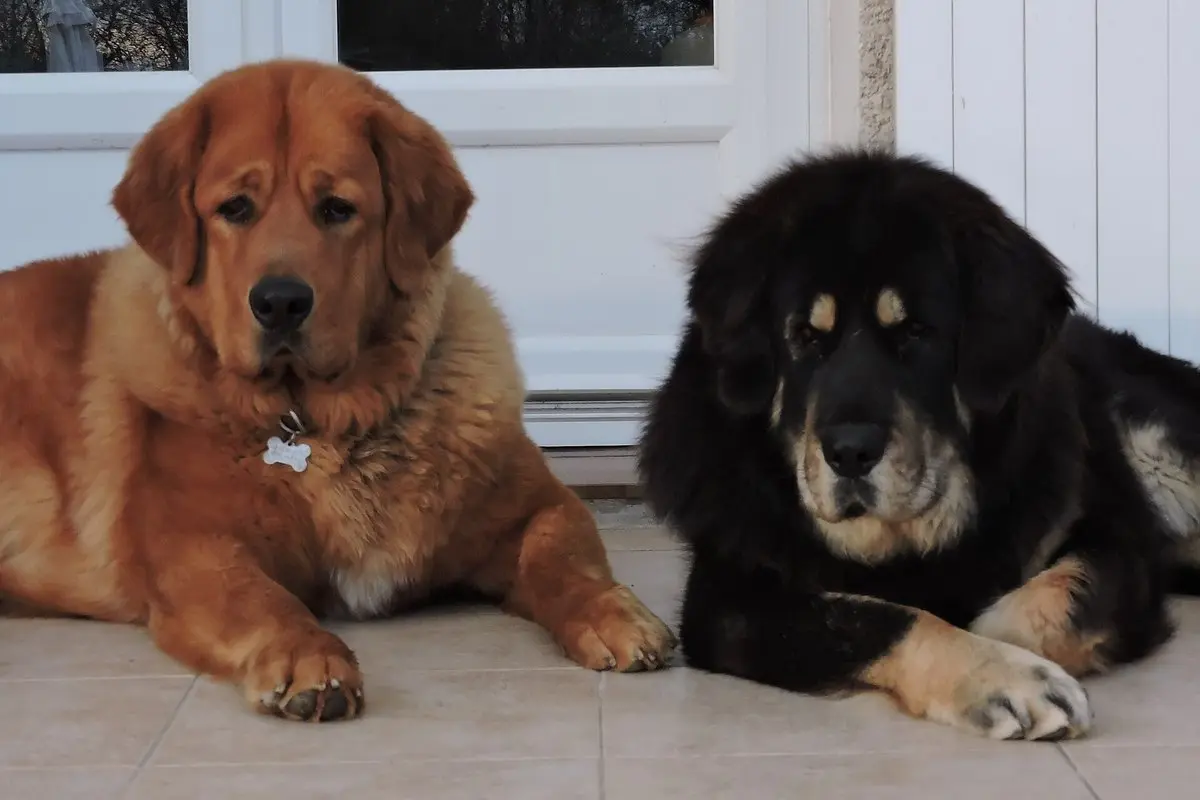
The Tibetan Mastiff is a watchful, aloof, imposing, and intimidating dog that the AKC calls a supreme guard dog. These densely coated giants are calm and gently devoted to their families at home, but reserved and territorial with strangers. A broad head with high-set V-shaped ears and expressive brown eyes gives them a noble, wise expression. In this dog breed guide profile, you will find the origin, appearance, temperament, and ideal owner recommendations for the Tibetan Mastiff (also known as the Do Khyi).
| Origin | Tibet (China); patron – FCI |
|---|---|
| FCI Group | Group 2 – Molossoid breeds, Mountain type (No. 230) |
| Height | males from 26 inches, females from 24 inches |
| Weight | males 90–150 lbs, females 70–120 lbs |
| Coat | double coat, medium to long, with a mane |
| Colors | black, black and tan, golden-red, blue-gray; often with white markings |
| Lifespan | 10–12 years |
| Temperament | calm, territorial, independent, nocturnal guardian |
| Best for | experienced owners with a large fenced yard |
Tibetan Mastiff: The Himalayan Guardian
The AKC acknowledges that no one knows exactly how or when Tibetan Mastiffs originated—the breed is so ancient and Tibet was so isolated that it is impossible to say for sure. It is known that they have been powerful Himalayan guardians for millennia, and they are believed to be the ancestors of all modern mastiffs. Early travelers to Tibet were sometimes gifted these giants, which were later used to develop Middle Eastern and European mastiff breeds. The breed has retained the hardiness required to survive in Tibet, Ladakh, and other high-altitude Himalayan regions.
The name "mastiff" was assigned by Europeans, as almost all large dogs in the West were historically given this title. Early visitors misnamed other Tibetan breeds as well—the Tibetan Terrier is not a terrier, and the Tibetan Spaniel is not a spaniel. It would be more accurate to call the Tibetan Mastiff a Tibetan or Himalayan mountain dog. The FCI officially recognized the breed in 1961.
Appearance: A Lion with a Mane
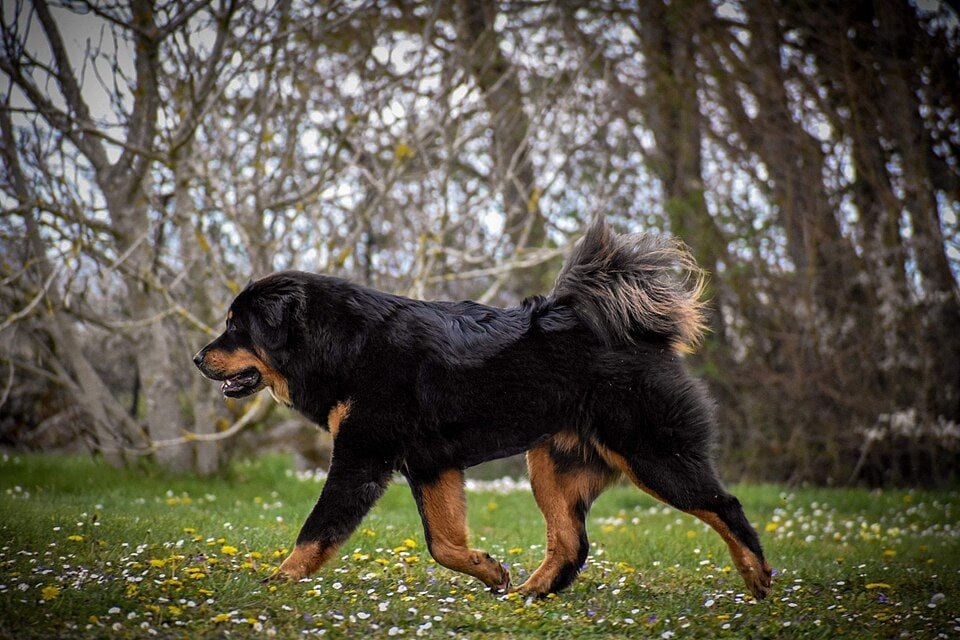
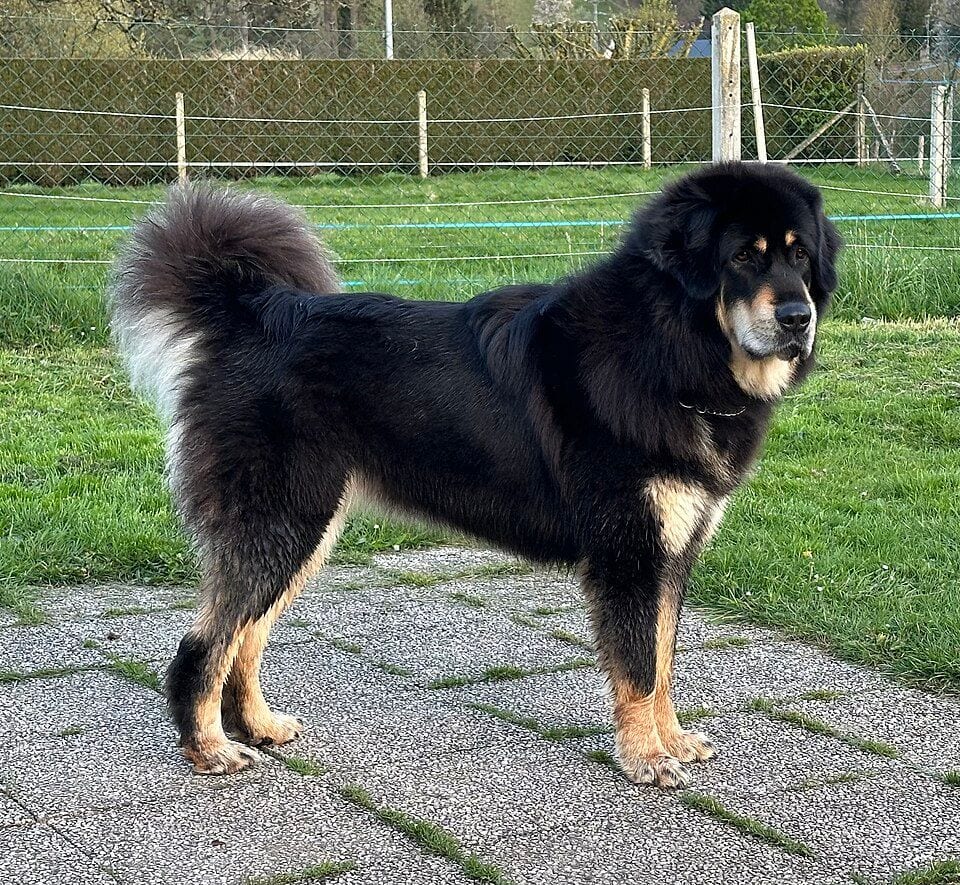
The Tibetan Mastiff is a powerful, muscular, and massive dog, yet, according to the AKC, they are surprisingly light-footed and can react to a threat with unexpected agility. Their double coat is medium to long, depending on the climate, with a heavy mane around the neck. Colors include solid black, black and tan, various shades of red ranging from pale gold to deep red, and blue-gray, often with white markings on the neck, chest, and legs. Their coat naturally repels dirt and odors, lacking the typical "doggy smell" often associated with large breeds.
In the West, Tibetan Mastiffs are judged under a single standard, whereas the Indian standard recognizes two varieties: the smaller "lion head" with very long hair from the forehead to the withers, and the larger "tiger head" with a shorter coat. This is one of the few primitive breeds where females go into heat only once a year, even in warm climates—just like wolves and other wild canine relatives. Estrus typically occurs in late fall, so most puppies are born in December or January.
Temperament: The Nocturnal Watchdog
As a flock guardian in both Tibet and the West, the Tibetan Mastiff employs all standard guarding tactics—barking and marking territorial boundaries—to deter predators and avoid direct confrontation. Through centuries of selective breeding, they have become nocturnal watchdogs: they often sleep during the day and are active and alert at night, barking at any unidentified sounds. Dogs bred in the West are generally calmer, but they remain highly reserved around strangers.
The AKC notes that Tibetan Mastiffs respond poorly to traditional obedience training. They are highly intelligent and learn quickly, but they see no need to repeat what they already know. They will do what their owner asks if they respect them and trust their judgment, but when in doubt, they will follow their own instincts. Treats rarely motivate them, and while they might perform perfectly in a training class, they can completely ignore commands at home. They do not have a reliable recall and should never be let off-leash in an unfenced area.
Health and Care
- Health. Relatively healthy breed; screened for elbow and hip dysplasia, hypothyroidism, entropion, and ectropion; seizures occur rarely.
- Coat. Heavy shedding happens in late winter or early spring, with a sometimes smaller shed in late summer or fall.
- Exercise. Moderate daily activity—they prefer patrolling their territory over chasing a ball; they are more active in cooler weather.
- Space. A spacious fenced yard is required, ideally with another dog; apartments are not suitable.
| Trait | Tibetan Mastiff | Central Asian Shepherd Dog | Caucasian Shepherd Dog |
|---|---|---|---|
| Origin | Tibet | Central Asia | Caucasus |
| Male height | from 26 inches | from 27.5 inches | 28–29.5 inches |
| Activity | nocturnal guardian | territorial guardian | territorial guardian |
| Subject to breed restrictions | No | No | Yes |
The Tibetan Mastiff is Best for a Spacious Property and an Experienced Owner
The Tibetan Mastiff is an ancient guardian that decides for itself what constitutes a threat. They are much better suited for a rural property than a city environment.
- Must haves: a high fence, a large property, early socialization, and experience with guardian breeds.
- Not suitable for: apartments, noise-sensitive neighbors (due to nocturnal barking), families that frequently host guests, and novice owners.
Their thick coat sheds heavily mostly once a year, making grooming relatively straightforward for the rest of the year. A large property must not only be fenced but also regularly checked to ensure the dog cannot dig under or climb over it.
What to Know Before Getting a Tibetan Mastiff
The Tibetan Mastiff is ideal for experienced owners living in a house with a large, securely fenced yard, where neighbors won't be bothered by nocturnal barking. Look for a reputable breeder whose dogs are AKC-registered and have been health-tested for elbow, hip, eye, and thyroid issues. Keep in mind that puppies are usually born in the winter, so you may have to wait for a well-bred litter. While they are not universally banned, it is always wise to check local ordinances, homeowners association rules, and insurance policies regarding large guardian breeds. Additionally, ensure your new puppy is microchipped and registered with your vet—you can learn more about general guidelines in our breed guide introduction.
You can find other large guardian breeds in the profiles for the Central Asian Shepherd Dog, Caucasian Shepherd Dog, and Cane Corso, or discover another dog of Tibetan origin in the Shih Tzu guide.
Frequently asked questions
How much does a Tibetan Mastiff weigh?
According to the AKC, males weigh 90–150 lbs and stand at least 26 inches at the shoulder, while females weigh 70–120 lbs and are at least 24 inches tall.
Is a Tibetan Mastiff good for an apartment?
No. The Tibetan Mastiff needs a spacious, securely fenced yard, ideally with another dog. Apartments are unsuitable for this breed, and they tend to stay awake at night, barking at unidentified sounds.
Are Tibetan Mastiffs easy to train?
No. The AKC notes that Tibetan Mastiffs are highly intelligent and learn quickly, but they see no need to repeat what they already know. When in doubt, they follow their instincts. They are rarely motivated by treats, are notorious for performing perfectly in class but ignoring commands at home, and do not have a reliable recall.
What are lion-head and tiger-head Tibetan Mastiffs?
The Indian standard recognizes two varieties: the smaller "lion head" with very long hair from the forehead to the withers forming a mane, and the larger "tiger head" with a shorter coat. In the West, they are judged under a single standard.
Do Tibetan Mastiffs shed a lot?
They shed slightly year-round, with one heavy shedding season late in the winter or early spring; sometimes there is a smaller shed in late summer or fall. Their coat naturally repels dirt and lacks a strong dog odor.
Sources
- Wikipedia: Tibetan Mastiff
- AKC (American Kennel Club): Tibetan Mastiff breed profile
- FCI (Fédération Cynologique Internationale): Tibetan Mastiff breed standard (No. 230)
- Cover photo: A brown and a black-and-tan Tibetan Mastiff lying by a door (Photo: Brunodesola, CC BY-SA 4.0)
- Wikimedia Commons photo: Black-and-tan Tibetan Mastiff trotting across a meadow (Photo: Rxma.ne, CC BY-SA 4.0)
- Wikimedia Commons photo: Black-and-tan Tibetan Mastiff standing on pavement (Photo: Rxma.ne, CC BY-SA 4.0)
Log in to comment
No comments yet. Be the first.