Boston Terrier: Temperament, Size, Care & Health
- The breed's patriarch, a dog named Judge, was purchased by Robert C. Hooper in Boston around 1870; he is the ancestor of almost all true Boston Terriers.
- The Boston Terrier Club of America was founded in 1891, and the AKC recognized the breed in 1893; it has been the official state dog of Massachusetts since 1979.
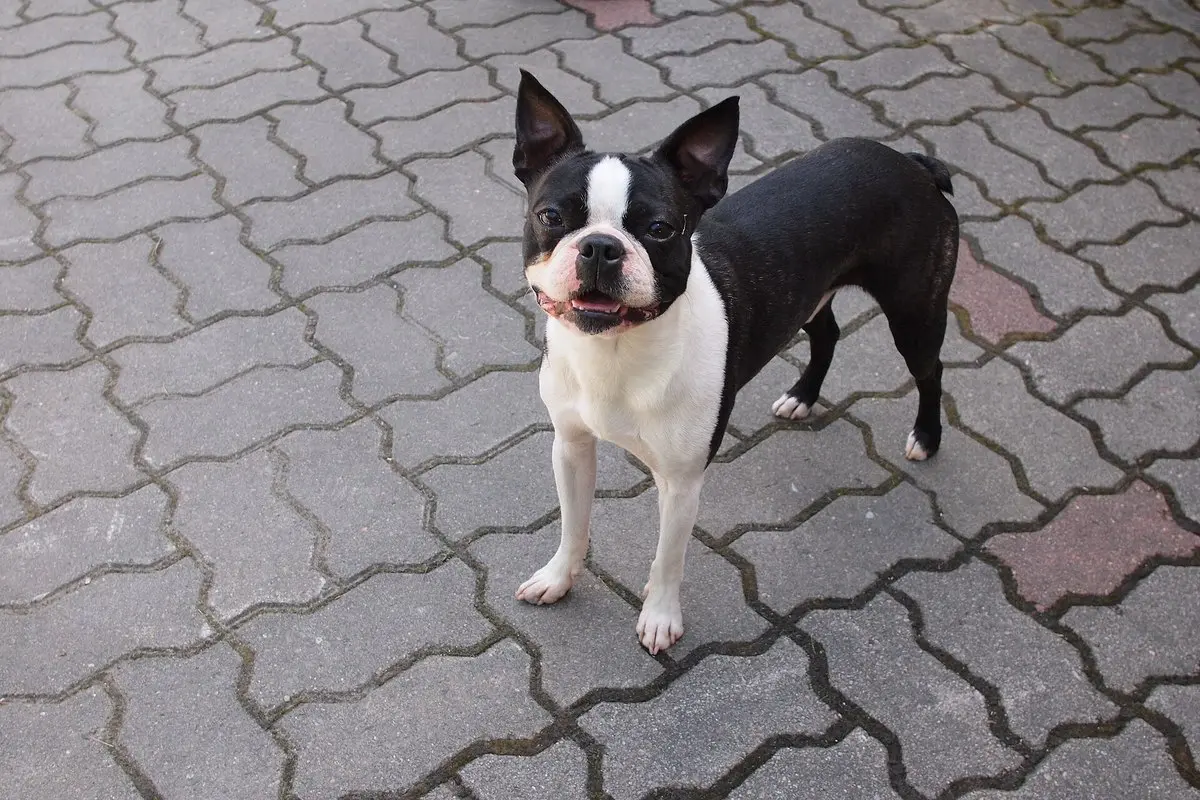
- Weighing up to 25 lbs and standing 10–12 inches tall, their coat comes in white with black, brindle, or seal.
- A cheerful, people-oriented, and well-mannered city dog that loves to play.
- Their large eyes are prone to injury, and their short muzzle makes them highly sensitive to heat.
This article is part of the 77.today dog breeds guide, prepared by the 77.today editors from the sources listed at the end.
The Boston Terrier is a lively little companion you will instantly recognize by their fitted "tuxedo," athletic yet compact body, and friendly, shining large round eyes. Thanks to their impeccable manners, they are nicknamed the "American Gentleman." The AKC notes that a breed named after a city usually makes an excellent urban dog—and the Boston Terrier is no exception. In the dog breed catalog, you will find the history, appearance, temperament, and care of the Boston Terrier.
| Origin | USA (Boston, Massachusetts) |
|---|---|
| FCI Group | Group 9 – Companion and Toy Dogs (No. 140) |
| Height | 10–12 inches (AKC) |
| Weight | up to 25 lbs; AKC – three weight classes |
| Coat | short, smooth, shiny |
| Colors | white with black, brindle, or seal |
| Lifespan | 11–13 years |
| Temperament | cheerful, intelligent, friendly, well-mannered |
| Suitable for | apartments, city living, families with children |

The Boston Terrier – One of the Few American Dogs
In 19th-century England, the popularity of blood sports led to crossing terriers with bulldog-type dogs. The AKC notes that in the late 1860s in Liverpool, crossing a bulldog with the now-extinct White English Terrier produced a sturdy, muscular dog named Judge. His owner sold him to an American, William O'Brien, who brought the dog to Boston, and in 1870, O'Brien sold Judge to Bostonian Robert C. Hooper. "Hooper's Judge" became the patriarch of the breed and the common ancestor of almost all true Boston Terriers.
Judge weighed about 32 lbs, was dark brindle with a white facial blaze, a square head, and an almost even bite. He was bred with a small white female named Gyp from Southboro, owned by Edward Burnett, who weighed about 20 lbs and already had the characteristic blocky head. Subsequent breeders downsized the dogs—the old Boston Bulldogs weighed up to 44 lbs. The Boston Terrier Club of America was founded in 1891, and the breed was admitted to the AKC in 1893. Boston University has had a Boston Terrier mascot, Rhett, since 1922, and it has been the official state dog of Massachusetts since 1979. The FCI recognized the breed in 1955.
Appearance: A Tuxedo and Large Eyes
The Boston Terrier is a compact, well-proportioned, short-tailed dog. The head is square, ears are erect, the neck is slightly arched, and the muzzle is short and generally free of wrinkles, with an even or slightly undershot bite. The chest is broad. Under international standards, the dog should not weigh more than 25 lbs, and the AKC divides them into three weight classes. Their movements are light and rhythmic.
The coat is short and smooth, and the pattern is the breed's most important feature. White is combined with black, brindle, or seal (black that appears reddish in bright light). Required white markings include the chest, muzzle band, and a blaze between the eyes; a white collar, white forelegs, and white hind legs below the hocks are also desired. Symmetrical markings are highly valued in dog shows. Solid colors and other variations do not meet the standard.
Temperament: A Well-Mannered Entertainer
The AKC describes Boston Terriers as bright dogs with a natural sense of humor and a constant source of smiles. They are sturdy but easily portable, highly people-oriented, and always ready for a walk. They are known to be intelligent, lively, energetic, affectionate, and loyal, getting along perfectly with children, other dogs, and cats, and they rarely bark without reason. The Boston Terrier has lost most of the aggressive traits of its ancestors, though some males may defend their territory from other dogs.
Exercise needs vary: for some, a brisk walk once or twice a day is enough, while others need more running and playtime. The AKC jokes that if let out into the yard alone, a Boston will likely just sit by the door waiting to be let back in. If left alone for long periods, they become frustrated and may develop undesirable behaviors. Boston Terriers excel in agility, obedience, flyball, and rally events.
Health
- Eyes. Large, prominent eyes are the main risk; check them daily and protect them from dust and injuries. Breeding dogs should be screened for cataracts, corneal ulcers, and glaucoma.
- Breathing. Like all flat-faced breeds, Bostons struggle to breathe in heat and humidity.
- Deafness and patellar luxation – breeders should screen for these.
Care
- Coat. Occasionally brush with a hound glove or soft brush.
- Eyes and wrinkles. Inspect eyes daily; clean facial folds as needed.
- Ears and nails. Clean and trim regularly.
- Heat. Provide a cool place and stick to short walks during the summer.
| Trait | Boston Terrier | French Bulldog | Pug |
|---|---|---|---|
| Weight | up to 25 lbs | up to 28 lbs | 13–18 lbs |
| Ears | erect | erect, bat-like | floppy |
| Origin | USA | France | China |
| Temperament | cheerful, well-mannered | playful, rarely barks | calm, affectionate |
The Boston Terrier is Great for the City and First-Time Owners
The Boston Terrier is small, cheerful, and friendly, making them an excellent fit for apartments and first-time dog owners.
- Suitable for: city dwellers, families with children, seniors, beginners, and homes with other dogs or cats.
- Not suitable for: runners on hot days, people who leave their dog alone for long hours, and homes without summer cooling (air conditioning).
Their short coat sheds minimally and requires almost no grooming, but it offers little warmth—a Boston will appreciate a dog jacket during cold winter walks. Their eyes require the most attention: it is worth inspecting them daily, and if you notice redness or excessive tearing, do not delay in contacting a veterinarian.
Boston Terriers learn well if training sessions are short and fun; praise and treats work much better for them than harshness.
How to Choose a Boston Terrier Puppy
Ask the breeder for the parents' eye, hearing, and patella screening results, and observe how the parents breathe. Choose a puppy with open nostrils and eyes that are not overly protruding. When looking for a puppy, always seek out a reputable breeder who prioritizes health and temperament, or consider adopting through a local shelter or breed-specific rescue. Ensure your new pet is microchipped and registered according to your local laws; for more general guidelines, see the guide introduction.
You can find related small molosser breeds in the French Bulldog and Pug profiles, and a breed sharing common "bull and terrier" ancestors in the Staffordshire Bull Terrier guide.
Frequently asked questions
How much does a Boston Terrier weigh?
Under international standards, a Boston Terrier should not weigh more than 25 lbs. The AKC divides them into three weight classes: under 15 lbs, 15 to 20 lbs, and 20 to 25 lbs. Height at the withers is typically 10 to 12 inches.
Why is the Boston Terrier called the "American Gentleman"?
Because of their excellent manners and tuxedo-like coat pattern—a white chest, muzzle band, and a blaze between the eyes on a black, brindle, or seal background.
Is a Boston Terrier a good apartment dog?
Yes. The AKC calls them an excellent city dog—sturdy but portable, people-oriented, and always ready for a brisk walk to the park or a cafe.
How do you care for a Boston Terrier's eyes?
The AKC recommends checking daily for redness or irritation; some owners carry saline eye drops to flush out dust. Breeding dogs should be screened for cataracts, corneal ulcers, and glaucoma.
What colors do Boston Terriers come in?
The breed standard allows white combined with black, brindle, or seal (black with a reddish cast in bright light). Solid colors or other variations do not meet the standard.
Sources
- Wikipedia: Boston Terrier
- AKC: Boston Terrier breed profile
- FCI: Boston Terrier breed standard (No. 140)
- Cover photo: Black and white Boston Terrier standing on pavement (Photo: Tommi Nummelin, CC BY-SA 3.0)
- Wikimedia Commons photo: Boston Terrier head with large eyes in grass (Photo: Brad Williams Sleephla541, Public Domain)
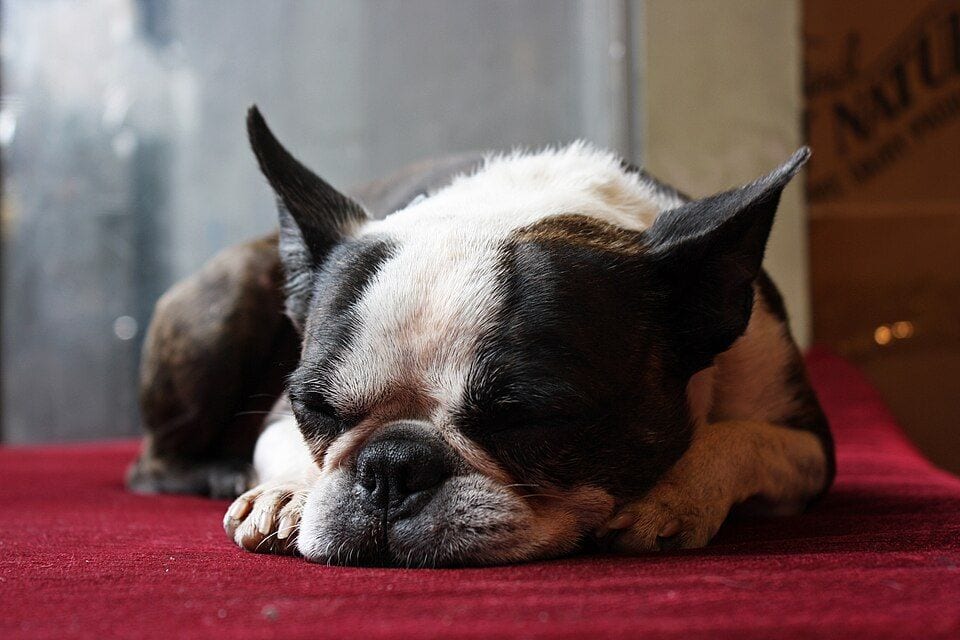
- Wikimedia Commons photo: Boston Terrier snoozing on a red rug (Photo: istolethetv, CC BY 2.0)
Log in to comment
No comments yet. Be the first.