Beagle: Temperament, Size, Care, Health & Buying Guide
- The Beagle is a British hound; the modern breed was developed around 1830 from Reverend Phillip Honeywood's pack in Essex.
- Queen Elizabeth I kept "pocket" Beagles standing just 8 to 9 inches tall, though that specific line has since died out.
- The AKC recognizes two sizes: under 13 inches (under 20 lbs) and 13–15 inches (20–30 lbs); they live 10–15 years.
- Beagles are pack dogs: they love company, dislike being alone, and must always be walked on a leash due to their powerful sense of smell.
- Thanks to their exceptional noses, Beagles often work in airports searching for prohibited food and agricultural products.
- The Beagle: A Scenthound for Foot Hunters
- Appearance: Small but "Big for Their Inches"
- Temperament: A Merry Pack Dog with a Persistent Nose
- Health and Weight
- Care: Leashes, Fences, and Plenty of Exercise
- The Beagle and Other Small Hounds
- The Beagle is Perfect for a Friendly Family with Time and a Fence
- How to Choose a Beagle Puppy
This article is part of the 77.today dog breeds guide, prepared by the 77.today editors from the sources listed at the end.
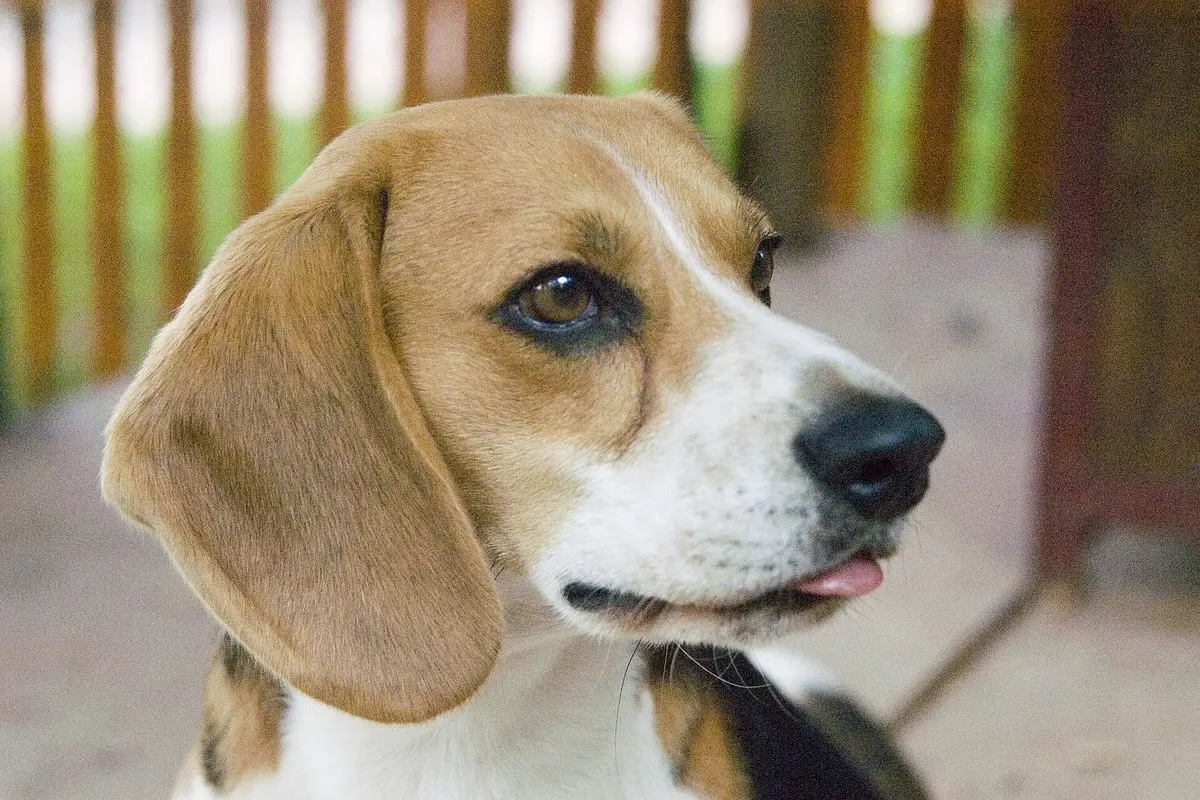
The Beagle is a dog whose large brown eyes and long, floppy ears are hard to resist. The AKC describes them as an excellent hunting dog, a loyal companion, and a merry, easygoing family member. Beagles were bred to hunt in packs, so they enjoy company and generally get along with everyone. However, beneath that adorable face lies a persistent hound whose nose can lead them far astray. In this dog breed guide profile, you will find the Beagle's origins, appearance, temperament, care, and health.
| Origin | Great Britain |
|---|---|
| FCI Group | Group 6 – Scenthounds and related breeds (No. 161) |
| Height | 13–15.5 inches (FCI); AKC – under 13 inches or 13–15 inches |
| Weight | about 20–30 lbs |
| Coat | Short, dense, double coat |
| Colors | Tricolor, red and white, lemon, and other hound colors |
| Lifespan | 10–15 years |
| Temperament | Merry, friendly, curious, persistent |
| Working Trial | Yes – required under the FCI standard |
The Beagle: A Scenthound for Foot Hunters
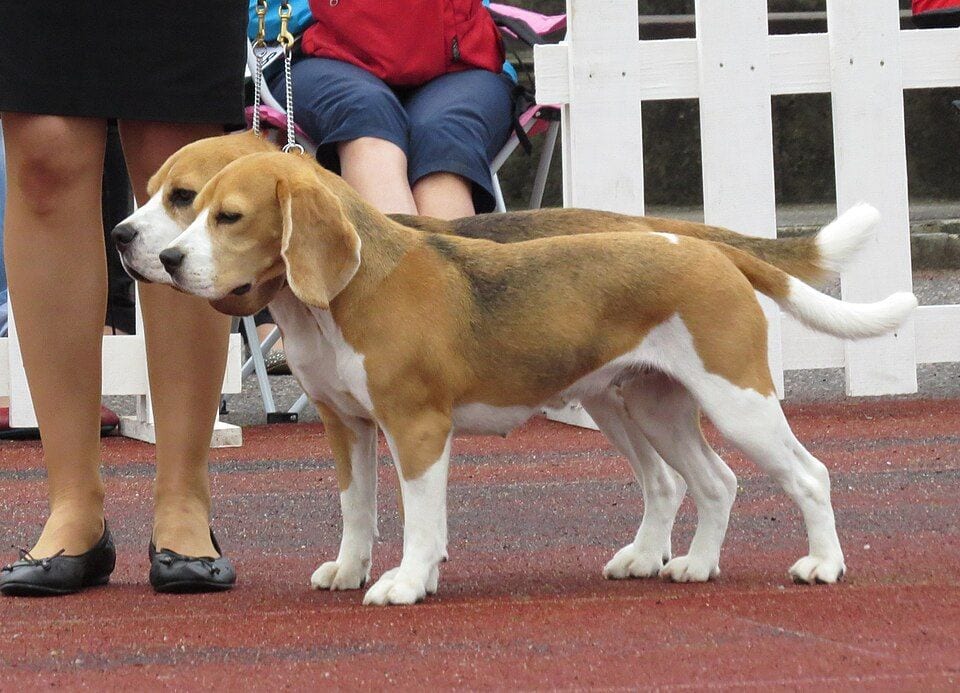
The exact origins of the Beagle are unclear, and even the origin of the name is debated: some link it to the Gaelic word beag ("little"), while others trace it to a French term describing the sound hounds make while hunting. Small hounds were called "beagles" in England as early as the Middle Ages. Edward II and Henry VII kept packs of "glove Beagles," and Queen Elizabeth I kept "pocket" Beagles that stood just 8 to 9 inches tall and could ride in saddlebags during a hunt. She called them her "singing Beagles" and would let them run loose among the plates at royal banquets. This tiny line eventually died out.
In the 18th century, two breeds were primarily used to hunt rabbits and hares: the large, slow, but keen-nosed Southern Hound and the faster North Country Beagle. In the 1830s, Reverend Phillip Honeywood established a Beagle pack in Essex that is widely considered the foundation of the modern breed, while Thomas Johnson refined the breed to ensure the dogs were both attractive and capable hunters. The AKC emphasizes the Beagle's historical role as a "foot hound": unlike Foxhounds, they could be followed on foot by hunters who did not own a horse. The AKC registered its first Beagle, named Blunder, in 1885, and the FCI officially recognized the breed in 1955.
Appearance: Small but "Big for Their Inches"
The Beagle is a sturdy, compact dog often described as being "big for their inches." The head is broad, featuring long, low-set floppy ears and large brown or hazel eyes that give them a famously pleading expression. The chest is deep, the legs are strong, and the tail is carried merrily with a white tip, which was historically bred so the dog could be easily seen in tall grass during a hunt. The coat is short, dense, and double-layered, growing thicker in the winter.
The most common colors are tricolor (black, tan, and white), red and white, and lemon. The AKC divides Beagles into two varieties based on height: under 13 inches and 13 to 15 inches, while the FCI standard specifies a height of 13 to 15.5 inches. The Beagle closely resembles the much larger Foxhound, just smaller and slower.
Temperament: A Merry Pack Dog with a Persistent Nose
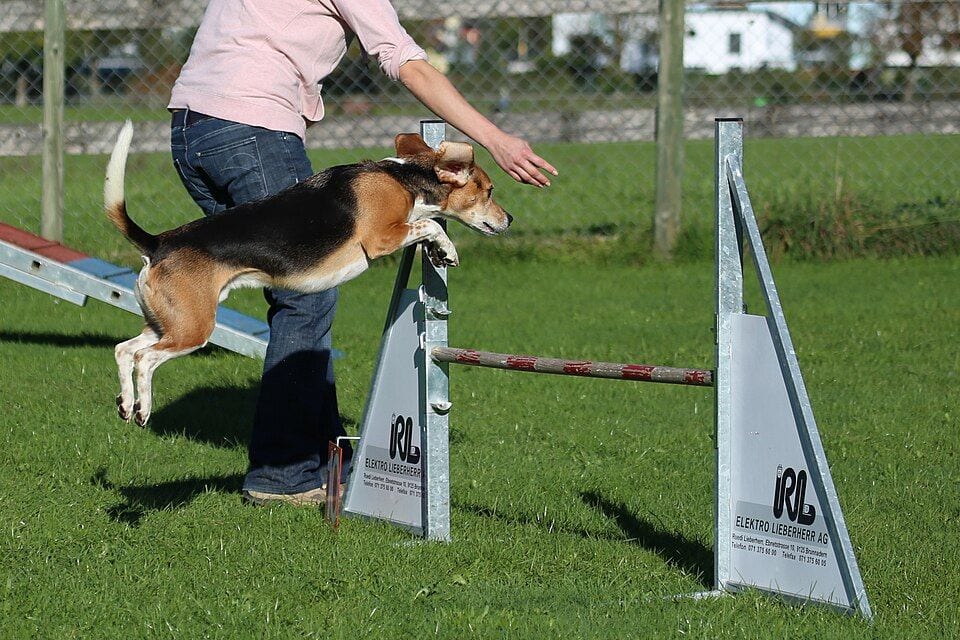
The AKC calls Beagles merry, loving, happy, and friendly—traits that make them outstanding family dogs. They are curious, intelligent, and energetic, loving nothing more than playing and spending time with their people. It is worth noting that Beagles are also highly independent and self-reliant, meaning training requires plenty of patience. Harsh methods do not work with this breed; they respond best to treats and positive reinforcement.
Because Beagles were bred to work in packs, they get bored when left alone for long periods and can become destructive. Having human company or another dog helps immensely. A Beagle's incredible sense of smell is also put to work today: thanks to their noses and friendly demeanor, Beagles are frequently employed by airport quarantine and customs services to sniff out prohibited agricultural products and food.
Health and Weight
- Hip dysplasia and luxating patella – standard screenings for breeding dogs.
- Epilepsy and thyroid disorders (hypothyroidism).
- Musladin-Lueke Syndrome (MLS) – an inherited connective tissue disorder for which a DNA test is available.
- Eye conditions and cardiac exams – recommended by the AKC.
- Obesity – Beagles gain weight very quickly without enough exercise.
Care: Leashes, Fences, and Plenty of Exercise
- Exercise. At least an hour of active exercise every day—not just being let out into the yard.
- Security. Always use a leash; backyard fences must be at least 5 feet tall and buried into the ground, as Beagles are notorious escape artists.
- Grooming. Brush once a week with a rubber hound mitt or brush; they have a heavy shedding season in the spring.
- Ears. Check their floppy ears weekly for dirt or signs of infection.
- Scent games. Hiding treats and tracking games are excellent ways to channel their natural hunting instincts.
The Beagle and Other Small Hounds
| Trait | Beagle | Dachshund | Lithuanian Hound |
|---|---|---|---|
| Height | 13–15.5 inches | low to ground | taller, up to ~24 inches |
| Hunting | rabbits, hares | burrowing animals | hares, foxes |
| Origin | Great Britain | Germany | Eastern Europe |
| Voice | loud, melodic | loud | loud, hound-like |
The Beagle is Perfect for a Friendly Family with Time and a Fence
The Beagle is a merry, compact, and kid-friendly breed, making them a very popular choice for families. However, their nose will always take precedence over their ears.
- Good fit for: Active families with children, homes that already have another dog, and people who enjoy long walks and scent-training games.
- Not a good fit for: Anyone who will leave the dog alone for long hours, lacks a securely fenced yard, or expects a dog that will reliably obey off-leash.
Beagles are prone to weight gain because they will eat at every opportunity—food must be kept out of reach, and portions must be strictly measured. Their voice is loud, so apartment neighbors might easily hear when the dog is left home alone.
How to Choose a Beagle Puppy
Ask the breeder for the parents' hip, eye, heart, and thyroid evaluations, as well as their MLS DNA test results. Ask whether the parents come from working (field) or show lines—working Beagles typically have a much stronger hunting instinct. Meet the mother to observe her temperament and see the conditions where the puppies are raised. When bringing a puppy home, ensure you receive a formal contract and health guarantee. Reputable breeders will also have their puppies microchipped and registered with a recognized kennel club like the AKC before they go to their new homes; for more details on finding a responsible breeder, see our dog breed guide introduction.
You can find other hounds and hunting dogs in the Lithuanian Hound and Dachshund profiles, or read about another friendly family dog in the Cavalier King Charles Spaniel guide.
Frequently asked questions
How much does a Beagle weigh?
The AKC recognizes two Beagle varieties: those under 13 inches tall weighing under 20 lbs, and those 13 to 15 inches tall weighing 20 to 30 lbs. The FCI standard specifies a height of 13 to 15.5 inches.
Can a Beagle be off-leash?
The AKC recommends always walking a Beagle on a leash. As a hound with a strong hunting instinct, they cannot resist a tempting scent and will run off to track it. A backyard fence should be at least 5 feet tall and buried into the ground, as Beagles love to dig.
Is a Beagle a good family dog for kids?
Yes. Beagles are merry, friendly, and loving, making them excellent family dogs. They also get along well with other animals, including cats, especially if raised with them.
Do Beagles bark a lot?
Beagles have a loud, melodic hound voice. Queen Elizabeth I even called her Beagles "singing" hounds. When left alone, Beagles often howl and bark, which is why they thrive on companionship.
What diseases should I check for when choosing a Beagle puppy?
The AKC recommends hip, heart, eye, and thyroid evaluations, as well as a DNA test for Musladin-Lueke Syndrome (MLS). The breed can also be prone to epilepsy and luxating patella (dislocated kneecaps).
Sources
- Wikipedia: Beagle
- AKC: Beagle breed profile
- FCI: Beagle breed standard (No. 161)
- Cover photo: Tricolor Beagle head (Photo: Marmo & Daniele, CC BY-SA 3.0)
- Wikimedia Commons photo: Two Beagles at a dog show (Photo: Tomasina, CC BY-SA 3.0)
- Wikimedia Commons photo: Beagle jumping an agility hurdle (Photo: A. Buser, CC BY-SA 3.0 ch)
Log in to comment
No comments yet. Be the first.