Cavalier King Charles Spaniel: Temperament, Care & Health
- The breed is named after King Charles II; during the Civil War, the king's supporters were called Cavaliers.
- In the 1920s, American Roswell Eldridge offered a prize for old-type spaniels with longer muzzles, sparking the breed's revival.
- The UK Kennel Club recognized the Cavalier as a distinct breed in 1944, the FCI in 1955, and the AKC in 1995.
- They come in four colors: Blenheim, tricolor, black and tan, and ruby, weighing 13–18 lbs.
- The biggest health risks are mitral valve heart disease and syringomyelia; health testing for parents is essential.
- The Cavalier – The Revival of King Charles II's Spaniels
- Appearance: Silk and Round Eyes
- Temperament: Gentle With Everyone
- Health: Heart and Nervous System
- Care
- The Cavalier and Other Gentle Companions
- The Cavalier Fits Almost Any Family, Provided They Aren't Left Alone Too Often
- How to Choose a Cavalier Puppy
This article is part of the 77.today dog breeds guide, prepared by the 77.today editors from the sources listed at the end.
The Cavalier King Charles Spaniel is a small, graceful dog whose ultimate weapon is the gentle, "melting" expression of its large, round eyes. The AKC calls it the best of two worlds: the attentiveness and gentle nature of a toy breed combined with the liveliness and athleticism of a sporting spaniel. The Cavalier is a great fit for both active owners and homebodies, but it requires a responsible approach to its health. In this dog breed guide profile, you will find the history, appearance, temperament, and health risks of the Cavalier King Charles Spaniel.
| Origin | Great Britain |
|---|---|
| FCI Group | Group 9 – Companion and Toy Dogs, English Toy Spaniels (No. 136) |
| Height | 12–13 inches |
| Weight | 13–18 lbs |
| Coat | medium length, silky, with feathering |
| Colors | Blenheim, tricolor, black and tan, ruby |
| Lifespan | 12–15 years (AKC); other sources say 8–12 |
| Temperament | gentle, affectionate, adaptable, friendly to everyone |
| Good for | families, seniors, apartment living |
The Cavalier – The Revival of King Charles II's Spaniels
Toy spaniels have been the dogs of European nobility since at least the Renaissance. In the 17th century, British Kings Charles I and his son Charles II were particularly fond of small black and tan spaniels, which were later named in honor of the latter. According to diarist Samuel Pepys, Charles II seemed more concerned with breeding spaniels than ruling the country. In the early 18th century, John Churchill, the 1st Duke of Marlborough, bred red and white spaniels at Blenheim Palace, which he claimed could keep up with a trotting horse—this is where the red and white color name, Blenheim, originated.
In the 19th century, toy spaniels were crossed with flat-faced Asian dogs, most likely Pugs and Japanese Chin, resulting in a domed skull and a short muzzle. The old type nearly went extinct. In 1926, wealthy American Roswell Eldridge offered a prize of 25 pounds at a dog show for the best male and female matching the "old-type" spaniels with a long muzzle and flat skull, as depicted in paintings from Charles II's era. Eldridge died before seeing the final result, but the first Cavalier club was founded in 1928, and the standard was written based on a dog named Ann's Son. World War II nearly wiped out the breed—one kennel was left with just three dogs out of 60, and the sire of most puppies born during the war was a single dog, Plantation Banjo. The UK Kennel Club recognized the Cavalier as a distinct breed on December 5, 1944, the FCI in 1955, and the AKC in 1995.
Appearance: Silk and Round Eyes
The Cavalier is a small spaniel, standing no taller than 13 inches; as an adult, it resembles a juvenile version of larger spaniel breeds. Large, round, dark eyes and a gentle expression are the most important hallmarks of the breed. The muzzle is of medium length, the skull is flat, and the ears are long, set high, and heavily feathered. The tail is typically undocked. The coat is medium length, silky, and free of curls (a slight wave is permitted), with feathering on the ears, legs, and tail.
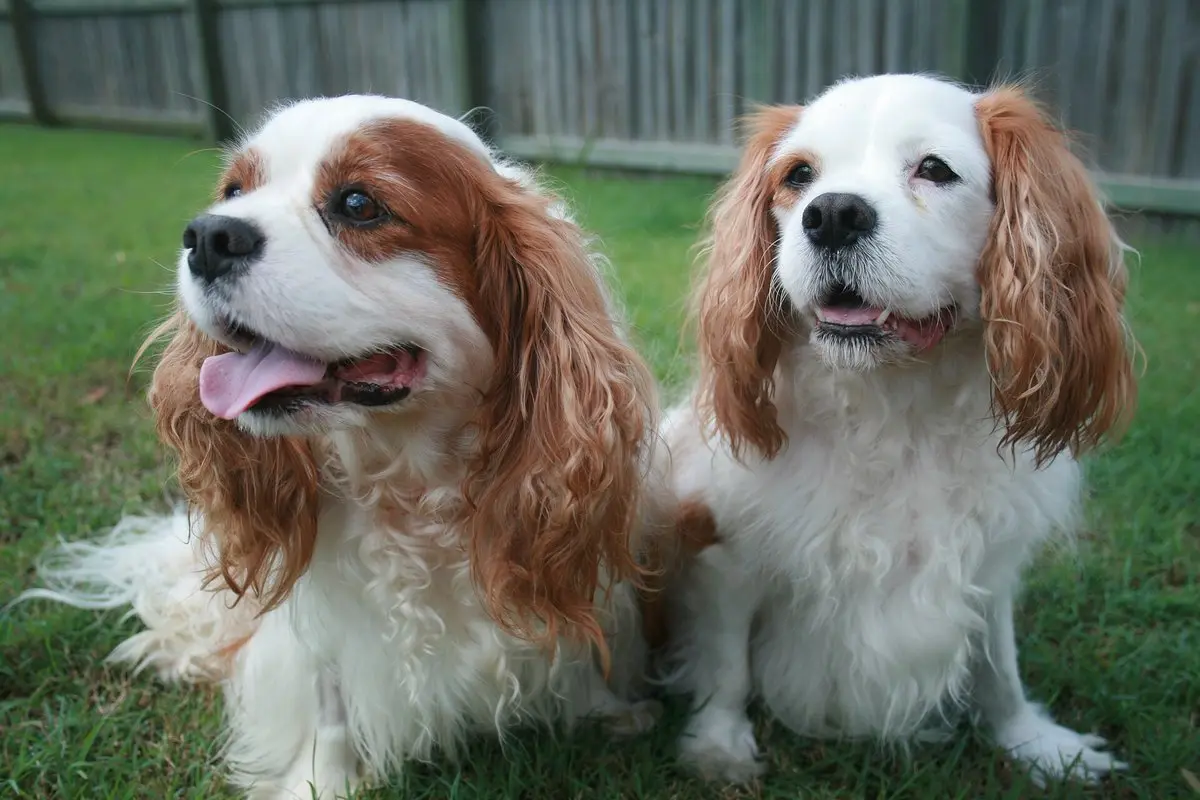
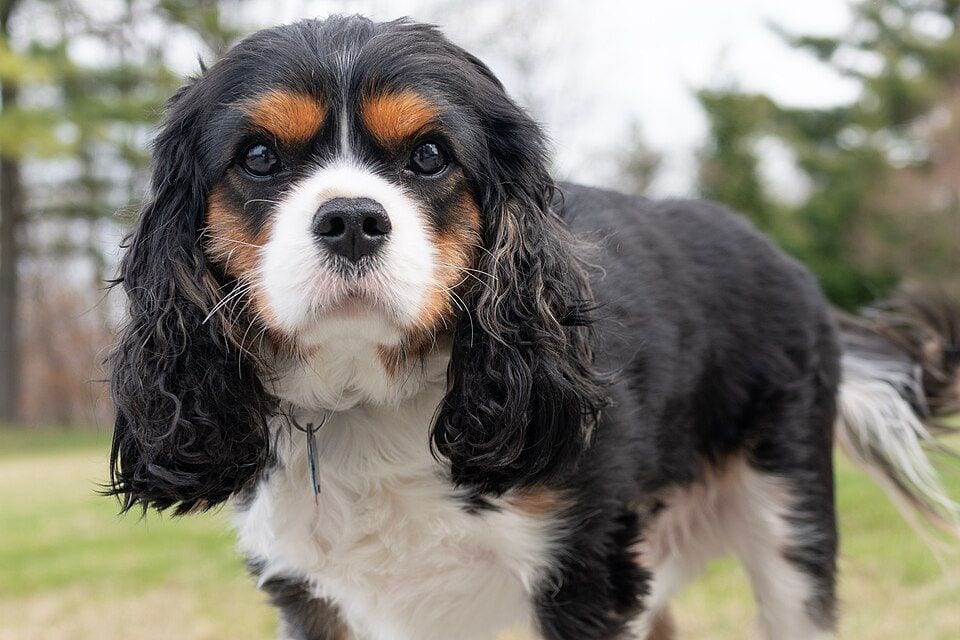
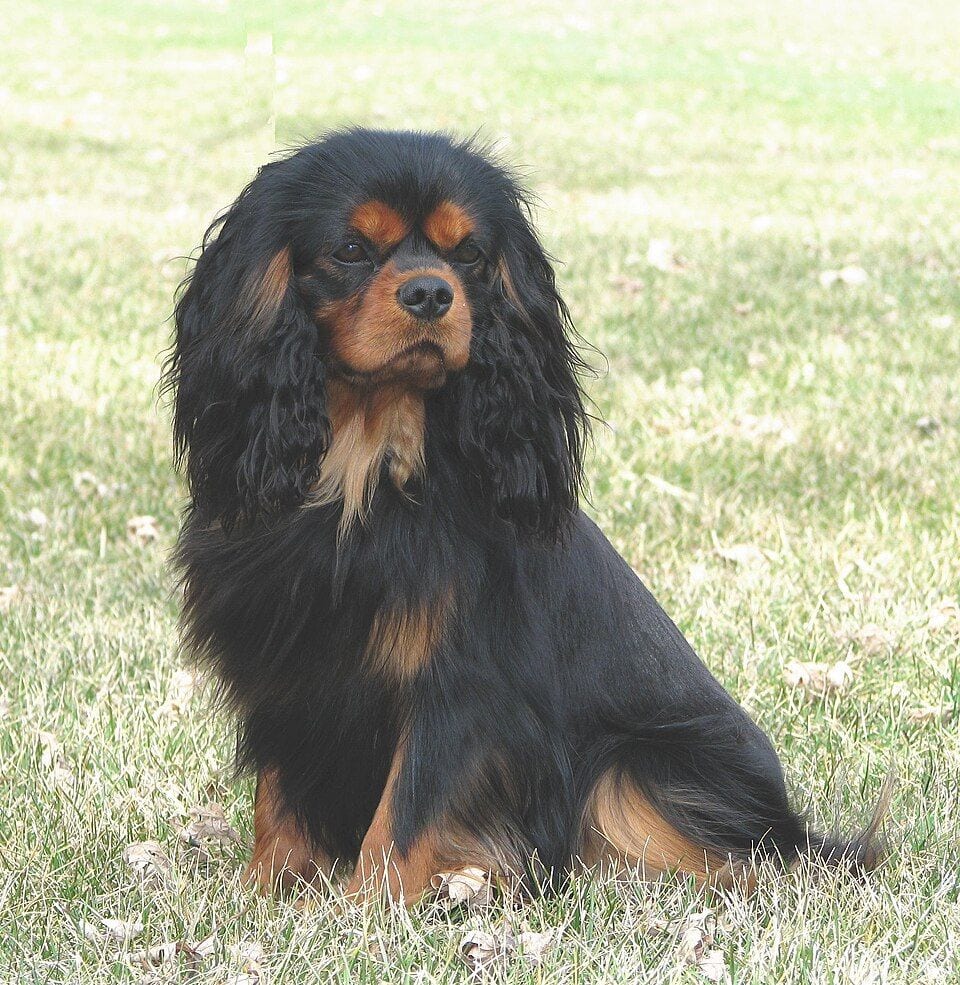
Four colors are recognized: Blenheim (chestnut markings on a white background), tricolor (black and white with tan markings), black and tan, and ruby (solid rich red). Under the FCI standard, each color is judged separately at dog shows.
Temperament: Gentle With Everyone
The AKC describes Cavaliers as sweet, gentle, and affectionate dogs that are incredibly eager to please their humans. They are friendly with strangers and other animals, and they get along wonderfully with children, making them poor guard dogs. Cavaliers are intelligent and easy to train; they excel in obedience, rally, and agility, and make excellent therapy dogs.
The Cavalier's most notable trait is adaptability: they can be energetic athletes with an active owner or couch potatoes with a relaxed one. However, their ancestors were sporting spaniels, so Cavaliers retain a strong sense of smell and a hunting instinct. The AKC advises against letting them off-leash in unfenced areas, as they might catch an interesting scent and ignore commands to return.
Health: Heart and Nervous System
- Mitral valve disease – the most common and serious issue in the breed; parents must be regularly screened by a veterinary cardiologist.
- Syringomyelia – a neurological condition where fluid-filled cavities develop within the spinal cord; screened via MRI.
- Eye conditions – retinal problems and cataracts.
- Patellar luxation, hip dysplasia, and middle ear infections.
The narrow gene pool formed after the war means that hereditary diseases are common in the breed. The AKC notes that properly health-tested Cavaliers generally live comfortably into old age.
Care
- Coat. Requires regular brushing and occasional bathing; brushing also serves as a soothing massage.
- Ears. Heavily feathered ears should be checked weekly.
- Nails. Trim at least once a month.
- Exercise. Moderate walks on a leash; a fenced yard is ideal.
- Weight. Cavaliers love to eat, and excess weight puts unnecessary strain on the heart.
The Cavalier and Other Gentle Companions
| Trait | Cavalier | English Cocker Spaniel | Shih Tzu |
|---|---|---|---|
| Weight | 13–18 lbs | 26–34 lbs | 9–16 lbs |
| Origin | Great Britain | Great Britain | China / Tibet |
| Energy | medium | high | low to medium |
| Main risk | heart | ears, eyes | breathing, eyes |
The Cavalier Fits Almost Any Family, Provided They Aren't Left Alone Too Often
The Cavalier thrives in both apartments and houses, getting along well with children, other dogs, and even cats, which is why they are frequently recommended for first-time owners.
- Good for: families with children, seniors, beginners, and therapy or visitation programs.
- Not for: those who are away from home for long hours, people looking for a guard dog, or anyone unwilling to commit to weekly brushing and ear cleaning.
The biggest concern with a Cavalier is health, so when choosing a puppy, it is worth paying more attention to the parents' heart clearances than the color of their coat. Annual check-ups with a veterinary cardiologist for adult dogs help catch disease early.
How to Choose a Cavalier Puppy
The most important question for a breeder is when and how the parents' hearts were tested, and whether they were screened for syringomyelia. A responsible breeder will not show puppies from parents that are too young and will gladly provide cardiologist and MRI reports, as well as eye clearances. Ask about the lifespan and health history of the puppy's grandparents. When buying a Cavalier puppy in the US, check that the breeder provides AKC registration paperwork and proof of microchipping, which is highly recommended by veterinarians for your pet's safety. Local ordinances regarding pet registration vary by city and state, so be sure to check your local laws; you can find more general rules in our guide introduction.
You can find other spaniels and companions in the English Cocker Spaniel, Shih Tzu, and Poodle profiles, and learn about Cavalier and Poodle crosses in our Poodle mixes guide.
Frequently asked questions
What colors do Cavalier King Charles Spaniels come in?
Four colors are recognized: Blenheim (chestnut and white), tricolor (black, white, and tan), black and tan, and ruby (solid rich red).
How much does a Cavalier King Charles Spaniel weigh?
According to the AKC, Cavaliers weigh 13–18 lbs and stand 12–13 inches tall at the shoulder.
What health issues are common in Cavaliers?
The AKC notes mitral valve disease, syringomyelia (a neurological condition), eye issues (retinal problems, cataracts), patellar luxation, hip dysplasia, and middle ear infections. Responsible breeders test all breeding dogs.
Is the Cavalier a good family dog?
Yes. Cavaliers are gentle, affectionate, friendly with strangers and other animals, and get along well with children. They adapt easily to both active and quiet lifestyles.
What is the difference between a Cavalier and a King Charles Spaniel?
The King Charles Spaniel (known in the US as the English Toy Spaniel) was crossed with Asian toy dogs in the 19th century, gaining a domed skull and flatter face. The Cavalier was recreated as the old-type spaniel with a longer muzzle and flatter skull, and is generally slightly larger.
Sources
- Wikipedia: Cavalier King Charles Spaniel
- AKC: Cavalier King Charles Spaniel breed profile
- FCI: Cavalier King Charles Spaniel breed standard (No. 136)
- Cover photo: A pair of Blenheim Cavalier King Charles Spaniels (Photo: Kbwatts, CC BY-SA 4.0)
- Wikimedia Commons: Tricolor Cavalier King Charles Spaniel (Photo: Austin Kirk, CC BY 2.0)
- Wikimedia Commons: Black and tan Cavalier sitting in grass (Photo: Vanesa Eliza, CC BY-SA 4.0)
Log in to comment
No comments yet. Be the first.