Cane Corso: Temperament, Size, Care & Health
- The Cane Corso originated in Italy; in the past, they guarded farms, drove cattle, and hunted wild boar.
- By the 1960s, the breed survived only in Apulia; the current population has been restored since the 1980s.
- The FCI provisionally recognized the breed in 1996 and fully in 2007; the AKC followed in 2010.
- Males stand 24.5–27.5 inches and weigh 99–110 lbs, while females are about 1.5 inches shorter and 11 lbs lighter.
- A strong-willed guardian that requires early socialization, consistent training, and an experienced owner.
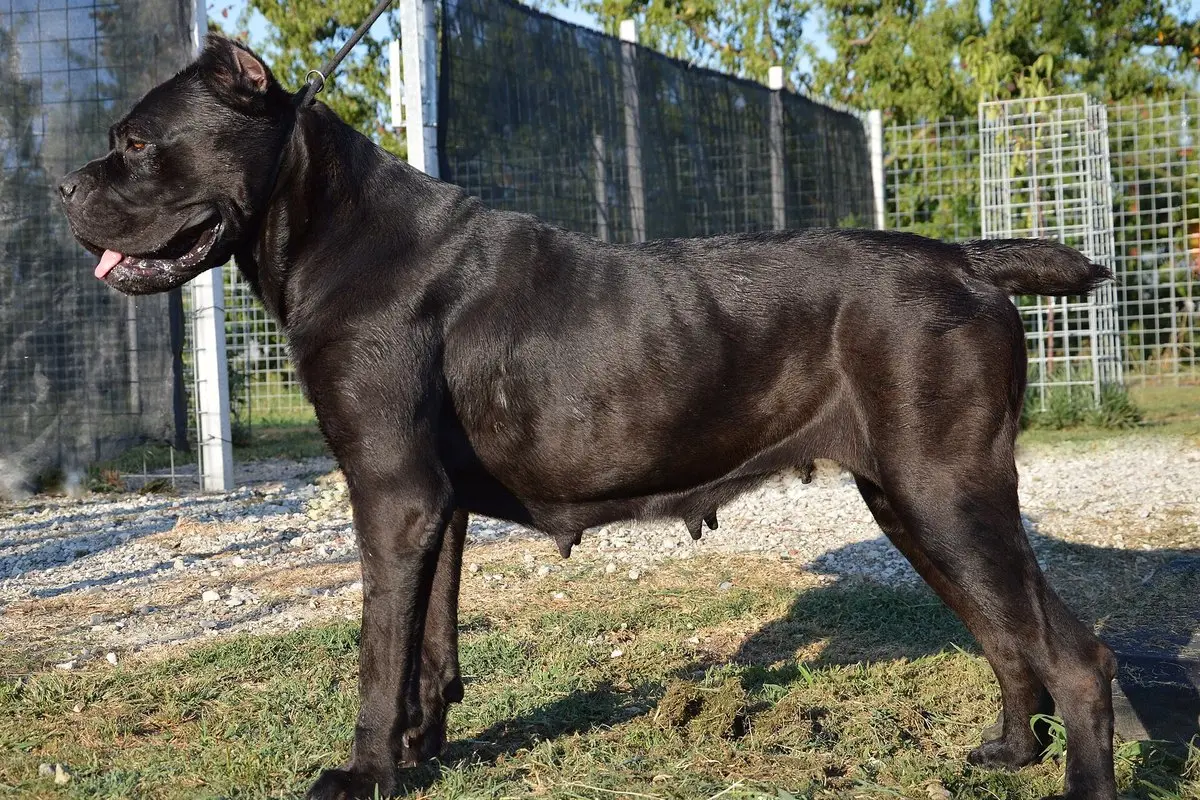
- The Cane Corso: A Roman Molosser Descendant Reborn in the 20th Century
- Appearance: A Powerful Yet Elegant Molosser
- Temperament: A Guardian That Wants to Be Near the Family
- Health: Joints, Eyes, Skin, and Stomach
- Care: Plenty of Exercise and Work
- The Cane Corso vs. Other Molossers
- What to Know Before Buying a Cane Corso Puppy
This article is part of the 77.today dog breeds guide, prepared by the 77.today editors from the sources listed at the end.
The Cane Corso is a dog whose mere appearance deters uninvited guests: a massive head, an alert gaze, rippling muscles beneath a short, stiff coat, and a weight that often exceeds 100 lbs. The AKC calls them a peerless protector, and the breed's name is derived from a Latin word meaning guardian or protector dog. Yet behind this imposing exterior lies a devoted family dog that needs a firm but fair hand. In this dog breed guide profile, you will find the origins, appearance, temperament, health, and advice for future owners of the Cane Corso.
| Origin | Italy (survived in Apulia) |
|---|---|
| FCI Group | Group 2: Pinscher and Schnauzer, Molossoid and Swiss Mountain and Cattledogs (No. 343) |
| Height | Males 24.5–27.5 inches, females about 1.5 inches shorter |
| Weight | Males 99–110 lbs, females about 88–99 lbs |
| Coat | Short, dense, shiny, with an undercoat |
| Colors | Black, grays, fawns, dark wheat; brindle |
| Lifespan | 9–12 years |
| Temperament | Alert, loyal, independent, protective |
| Working Trial | Yes – the FCI requires a working trial |
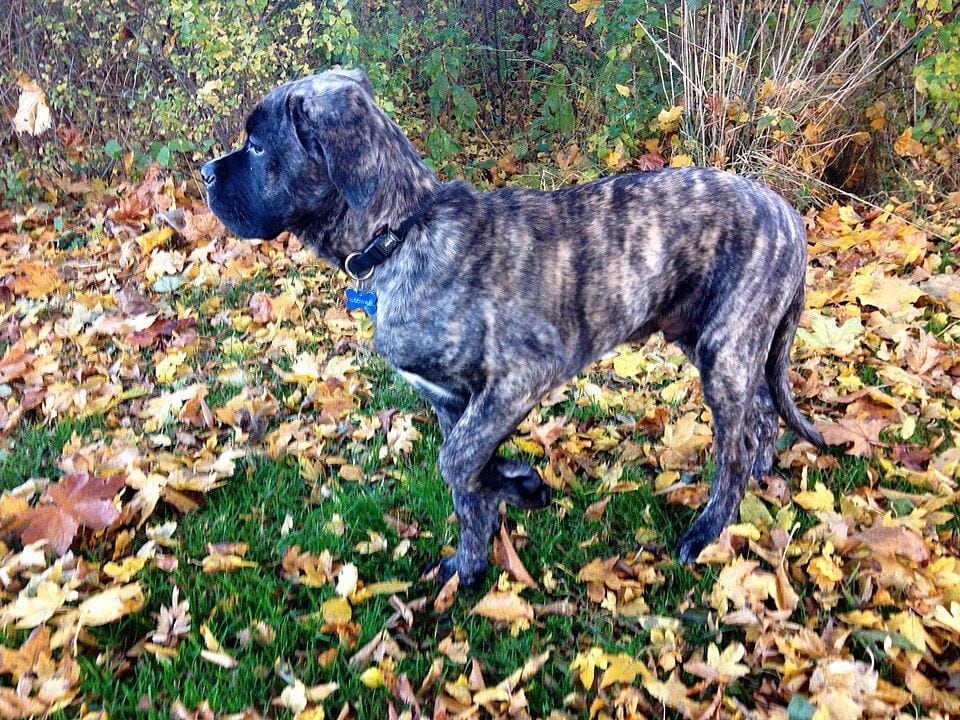
The Cane Corso: A Roman Molosser Descendant Reborn in the 20th Century
The Cane Corso belongs to the Molosser family—large, mastiff-type guardians named after the ancient Greek Molossoi tribe. According to the AKC, Roman legions conquering the Greek islands brought these dogs back to Italy and crossed them with native breeds. These dogs gave rise to both the ancestors of the Cane Corso and their larger relative, the Neapolitan Mastiff. After the fall of the Western Roman Empire, Corsos became rural workers: hunting wild boar, driving cattle, and guarding farms and henhouses.
The FCI standard notes that Cane Corsos were once widespread throughout the Italian Peninsula, but by the 20th century, they survived only in Apulia, Southern Italy. When the sharecropping (mezzadria) system collapsed in the 1960s, the dogs nearly disappeared. Around 1980, Italian enthusiasts began planned breeding from a few surviving dogs, and in 1983, they founded the breed society Società Amatori Cane Corso. The Italian Kennel Club (ENCI) recognized the breed in 1994, the FCI provisionally in 1996, and fully in 2007. The first Corso was imported to the US in 1988, and the AKC recognized the breed in 2010. In Italy, about 3,000 to 4,250 Cane Corsos were registered annually between 2011 and 2019.
Appearance: A Powerful Yet Elegant Molosser
The Cane Corso is a large, strong, and muscular dog, but never clunky; the AKC compares their movement to feline grace. The head is massive, with its length slightly exceeding one-third of the height at the withers, a pronounced stop, and a flat skull top. The eyes are oval, set wide apart, and as dark as possible. The coat is short, dense, and shiny, with an undercoat whose thickness depends on the climate.
The standard allows black, several shades of gray (lead, light gray, slate), fawn colors ranging from light fawn to stag red, and dark wheat, as well as brindle variations. Small white markings on the chest, toes, or nose are tolerated. While ear cropping and tail docking have historically been common for the breed, these practices are becoming increasingly controversial. In the US, the AKC standard still mentions cropped ears and docked tails, but many owners and breeders are now opting to leave their dogs natural, and several veterinary associations strongly oppose cosmetic surgeries.

Temperament: A Guardian That Wants to Be Near the Family
The AKC describes Cane Corsos as intelligent, loyal, eager to please, and versatile, but also assertive and stubborn dogs that can "take over" from an inexperienced owner if not properly trained. The breed exhibits the calm demeanor of a professional bodyguard: the Corso observes, evaluates, and reacts only when they believe it is necessary. In the FCI working trial, the dog must remain calm with non-aggressive strangers, indifferent to gunfire, and resolutely defend their owner from an attacker.
With their people, the Cane Corso is affectionate and attached, and they do not like being left alone for long periods. Because this is a large and powerful guardian, early socialization with people, children, and other dogs is essential, and obedience training must continue through adolescence. Corsos learn well if the training is consistent and praise-based.
Health: Joints, Eyes, Skin, and Stomach
- Hip and elbow dysplasia, patellar luxation – parents should have their joints evaluated by X-ray (such as OFA or PennHIP).
- Eyelid disorders – outward rolling (ectropion) and inward rolling (entropion) of the eyelids, as well as cherry eye (prolapse of the third eyelid gland).
- Demodectic mange – a mite-induced skin condition to which the breed is more susceptible.
- Idiopathic epilepsy and thyroid dysfunction.
- Gastric dilatation-volvulus (bloat) – a high risk for deep-chested dogs.
A 2017 study covering 232 Cane Corsos from 25 countries found an average lifespan of 9.3 years; black brindle dogs lived the longest.
Care: Plenty of Exercise and Work
- Exercise. The AKC recommends at least a mile of brisk walking or running in the morning and evening; hiking and biking are also great options.
- Grooming. Brush once a week with a rubber curry brush, and daily during shedding seasons.
- Nutrition. High-quality food formulated for large breeds, split into multiple meals a day, with a rest period after eating to prevent bloat.
- Activities. Obedience, tracking, protection sports—the Corso is happiest when they have a job to do.
The Cane Corso vs. Other Molossers
| Trait | Cane Corso | Rottweiler | Boxer |
|---|---|---|---|
| Weight (males) | 99–110 lbs | 110–132 lbs | 65–80 lbs |
| Origin | Italy | Germany | Germany |
| Guarding instinct | Very strong | Strong | Moderate |
| Good for beginners | No | No | Conditionally |
What to Know Before Buying a Cane Corso Puppy
The popularity of large guardians attracts many backyard breeders, so only choose a reputable breeder whose dogs have AKC (or equivalent) registration, hip and elbow health clearances, and ideally, working titles. Meet the mother and evaluate her temperament—fearful or uncontrollably aggressive parents are a serious red flag. While there is no federal ban on the breed, local breed-specific legislation (BSL) and homeowners insurance policies may restrict them, so always check your local ordinances. A responsible breeder will also ensure the puppy is microchipped and has received their initial vaccinations before sending them to their new home. We discuss general ownership rules and finding ethical breeders in our guide introduction.
You can find other large guardians in the profiles for the Rottweiler, Central Asian Shepherd Dog, and Caucasian Shepherd Dog, or a more outgoing Molosser in the Boxer description.
Frequently asked questions
How much does a Cane Corso weigh?
Under the FCI standard, males weigh 99–110 lbs, and females weigh about 11 lbs less. Male height at the withers is 24.5–27.5 inches, with females being about 1.5 inches shorter. The AKC does not specify weight limits, only requiring that weight be proportionate to height.
Is a Cane Corso a good first dog?
Usually not. This is a large, powerful, and independent guardian that can become dominant if not consistently trained. The AKC emphasizes that early socialization and obedience classes are absolutely essential for this breed.
What is the lifespan of a Cane Corso?
The AKC lists their lifespan as 9–12 years. In a 2017 study of 232 dogs from 25 countries, the average lifespan was 9.3 years, with black brindle dogs living the longest at an average of 10.3 years.
Are Cane Corsos banned or restricted in the US?
There is no federal ban, but breed-specific legislation (BSL) varies by city and state, and some local ordinances may restrict them. Additionally, many homeowners and renters insurance policies have breed restrictions that may include the Cane Corso, so it is crucial to check local laws and your insurance policy before bringing one home.
What colors do Cane Corsos come in?
The standard allows black, lead gray, light gray, slate gray, light and dark fawn, stag red, and dark wheat, as well as brindle variations. Small white patches on the chest, toes, or the bridge of the nose are acceptable.
Sources
- Wikipedia: Cane Corso
- AKC: Cane Corso breed profile
- FCI: Italian Cane Corso breed standard (No. 343)
- Cover photo: Black female Cane Corso standing on grass (Photo: Topmoretta, CC BY-SA 4.0)
- Wikimedia Commons photo: Brindle Cane Corso among autumn leaves (Photo: Diesel40, CC BY-SA 3.0)
- Wikimedia Commons photo: Head of a young gray Cane Corso with light eyes (Photo: Bontempi1953, CC BY-SA 4.0)



Log in to comment
No comments yet. Be the first.