Rottweiler: Temperament, Size, Care & Health
- The Rottweiler's ancestors were cattle drovers for Roman legions; the breed is named after the old free city of Rottweil in Germany.
- In German, they were called "Rottweiler Metzgerhund" (Rottweil butchers' dogs) because they drove cattle and pulled meat carts.
- In 1921, German clubs merged to form the ADRK, which is recognized worldwide as the breed's home club.
- Under the FCI standard, males stand 24–27 inches and females 22–25 inches; average weight is about 110 lbs for males and 95 lbs for females.
- A well-socialized Rottweiler is calm and confident, but an untrained one can be dangerous.
This article is part of the 77.today dog breeds guide, prepared by the 77.today editors from the sources listed at the end.
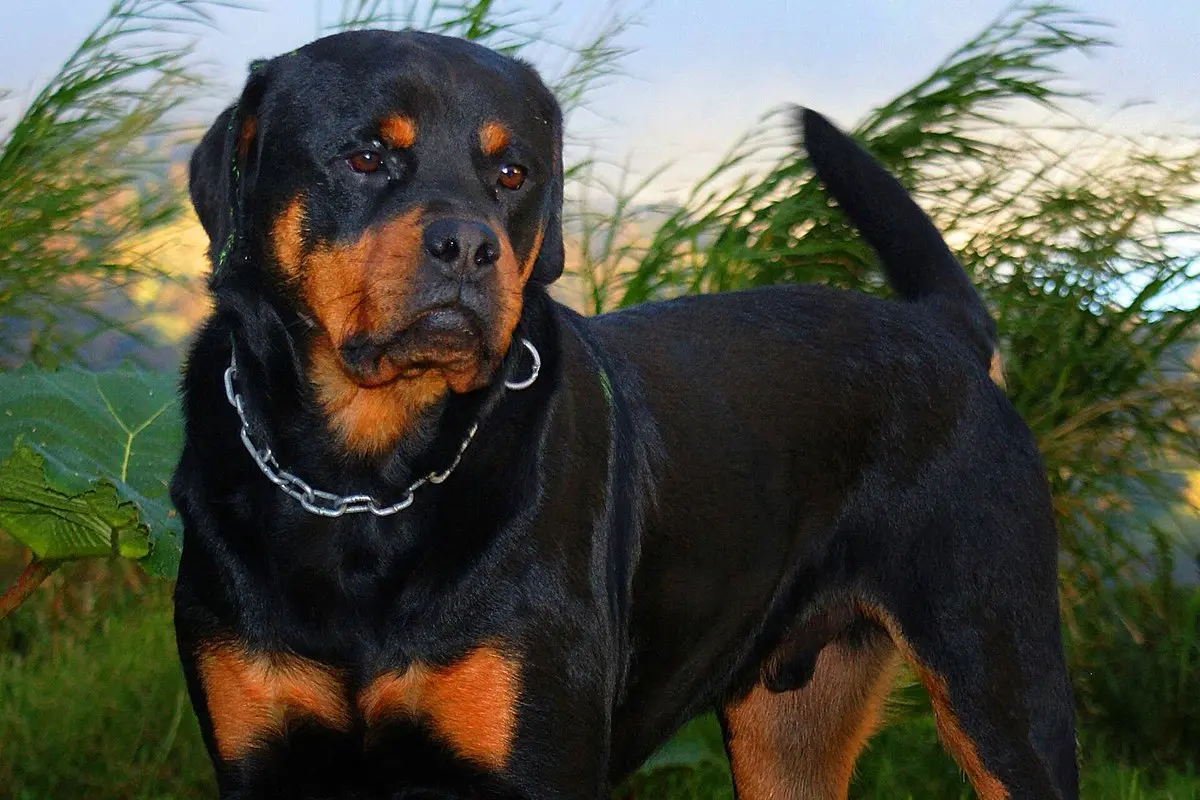
The Rottweiler is a robust, muscular dog with a glossy black coat and distinct rust markings. According to the AKC, within the family circle, they are gentle playmates and protectors, while observing the outside world with a self-assured aloofness. The FCI standard notes that breeders aim for a dog of immense strength whose powerful appearance does not lack nobility, making it exceptionally suited as a companion, service, rescue, and working dog. In our dog breed catalog, you will find the Rottweiler's history, appearance, temperament, and health tips.
| Origin | Germany (Rottweil, Württemberg) |
|---|---|
| FCI Group | Group 2 – Pinscher and Schnauzer, Molossoid breeds (No. 147) |
| Height | males 24–27 inches, females 22–25 inches |
| Weight | average 110 lbs for males, 95 lbs for females |
| Coat | straight, coarse, medium length, undercoat on neck and thighs |
| Color | black with distinct rust or mahogany markings |
| Lifespan | 9–10 years |
| Temperament | calm, confident, courageous, loyal |
| Working Trial | yes – FCI requires a working trial |
The Rottweiler: A Dog of Roman Legions and Butchers
The FCI standard considers the Rottweiler one of the oldest surviving breeds, with origins dating back to Roman times. The AKC explains that as Roman legions marched into distant lands, they drove herds of cattle as food supplies. To guard and drive these herds, they needed sturdy, resilient dogs bred from Asian mastiff-type dogs. These dogs crossed the Alps with the legions, protecting both people and cattle. In the region of Rottweil, they interbred with local dogs. Their main job became driving and guarding cattle, as well as defending their owners and their property.
The breed took its name from the old free city of Rottweil and was known as the "Rottweil butchers' dog" (Rottweiler Metzgerhund): butchers bred them strictly for their working abilities. The dogs drove cattle to market, protected them from bandits, and pulled meat carts. In the 19th century, cattle began to be transported by trains, and Rottweilers lost their jobs. However, the growing demand for police dogs before World War I revived interest in the breed. During both World Wars, they served as messenger, ambulance, draft, and guard dogs. Two German clubs were founded in 1914 and 1915, and in 1921, they merged into the ADRK—the globally recognized home club for the breed. The AKC recognized the breed in 1931, and the FCI in 1955.
Appearance: Strength and Nobility
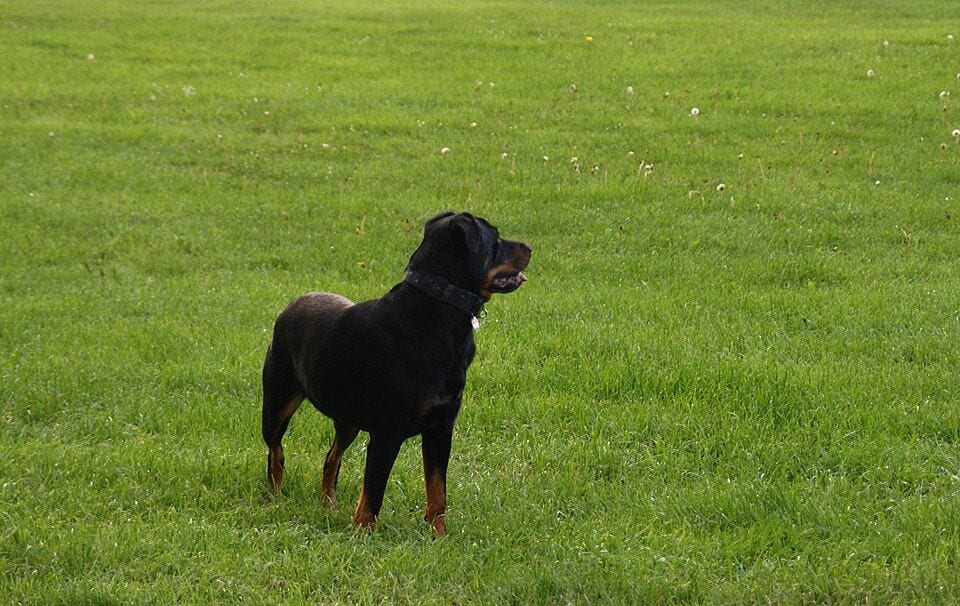
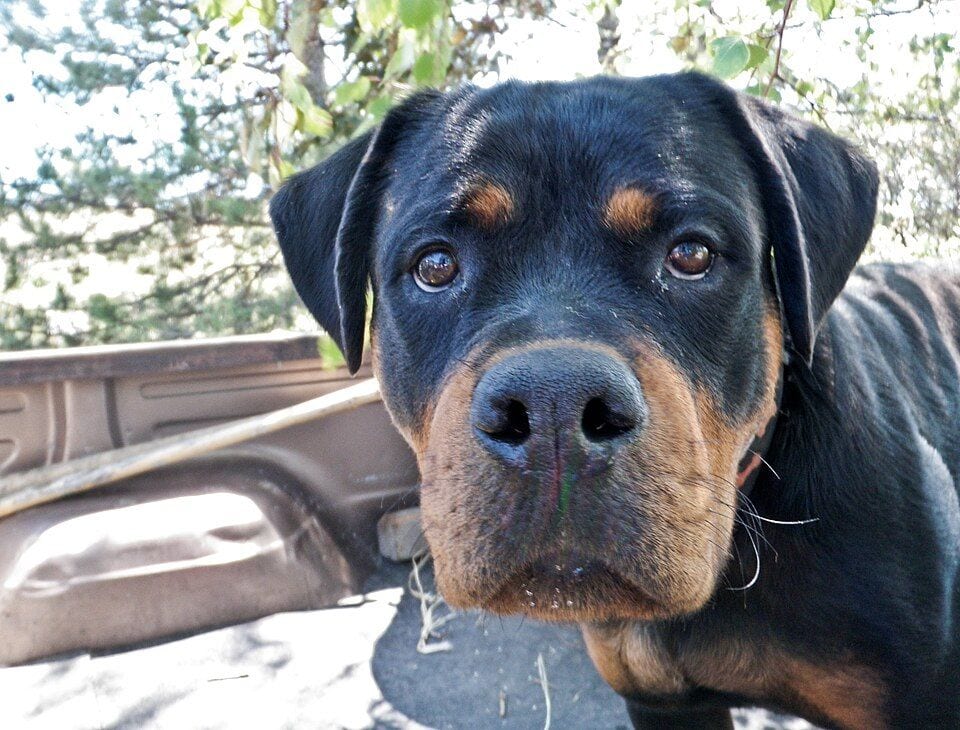
The Rottweiler is a medium-to-large, sturdy, and powerful dog with a broad chest reaching the elbows and a straight back. The skull is of medium length, relatively broad between the ears, and the nose is broad and always black. The eyes are warm, dark brown, with a calm, intelligent, and fearless expression. The ears are pendant and lie flat against the head. The coat is straight, coarse, medium-length, and lies flat, with an undercoat present on the neck and thighs.
The color is black with clearly defined markings of a rich tan or rust on the cheeks, muzzle, chest, legs, and above the eyes; on the chest, the markings form two inverted triangles. Rottweilers are born with tails. Historically, they were docked because they frequently broke while guarding livestock, but this practice is now banned in many European countries, and the latest FCI standard no longer requires a docked tail. In the US, the AKC standard still includes tail docking, though natural tails are becoming more common.
Temperament: A Calm Guardian That Needs a Leader
The AKC emphasizes that a well-bred and properly raised Rottweiler is calm and confident, courageous but not unduly aggressive. Their aloofness toward strangers hides a playful and even silly side that their family loves—sometimes they forget they aren't lap dogs and try to snuggle up on your knees. They rarely bark without cause: males typically observe their surroundings quietly, and when faced with a threat, they bristle and grow quiet.
The Rottweiler is a "people dog" that does not do well in isolation. Leadership, puppy socialization, basic obedience classes, and living indoors with the family are key to raising a well-mannered dog. The breed is highly intelligent, learns easily, and wants to please, though some individuals can be stubborn. Therefore, discipline must be consistent, fair, and firm, but never harsh. An untrained or poorly trained Rottweiler can be destructive and dangerous.
Health
- Hip dysplasia – X-ray evaluations are necessary before breeding.
- Eye and heart conditions – clearances by veterinary ophthalmologists and cardiologists are recommended.
- Cancer – occurs in the breed; the AKC notes studies linking longevity to careful vaccination protocols and delaying spaying/neutering.
- Weight – excess weight puts strain on the joints, making daily exercise essential.
Care
- Coat. Brush once a week; they shed more heavily in the spring and fall.
- Nails and teeth. Maintain weekly; a nail grinder works well for their strong nails.
- Exercise. Daily walks, trotting, and swimming; Rottweilers easily learn to pull carts and excel in tracking, herding, and obedience sports.
The Rottweiler and Other Guardians
| Trait | Rottweiler | Doberman Pinscher | Cane Corso |
|---|---|---|---|
| Weight (males) | about 110 lbs | 90–100 lbs | 100–110 lbs |
| Origin | Germany | Germany | Italy |
| Coat | short with undercoat | short without undercoat | short with undercoat |
| Lifespan | 9–10 yrs | 10–12 yrs | 9–12 yrs |
The Rottweiler is Suited for a Responsible Owner Who Will Keep Them Indoors
The Rottweiler is powerful, intelligent, and loyal, making a well-raised dog a calm family member. However, their sheer strength requires more effort than the average owner might expect.
- Good fit for: Experienced dog owners, families who will keep the dog indoors with them, and people interested in obedience or tracking sports.
- Not a good fit for: Those who plan to keep the dog chained or in a kennel, are unwilling to attend training classes, or cannot physically manage a 110-pound dog.
In the US, while Rottweilers are popular and loving pets, they are sometimes subject to breed-specific legislation (BSL) or homeowners and renters insurance restrictions. It is always a good idea to check your local city and state ordinances, as well as your insurance policy, before bringing one home or traveling.
How to Choose a Rottweiler Puppy
Choose a reputable breeder whose dogs are registered with a recognized organization like the AKC, and who provides health clearances for hips, eyes, and hearts, along with working titles if possible. Meet the parents to ensure they have a calm and confident temperament, rather than being fearful or uncontrollably aggressive. Be prepared to enroll in puppy socialization classes from day one. Avoid puppy mills and pet stores, and ensure your new puppy is microchipped, as recommended by veterinarians, and registered with a reputable database. We cover all the rules for finding a responsible breeder in our guide introduction.
You can find other guardians in the profiles for the Doberman Pinscher, Cane Corso, and German Shepherd, or a friendlier German molosser in the Boxer's description.
Frequently asked questions
How much does a Rottweiler weigh?
Under the FCI standard, males stand 24–27 inches and females 22–25 inches, with an average weight of about 110 lbs for males and 95 lbs for females. The AKC notes a broader weight range: 95–135 lbs for males and 80–100 lbs for females.
Are Rottweilers dangerous?
A well-raised, trained, and socialized Rottweiler is a reliable and loving companion, but an untrained or poorly trained dog can be destructive and dangerous. While not inherently aggressive, the breed is sometimes subject to local breed-specific legislation or homeowners insurance restrictions in the US.
Are Rottweilers' tails docked?
Historically, tails were docked, but this practice is now banned in many European countries, and the latest FCI standard no longer requires a docked tail. In the US, tail docking is still a common practice and is permitted under the AKC breed standard, though some breeders and owners are increasingly opting to leave the tail natural.
Is a Rottweiler a good family dog?
Yes, if the dog is properly socialized and trained. They love children, are loyal, and eager to please. The AKC notes that within the family circle, the Rottweiler is a gentle playmate and a devoted protector.
What is the lifespan of a Rottweiler?
The AKC states they live 9–10 years. It is important to choose a puppy from parents who have had their hips, eyes, and hearts tested.
Sources
- Wikipedia: Rottweiler
- AKC (American Kennel Club): Rottweiler breed profile
- FCI (Fédération Cynologique Internationale): Rottweiler breed standard (No. 147)
- Cover photo: Rottweiler standing among reeds (Photo: Julián Monge-Nájera, CC BY-SA 4.0)
- Wikimedia Commons photo: Rottweiler standing in a meadow (Photo: Dg-505, CC BY 3.0)
- Wikimedia Commons photo: Head of a young Rottweiler (Photo: Michael (a.k.a. moik) McCullough from Klamath Falls, Oregon, USA, CC BY 2.0)
Log in to comment
No comments yet. Be the first.