English Bulldog: Temperament, Size, Care & Health
- Bulldog ancestors were used for bull-baiting; after England banned blood sports in 1835, the breed was transformed into a companion.
- The Bulldog Club was founded in 1875, making it the oldest single-breed dog club in the world; the AKC recognized the breed in 1886.
- Males weigh about 50–55 lbs, females 40–50 lbs; height is 14–15 inches; lifespan is 8–10 years.
- Their short snout causes breathing difficulties and heat sensitivity; some countries like the Netherlands have even banned breeding dogs with overly short muzzles.
- The Bulldog is calm, gentle, and especially fond of children, but they cannot swim and must never be left in the heat.
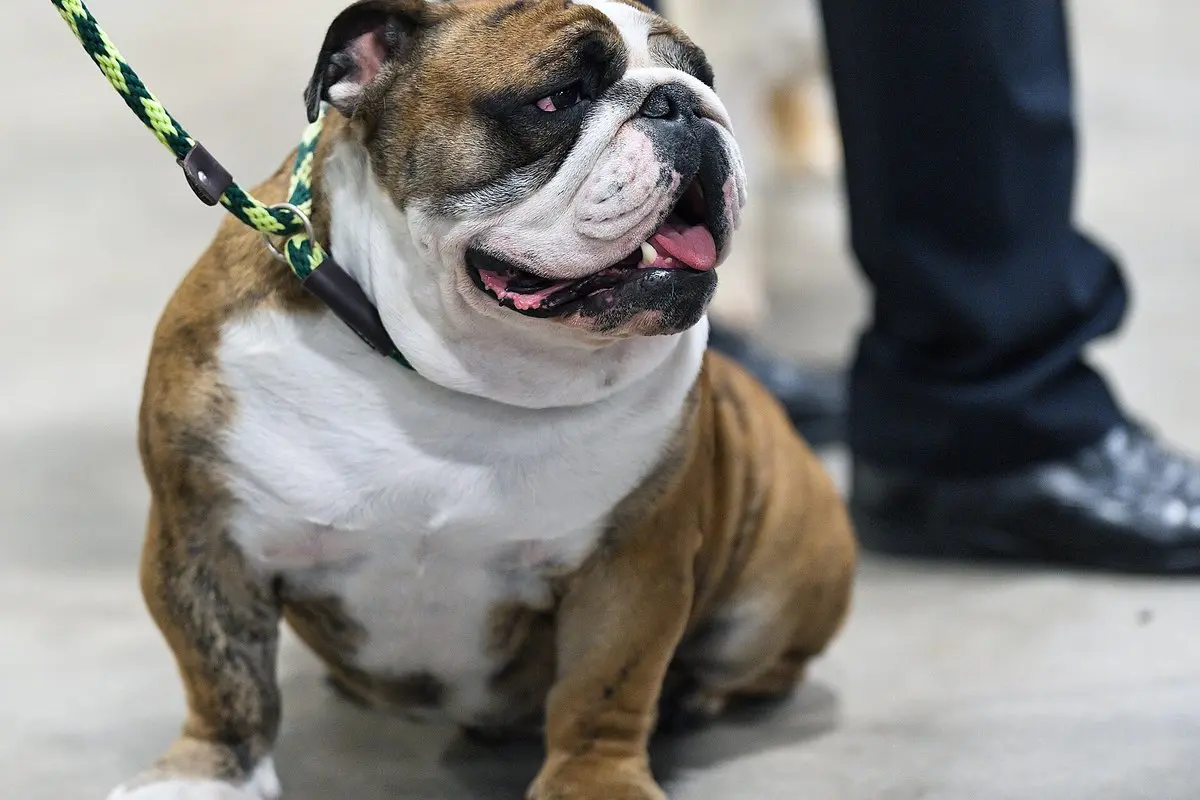
- The English Bulldog: From Bull-Baiting to the Couch
- Appearance: A Broad Head and Stocky Body
- Temperament: Peaceful and Dignified
- Health: Heat, Breathing, and Wrinkles
- Care
- The English Bulldog and Related Breeds
- The English Bulldog is Perfect for a Quiet Life and a Cool Home
- How to Choose a Healthy English Bulldog Puppy
This article is part of the 77.today dog breeds guide, prepared by the 77.today editors from the sources listed at the end.
You cannot mistake the English Bulldog for any other breed: loose wrinkled skin on the head, a furrowed brow, a pushed-in nose, small ears, an undershot jaw with hanging chops, and a distinctive rolling gait. The AKC describes them as a sweet but courageous, friendly but dignified "sourmug" whose face has become a universal symbol of courage and tenacity. Today, the Bulldog is a calm companion, though their unique appearance comes with health costs. In this dog breed guide profile, you will find the history, appearance, temperament, and health tips for the English Bulldog.
| Origin | Great Britain |
|---|---|
| FCI Group | Group 2: Molossoid breeds (No. 149) / AKC: Non-Sporting Group |
| Height | 14–15 inches |
| Weight | Males about 50–55 lbs, females 40–50 lbs |
| Coat | Short, smooth, glossy |
| Colors | Red, fawn, white, brindle, piebald |
| Lifespan | 8–10 years |
| Temperament | Calm, gentle, loyal, courageous |
| Suited for | Apartments and city living; not suited for heat or water |
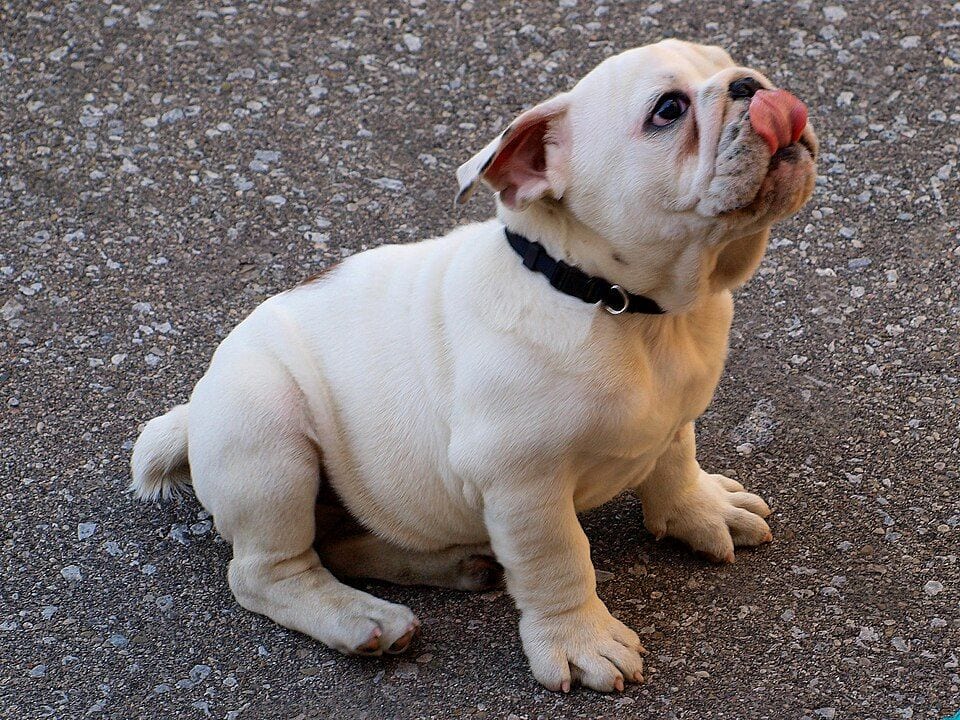
The English Bulldog: From Bull-Baiting to the Couch
The first known mention of the word "bulldog" was in a letter from 1631–1632. The ancestors of the Bulldog were used for the cruel sport of bull-baiting: dogs were set upon a tethered bull, and the winner was the one that grabbed the bull by the nose and pinned it to the ground. Over centuries, these dogs developed a stocky body, a massive head and jaws, and a ferocious temperament. The AKC notes that the breed may have originated as far back as the 13th century, during the reign of King John.
In 1835, England's Cruelty to Animals Act banned blood sports, and the Old English Bulldog lost its original purpose. Crossing them with terriers led to the Bull Terrier and Staffordshire Bull Terrier, while Bulldog enthusiasts began reshaping the breed into a companion—gentler, calmer, and especially fond of children. The first Bulldog club was founded in 1864, the first standard was published in 1865, and in 1875, the still-active Bulldog Club was established, considered the oldest single-breed dog club in the world. The first volume of the British Kennel Club's stud book recorded a Bulldog named Adam, born in 1864. The AKC recognized the breed in 1886, and the FCI followed in 1955.
Appearance: A Broad Head and Stocky Body
The Bulldog is a medium-sized, stocky, muscular, low-slung dog with a broad head and shoulders. They feature thick skin wrinkles on the forehead, round, dark, widely set eyes, and a short muzzle with a characteristic rope over the nose. They also have loose skin hanging under the neck, drooping chops, and an undershot jaw. The tail is short—either straight or screwed into a "corkscrew." The coat is short, smooth, and glossy, coming in colors like red, fawn, white, brindle, and piebald.
Selective breeding for appearance has come at a cost. In 1894, two famous Bulldogs competed to see who could walk 20 miles: King Orry, who resembled the older, lighter-boned type, finished the walk, while Dock Leaf, who was smaller, heavier, and more like modern Bulldogs, collapsed and died. Today's Bulldogs could no longer perform the job they were originally bred for—they wouldn't be able to hold down a bull, and their short snouts would prevent a strong grip.
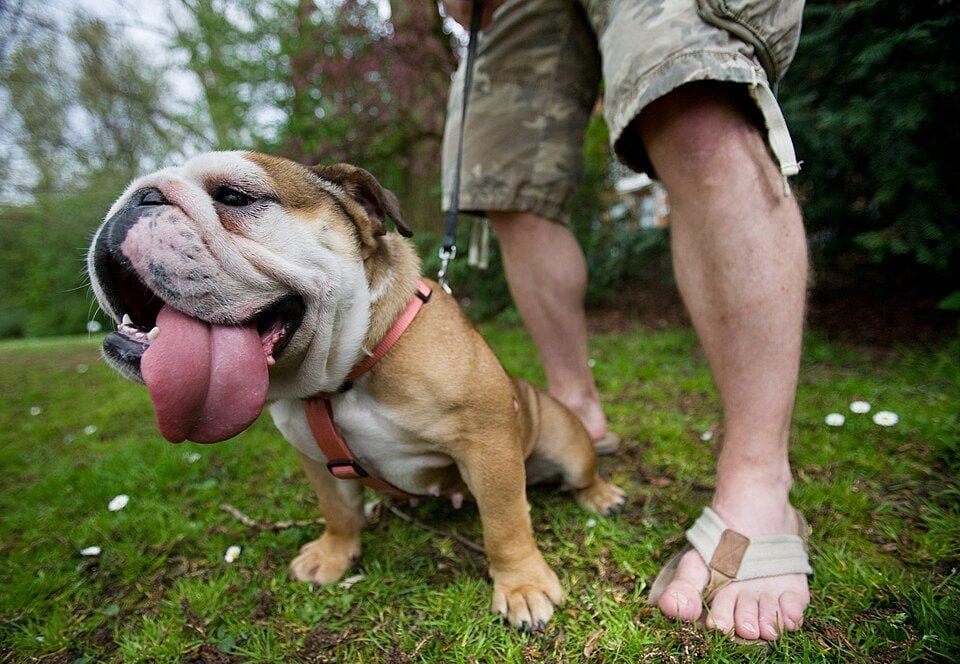
Temperament: Peaceful and Dignified
The AKC standard requires the Bulldog's disposition to be equable and kind, resolute and courageous, but never vicious or aggressive, with a peaceful and dignified demeanor. Bulldogs are famous for getting along well with children, other dogs, and household pets. They are devoted, gentle, and eager to please their owners, happily resting at their feet or trying to squeeze onto their laps, even though they can weigh up to 55 pounds.
A calm demeanor does not mean laziness: Bulldogs enjoy brisk walks and occasional playtime, and moderate exercise combined with careful diet management helps keep them in shape. They adapt well to both city and country living, and puppy training classes along with early socialization are highly recommended, just as with any other breed.
Health: Heat, Breathing, and Wrinkles
- Brachycephalic syndrome – narrow airways leading to breathing difficulties in heat and humidity.
- Overheating – never leave them in the sun without shade and water, or in a closed car; a bluish tongue is a danger sign meaning the dog must be cooled with water immediately.
- Hip dysplasia – more common in this breed.
- Skin wrinkles – moisture and food debris can accumulate in them, potentially causing infections.
- Water and stairs – a major hazard; Bulldogs cannot swim.
In the Netherlands, a 2014 law (enforced since 2019) bans breeding dogs with muzzles shorter than one-third of their skull length, meaning most Bulldogs cannot be legally bred there. In the United States, while there are no nationwide bans, reputable breed clubs and the AKC strongly encourage responsible breeding practices that prioritize health. Breeders are increasingly focusing on producing Bulldogs with more moderate features, ensuring clearer airways and better overall welfare to combat the severe health risks associated with extreme brachycephaly.
Care
- Coat. Brush for about 10 minutes, 2–3 times a week, using a soft brush.
- Wrinkles. Clean and dry them regularly (avoiding the immediate eye area).
- Ears, tail, and nails. Clean the ears and the area under the tail, and trim the nails about every two weeks.
- Summer. Keep them in a cool, air-conditioned room on hot days.
The English Bulldog and Related Breeds
| Trait | English Bulldog | French Bulldog | Bull Terrier |
|---|---|---|---|
| Weight | 40–55 lbs | up to 28 lbs | 50–70 lbs |
| Muzzle | Very short | Very short | Long, egg-shaped head |
| Origin | Great Britain | France | Great Britain |
| Energy Level | Low to moderate | Moderate | High |
The English Bulldog is Perfect for a Quiet Life and a Cool Home
The Bulldog loves being around people and doesn't require a lot of exercise, making them well-suited for apartments and city living. However, their physical build does come with limitations.
- Best for: Families with children, seniors, people who work from home, and those who enjoy quiet, leisurely walks.
- Not for: Runners, people living without air conditioning during hot summers, and those unprepared for potentially high veterinary bills.
Bulldogs are poor swimmers, so they must be closely supervised near bodies of water and pools, or fitted with a canine life jacket. In the summer, it's best to avoid long car trips without air conditioning.
How to Choose a Healthy English Bulldog Puppy
The most important factor is breathing. Ask to see both parents moving around: they shouldn't be gasping for air after a short walk or snoring excessively loud while resting. Ask the breeder about health clearances for the parents' airways, hips, and eyes, as well as their ages. Look for a puppy with wider, more open nostrils and a muzzle that isn't excessively short. When looking for an English Bulldog puppy, always seek out a reputable breeder who provides a clear contract and health guarantees, and avoid pet stores or puppy mills. A good breeder will also ensure the puppy is microchipped and has its initial vaccinations before going home. For more tips on finding a responsible breeder or exploring breed-specific rescues, check out our dog breed guide introduction.
You can find related breeds in the profiles for the French Bulldog, Bull Terrier, and Pug.
Frequently asked questions
How much does an English Bulldog weigh?
The AKC standard specifies about 50 lbs for males and 40 lbs for females; under the British standard, males weigh about 55 lbs and females 50 lbs. Height at the withers is 14–15 inches.
Why do English Bulldogs have trouble breathing?
Due to selective breeding for appearance, Bulldogs have a very short snout (brachycephaly), which narrows their airways. In hot and humid weather, they struggle to breathe and overheat easily. The AKC warns that if an overly excited or overheated Bulldog's tongue turns bluish, the dog must be cooled down immediately.
Can an English Bulldog swim?
No. The AKC emphasizes that Bulldogs should never be allowed in water deeper than their elbows without close supervision. Pools and stairs pose a major danger to them.
Is breeding English Bulldogs banned in the Netherlands?
The breed itself isn't banned, but overly short snouts are: in 2014, the Dutch government banned breeding dogs with muzzles shorter than one-third of their skull length, enforcing it in 2019. This affects most Bulldogs due to breathing, heat intolerance, and other health issues. In 2019, the Dutch Kennel Club also introduced additional Bulldog breeding rules.
Is the English Bulldog a good family dog?
Yes. Bulldogs are known for being calm, gentle, and especially fond of children; they also get along well with other dogs and pets. The AKC standard requires a Bulldog's disposition to be peaceful, dignified, and courageous, but not aggressive.
Sources
- Wikipedia: Bulldog
- AKC (American Kennel Club): Bulldog breed profile
- FCI (Fédération Cynologique Internationale): Bulldog breed standard (No. 149)
- Cover photo: A reddish-white English Bulldog sitting on a leash (Photo: SheltieBoy, CC BY 2.0)
- Wikimedia Commons photo: A white English Bulldog sitting on asphalt (Photo: Michael Gil from Toronto, ON, Canada, CC BY 2.0)
- Wikimedia Commons photo: An English Bulldog with its tongue out in a park (Photo: Jorge Royan, CC BY-SA 3.0)
Log in to comment
No comments yet. Be the first.