Great Dane: Size, Temperament, Colors & Health
- The breed's ancestors were 16th- and 17th-century boar and bear hunting dogs, as well as guardian chamber dogs for German nobility.
- In 1878, a Berlin committee named these dogs Deutsche Dogge; the name Great Dane comes from the French Grand Danois, though the breed has no ties to Denmark.
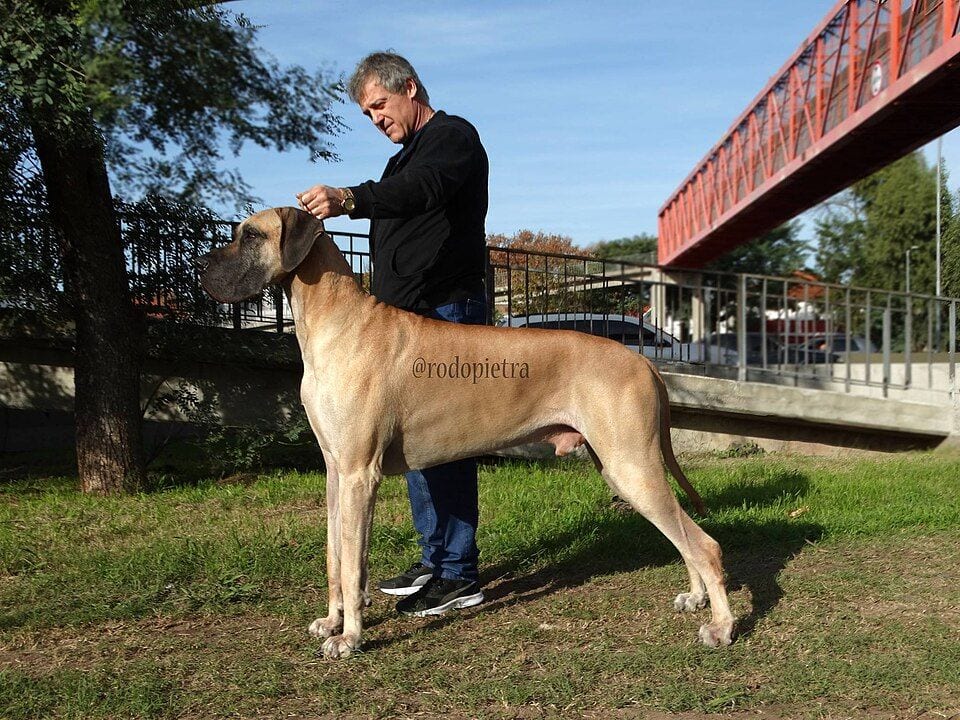
- AKC standards: males are 30–32 inches and 140–175 lbs, females 28–30 inches and 110–140 lbs; the record holder, Zeus, stood 44 inches tall.
- Gastric dilatation-volvulus (bloat) is the leading cause of death for Great Danes; their average lifespan is 7 to 10 years.
- Great Danes are friendly, patient with children, and alert home guardians; early socialization and obedience training are absolutely essential.
This article is part of the 77.today dog breeds guide, prepared by the 77.today editors from the sources listed at the end.
The Great Dane is a dog that, when standing on its hind legs, towers over most people. Often called the "Apollo of Dogs," they are massive yet elegant, powerful yet balanced, moving with a smooth, long-reaching stride. The AKC notes that living with such a dog is a true joy, but also a serious commitment due to their sheer size, weight, and strength. In this dog breed directory profile, you will find the history, appearance, temperament, and health risks of the Great Dane (known in Germany as the Deutsche Dogge).
| Origin | Germany |
|---|---|
| FCI Group | Group 2 – Molossoid breeds, Mastiff type (No. 235); AKC Working Group |
| Height | males 30–32 inches, females 28–30 inches (AKC) |
| Weight | males 140–175 lbs, females 110–140 lbs (AKC) |
| Coat | short, smooth, close-cropped |
| Colors | 3 FCI groups: fawn and brindle; harlequin, merle, and black; blue |
| Lifespan | 7–10 years |
| Temperament | friendly, patient, loyal, alert |
| Suitable for | families with space; experienced owners |
The Great Dane: From Noble Boar Hunters to Chamber Dogs
In the 16th century, nobility across many European countries imported strong, long-legged dogs of various types—crosses between English Mastiffs and Irish Wolfhounds—from England and Ireland. In Germany, they were called Englische Docke, and later Englische Dogge, which simply meant "English dog." From the early 17th century, they were bred independently in the courts of German nobility. These dogs hunted bears, boars, and deer: the dog would hold the wild beast until the hunter could dispatch it. The most favored dogs slept in the lords' bedchambers at night as "chamber dogs" (Kammerhunde), wearing ornate collars and protecting the nobles from assassination attempts. Under the FCI standard, the breed's ancestors are listed as the Bulldog-type "Bullenbeisser" and large boar-hunting dogs.
With the advent of firearms, these dogs transitioned into symbols of luxury and status. At the 1863 Hamburg dog show, eight "Danish Dogges" and seven "Ulmer Dogges" were exhibited. In 1878, a committee in Berlin decided to group all these similar dogs under the name Deutsche Dogge (German Mastiff). The first standard was drafted in 1880, and the first breed club was founded in 1888. By the late 19th century, Great Danes were also known as "Empire dogs" due to their close association with Chancellor Otto von Bismarck. The breed quickly gained international popularity, and the FCI officially recognized the Great Dane in 1961.
Appearance: An Elegant Giant
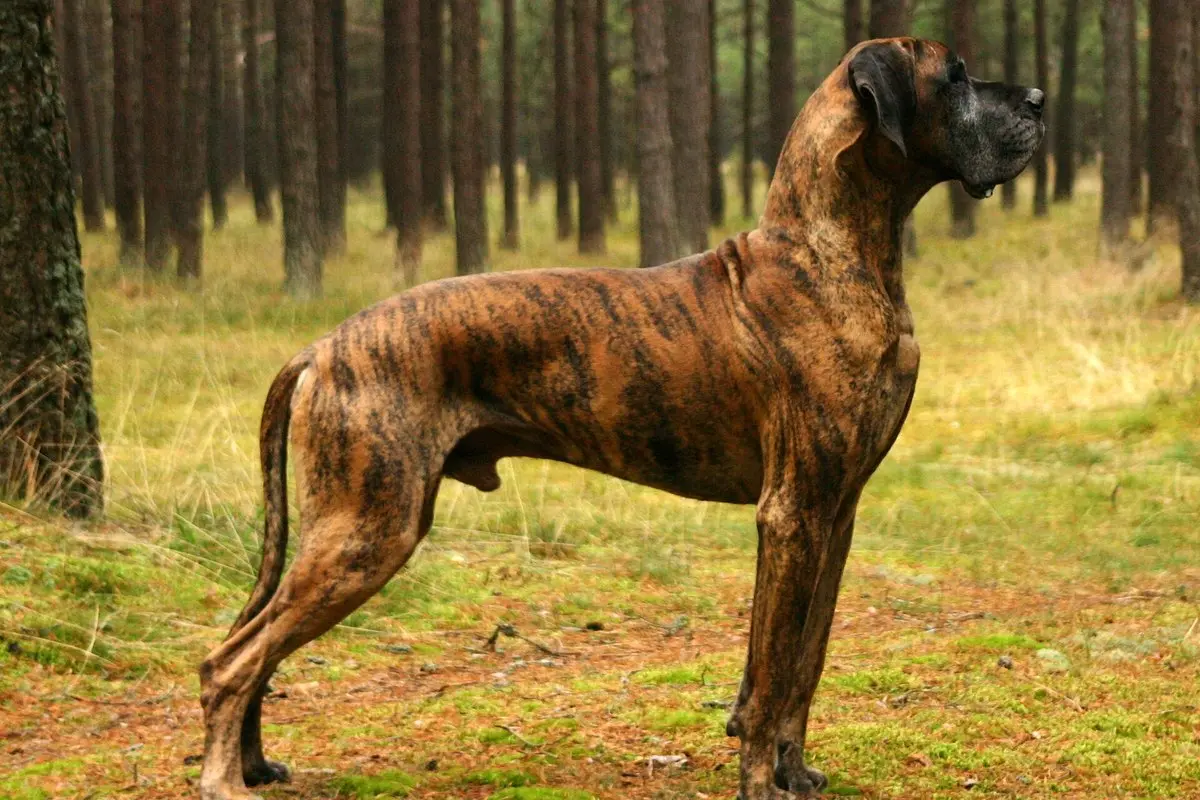
The Great Dane is a square-proportioned, massive, powerful, and harmoniously built dog that should never appear clumsy or clunky. The AKC standard requires males to be no less than 30 inches tall at the shoulder, and females no less than 28 inches; dogs falling below these minimums are disqualified. The head is long and expressive, with ears that naturally drop in a triangular shape. Historically, when Great Danes hunted boars, their ears were cropped to prevent injuries. While ear cropping remains a recognized practice in the US under the AKC standard, it is increasingly controversial, and many veterinary associations now recommend against cosmetic procedures that lack medical necessity.
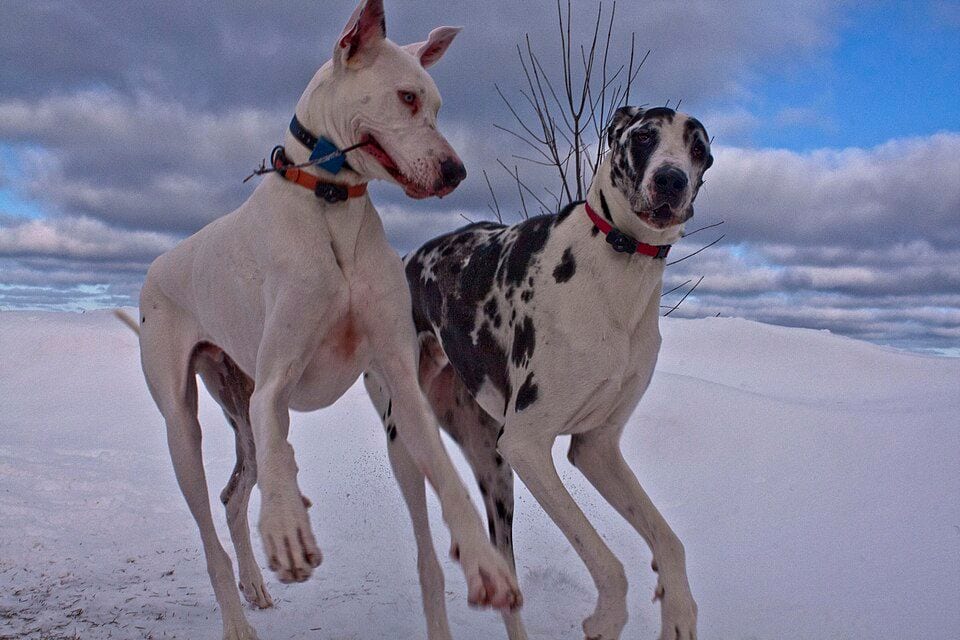
The coat is short and smooth. Under the FCI standard, Great Danes are divided into three distinct color groups: the first is fawn (ranging from light yellow to deep golden, preferably with a black mask) and brindle (a fawn base with black chevron stripes); the second includes harlequin (white with irregular, "torn" black patches), merle (gray with black patches), and black, including "mantle" patterns; the third is pure steel blue. Great Danes are typically bred only within their specific color groups, almost as if they were separate breeds. Cross-color breeding is generally restricted to highly experienced breeders who deeply understand the breed's complex genetics.
Temperament: A Gentle Giant
The AKC describes Great Danes as calm, friendly, and eager-to-please dogs that are patient with children and make friends easily. At the same time, they are alert home guardians—their sheer size is often enough to deter intruders, and anyone who mistakes their friendliness for weakness will meet a courageous and powerful opponent. They are widely known to be affectionate, deeply loyal, especially attentive to their family's children, and somewhat reserved with strangers, while generally getting along well with other household pets.
Until they reach maturity, Great Danes are active and curious, but as adults, they are perfectly happy sleeping for most of the day. However, they still require two or three brisk walks daily to stay healthy. Great Danes often follow their noses, so they should always be walked on a leash and only let loose in a securely fenced area with a high fence. Because of their massive size and strength, early socialization and consistent obedience training are absolutely mandatory.
Health: Stomach, Heart, and Joints
- Gastric dilatation-volvulus (bloat) – The AKC calls this the leading cause of death for Great Danes. Many breeders and owners opt for a preventative surgery called a prophylactic gastropexy. Avoid intense exercise right before and after meals.
- Heart and eye conditions – Parents should have cardiac and ophthalmologist clearances.
- Thyroid issues – Hypothyroidism and autoimmune thyroiditis can occur.
- Hip dysplasia – X-ray evaluations are necessary.
- Growing joints – Running and hiking with a Great Dane should be avoided until they are fully mature at around 2 years of age.
Care
- Coat. Brush once a week with a rubber grooming mitt or hound glove, and daily during shedding seasons.
- Diet. High-quality large-breed formula, split into multiple meals a day, with strict rest after eating.
- Space. An extra-large dog bed, a spacious vehicle, and a home environment suited for a dog of this size.
- Cost. Food, medications, and veterinary care for a dog this massive cost significantly more than for an average-sized breed.
The Largest Dog Breeds
| Breed | Male Height | Male Weight |
|---|---|---|
| Great Dane | 30–32 inches | 140–175 lbs |
| Saint Bernard | 28–30 inches | 140–180 lbs |
| Newfoundland | around 28 inches | 130–150 lbs |
| Caucasian Shepherd Dog | 28–30 inches | 110+ lbs |
The Great Dane is Suited for Spacious Homes and Calm Owners
The Great Dane is gentle and calm, but their size changes your everyday life: from the car you drive to the bed you sleep in. Before bringing one home, it is worth considering the practicalities.
- Suitable for: families with children, a house or a spacious apartment with an elevator, and people who want a calm, quiet companion.
- Not suitable for: tiny living spaces, small cars, or those who cannot afford the high costs of large quantities of food and giant-breed veterinary care.
A Great Dane puppy grows incredibly fast and within a few months will be stronger than most people. Teaching them to heel on a leash and not to jump on people must begin from day one—later on, the physical advantage will be entirely on the dog's side.
How to Choose a Great Dane Puppy
Ask the breeder about the parents' hip, heart, eye, and thyroid health clearances, as well as any history of bloat in their bloodline. Inquire about which color groups they breed, and be wary of irresponsible cross-color breeding. Carefully evaluate whether you can care for a dog of this magnitude for its entire life. Remember that a reputable breeder will provide a clear contract, allow you to meet the parents, and never sell through pet stores or puppy mills. It is also highly recommended by veterinarians to have your dog microchipped and registered. For more general rules on finding a responsible breeder or adopting through a breed rescue, see our guide introduction.
You can find other giant breeds in the profiles for the Saint Bernard, Newfoundland, and Tibetan Mastiff.
Frequently asked questions
How much does a Great Dane weigh?
According to the AKC, males weigh 140–175 lbs and stand 30–32 inches tall, while females weigh 110–140 lbs and are 28–30 inches tall. Other international kennel clubs set minimum weights around 120 lbs for males and 100 lbs for females.
What is the tallest Great Dane on record?
The Guinness World Records lists a black Great Dane named Zeus as the tallest dog ever, measuring 44 inches at the withers; he passed away in September 2014. The previous record holder, George, stood 43 inches tall.
Why is the breed called the Great Dane?
The English name Great Dane is a translation of the French Grand Danois. It stuck due to political tensions between Germany, France, and Britain in the 19th century, even though the breed has no connection to Denmark. In Germany, it is called the Deutsche Dogge.
What is the lifespan of a Great Dane?
The AKC states their lifespan is 7 to 10 years. The leading cause of death for Great Danes is gastric dilatation-volvulus (bloat), which is why many owners consider preventative gastropexy surgery.
Can a Great Dane live in an apartment?
Great Danes are calm and sleep for most of the day as adults, but their massive size requires space. They can live in an apartment if there is enough room and the owner provides a couple of brisk walks every day.
Sources
- Wikipedia: Great Dane
- AKC: Great Dane Breed Profile
- FCI: Great Dane Breed Standard (No. 235)
- Cover Photo: Brindle Great Dane standing in a forest (Photo: Harlis.jpg: Rytis Mikelskas derivative work: Pleple2000, CC BY-SA 3.0)
- Wikimedia Commons Photo: Fawn Great Dane standing next to its owner (Photo: Wir Sind Pietras - Argentina, CC BY-SA 4.0)
- Wikimedia Commons Photo: White and harlequin Great Danes in the snow (Photo: The Humane Society of the United States, CC BY 2.0)
Log in to comment
No comments yet. Be the first.