Maltipoo, Labradoodle & Poodle Mixes: Size, Care & Health
- A Maltipoo is a Maltese and Toy or Miniature Poodle mix; a Labradoodle crosses a Labrador Retriever and Poodle, while a Goldendoodle mixes a Golden Retriever and Poodle.
- Neither the AKC, UKC, nor the UK Kennel Club recognizes these mixes as official breeds, meaning they lack standard pedigrees and breed standards.
- The designer dog trend began in Australia, where Wally Conron crossed a Labrador Retriever and a Poodle to create a guide dog for people with allergies.
- A mixed breed's coat is unpredictable: some puppies may inherit the shedding coat of their non-Poodle parent.
- Health depends on the parents: a reputable breeder health-tests both purebred parents just as they would for purebred litters.
This article is part of the 77.today dog breeds guide, prepared by the 77.today editors from the sources listed at the end.
Maltipoos, Labradoodles, Goldendoodles, Cavapoos, and Schnoodles are all crosses between a Poodle and another breed, commonly known as designer dogs. They attract owners with their teddy-bear looks and the promise of a non-shedding, allergy-friendly coat. At the same time, this is one of the biggest trends fueling irresponsible breeding, because a mix is not a breed: there is no standard, no pedigree, and no guarantee of how the puppy will turn out. In this dog breed guide profile, we explain what a Maltipoo and other Poodle mixes are, how they originated, what to expect, and how to avoid falling into the trap of a puppy mill.
| Maltipoo | Maltese × Toy or Miniature Poodle |
|---|---|
| Labradoodle | Labrador Retriever × Standard or Miniature Poodle |
| Goldendoodle | Golden Retriever × Poodle |
| Cavapoo | Cavalier King Charles Spaniel × Poodle |
| Schnoodle | Schnauzer × Poodle |
| Recognition | Not recognized by the AKC, UKC, or the UK Kennel Club |
| Size | Depends on the Poodle's size and the other parent's breed |
| Coat | Unpredictable: curly, wavy, or straight |
| Pedigree | None; registered as a mixed breed |
The Designer Dog Trend Started With the Labradoodle
The Encyclopedia Britannica traces the designer dog trend back to the late 20th century, when breeders began crossing purebred Poodles with other breeds to combine the Poodle's coat with the traits of another breed. The most famous example is the Labradoodle. Australian breeder Wally Conron, who introduced this mix to the Royal Guide Dogs Association of Australia in Victoria, wanted to create a guide dog for a person allergic to dog hair. He crossed a Labrador Retriever and a Poodle, hoping to combine the Poodle's low-shedding coat with the Labrador's gentle and obedient nature. One dog from that litter, Sultan, worked as a guide dog in Hawaii for ten years.
Conron later repeatedly stated that he regretted starting this trend. According to him, the catchy name and the idea of a "hypoallergenic" dog fueled countless irresponsible puppy mills, and many of these dogs suffer from behavioral or hereditary problems—he even famously said he "released a Frankenstein's monster." Representatives of the AKC have voiced similar concerns. In the 1990s, Goldendoodles became popular in Australia and the US, followed by Maltipoos, Cavapoos, and dozens of other combinations ending in "-poo" or "-doodle."
Maltipoo: The Most Popular Small Poodle Mix
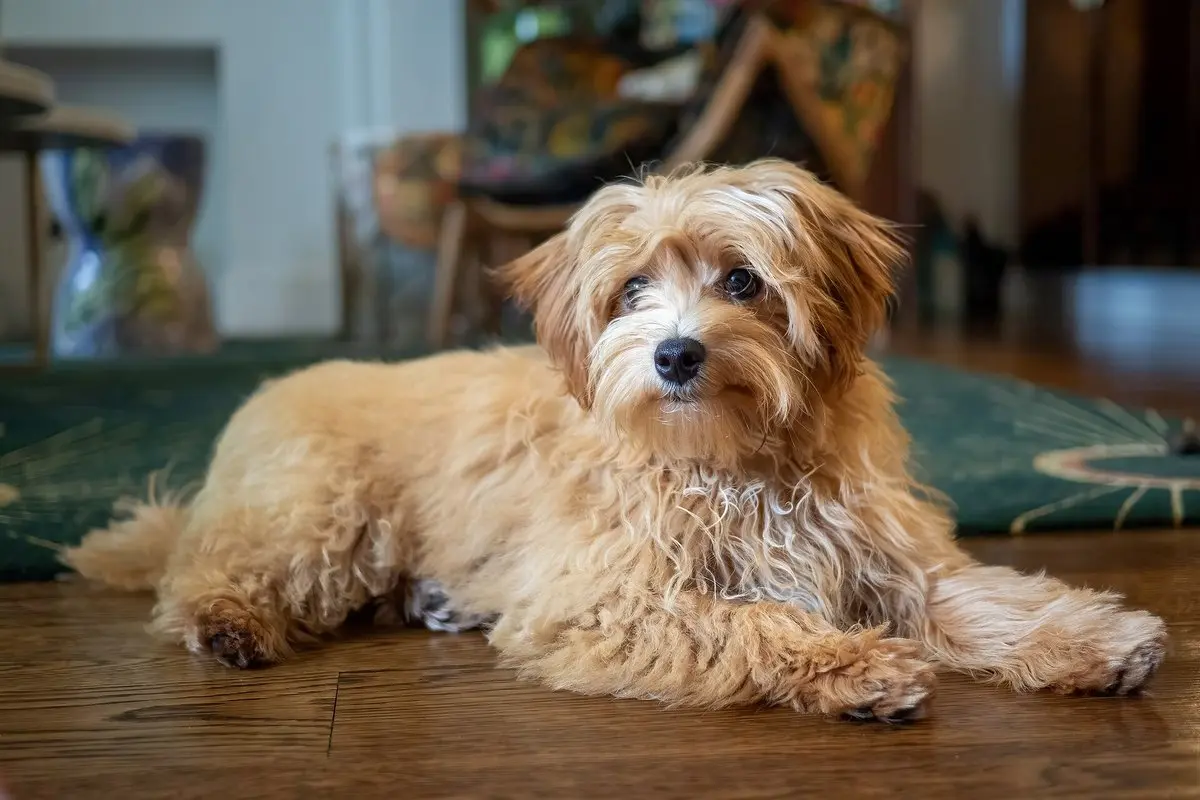
A Maltipoo is created by crossing a Maltese with a Toy or Miniature Poodle. Both parents are small, low-shedding, intelligent, and devoted companions, so a Maltipoo is usually a small dog (weighing just a few pounds), playful, and affectionate, with a curly or wavy coat. Colors vary widely—from white and cream to apricot or black, depending on the Poodle parent.
It is important to understand that mixed breeds, unlike purebred dogs, do not breed "true to type." Even within the same litter, puppies can vary significantly in size, coat, and temperament. Therefore, promises that a Maltipoo will "always weigh 6 to 7 lbs" or "never shed at all" are unfounded—the best point of reference is always both parents.
Do Poodle Mixes Really Not Shed?
The main reason people choose Poodle mixes is the promise of a low-shedding, allergy-friendly coat. However, coat type is inherited unpredictably: some puppies get the Poodle's curls, others get the straight, shedding coat of the Labrador Retriever or Golden Retriever, and most end up with something in between. Because of this, breeders often create F1b generations (a mix crossed back with a Poodle) or multi-generational "multigen" dogs to achieve a curlier coat.
Furthermore, dog allergens are found not only in the hair but also in saliva and dander. A person with severe allergies should spend time with a specific dog or its parents before bringing a puppy home. If a low-shedding coat is the top priority, a more predictable choice might be a purebred Poodle, Bichon Frise, or Maltese.
Health: The Benefits and Risks of Crossbreeding
When crossing two different breeds, the likelihood of a puppy inheriting the same recessive disease from both parents decreases, which is why the first generation often exhibits hybrid vigor. However, this benefit diminishes when mixes are bred together, and diseases common to both parent breeds can still appear in the mix. For example, the Australian Labradoodle Association notes that Labradoodles are prone to hip and elbow dysplasia, eye diseases, and Addison's disease. Data from US veterinary clinics shows that the difference in lifespan between mixed breeds and purebred dogs is relatively small.
- Maltipoo – check both parents for patellar luxation, eye issues, and dental problems common in small breeds.
- Labradoodle and Goldendoodle – require hip and elbow X-ray evaluations, eye exams, and retriever DNA tests.
- Cavapoo – heart screenings are crucial, as mitral valve disease is very common in the Cavalier King Charles Spaniel.
Price and Puppy Mills
Designer dog puppies sometimes cost more than their purebred parents. This high demand attracts puppy mills, which prioritize profit over the health and welfare of the dogs. A reputable breeder of mixed-breed dogs operates with the same standards as a purebred breeder: they health-test both parents, allow you to meet the mother, raise the puppies in a home environment, and willingly answer all your questions. In the US, while commercial breeding is regulated by the USDA, standards vary widely by state, making it essential for buyers to do their own due diligence. Avoid pet stores and online brokers, as they frequently source from large-scale commercial breeding facilities where close inbreeding, overbreeding, and early separation from the mother are common issues.
| Mix | Parents | Size | Key Health Tests |
|---|---|---|---|
| Maltipoo | Maltese × Miniature/Toy Poodle | Small | Patellas, eyes |
| Cavapoo | Cavalier × Miniature/Toy Poodle | Small | Heart, patellas, eyes |
| Labradoodle | Labrador × Poodle | Medium to Large | Hips, elbows, eyes |
| Goldendoodle | Golden × Poodle | Medium to Large | Hips, elbows, eyes, heart |
How to Choose a Poodle Mix Puppy
Ask to meet both parents, or at least the mother, and request to see their health test results. Inquire about the generation (F1, F1b, multigen) and what size Poodle was used. Beware of advertisements promising a "100% non-shedding" or "completely hypoallergenic" dog, and never agree to meet a breeder in a parking lot to pick up a puppy. Vets strongly recommend that every puppy be microchipped before going to its new home, and you should ensure the dog is registered with a national recovery database. Since they are mixed breeds, they cannot be registered with the AKC for conformation shows, though they can participate in AKC companion events. For more on finding a reputable breeder, check our guide introduction.
You can learn more about the parent breeds in our profiles for the Poodle, Maltese, Labrador Retriever, and Cavalier King Charles Spaniel.
Frequently asked questions
What is a Maltipoo?
A Maltipoo is a cross between a Maltese and a Toy or Miniature Poodle. Because it is not a recognized breed, there is no official standard or pedigree, and puppies' size, coat, and temperament can vary even within the same litter.
Are Maltipoos and other Poodle mixes good for people with allergies?
Not always. Poodle mixes are often bred for their low-shedding coats, but a mix can inherit the shedding coat of the other parent. Furthermore, allergens are found in saliva and dander, so an allergic person must spend time with a specific dog before bringing it home.
What do F1, F1b, and multigen mean?
F1 is a first-generation mix whose parents are two different purebred dogs. F1b is an F1 mix crossed back with a Poodle to achieve a more Poodle-like coat. Multigen refers to multi-generational mixes produced by breeding two mixes together. The benefits of crossbreeding (hybrid vigor) are strongest in the first generation.
Is the Labradoodle a recognized breed?
No. The AKC and other major kennel clubs do not recognize the Labradoodle as a breed. The Australian Labradoodle Association has been trying to develop a distinct "Australian Labradoodle" breed since 2000 by introducing bloodlines from other breeds, but it remains unrecognized by major registries.
Why does Wally Conron regret creating the Labradoodle?
Conron stated that his idea caused a lot of harm: the high demand fueled irresponsible puppy mills, and the genetics of mixes are unpredictable. He famously said he "opened a Pandora's box" and created a "Frankenstein's monster," as many of these dogs suffer from behavioral or hereditary issues.
Sources
- Wikipedia: Dog crossbreed (designer dogs)
- Wikipedia: Labradoodle
- Wikipedia: Goldendoodle
- AKC: Maltese breed profile
- AKC: Poodle (Toy) breed profile
- Cover photo: Apricot Maltipoo lying on a rug (Photo: Rhododendrites, CC BY-SA 4.0)
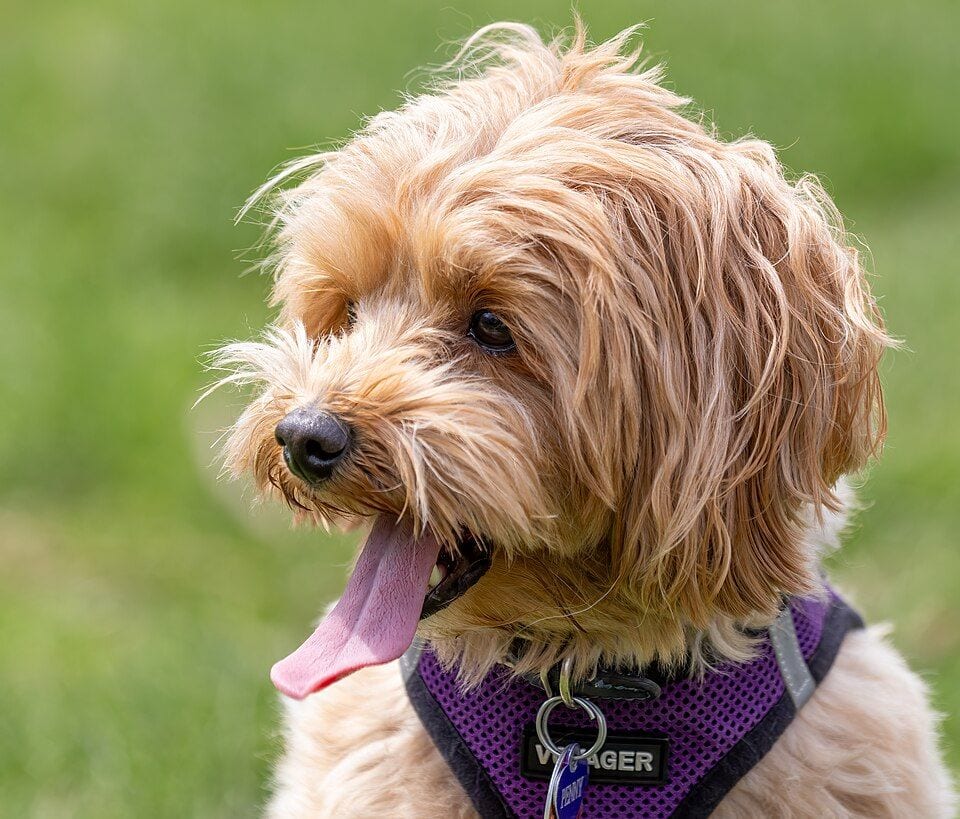
- Wikimedia Commons photo: Headshot of a tan Maltipoo with tongue out (Photo: Rhododendrites, CC BY-SA 4.0)
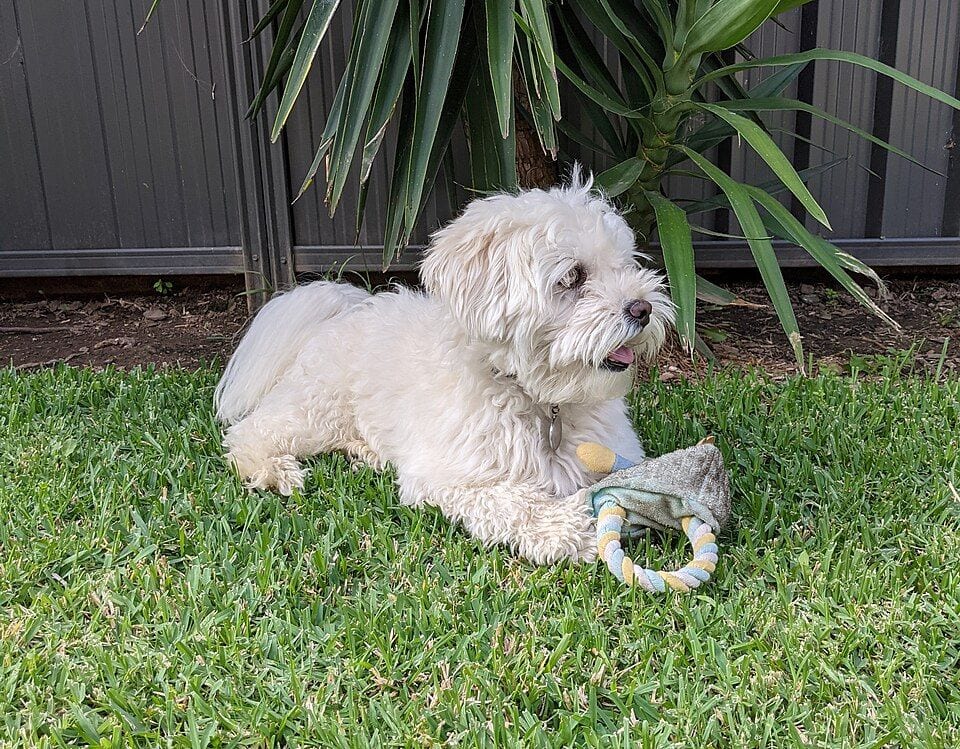
- Wikimedia Commons photo: White Maltipoo lying in the grass with a toy (Photo: TheSamDe, CC BY-SA 4.0)
Log in to comment
No comments yet. Be the first.