American Pit Bull Terrier: Temperament, Size & BSL Info
- The ancestors of the Pit Bull are 19th-century British "bull and terrier" crosses, which arrived in the US between 1845 and 1860.
- The breed was recognized by the United Kennel Club (UKC) in 1898 and later by the ADBA; it is not recognized by the AKC or FCI.
- Males typically stand 18–21 inches and weigh 33–60 lbs, while females are 17–20 inches and 29–49 lbs.
- In the US, American Pit Bull Terriers are frequently subject to Breed-Specific Legislation (BSL), meaning ownership may be restricted or banned depending on your city or county.
- Homeowners and renters insurance policies often have breed restrictions that include Pit Bull-type dogs, requiring owners to seek specialized coverage.
- The Pit Bull – A "Bull and Terrier" Descendant in America
- Appearance: Athletic and Muscular
- Temperament: Affectionate with Family, But Not a Guard Dog
- American Pit Bull Terriers and US Breed-Specific Legislation
- Legal Alternatives and Ownership Considerations in the US
- What to Do If You Are Interested in Similar Breeds
This article is part of the 77.today dog breeds guide, prepared by the 77.today editors from the sources listed at the end.
The American Pit Bull Terrier is a medium-sized, solidly built, short-haired dog with distinct muscle definition, whose ancestors came from England. It is one of the most controversial breeds in the world: some consider it a loyal, gentle companion and an excellent sporting dog, while others view it as dangerous due to its fighting history. In the US, the Pit Bull is frequently subject to Breed-Specific Legislation (BSL) and insurance restrictions. In this dog breed guide profile, we explain the origins, appearance, temperament, and legal considerations of the American Pit Bull Terrier.
| Origin | US (ancestors are British "bull and terrier" crosses) |
|---|---|
| Recognition | UKC (1898), ADBA; not recognized by AKC or FCI |
| Height | males 18–21 inches, females 17–20 inches |
| Weight | males 33–60 lbs, females 29–49 lbs |
| Coat | short, smooth, glossy, stiff |
| Colors | various, except merle |
| Temperament | confident, affectionate with family, energetic |
| Legal status US | subject to BSL and local ordinances in many cities |
The Pit Bull – A "Bull and Terrier" Descendant in America
Until the mid-19th century in England, now-extinct Old English Terriers and Old English Bulldogs were crossed to combine the terrier's gameness with the bulldog's strength and athleticism. This resulted in "bull and terrier" type dogs, originally used for bull and bear baiting. When Britain banned this blood sport in 1835, enthusiasts turned to dog fighting, which was easier to organize and hide. Between 1845 and 1860, these dogs arrived in the US, where they became the direct ancestors of the American Pit Bull Terrier.
In America, farmers and ranchers recognized the Pit Bull's talents, using them to catch semi-wild cattle and hogs, hunt, drive livestock, and serve as family companions; unfortunately, they were also bred for fighting. On February 10, 1898, the breed was recognized by the newly founded United Kennel Club (UKC), and the American Dog Breeders Association (ADBA), founded in 1909, drafted its own standard. The AKC eventually registered these dogs under the name American Staffordshire Terrier, and the breeds diverged from there. The FCI does not recognize the American Pit Bull Terrier.
Appearance: Athletic and Muscular
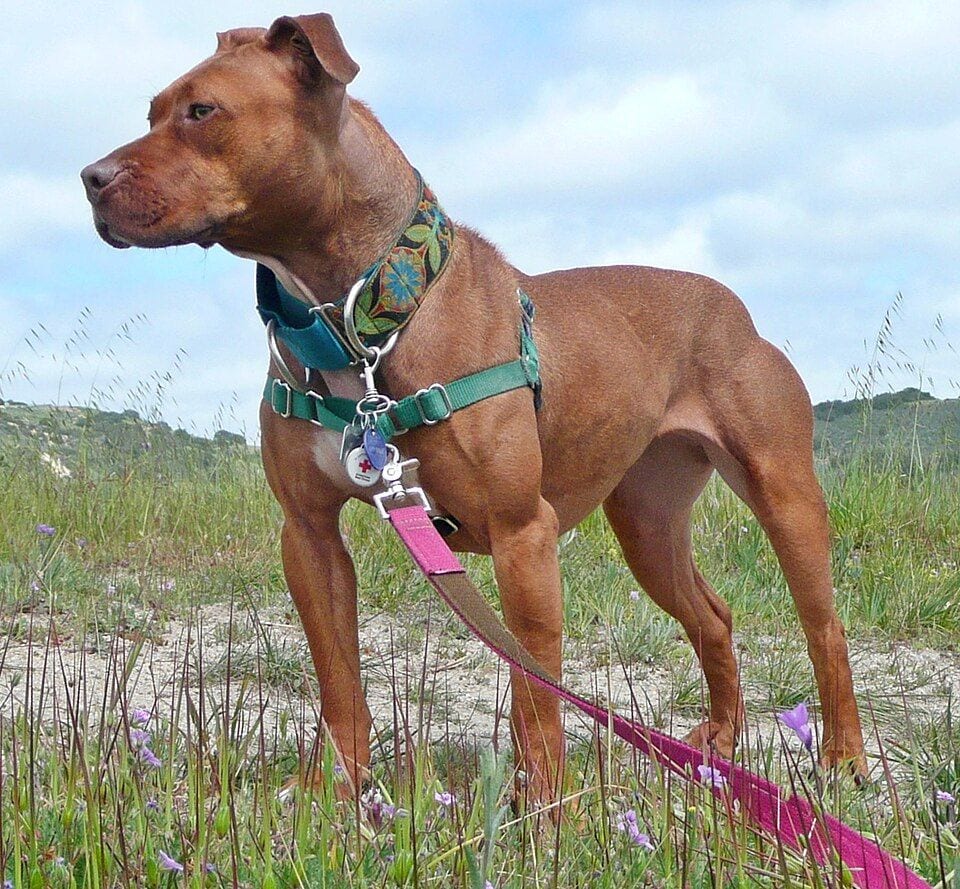
The Pit Bull Terrier is a medium-sized, solid, somewhat lean dog with clearly visible musculature. Males typically stand 18–21 inches tall and weigh 33–60 lbs, while females are 17–20 inches tall and weigh 29–49 lbs. Compared to the Staffordshire Bull Terrier, the Pit Bull is about 6–8 inches taller and 24–35 lbs heavier. The ADBA standard describes round or almond-shaped eyes, small to medium half-prick or "rose" ears, and a slightly thick tail tapering to a point.
The coat is short, smooth, glossy, and stiff. Many colors, patterns, and combinations are allowed, but neither the ADBA nor the UKC accepts the merle pattern; common patterns include solid and "tuxedo". In everyday language and some local laws, the word "Pit Bull" is used to describe several similar dogs—such as the American Staffordshire Terrier, Staffordshire Bull Terrier, and others—although some breeders argue that the true Pit Bull is strictly the American Pit Bull Terrier.
Temperament: Affectionate with Family, But Not a Guard Dog
Breed experts describe Pit Bull Terriers as affectionate with their families, joyful, confident, and curious dogs. They are raised as companions and sporting dogs, and are generally entirely unsuited for guard duty because of their friendly nature toward humans. Potential aggression toward other dogs or animals can vary in degree from dog to dog, making early socialization and responsible management essential. Human-directed aggression is considered highly unacceptable in the breed: dogs showing such aggression or extreme fearfulness should not be bred.
In many parts of the world, Pit Bull-type dogs face restrictions. Over a dozen European countries, Australia, Canada, Ecuador, Malaysia, New Zealand, Puerto Rico, Singapore, and Venezuela have regulations ranging from outright bans to strict ownership conditions, with some Australian states requiring mandatory spaying and neutering.
American Pit Bull Terriers and US Breed-Specific Legislation
Unlike countries with national bans, the United States handles dog laws at the state, county, or municipal level. This has led to a patchwork of Breed-Specific Legislation (BSL) across the country. If you are considering adding an American Pit Bull Terrier to your family, you must navigate these local rules:
- Local Bans and Restrictions. Many cities and counties prohibit the breeding, sale, or ownership of Pit Bull-type dogs entirely, while others require mandatory spay/neuter, microchipping, or specialized registration.
- Insurance Exclusions. Homeowners and renters insurance companies frequently include Pit Bulls on their restricted breed lists. Owning one may require you to seek out specialized canine liability insurance or a more accommodating insurance provider.
- Housing Rules. Landlords, property management companies, and Homeowners Associations (HOAs) often have strict policies banning Pit Bulls and their mixes from rental properties and managed communities.
- Public Space Regulations. Even in areas where they are legal, local ordinances may require Pit Bulls to be muzzled and kept on a short leash in public parks or on city sidewalks.
- Travel Considerations. When traveling across state lines or flying, you may encounter airline bans or local laws in your destination city that restrict Pit Bull-type dogs.
Because of these complexities, it is crucial to research your local city and county ordinances, as well as your housing and insurance contracts, before adopting or purchasing an American Pit Bull Terrier.
| Breed | US BSL Status | AKC Recognition |
|---|---|---|
| American Pit Bull Terrier | Frequently restricted | Not recognized |
| American Staffordshire Terrier | Frequently restricted | Recognized |
| Staffordshire Bull Terrier | Sometimes restricted | Recognized |
| Bull Terrier | Rarely restricted | Recognized |
Legal Alternatives and Ownership Considerations in the US
Because owning an American Pit Bull Terrier can be legally and logistically challenging depending on your zip code, fans of the breed should be aware of how similar dogs are treated under the law.
- Fewer Restrictions: The Bull Terrier and the Boxer are generally not targeted by BSL and are widely accepted by landlords and insurance companies.
- Varying Restrictions: The Staffordshire Bull Terrier and American Staffordshire Terrier are recognized by the AKC, which can sometimes help with housing, but they are still frequently lumped into "Pit Bull" bans by local municipalities.
- Adoption Realities: Animal shelters across the US are filled with Pit Bull mixes. Adopting from a rescue is a great way to find a loving companion, but the same local laws and housing restrictions will apply to a mixed-breed dog that visually resembles a Pit Bull.
If you plan to travel internationally with your dog, always check the destination country's rules well in advance—many nations prohibit even the temporary import of Pit Bull-type dogs.
What to Do If You Are Interested in Similar Breeds
If you admire the "bull and terrier" type but want to avoid the heaviest BSL restrictions, you might consider the Bull Terrier, which is rarely targeted by bans, or the Staffordshire Bull Terrier, though you must still verify your local laws. Regardless of the breed you choose, your dog should be microchipped, vaccinated, and registered with your local county as required by law. We cover general ownership rules in the introduction to our guide, and you can learn about other large, protective breeds in our Caucasian Shepherd Dog profile.
Frequently asked questions
Can I legally own an American Pit Bull Terrier in the US?
Yes, but it depends on your location. While there is no federal ban, many cities and counties enforce Breed-Specific Legislation (BSL). These local ordinances can range from mandatory muzzling and specialized insurance requirements to outright bans on owning, breeding, or selling Pit Bull-type dogs. Always check your local laws before getting one.
What is the difference between a Pit Bull and an American Staffordshire Terrier?
Both breeds share the same ancestry. The AKC registered Pit Bulls under the name American Staffordshire Terrier, and the breeds diverged from there. The AmStaff is recognized by the AKC and FCI, while the American Pit Bull Terrier is recognized only by the UKC and ADBA. They are very similar, though Pit Bulls can be slightly taller and leaner.
How much does an American Pit Bull Terrier weigh?
Males typically stand 18–21 inches tall and weigh 33–60 lbs, while females are 17–20 inches tall and weigh 29–49 lbs. Compared to the Staffordshire Bull Terrier, the Pit Bull is about 6–8 inches taller and 24–35 lbs heavier.
Does the word "Pit Bull" refer to a single breed?
In everyday language and many local laws, "Pit Bull" is used as an umbrella term for several similar breeds, including the American Staffordshire Terrier, Staffordshire Bull Terrier, and various mixes. However, purists and breed experts maintain that the true "Pit Bull" is strictly the American Pit Bull Terrier.
Are Pit Bulls restricted outside the US?
Yes. Pit Bull-type dogs face restrictions or outright bans in many parts of the world, including parts of Canada, Australia, New Zealand, Ecuador, Malaysia, Puerto Rico, Singapore, Venezuela, and over a dozen European countries. Regulations range from mandatory spay/neuter and muzzling to complete prohibition.
Sources
- Wikipedia: American Pit Bull Terrier
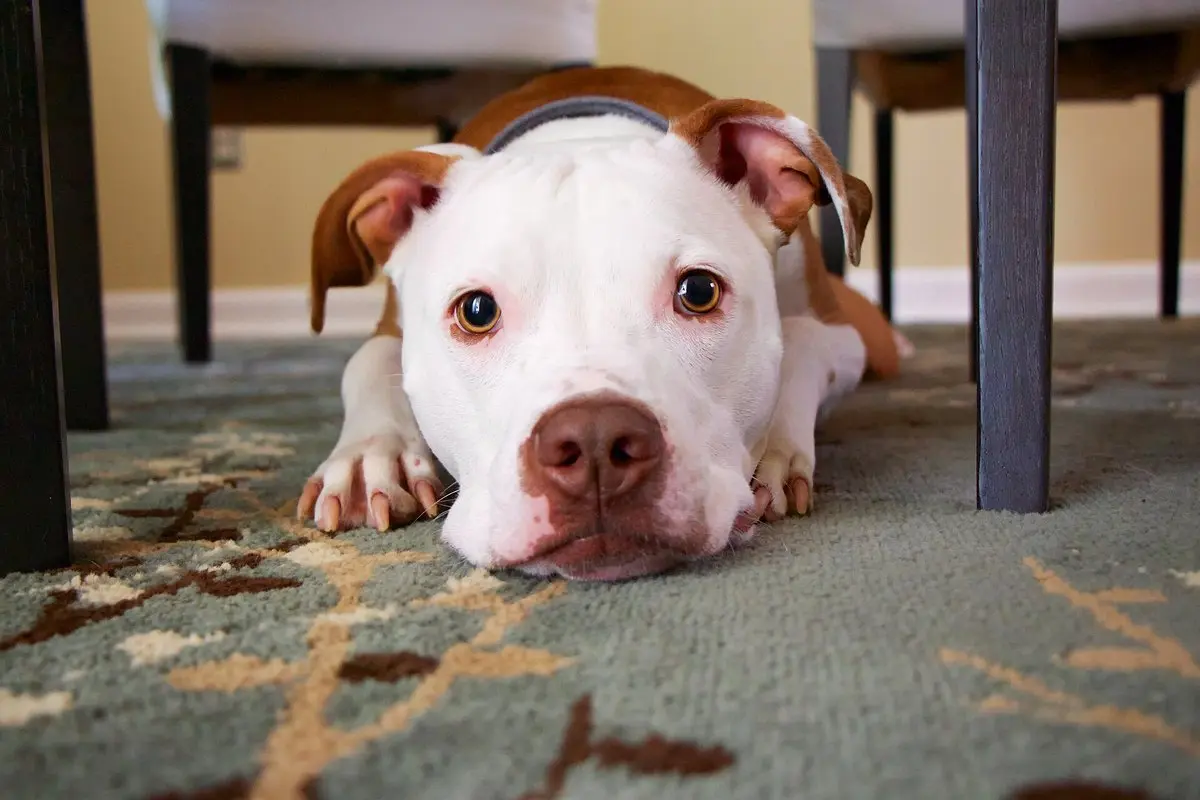
- Cover photo: A white and tan Pit Bull Terrier lying on a rug (Photo: Mike Burke studio57mm, CC0)
- Wikimedia Commons photo: A red Pit Bull Terrier standing in a meadow with a harness (Photo: Stacy, CC BY 2.0)
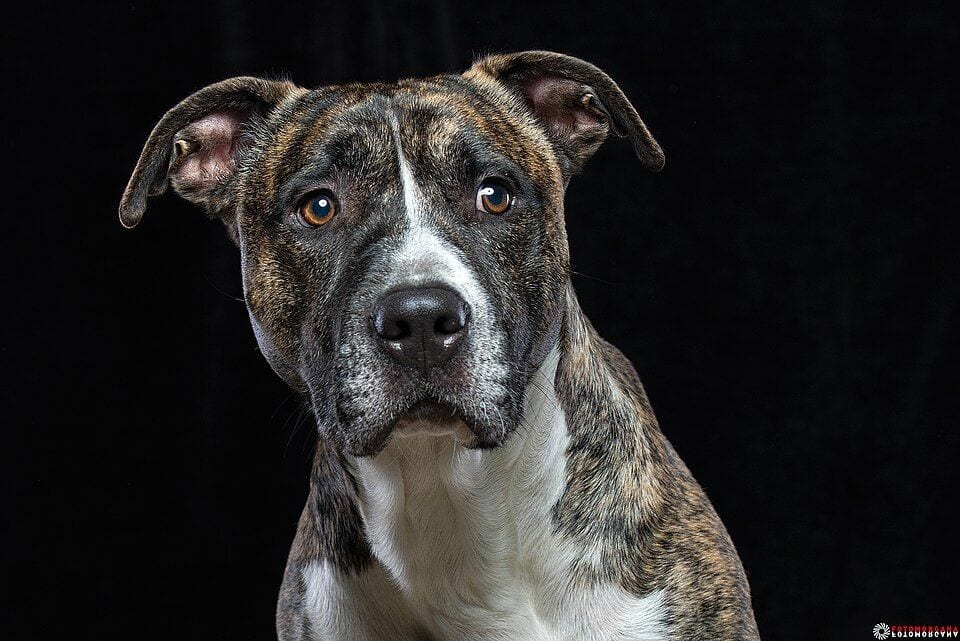
- Wikimedia Commons photo: Portrait of a brindle Pit Bull Terrier on a dark background (Photo: Andraz Muljavec fotomorgana, CC BY-SA 4.0)
Log in to comment
No comments yet. Be the first.