Abyssinian Cat: Temperament, Colors, Size, Health & Care
- The Abyssinian is named after the first exhibition cats brought from Abyssinia (now Ethiopia), though geneticists trace their roots to Southeast Asia and Europe.
- Their most distinct feature is a ticked coat: each hair has three to four bands of alternating color.
- Average weight is about 10 lbs (8–12 lbs); this is one of the most active and curious cat breeds.
- Great Britain recognized the breed in 1929, and the CFA has registered them since its founding in 1906.
- The breed can be prone to retinal degeneration, pyruvate kinase deficiency, and renal amyloidosis; some of these can be identified via genetic testing.
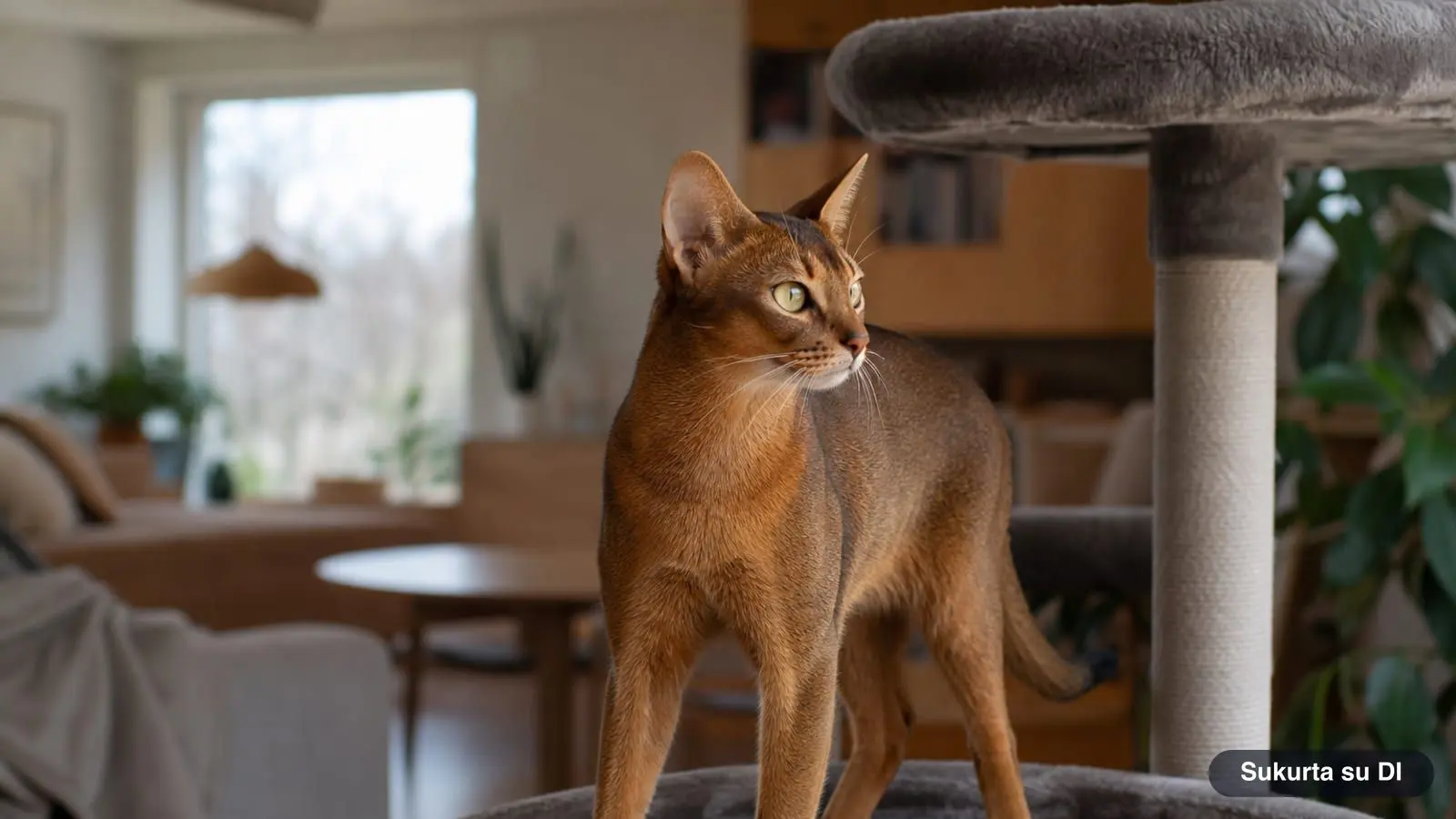
- A Ticked Coat: Each Hair with Multiple Bands of Color
- A Slender, Muscular, and Fine-Boned Cat
- Temperament: The Clown of the Cat Kingdom That Is Never Bored
- History: From Zula in 1871 to the First Sequenced Cat Genome
- Health: Eye Diseases, Anemia, and Renal Amyloidosis
- Care: Minimal Grooming, Maximum Movement
- Abyssinian, Somali, and Ocicat: Relatives with Different Coats
- How to Choose a Healthy Abyssinian Kitten
This article is part of the 77.today cat breeds guide, prepared by the 77.today editors from the sources listed at the end.
The Abyssinian cat looks as if it just stepped out of the savanna: slender, long-legged, with large pointed ears and almond-shaped eyes, and a short coat that glows with a warm reddish-brown tone. These cats are often compared to runway models—graceful yet muscular, as if always standing on their tiptoes. This is one of the oldest recognized breeds and also one of the most active. In our cat breeds guide, you will find out what makes the Abyssinian's coat special, what their temperament is like, how much they weigh, and which hereditary diseases are worth testing for.
| Origin | Great Britain (breeding); ancestors – Southeast Asia and Indian Ocean coasts |
|---|---|
| Recognition | GCCF in 1929; CFA since 1906; TICA championship status in 1979 |
| Weight | average 10 lbs (8–12 lbs) |
| Height | 8–10 inches |
| Coat | short, dense, close-lying, ticked |
| Colors | ruddy (usual), sorrel, blue, fawn, sometimes chocolate, lilac, and silver |
| Eyes | almond-shaped; gold, green, hazel, or copper |
| Activity | very high |
| Grooming | brush a few times a month |
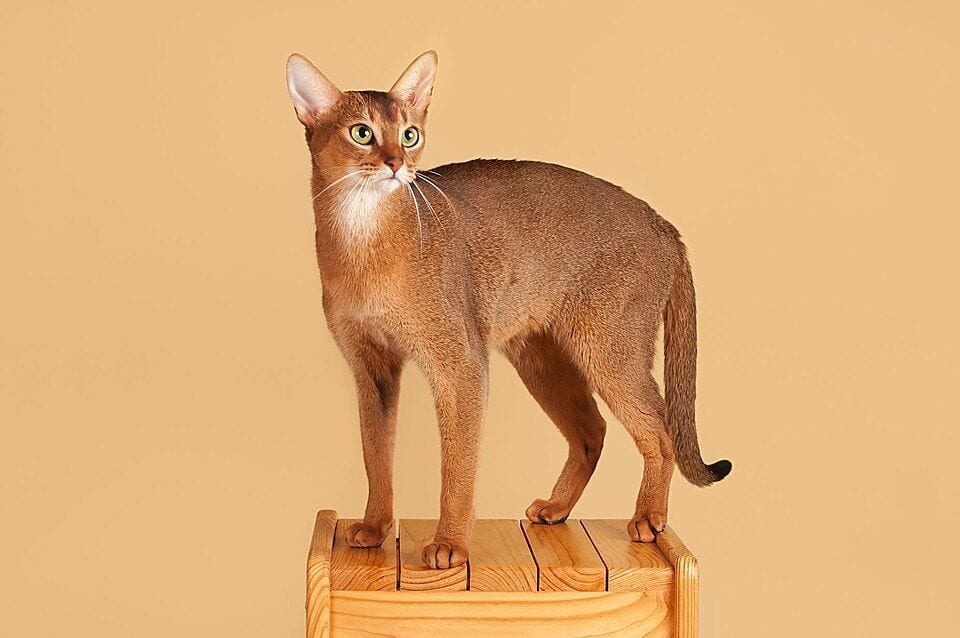
A Ticked Coat: Each Hair with Multiple Bands of Color
Genetically, the Abyssinian's coat is a variation of the tabby pattern, but instead of stripes or spots, the color is "scattered" across the body. The base of each hair is light, with three or four increasingly darker bands extending toward the tip. This so-called ticking (agouti) must be even across the entire body, though the spine line, tail, back of the hind legs, and paw pads are always darker. An M-shaped mark is often visible on the forehead, while grayish shades near the hair roots are considered a serious fault.
The original, historical color is a warm, deep reddish-brown with black ticking. In Europe, this is called usual, while in America it is known as ruddy. Later, a lighter copper sorrel (cinnamon) variety emerged, and through outcrossing with other shorthairs, blue (blue-gray on a warm beige base) and fawn (soft peach) were introduced. Most organizations also recognize silver varieties, and some accept chocolate and lilac. Kittens are born dark, and their true color settles in over several months.
A Slender, Muscular, and Fine-Boned Cat
The Abyssinian is a medium-sized cat: they weigh an average of about 10 lbs, typically ranging from 8 to 12 lbs, with a shoulder height of 8 to 10 inches. The head is a modified wedge with a slight break at the muzzle, the ears are large, pointed, and alert, and the eyes are almond-shaped. The legs are long, the paws are small and oval, and the tail is long and tapering. The Abyssinian looks light, but when you pick one up, you can feel their solid, firm muscles.
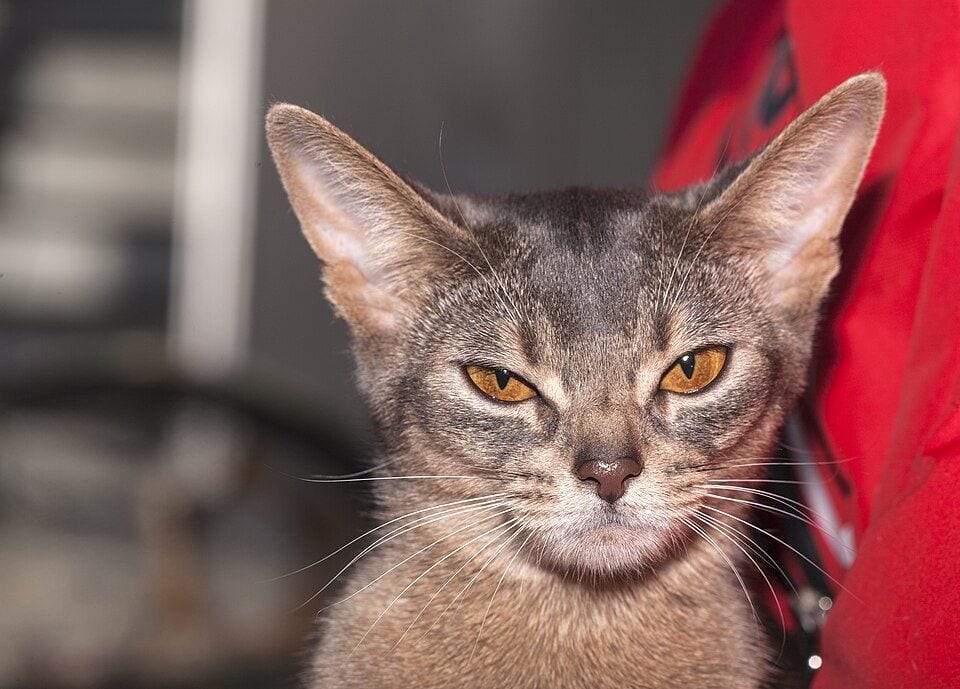
Temperament: The Clown of the Cat Kingdom That Is Never Bored
If you are looking for a cat that will snooze on your lap for hours, the Abyssinian is probably not for you. The CFA describes them as tireless problem solvers who leave no unexplored spaces in the home and are constantly in motion unless they are sleeping. If they do not have enough toys, they will invent their own. Because of their playfulness and curiosity, Abyssinians are often called the clowns of the cat kingdom. They love high vantage points from which to observe the whole room, making shelves and tall scratching posts an absolute must.
At the same time, the Abyssinian is deeply attached to their people. Veterinarian Joan O. Joshua compared the dog-like attachment of Abyssinians and Burmese to their owners. If they lack attention, an Abyssinian will gently tap you with a paw. They are not overly vocal: instead of loud meowing, you will more often hear quiet, trill-like chirps. They get along well with children who enjoy playing hunting games and with other cats, but they do not like being left alone for long periods—in quieter households, the CFA recommends keeping two cats.
History: From Zula in 1871 to the First Sequenced Cat Genome
Legend has it that the first cat of this type, named Zula, was brought to England from the Abyssinian War in 1868 by British General Robert Napier, and in December 1871, she won a prize at the Crystal Palace cat show. Some modern breeders doubt whether Zula was truly an Abyssinian: in surviving illustrations, her ears are too small and her coat is too long. The oldest known specimen of an "Abyssinian-type" cat is a taxidermy mount in the Leiden Zoological Museum in the Netherlands, acquired around 1834–1836 and labeled as originating from India.
The breed was developed in Great Britain, where the GCCF recognized it in 1929. After World War II and a feline leukemia virus outbreak, Abyssinians nearly disappeared in Britain, forcing breeders to import cats from the Netherlands, Scandinavia, North America, Australia, and New Zealand. In 2007, an Abyssinian named Cinnamon became the first cat to have its entire genome sequenced and published. The Abyssinian also served as the foundation for other breeds, including the longhaired Somali and the spotted Ocicat.
Health: Eye Diseases, Anemia, and Renal Amyloidosis
The Abyssinian cat has low genetic diversity, making breeder testing especially important for preventing hereditary diseases:
- Progressive Retinal Atrophy (PRA). The Abyssinian is the breed most frequently affected by this condition. The early-onset form is caused by a dominant CRX gene mutation, while the late-onset form is due to a recessive CEP290 (rdAc) mutation. Thanks to testing, the prevalence in Sweden dropped from 45% to less than 4% (as of 2008).
- Pyruvate Kinase (PK) Deficiency – a hereditary anemia caused by a recessive mutation in the PKLR gene. The CFA notes that genetic testing allows breeders to easily eliminate carriers.
- Familial Renal Amyloidosis – a buildup of proteins in the kidneys that can lead to kidney failure.
- Patellar Luxation (Slipped Stifles) – in one study, this was found in 26 out of 69 examined Abyssinians.
- Abyssinians are also diagnosed more frequently with feline infectious peritonitis and atopic dermatitis, making good veterinary care essential.
CFA breeders recommend getting your Abyssinian used to tooth brushing from an early age, as the breed can be prone to gingivitis.
Care: Minimal Grooming, Maximum Movement
- Coat. The short, dense coat only needs to be brushed a few times a month; the CFA suggests wiping it down with a chamois cloth to bring out its natural shine. Bathing is rarely necessary.
- Vertical Space. Wall shelves, tall cat trees, and window perches—the Abyssinian loves to observe their surroundings from above.
- Daily Play. At least two active play sessions a day, interactive toys, and food puzzles are highly recommended. Well-socialized Abyssinians can even learn to walk on a harness.
- Teeth. Regular brushing and routine dental check-ups at the vet.
Abyssinian, Somali, and Ocicat: Relatives with Different Coats
| Trait | Abyssinian | Somali | Ocicat |
|---|---|---|---|
| Coat | short, ticked | semi-long, ticked, plumed tail | short, with distinct spots |
| Origin | Great Britain | longhaired Abyssinian kittens | Abyssinian and Siamese cross in the US |
| Activity | very high | very high | high |
| Grooming | a few times a month | more often, especially the tail and "britches" | rarely, short coat |
How to Choose a Healthy Abyssinian Kitten
Before buying, ask the breeder to show the genetic test results for PK deficiency and PRA (rdAc) for both parents, and have them explain whether there is any history of renal amyloidosis in the bloodline. You should also inquire about the condition of the parents' patellas. A kitten's coat may still be darker than its parents'—this is completely normal. Keep the breed's energy levels in mind: an Abyssinian needs active owners and daily attention. Reputable breeders and registries like the CFA or TICA generally recommend that kittens stay with their mother until they are at least 14 weeks old. For more general advice on finding a responsible breeder, checking contracts, and avoiding puppy mills or pet stores, see our guide introduction.
If you are captivated by the Abyssinian's looks but prefer a longer coat, check out the Somali; if you love a wild appearance with spots, consider the Bengal or the Egyptian Mau.
Frequently asked questions
Is the Abyssinian cat really from Ethiopia?
Probably not. The name comes from the fact that the first cats of this type shown in English exhibitions were brought from Abyssinia, modern-day Ethiopia. A UC Davis genetic study showed the breed has genetic markers from both Southeast Asian and Western cats, and the CFA points to origins along the Indian Ocean coast and Southeast Asia.
How much does an Abyssinian cat weigh?
On average, about 10 lbs, typically ranging from 8 to 12 lbs. It is a slender, fine-boned, yet muscular medium-sized cat.
Is the Abyssinian a lap cat?
Usually not for long. Abyssinians are very attached to their owners and crave attention, but due to their high activity levels, they rarely sit in a lap for extended periods—they find it much more interesting to explore, climb, and play.
What colors do Abyssinian cats come in?
The original color is a warm reddish-brown with black ticking (ruddy, known in Europe as usual). Also recognized are cinnamon (sorrel), blue, fawn, and in some associations chocolate, lilac, and silver varieties. All share the same ticked pattern.
Why are Abyssinian kittens born dark?
Abyssinian kittens are born with a darker coat that lightens over several months, eventually taking on its characteristic glowing shade. Therefore, their final color is best evaluated as they mature.
Log in to comment
No comments yet. Be the first.