Devon Rex: Temperament, Size, Care & Health
- The Devon Rex originated from a single curly-coated kitten named Kirlee, born in Devon, England, in 1959–1960.
- Their wavy coat is caused by a different mutation than the Cornish Rex: crossing the two breeds results in straight-haired kittens.
- An adult Devon Rex weighs about 6–9 lbs, with males being slightly larger.
- They shed less than most cats, but the breed is not hypoallergenic.
- Blood type B is common in the breed, and hereditary COLQ myopathy can occur—both should be tested by breeders.
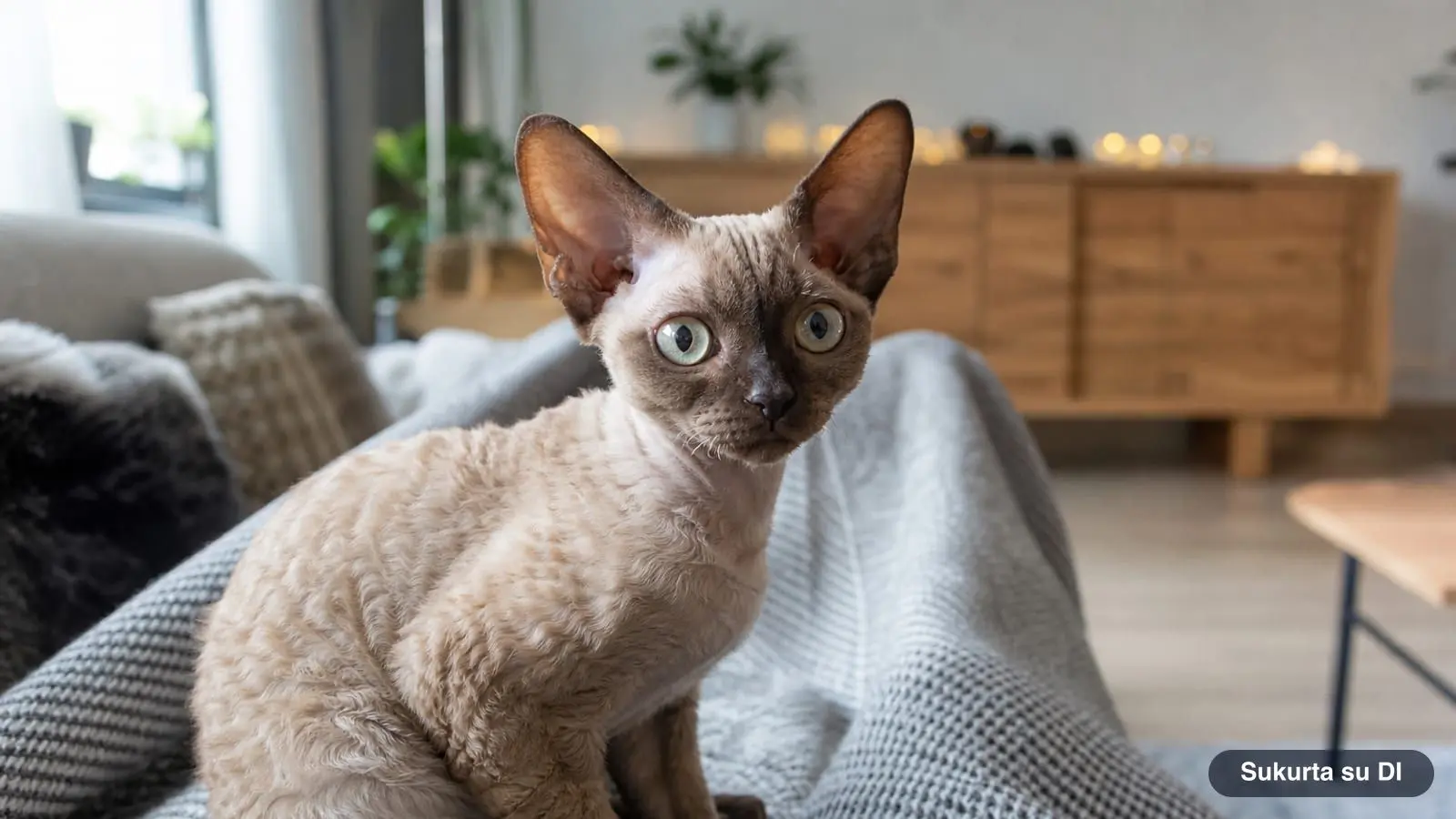
- The Devon Rex curl is caused by a different mutation than the Cornish Rex
- An elf-like head, muscular body, and "bulldog" stance
- Temperament: part clown, part soulmate
- Health: blood type B, myopathy, and skin issues
- Care: gentle grooming for a fragile, curly coat
- The Devon Rex and other curly-coated breeds
- How to choose a Devon Rex kitten
This article is part of the 77.today cat breeds guide, prepared by the 77.today editors from the sources listed at the end.
The CFA breed profile begins by saying that if you could cross a cat with an elf, you would likely get a Devon Rex. And indeed—large expressive eyes, huge ears set low on the sides of the head, broad cheekbones, and a mischievous gaze make this cat look almost like a fairytale character. Add to that a soft, curly, wavy coat. The Devon Rex is one of the most popular shorthair breeds. In this cat breeds guide profile, you will find their origins, temperament, coat characteristics, health tests, and care tips.
| Origin | England, Devon, spontaneous mutation |
|---|---|
| Recognition | FIFe, CFA, TICA, GCCF |
| Weight | about 6–9 lbs, males slightly larger |
| Body | small to medium, but muscular, broad chest |
| Coat | very short, soft, wavy, with sparse guard hairs |
| Whiskers and eyebrows | curly, fragile, often broken |
| Colors | all colors and patterns |
| Eyes | large, oval, any color |
| Temperament | affectionate, playful, social |
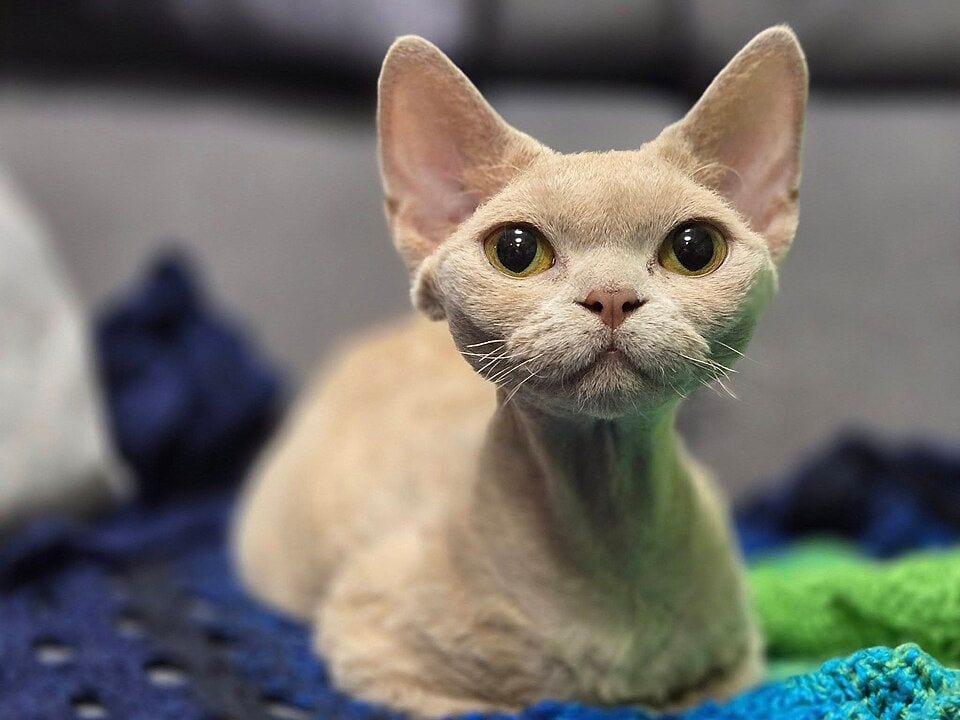
The Devon Rex curl is caused by a different mutation than the Cornish Rex
In 1959–1960, in a litter born in a garden in Buckfastleigh, Devon, Beryl Cox noticed an unusual curly-coated kitten and named him Kirlee. A decade earlier, the curly-coated Cornish Rex had already appeared in the neighboring county of Cornwall, so it was initially thought to be the same mutation. However, when Kirlee was crossed with a Cornish Rex female, only straight-haired kittens were born—proving that the curls were caused by different genes. Kirlee was mated with his offspring, and later with other breeds, which is why the Devon Rex today has one of the widest palettes of colors and patterns.
In 2010, DNA testing revealed that the Devon Rex curl is caused by a form of the KRT71 gene, which is related to the hairlessness gene of the Sphynx. Both are recessive, which is why European Sphynx lines were developed by outcrossing with the Devon Rex.
An elf-like head, muscular body, and "bulldog" stance
The head is the first thing that catches the eye: a short, broad wedge shape with a prominent forehead, large oval eyes, and gigantic, wide-set ears with rounded tips. The body is small to medium, but, in the words of the CFA, surprisingly heavy and muscular: the chest is broad, the neck is slender, and the front legs often stand wide apart like a bulldog's. The legs are somewhat long, the paws are small and oval, and the tail is long and thin.
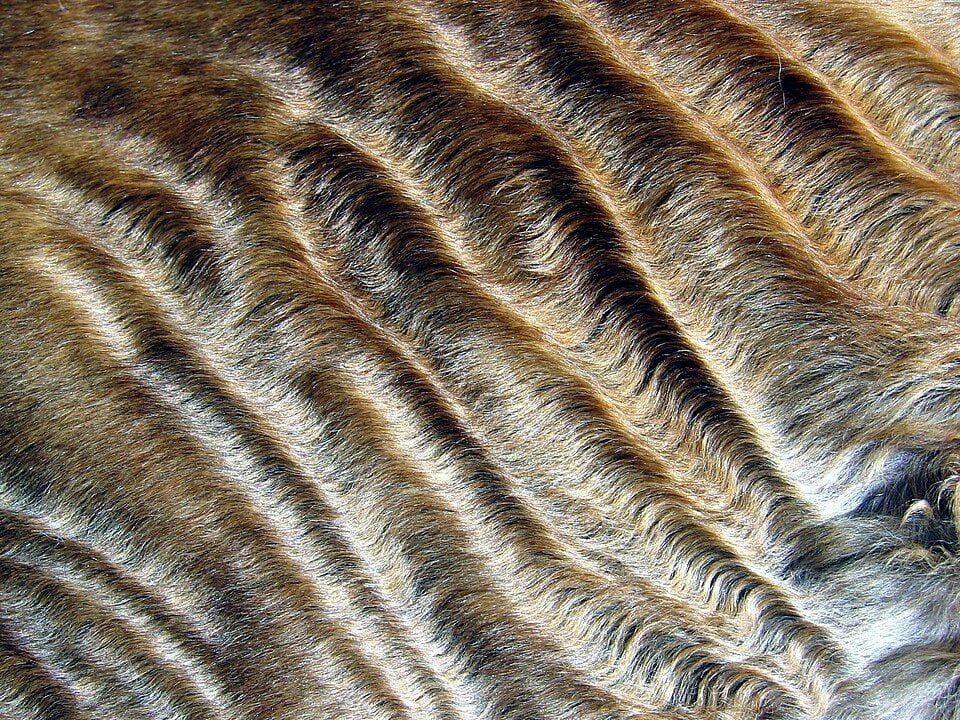
The coat is short, dense, as soft as a tissue, and wavy—the hairs bend inward, creating the impression of a rippling water surface. Unlike the Cornish Rex, the Devon Rex also has sparse, short, curly guard hairs, so its waves are looser, and the coat density varies. In the neck and belly areas, there is sometimes so little hair that the skin looks like suede. The whiskers and eyebrows are also curly and fragile, often breaking off.
Temperament: part clown, part soulmate
Devon Rex cats become very attached to their people and dislike being left alone for long periods. The CFA calls them cats for people who like their cat to "own" them, rather than the other way around. They learn to respond to their names, follow their owners all over the house, sleep right next to them under the covers, and often try to "help" with everything—even jumping into the bathtub or shower. They love to climb and jump, and can easily learn to play fetch or walk on a leash.
Devon Rex cats are vocal, but quiet—using chirps, trills, and purrs. Every guest is a potential new friend to them. They get along wonderfully with dogs and children, patiently tolerating even kids' games. They have a hearty appetite, and some Devon Rex cats are interested in unusual foods, such as fruits or vegetables, so be sure to keep table scraps safely out of reach.
Health: blood type B, myopathy, and skin issues
- Blood type B. The CFA notes that blood type B is very common in the breed. If a type A male is mated with a type B female, the kittens can die from antibodies in the mother's milk, making genetic blood typing essential for breeders. Owners should also know their cat's blood type in case a transfusion is ever needed.
- Hereditary myopathy (COLQ). A muscle weakness disease that appears between 3 and 23 weeks of age. Sometimes it stabilizes, but it usually progresses, and cats can choke on their food due to laryngeal spasms. Carriers are identified by a genetic test.
- Skin conditions. The breed is prone to atopic dermatitis, congenital hypotrichosis (hairlessness), and dermatitis caused by Malassezia yeast, so greasy skin or itching should be examined by a veterinarian.
Care: gentle grooming for a fragile, curly coat
- Coat. The Devon Rex sheds less than most cats and, in the words of the CFA, is a "wash-and-wear" cat. Do not use stiff brushes or combs—the fragile hairs will break; simply wiping them down with a soft grooming glove or a damp hand is enough.
- Ears and skin. Wax builds up quickly in their large ears, so clean them regularly. If the coat looks greasy, they can be bathed occasionally with a mild shampoo.
- Warmth. Their sparse coat provides little insulation, so the Devon Rex constantly seeks warmth and loves heated beds or snuggling under the blankets.
- Activity. Shelves, cat trees, and daily interactive play are essential for this curious and agile cat.
The Devon Rex and other curly-coated breeds
| Trait | Devon Rex | Cornish Rex | Selkirk Rex |
|---|---|---|---|
| Origin | England, Devon | England, Cornwall | USA, Montana |
| Coat | loose waves, sparse guard hairs | tight uniform waves, no guard hairs | plush loose curls, short or long |
| Inheritance | recessive | recessive | dominant |
| Body | small, muscular, broad chest | long, curved back | large, stocky |
How to choose a Devon Rex kitten
The CFA warns that you may have to wait for a kitten from a reputable breeder, though breeders sometimes offer retired adult cats, which is an excellent option. Ask to see the COLQ myopathy test and blood type results for both parents, and inquire about any history of skin or heart disease in the lineage. Consider whether your schedule will allow you to avoid leaving the cat alone for long periods—the Devon Rex struggles with loneliness. When bringing a cat home, ensure they are microchipped and registered with your local vet, and check your city or state ordinances regarding pet ownership, which we cover in our main guide.
If you love curly coats, compare them with the Cornish Rex and Selkirk Rex, or if you prefer even less hair, check out the Sphynx.
Frequently asked questions
Is the Devon Rex good for people with allergies?
Devon Rex cats shed less than most breeds, so some allergy sufferers tolerate them better. However, the CFA emphasizes that the breed is not hypoallergenic: allergies are caused by the Fel d 1 protein in saliva and skin secretions, which Devon Rex cats also produce.
What is the difference between a Devon Rex and a Cornish Rex?
Both breeds originated in neighboring English counties, but their curls are caused by different mutations. The Cornish Rex lacks guard hairs, has a coat of tight, uniform waves, and a long, curved body like a Greyhound. The Devon Rex has sparse, short, curly guard hairs, looser waves, and an elf-like head with huge, low-set ears.
How much does a Devon Rex weigh?
According to the CFA, adult Devon Rex cats typically weigh 6–9 lbs; males can be slightly larger. Despite their small size, they are surprisingly muscular and feel heavy when picked up.
Do Devon Rex cats need to be bathed?
Usually, it is not necessary, but their curly coat can sometimes become greasy, and wax can build up in their ears. Do not brush their coat with a stiff brush—the hair is fragile and can break; it is better to wipe them down with a soft grooming glove or a damp hand.
Why do Devon Rex breeders test for blood types?
The rarer blood type B is common in this breed. If a type A male is mated with a type B female, the kittens can die from blood incompatibility when nursing their mother's milk, unless they are hand-fed for the first few days. Therefore, responsible breeders determine blood types before breeding.
Log in to comment
No comments yet. Be the first.