Selkirk Rex: Temperament, Size, Care & Health
- All Selkirk Rex cats trace back to a curly-haired kitten named Miss DiPesto, born in Montana in 1986–1987.
- The curls are caused by a dominant KRT71 gene mutation, meaning just one copy of the gene creates a curly coat.
- This is the only cat breed named after a real person—the breeder's stepfather, Selkirk.
- They come in both shorthair and longhair varieties; they have a large, sturdy build, with males weighing around 12–15 lbs.
- Their coat is dense and not hypoallergenic, so they are not recommended for allergy sufferers; reputable breeders test for PKD, HCM, and blood type.
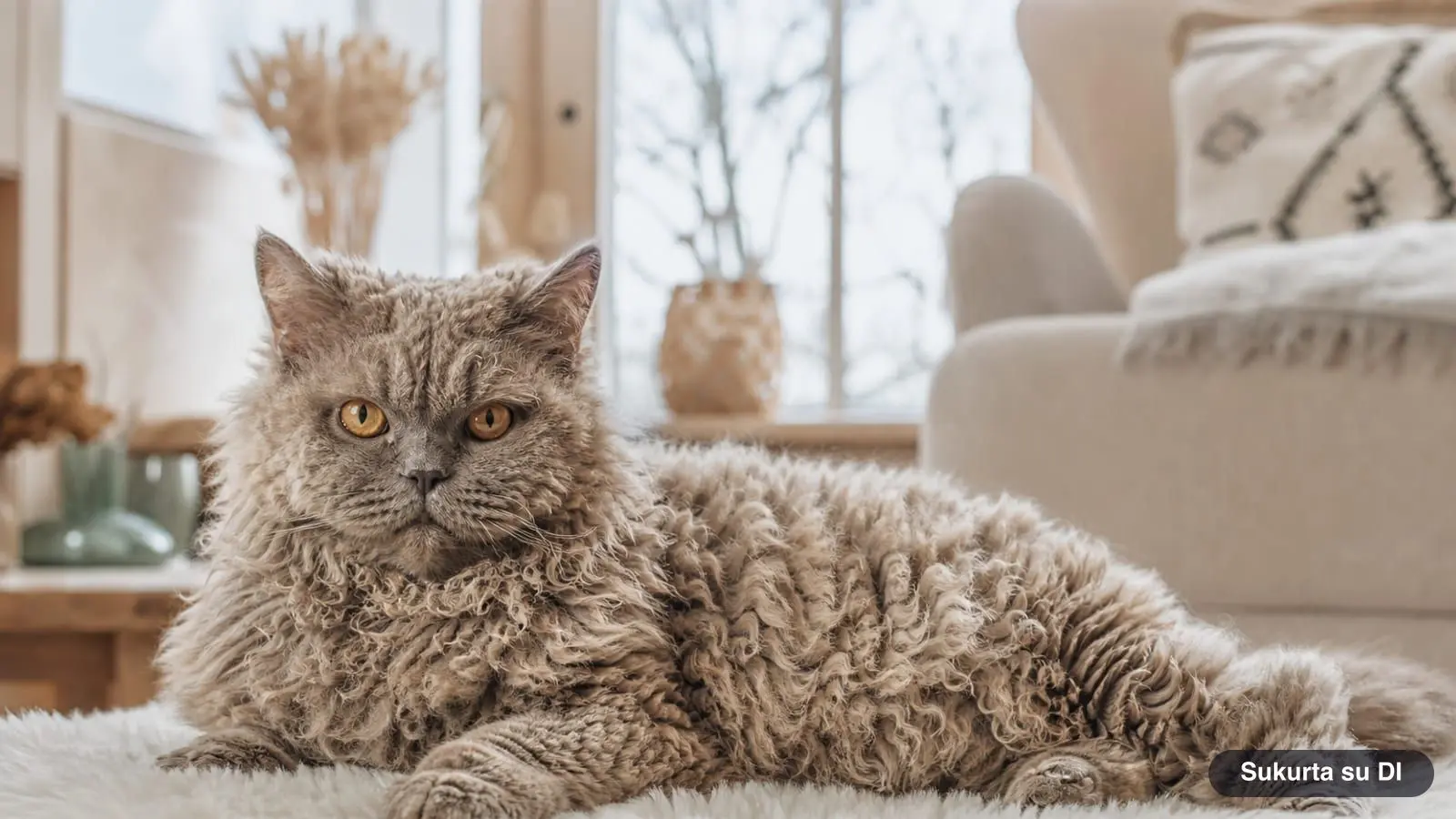
- The Selkirk Rex Curls Are Caused by a Dominant Gene
- Sturdy Build, Round Head, and Dense Curls
- Outcrossing with Persian and British Cats
- Temperament: Affectionate, Calm, and Lap-Loving
- Health: Inherited Risks from Persians and British Shorthairs
- Grooming: Fingers Instead of Combs
- Three Curly Breeds: Selkirk Rex, Devon Rex, and Cornish Rex
- How to Choose a Selkirk Rex Kitten
This article is part of the 77.today cat breeds guide, prepared by the 77.today editors from the sources listed at the end.
Show judges often joke that the Selkirk Rex is the original "bad hair day" cat: their curls point in every direction, as if the cat just stepped out of the shower. The CFA even calls them the "cat in sheep's clothing." Unlike the slender Devon Rex and Cornish Rex, this is a large, sturdy, round-faced cat with a dense, curly coat. In this cat breed guide profile, you will discover where the Selkirk Rex came from, the unique traits of their coat, their personality, and how to care for them.
| Origin | USA, Montana |
|---|---|
| Recognition | TICA in 1992; CFA registration in 1992, championship status in 2000; FIFe (longhair and shorthair) |
| Weight | Males around 12–15 lbs, females are smaller |
| Body | Medium to large, sturdy, heavy-boned |
| Coat | Short or long, dense, with loose curls |
| Inheritance | Dominant (KRT71 gene) |
| Colors | All colors, including pointed and bicolor |
| Eyes | Round, set wide apart |
| Temperament | Calm, affectionate, social |
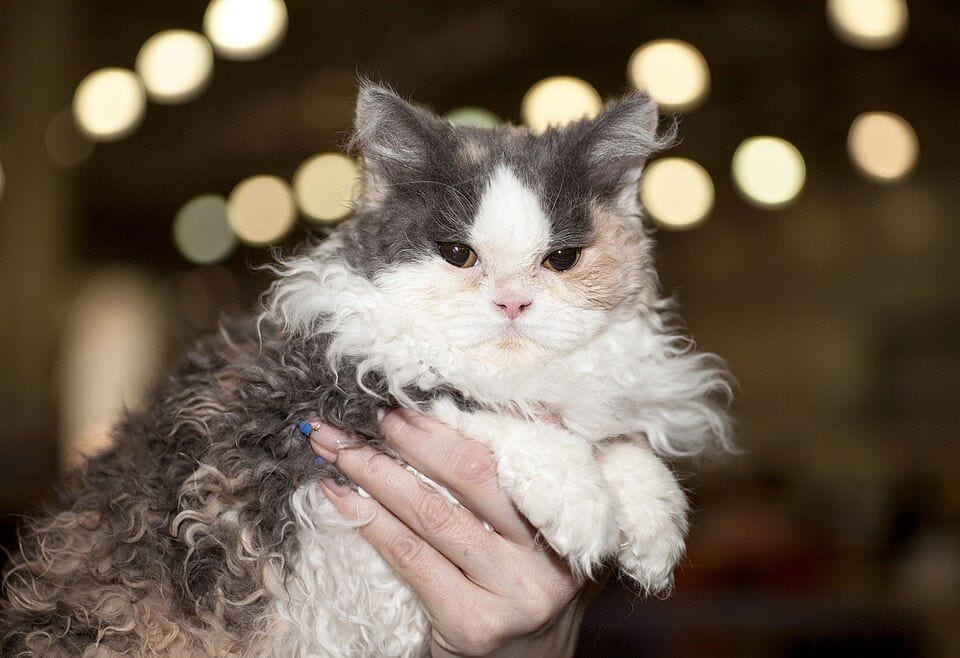
The Selkirk Rex Curls Are Caused by a Dominant Gene
In 1986–1987 in Montana, a rescued cat gave birth to a litter featuring one kitten with an unusual coat—a female with curly whiskers and hair that looked like it had a perm. She was taken in by Persian breeder Jeri Newman and named Miss DiPesto, after the curly-haired character from the TV show Moonlighting. When bred to a black Persian male, three out of her six kittens were born curly, proving that this new Rex gene was dominant. All modern Selkirk Rex cats trace their lineage back to Miss DiPesto. Newman named the breed after her stepfather, Selkirk—making it the only cat breed to this day named after a real person.
It was later discovered that the curls are caused by a variant of the KRT71 gene—the same gene whose other mutations cause the hairlessness of the Sphynx and the curls of the Devon Rex. The Selkirk Rex variant is dominant, so even a single copy produces a full, loosely curled coat. Cats that inherit two copies of the gene have tighter, softer curls resembling a Cornish Rex, tend to be more slender with larger ears and a less rounded head, and often have oilier coats.
Sturdy Build, Round Head, and Dense Curls
The Selkirk Rex is a medium to large cat with a solid, muscular body and heavy bones. Males weigh around 12–15 lbs, while females are slightly smaller. The head is round with full cheeks and no flat planes; prominent whisker pads give the muzzle a somewhat square appearance. The eyes are round and set wide apart, and the ears are medium-sized. Their whiskers are curly, brittle, and often break off.
They come in both shorthair and longhair varieties. Shorthairs have a coat of uniform length all over, while longhairs feature a longer ruff framing the face and a plumed tail. The curls are most prominent on the neck, tail, and belly. The coat is soft but dense, complete with an undercoat. All colors are permitted, including pointed, bicolor, cinnamon, silver, and chocolate. The abundance of curls can also be influenced by climate and hormonal changes.
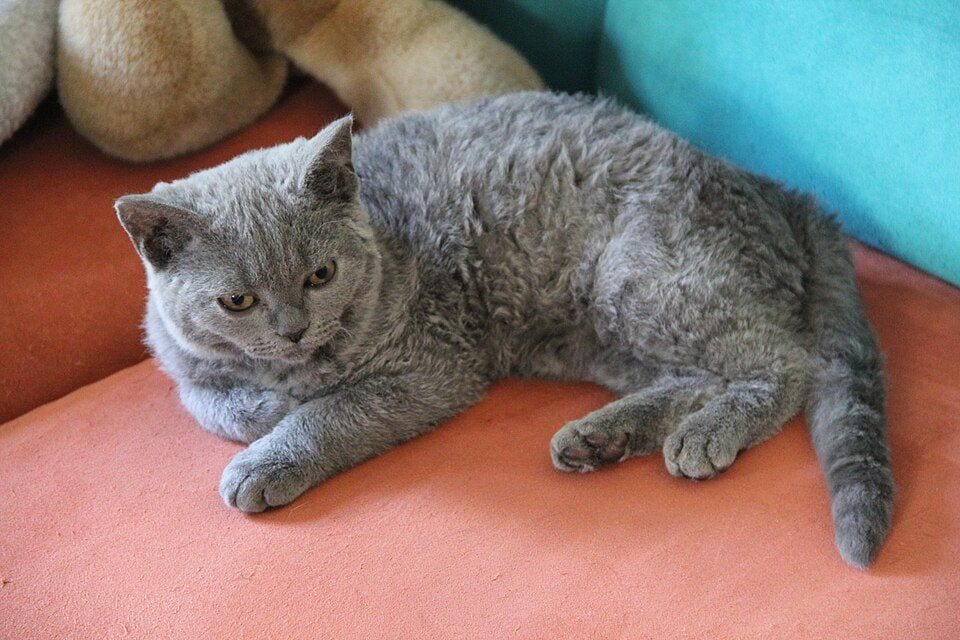
Outcrossing with Persian and British Cats
To establish the breed's foundation, American Shorthair, Persian, Himalayan, Exotic Shorthair, and British Shorthair cats were used. This allowed the breed to maintain significant genetic diversity: the inbreeding coefficient of the Selkirk Rex is low, similar to that of mixed-breed cats. TICA recognized the breed in 1992, and the CFA registered it the same year, granting it championship status in 2000. Since 2020, the CFA no longer permits outcrossing with Persians, and starting in 2025, outcrossing with British Shorthairs and Exotic Shorthairs is also prohibited, meaning both parents of CFA-registered kittens must be Selkirk Rex. TICA still allows these outcrosses.
Temperament: Affectionate, Calm, and Lap-Loving
The CFA notes that the cat's namesake (spelled DePesto by the CFA) was known as a bit of a "pest" because she constantly demanded attention. Her descendants often inherit this same trait: they will politely ask for your attention, and if they do not get it, they might jump right onto your lap or back if you are bending over. Selkirk Rex cats are intelligent but also have a silly streak—for example, they might try to run up a wall while chasing a laser pointer.
The Selkirk Rex is more social than highly active. Their focus is on their humans, and their idea of paradise is a warm lap. They prefer to keep their paws on the floor, though they will chase a toy with enthusiasm. They are not overly vocal but will happily respond when spoken to. They get along great with children and other pets, provided children understand that the cat should be handled gently.
Health: Inherited Risks from Persians and British Shorthairs
There are no known diseases specific to the Selkirk Rex breed itself. However, like other Rex breeds, their curly hair can irritate the inside of their ears, leading to increased wax production. Cats with two copies of the gene tend to have oilier coats and may require more frequent bathing. Because the breed was developed using Persian and British cats, reputable breeders test for conditions known in those breeds:
- Polycystic Kidney Disease (PKD) – In many registries, all Selkirk Rex cats used for breeding must be genetically tested or come from two tested parents.
- Hypertrophic Cardiomyopathy (HCM) and Hip Dysplasia – The CFA lists these among the conditions breeders should screen for.
- Blood Type Incompatibility – Most breeders determine the blood type via a genetic test before mating to prevent neonatal isoerythrolysis.
Grooming: Fingers Instead of Combs
- Coat. The CFA advises simply tousling the curls with your fingers using a gentle scratching motion—the coat will look its best, and the cat will be happy. The coat does not mat easily, but it is worth brushing once or twice a month to remove dead hair. A wide-toothed comb is handy for longhairs.
- Ears. Inspect and clean them regularly, as the curly hair promotes wax buildup.
- Bathing. If the coat becomes greasy, give them an occasional bath.
- Weight. This large, calm cat can easily gain weight, so engage them in daily play.
Three Curly Breeds: Selkirk Rex, Devon Rex, and Cornish Rex
| Trait | Selkirk Rex | Devon Rex | Cornish Rex |
|---|---|---|---|
| Coat | Dense, loose curls | Sparse, loose waves | Down hair only, tight waves |
| Inheritance | Dominant | Recessive | Recessive |
| Body | Large, sturdy | Small, muscular | Slender, arched back |
| Hypoallergenic | Not recommended | Not hypoallergenic | Not hypoallergenic |
How to Choose a Selkirk Rex Kitten
When looking for a Selkirk Rex kitten, always ask the breeder for the parents' PKD test results, echocardiogram (for HCM), and blood type screening. Remember that a kitten's curls can disappear during their first year and return later, with the final coat fully developing around two years of age. If curls are not your top priority, the CFA suggests considering a straight-haired Selkirk Rex—they have the exact same sweet personality and generally cost less. Reputable breeders associated with organizations like the CFA or TICA will usually not let kittens go to their new homes before they are 12 to 14 weeks old. Be sure to check local ordinances, and as we covered at the beginning of our guide, having your vet microchip your new pet is highly recommended.
You can find other curly-haired breeds in our Devon Rex and Cornish Rex profiles, or if you are looking for a cat with a similarly sturdy build but a straight coat, check out the British Shorthair.
Frequently asked questions
How does the Selkirk Rex differ from the Devon Rex and Cornish Rex?
The Selkirk Rex has a dense coat with all hair types and loose curls that curl in every direction. The Devon Rex and Cornish Rex have sparser coats with tighter waves. The Selkirk Rex's curls are caused by a dominant gene, while the other two are recessive. Additionally, the Selkirk Rex is large and sturdy, whereas the other Rex breeds are more slender.
Is the Selkirk Rex hypoallergenic?
No. Unlike other Rex breeds that have sparser coats, the Selkirk Rex has a thick, dense coat and is not recommended for people with severe cat allergies.
How do you groom a Selkirk Rex?
The CFA recommends gently tousling their curls with your fingers using a light scratching motion, and brushing them once or twice a month to remove dead hair. For longhaired cats, a wide-toothed comb helps separate the curls. Brushing too often will straighten out their beautiful curls.
Are all Selkirk Rex kittens curly?
No. Because the curl is caused by a dominant gene, mating a Selkirk Rex with a straight-haired cat results in about half the kittens being curly. Straight-haired Selkirk Rex cats have the exact same wonderful personality and, according to the CFA, typically cost less.
When does the Selkirk Rex coat fully develop?
Kittens are usually born curly, but they often lose their curls around six months of age. The curls typically return between 8 and 10 months, and the coat may continue to develop and mature until the cat is about two years old.
Log in to comment
No comments yet. Be the first.