Oriental Shorthair: Temperament, Colors, Care & Health
- The Oriental Shorthair is the Siamese cat's sibling without the point gene; recognized by the FCI/FIFe in 1959 and granted CFA championship status in 1977.
- Theoretically, over 300 color and pattern combinations are possible (the CFA notes over 600 when factoring in coat length).
- Males typically weigh between 7.5 and 12 lbs, while females generally weigh under 7.5 lbs.
- Their temperament matches the Siamese: highly social, vocal, playful, and they struggle with being left alone.
- In the US, they are a beloved and steadily popular breed within the CFA and TICA, often ranking highly among shorthair enthusiasts.
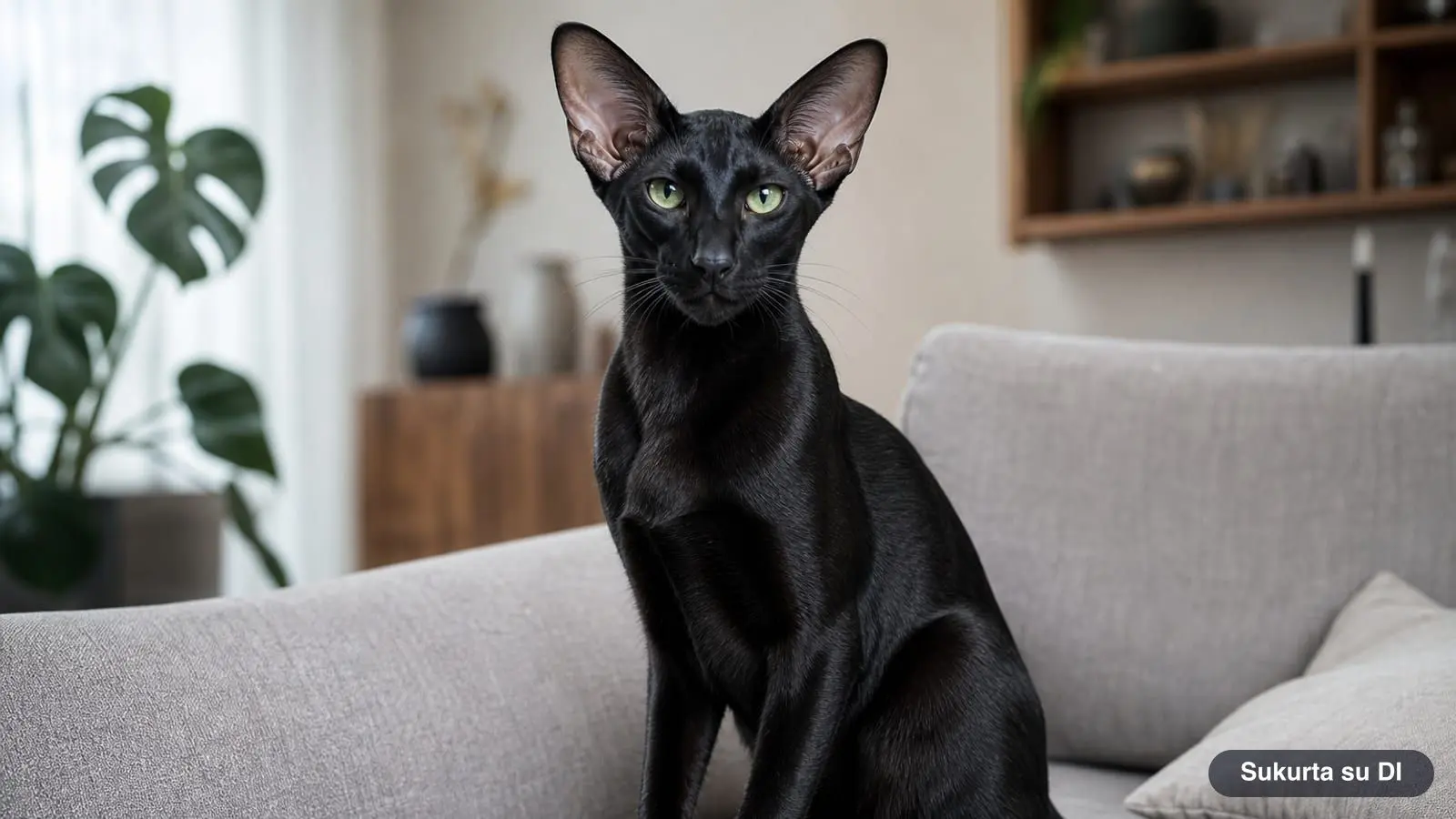
- The Oriental Shorthair – A Siamese Without Dark Points
- Hundreds of Colors and Green Eyes
- Temperament: Vocal, Affectionate, and Tireless
- Health: PRA and Amyloidosis Like the Siamese
- Care: Minimal for the Coat, Maximal for Attention
- Oriental, Siamese, and Balinese – Sisters of the Siamese Group
- How to Choose an Oriental Kitten
This article is part of the 77.today cat breeds guide, prepared by the 77.today editors from the sources listed at the end.
Imagine a Siamese painted in any color: coal black, chocolate, blue, tabby, or spotted, with green eyes. This is the Oriental Shorthair. The slender tubular body, long wedge-shaped head, giant ears, and long thin tail are all inherited from the Siamese, while the selection of colors and patterns is the largest among all breeds. American breeders and owners find Orientals especially endearing: they are a steadily popular choice in CFA and TICA registries, often outshining other sleek breeds. In our cat breeds guide, you will find everything about this breed.
| Origin | Great Britain and the US, from Siamese cats |
|---|---|
| Recognition | FIFe in 1959; CFA championship status in 1977; GCCF in 1997 |
| Weight | males 7.5–12 lbs, females up to 7.5 lbs |
| Body | slender, tubular, muscular; long legs and tail |
| Coat | short, glossy, close-lying (longhairs have a silky, semi-long coat) |
| Colors | all, except pointed (colorpoint) |
| Eyes | almond-shaped, usually vivid green |
| Temperament | highly social, vocal, playful |
| Grooming | once a week |
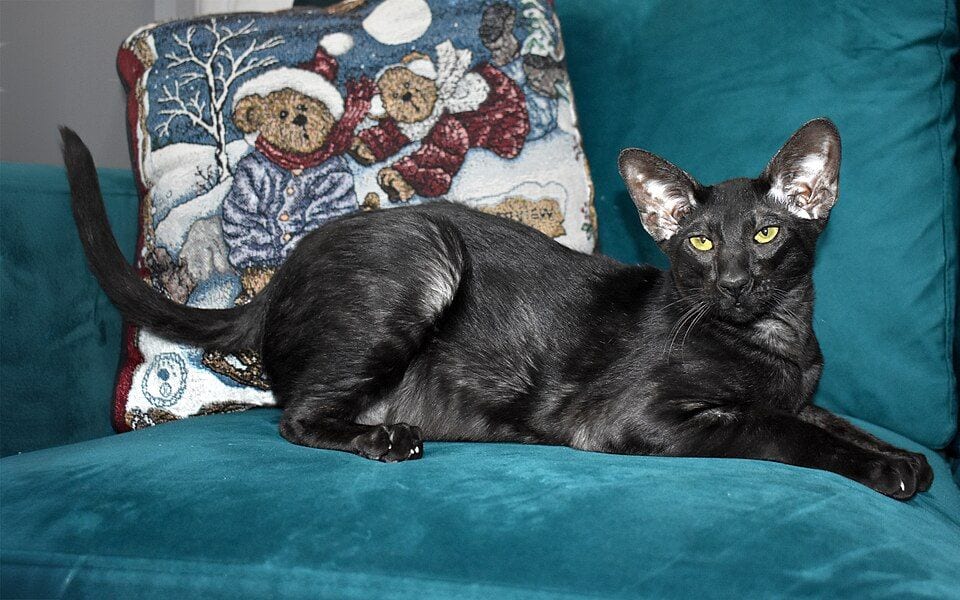
The Oriental Shorthair – A Siamese Without Dark Points
The CFA and FIFe describe the Oriental simply: it is essentially a Siamese without the point gene. In Siam (modern-day Thailand), there were not only pointed cats but also solid-colored ones, as the gene responsible for points is recessive. When Siamese breeding began in Great Britain in the late 19th century, pointed cats were registered as Siamese, while others were called "non-blue-eyed Siamese" or "foreign shorthairs." In the 1950s, European breeders, wanting to expand the color palette, started crossing Siamese cats with other breeds and established every possible color on a Siamese-type body. FIFe recognized the breed in 1959.
In the US, the breed was developed in 1971–1972 by New York-area breeders Vicky and Peter Markstein, who were fascinated by solid-colored Siamese-type cats in British catteries. The CFA registered Orientals in 1974, granted them championship status in 1977, and accepted longhairs in 1988—since then, the breed is often simply called the "Oriental." The British GCCF recognized it in 1997. In some organizations, the solid chocolate variety is known as the Havana Brown, and the solid white as the Foreign White.
Hundreds of Colors and Green Eyes
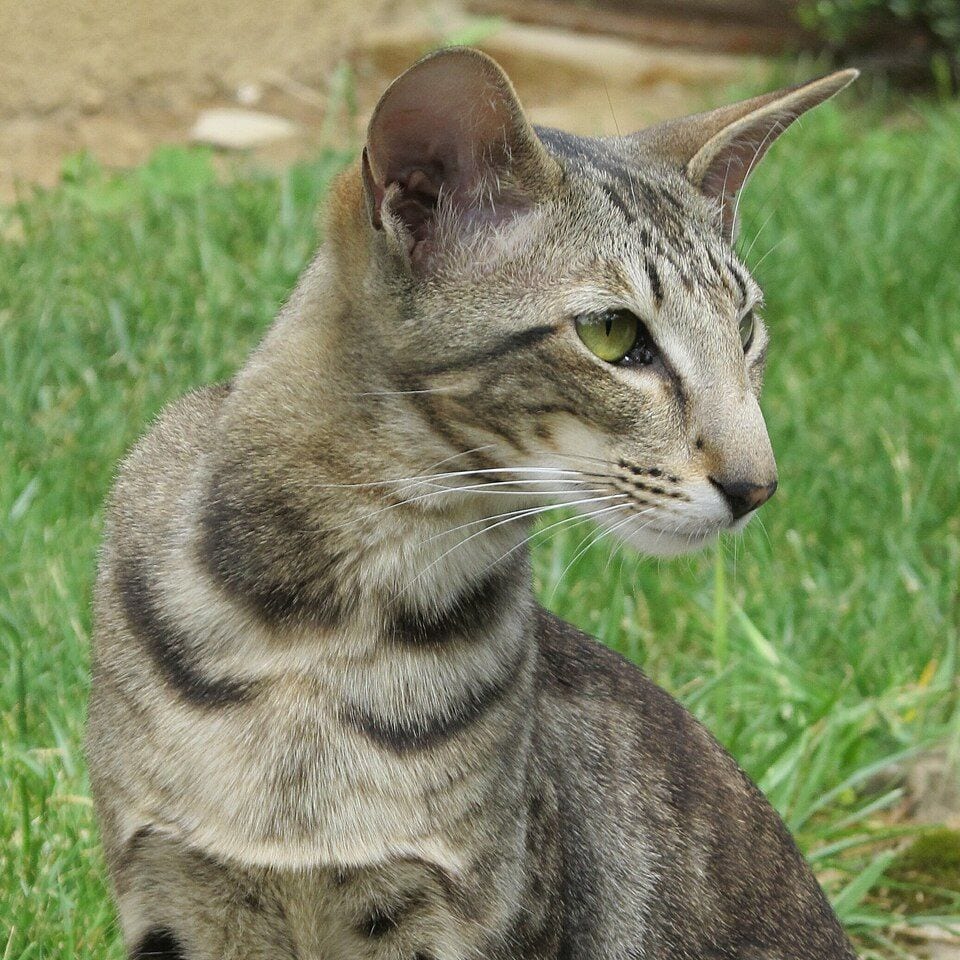
Theoretically, over 300 color and pattern combinations are possible, and the CFA, factoring in two coat lengths, mentions over 600. The primary colors are black (called "ebony"), chocolate, cinnamon, red, white, and their dilute forms: blue, lilac ("lavender"), fawn, caramel, cream, and apricot. They can be combined with silver (shaded or smoke), solid, four tabby patterns, tortoiseshell, or bicolor with white. The breed standard allows all colors except dark points: such Oriental kittens are registered as Siamese in most organizations.
The eyes are almond-shaped and usually vivid green. The head fits into a triangle with lines running from the tip of the nose to the tips of the ears. The coat is very short, glossy, and lies so close it looks painted on. Despite their slender appearance, Orientals are surprisingly muscular and athletic—they jump high and love to climb.
Temperament: Vocal, Affectionate, and Tireless
The CFA notes that the Oriental is just as intelligent as its Siamese ancestors. Every movement of their owner is interesting to them: they will inspect your toothbrush, "help" you tie your shoes and pick out breakfast from the fridge, and when you sit down, they will settle on your lap, purring and rubbing against your chin. Given attention, an Oriental will do anything to please you, but deprived of it, they can long for you and become depressed. There will be plenty of conversations—Orientals love to share their opinions on almost everything.
Breed standards emphasize that Orientals dislike being alone and usually prefer living in a pair or a group, enjoying the company of other cats and animals. They are easily trained, highly playful, and loud. Many of them gladly play fetch and maintain their playfulness well into old age. This is an excellent choice for an active family, but not for those looking for a quiet, independent cat.
Health: PRA and Amyloidosis Like the Siamese
- Progressive Retinal Atrophy (PRA) – a recessive disease leading to blindness. Genetic testing allows carriers to be removed from breeding programs or mated only with healthy cats.
- Amyloidosis – protein deposits that damage the liver and other organs. It can be both hereditary and acquired, and genetic markers are still being researched, so it is worth asking if the disease has occurred in the kitten's pedigree.
- Teeth and weight. As with other slender breeds, dental care and maintaining a lean body are crucial.
The CFA notes that most Orientals are healthy due to the breed's popularity and genetic diversity, and breeders often recommend securing pet insurance.
Care: Minimal for the Coat, Maximal for Attention
- Coat. Orientals shed very little but enjoy being brushed. For shorthairs, the CFA suggests a quick run-through with a rubber brush; for longhairs, a fine steel comb, both once a week.
- Warmth. Cats with little undercoat seek warmth—heated beds and a spot on a windowsill above a radiator are highly appreciated.
- Activity. Tall cat trees, feather toys, food puzzles, and trick training.
- Company. A second cat or another pet is essential if the house is empty for long periods.
Oriental, Siamese, and Balinese – Sisters of the Siamese Group
| Trait | Oriental Shorthair | Siamese | Balinese |
|---|---|---|---|
| Color | all, without points | only with dark points | only with dark points |
| Eyes | usually green | blue | blue |
| Coat | short (longhairs exist) | short | semi-long |
| FIFe kittens in 2025 | 1,551 (shorthairs) | 861 | 73 |
How to Choose an Oriental Kitten
The CFA notes that most breeders specialize in a few colors, so you may have to wait if you want a specific shade. Ask for the parents' PRA test results and inquire about amyloidosis in the pedigree. Because Oriental and Siamese lines are intertwined, pointed kittens can be born in a litter—they are registered as Siamese. Under CFA and TICA guidelines, kittens should not go to their new homes before 14 weeks of age. When looking for a reputable breeder, ensure they provide a contract, health guarantees, and allow you to meet the parents. Avoid pet stores or puppy mills, and consider checking local breed rescues if you are open to adoption.
You can find their longhaired relative in the Balinese profile, and a cat with a similar temperament but a sturdier, quieter build in the Tonkinese description.
Frequently asked questions
What is the difference between an Oriental Shorthair and a Siamese?
The body and head shape are identical, but the Oriental Shorthair lacks the dark points of the Siamese. Their coat comes in solid, tabby, spotted, bicolor, or other patterns, and they typically have green eyes instead of blue. The CFA and FIFe essentially consider the Oriental a Siamese without the point gene.
Does the Oriental Shorthair meow a lot?
Yes. Both the CFA and TICA emphasize that Orientals are very vocal and loud—they want to "talk" about almost everything. They also form deep attachments to their humans and can become depressed if they do not receive enough attention.
How much does an Oriental Shorthair weigh?
Orientals are medium-sized with fine bones but are surprisingly muscular. Males typically weigh 7.5–12 lbs, while females usually weigh under 7.5 lbs.
Are there longhaired Oriental cats?
Yes. The Oriental Longhair differs only in coat length—it has two copies of the recessive longhair gene, resulting in a silky, semi-long coat and a plumed tail. The CFA accepted longhaired Orientals in 1988, while other registries like FIFe register them as a separate breed.
Does an Oriental Shorthair need company?
Very much so. Breed standards note that Orientals dislike solitude and usually prefer living in pairs or groups. If you work outside the home, it is highly recommended to consider getting two cats.
Sources
- Wikipedia: Oriental Shorthair
- Wikipedia: Oriental Longhair
- FIFe: Oriental Shorthair breed standard
- FIFe: Oriental Longhair breed standard
- CFA: Oriental breed profile
- FIFe Breeding Statistics 2025
- FIFe Breeding & Registration Rules
- Wikimedia Commons: Black Oriental Shorthair
- Wikimedia Commons: Black marble Oriental Shorthair
Log in to comment
No comments yet. Be the first.