Egyptian Mau: Temperament, Size, Care & Health
- The Egyptian Mau is one of the few naturally spotted domestic cats; the spots occur only on the tips of the hairs.
- The breed was popularized in Europe and the US by Russian Princess Natalie Troubetskoy, who moved to the US with three Maus in 1956.
- Three colors are recognized: silver spotted, bronze spotted, and black smoke.
- A skin fold extending from the flank to the hind knee aids in running: the Mau is said to be able to run faster than 30 mph.
- The breed is prone to urate urinary stones and pyruvate kinase (PK) deficiency.
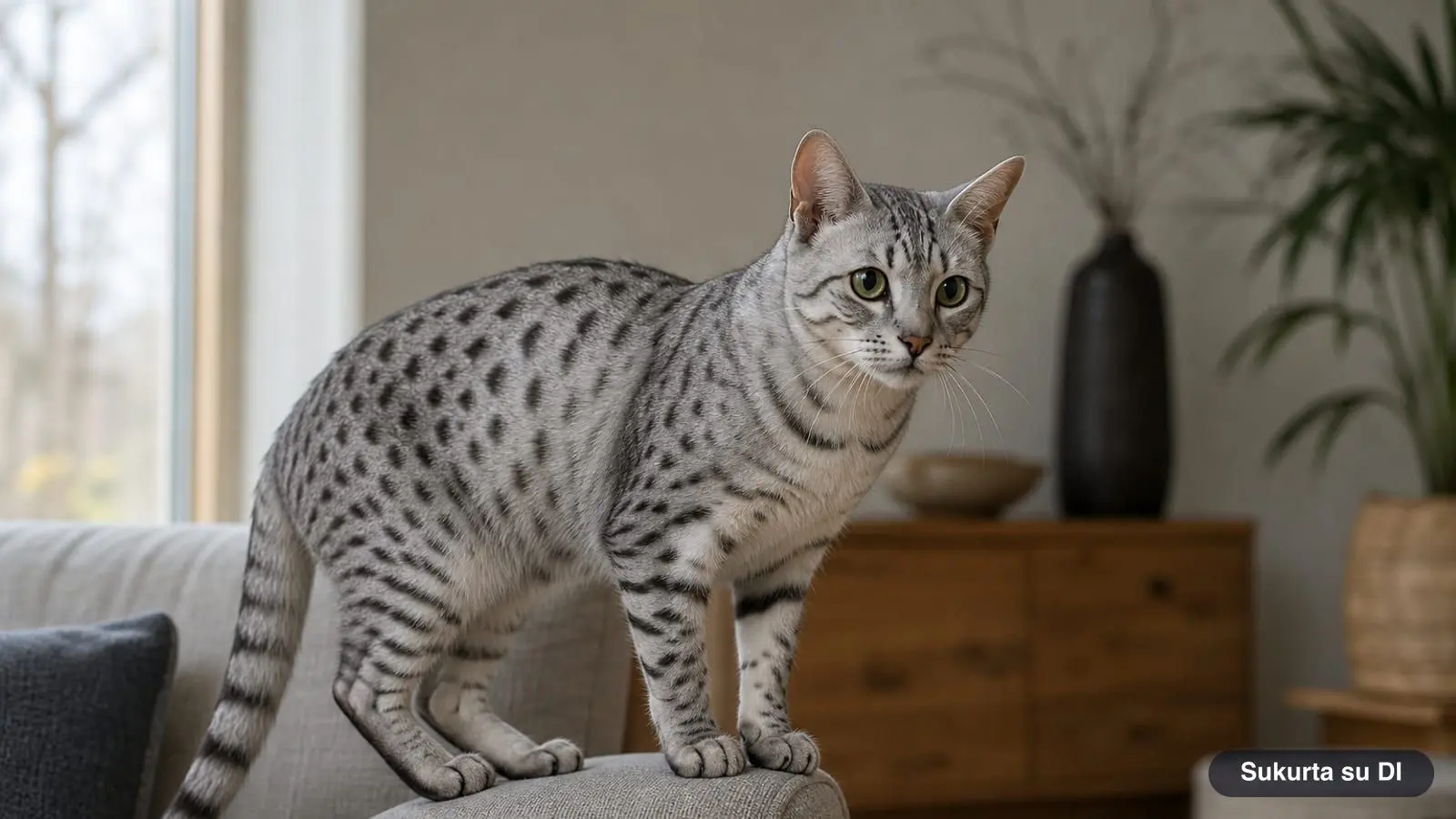
- Egyptian Mau spots—natural, not bred
- The fastest domestic cat with skin folds
- History: from pharaohs' frescoes to Princess Troubetskoy
- Temperament: intelligent, loyal, and alert
- Health: urate stones and PK deficiency
- Care: weekly brushing and plenty of water
- Egyptian Mau, Ocicat, and Bengal
- How to choose an Egyptian Mau kitten
This article is part of the 77.today cat breeds guide, prepared by the 77.today editors from the sources listed at the end.
The Egyptian Mau is a cat that can be recognized from ancient Egyptian frescoes: slender, muscular, with randomly scattered dark spots on a silver or bronze coat, a "scarab" mark on its forehead, and large light green eyes. This is one of the few naturally spotted domestic cat breeds—its spots were not bred through crossing, but inherited. In the cat breeds catalog profile, you will find the history, appearance, temperament, and health traits of the Egyptian Mau.
| Origin | Egypt; breed developed in Italy and the US since 1953. |
|---|---|
| Recognition | CFF 1968, CFA 1977, TICA 1979; FIFe, GCCF |
| Size | small to medium, muscular |
| Coat | short to medium, with several bands of ticking |
| Pattern | naturally spotted; "scarab" on the forehead |
| Colors | silver spotted, bronze spotted, black smoke |
| Eyes | large, round, light (gooseberry) green |
| Feature | skin fold from the flank to the hind knee |
| Grooming | brush once a week |
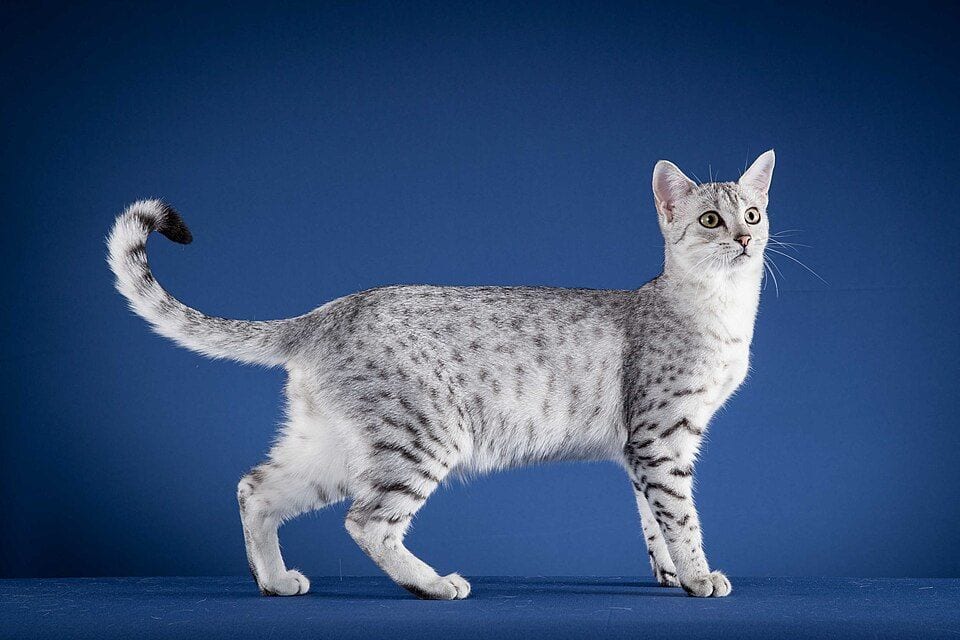
Egyptian Mau spots—natural, not bred
Most spotted breeds, like the Bengal or Ocicat, got their spots by crossing different breeds or even species. The Egyptian Mau's spotting is natural. The spots are scattered randomly, without a clear pattern, and vary in size and shape; a dark stripe may run along the spine and onto the tail. The spots are only on the tips of the hairs, and each hair has several bands of ticking. It is noted that the spots can be seen even on the shaved skin of a Mau.
Three colors are recognized: silver spotted, bronze spotted, and black smoke. The CFA notes that the coats of silver and bronze cats are dense and resilient, while smoke coats are finer and silkier; all three have a glossy finish. Solid black and blue (pewter) kittens are registered but do not compete in shows. On the forehead, there is a characteristic M-shaped mark resembling a scarab, and the eyes are outlined by dark "mascara" lines, giving the face a worried expression.
The fastest domestic cat with skin folds
The Egyptian Mau's body is described as a balance between the compactness of the Burmese and the elegance of the Siamese. The hind legs are longer than the front legs, so a standing Mau looks as if it is on its tiptoes, and the shoulder blades are high—the gait resembles that of a cheetah. A special feature is the loose skin fold from the flank to the knee of the hind leg. It allows the legs to extend further when running, which is why the Mau is often called the fastest domestic cat—it is claimed to be able to run faster than 30 mph, although there is no reliable source for this measurement.
The head is gently rounded and medium-sized, with medium to moderately large ears that are broad at the base, sometimes with tufts. The eyes are large and round; adults have light green eyes, while kittens may have amber eyes. The tail is medium in length and thick at the base.
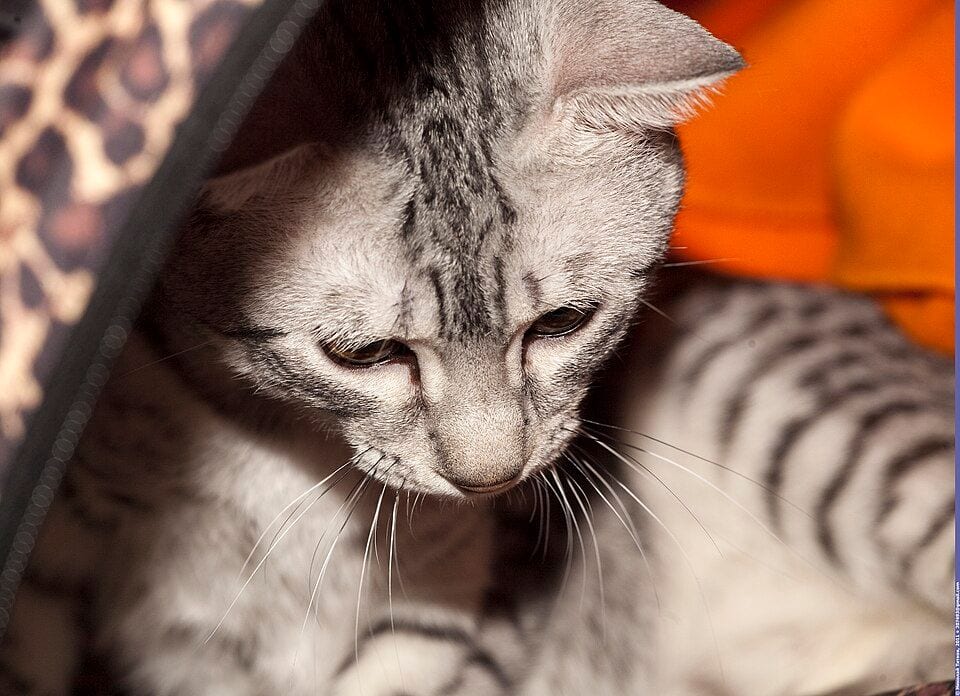
History: from pharaohs' frescoes to Princess Troubetskoy
The CFA notes that the word "mau" meant cat or sun in ancient Egypt, and papyruses and frescoes from around 1550 BC depict spotted cats very similar to today's Mau. The modern breed began in Italy in 1953: Russian Princess Natalie Troubetskoy, living in Rome, saw the Egyptian ambassador's cat and convinced him to help her get a cat from Cairo. A female named Baba was mated with the ambassador's male, and their offspring were shown at a cat show in Rome in 1955. In 1956, the princess moved to the US with three Maus.
The first championship status was granted in 1968 by the CFF; the CFA registered the Mau in 1970 and granted championship status in 1977, and TICA recognized it in 1979. The first Maus did not arrive in Great Britain until 1998. Interestingly, genomic studies assign the Egyptian Mau to the Western breed group and show a close relationship with the Maine Coon, Korat, and Western Turkish Angoras. The Mau remains a rare breed: in 2025, 103 kittens were registered in the FIFe studbooks.
Temperament: intelligent, loyal, and alert
The CFA describes Egyptian Maus as highly intelligent and devoted cats who expect to be full-fledged family members. Their sense of smell, hearing, and sight are very acute, so they are acutely aware of what is happening around them, while also being sensitive to their owner's mood. Maus enjoy interactive games, can teach their owner to play fetch, and happily walk on a harness. The CFA jokes that they sit on shoulders, stand guard by the refrigerator, and serve as fluffy alarm clocks.
Maus are strong-willed: they have a clear opinion on who can pick them up and when, and they can be cautious with strangers. With their own people, they are affectionate, loyal, and fearless. Their voice is quiet and melodic; they love to "chat" and chirp in greeting. It is widely noted that Maus love to romp and play at any age, and they gladly interact with other animals.
Health: urate stones and PK deficiency
- Urate urinary stones. These are diagnosed much more often in Egyptian Maus than in mixed breeds: in a large review of over 5,000 cases, the Mau's odds ratio for developing them was around 44, and in a Canadian study, urate stones were found in 14 out of 17 tested Maus. Therefore, it is important for them to drink plenty of water and follow a veterinarian-recommended diet.
- Pyruvate kinase (PK) deficiency. This causes anemia; the CFA notes that breeders carefully perform genetic testing.
- Longer gestation. A Mau's pregnancy lasts about 73 days, compared to the usual 64–67.
In other words, this is a healthy natural breed that, with proper care, lives a long time. However, because there are not genetic tests for all diseases, it is worth asking the breeder about the family's health history.
Care: weekly brushing and plenty of water
- Coat. Maus do not shed heavily, but the CFA recommends brushing them once a week—this takes just a few minutes and reduces the risk of hairballs.
- Water. Due to the risk of urinary stones, encourage drinking: use a water fountain, multiple bowls, and wet food.
- Exercise. For a fast cat that loves to jump, provide space to run, tall cat trees, and hunting games.
- Bathing. Usually unnecessary; human shampoos are not suitable for cats.
Egyptian Mau, Ocicat, and Bengal
| Trait | Egyptian Mau | Ocicat | Bengal |
|---|---|---|---|
| Origin of spots | natural | Abyssinian × Siamese cross | hybrid with leopard cat |
| Colors | silver, bronze, smoke | various | brown, silver, snow, etc. |
| Eyes | light green | various | various |
| FIFe kittens in 2025 | 103 | 164 | 3,535 |
How to choose an Egyptian Mau kitten
The CFA notes that there is a shortage of breeders, so you may have to wait for a kitten. Ask for the parents' PK deficiency test results and inquire if there is a history of urinary stones in the bloodline. Evaluate the spots—they should be distinct and random, not blurred into stripes. Keep in mind that kittens' eyes may still be amber. Reputable breeders and registries like TICA or CFA generally recommend that kittens go to their new homes no earlier than 14 weeks of age. We discussed microchipping and registration requirements in the guide introduction.
You can find a spotted but hybrid-origin cat in the Bengal profile, and another natural, highly active breed in the Abyssinian description.
Frequently asked questions
Does the Egyptian Mau originate from ancient Egypt?
The CFA notes that the word 'mau' meant cat or sun in ancient Egypt, and papyruses and frescoes from around 1550 BC depict spotted cats similar to today's Mau. However, genomic data shows that today's Egyptian Mau belongs to the Western breed group and is closely related to the Maine Coon, Korat, and Turkish Angora.
How fast does an Egyptian Mau run?
The Egyptian Mau is often called the fastest domestic cat: it is claimed to be able to run faster than 30 mph, though there are no reliable measurements. It is aided by longer hind legs and a loose skin fold from the flank to the hind knee, allowing it to extend its legs further.
What colors do Egyptian Maus come in?
Three colors are recognized: black silver spotted, black (bronze) spotted, and black smoke. Solid black and blue (pewter) colors are not recognized for shows, but some organizations register them in an auxiliary registry.
What color are an Egyptian Mau's eyes?
Adult Maus have light green eyes—the CFA calls them gooseberry green. Kittens' eyes can be amber. The eyes are outlined by dark 'mascara' lines, giving the face a characteristic worried expression.
Is the Egyptian Mau a good family cat?
Yes, if the family is active. The CFA describes Maus as highly intelligent, devoted, and agile cats that love to play, walk on a harness, and sit on shoulders. They can be cautious with strangers, but are affectionate and fearless with their people.
Sources
- Wikipedia: Egyptian Mau
- CFA (Cat Fanciers' Association): Egyptian Mau breed profile
- FIFe: List of recognized cat breeds and standards
- FIFe Breeding Statistics 2025 (registrations by breed and country)
- FIFe Breeding & Registration Rules (2.3.3 – kittens no earlier than 14 weeks)
- Wikimedia Commons photo: Black silver spotted Egyptian Mau cat
- Wikimedia Commons photo: Egyptian Mau cat at a cat show
Log in to comment
No comments yet. Be the first.