Bombay Cat: Temperament, Size, Care & Health
- The American Bombay was created in Kentucky in the 1960s by breeder Nikki Horner, who crossed a sable Burmese with a black American Shorthair.
- The British type consists of black Asian group cats, originating from crosses between European Burmese and black shorthairs.
- The coat is solid black to the roots and glossy like patent leather; the skin, nose, and paw pads are also black, while the eyes range from gold to copper.
- The CFA registered the breed in 1970, and TICA followed in 1979; the FIFe currently recognizes it on a preliminary basis.
- Females weigh 5.5–8 lbs, and males weigh 7.5–11 lbs; their average lifespan is around 15 years.
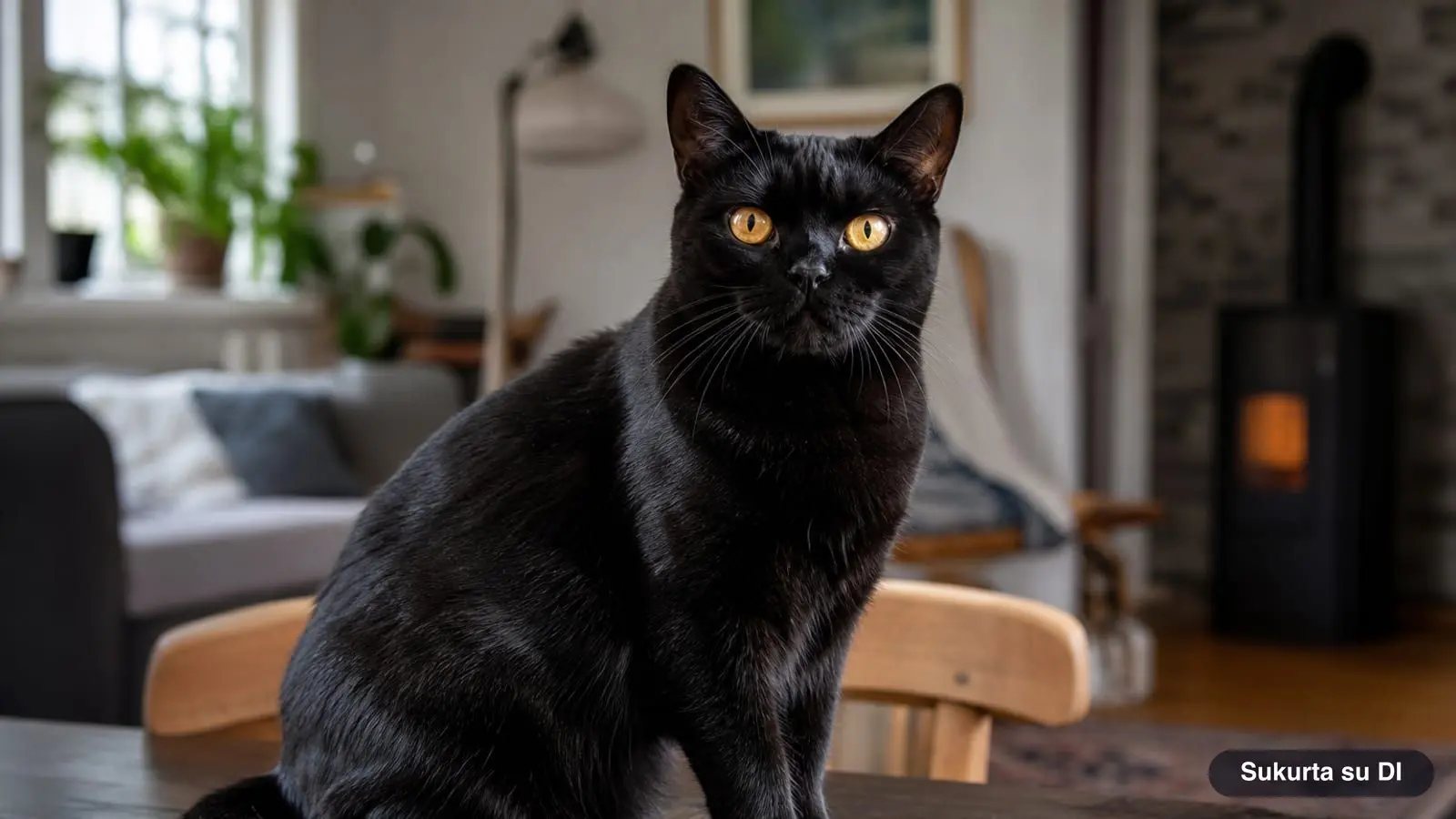
- The Bombay Cat: Black from Coat Tips to Skin
- Two Types: American and British
- History: Nikki Horner's "Parlor Panther"
- Temperament: Part Cat, Part Dog, Part Clown
- Health: Watery Eyes, Gums, and HCM
- Care: One of the Easiest Breeds to Groom
- Bombay, Burmese, and Black Oriental Shorthair
- How to Choose a Bombay Kitten
This article is part of the 77.today cat breeds guide, prepared by the 77.today editors from the sources listed at the end.
The Bombay cat was created with a clear goal in mind: to have a miniature black panther living in your living room. Its coat is completely black down to the roots, short, and glossy like patent leather. The skin, nose, and paw pads are also black, and large copper eyes burn brightly in its face. The CFA describes it as a cat with a patent-leather black coat and eyes shining like new copper pennies. In our cat breeds guide, you will discover where the Bombay originated, the differences between its two types, its temperament, and how to care for it.
| Origin | USA (Kentucky); British type – Great Britain |
|---|---|
| Recognition | CFA registry in 1970, championship status in 1976; TICA in 1979; FIFe – preliminary |
| Weight | females 5.5–8 lbs, males 7.5–11 lbs |
| Body | medium-sized, muscular, heavier than it appears |
| Coat | very short, dense, close-lying, glossy |
| Color | solid black only (including skin) |
| Eyes | round, gold to copper |
| Temperament | social, playful, affectionate |
| Grooming | rubber brush 2–3 times a month |
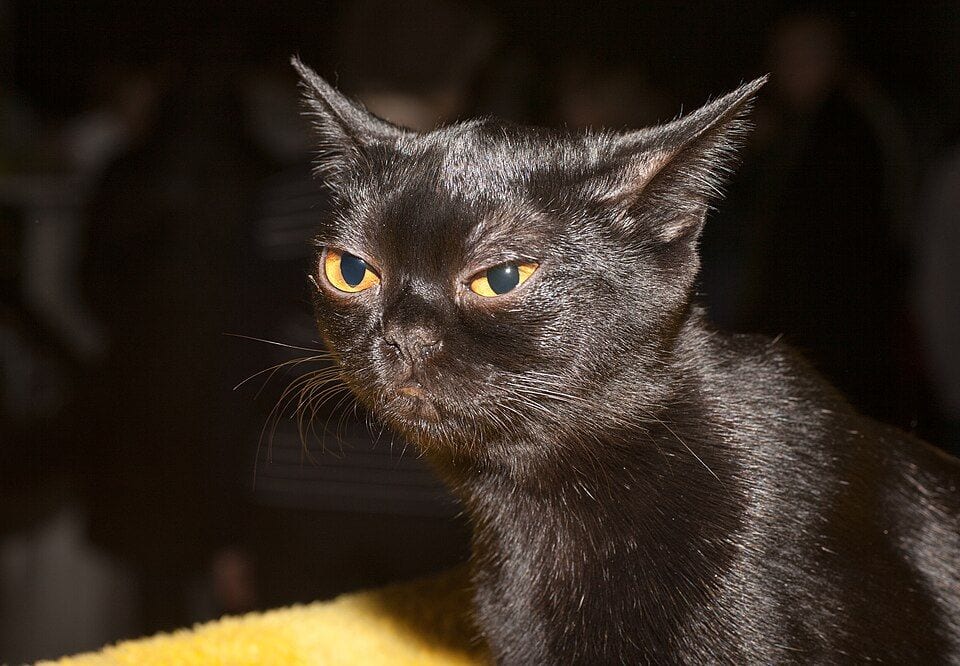
The Bombay Cat: Black from Coat Tips to Skin
The breed standard requires an adult cat's coat to be solid black down to the roots, with no lighter shading (exceptions are allowed for cats under two years old). The whiskers, skin, nose, and paw pads must also be black. The coat is short, dense, close-lying, and so glossy that, in the words of the CFA, you can almost see your reflection in it. The eyes are large, round, and set wide apart, always copper or gold—ranging from bright orange to warm gold. Green eyes are not permitted in the standard.
The body is medium-sized and muscular, neither compact nor elongated, and feels heavier than it looks. The head is round without any sharp angles, and the muzzle is short and broad with a moderate nose break—similar to the American Burmese. The ears are medium-sized, set wide apart, with rounded tips.
Two Types: American and British
The American type was developed by crossing sable American Burmese cats with black American Shorthairs. The goal was to achieve the Burmese body type but with a patent-leather black coat and copper eyes. This type is recognized by the CFA and TICA, while the FIFe recognizes it on a preliminary basis—along with the Lykoi, these are the newest FIFe breeds.
The British type consists of black Asian group cats, originating from accidental matings between European Burmese and black shorthairs. It is recognized only by the British GCCF, which registers them as "Asian Self." Both types are rare: in 2025, 30 Bombay kittens were registered in the FIFe studbooks, and TICA registered a total of 1,085 Bombay cats between 1979 and 2013.
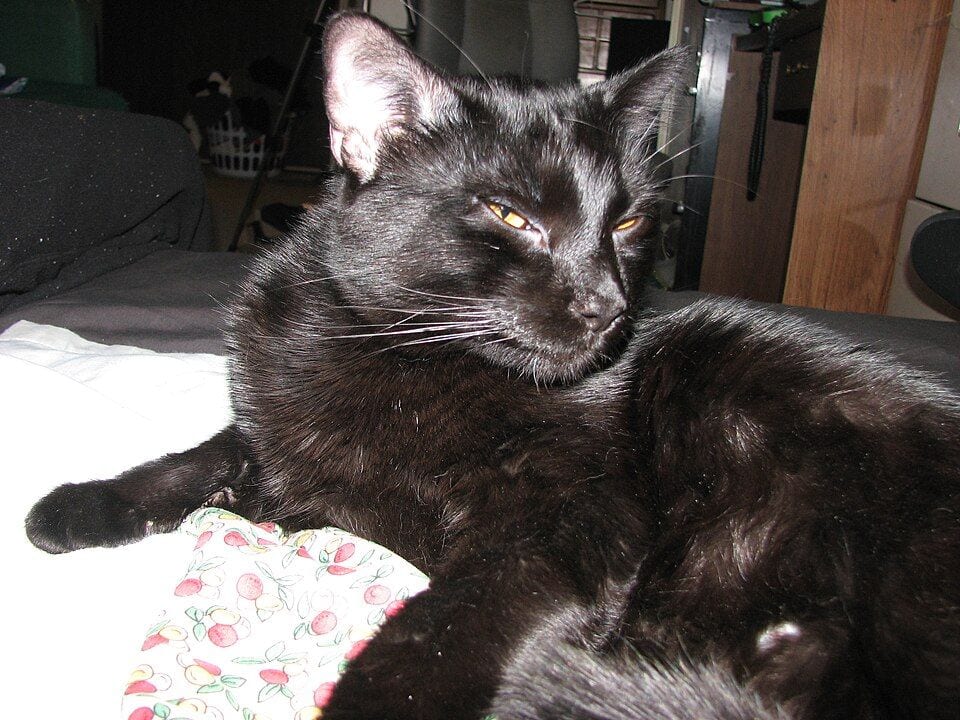
History: Nikki Horner's "Parlor Panther"
In 1958, Kentucky breeder Nikki Horner from Louisville set out to create a miniature black panther. Her first attempt failed, but the second—between 1965 and 1966—was successful. She paired a black American Shorthair male with a Burmese female, and later, through a combination of inbreeding and careful outcrossing, she created her own version of a "parlor panther." The CFA registered Bombay cats in 1970, granted them championship status in 1976, and the first national win came in 1982. TICA recognized the breed in 1979.
Temperament: Part Cat, Part Dog, Part Clown
The CFA describes Bombay cats as the perfect balance between the easygoing nature of the American Shorthair and the inquisitive, lap-loving personality of the Burmese. They are intelligent, mischievous, and absolutely love toys—even a paper bag or a cardboard box can keep them occupied for hours. They are neither hyperactive nor lethargic, adapt easily to almost any environment, and love being the center of attention. In their minds, every guest has come specifically to see them.
Bombay cats are extremely affectionate: they rub their heads against you, give "kisses," and snuggle up with their owners at night. They form strong bonds with their families and crave attention, making them great for families with children. When properly introduced, they quickly make friends with dogs and other pets. Bombay cats thrive as indoor-only pets and adapt well even to a studio apartment, provided all their needs are met; most prefer a quieter environment.
Health: Watery Eyes, Gums, and HCM
- Eyes and nose. The CFA notes that some Bombay cats have excessive eye tearing, requiring regular cleaning; the breed is also prone to nose and sinus issues.
- Gingivitis. Regular dental care is essential.
- Hypertrophic cardiomyopathy (HCM). This heart condition has been identified in Bombay cats, so responsible breeders screen their cats before mating.
- Weight. Food intake must be monitored to prevent the cat from overeating.
A healthy Bombay cat lives an average of about 15 years, with some reaching up to 20 years of age.
Care: One of the Easiest Breeds to Groom
- Coat. The CFA considers the Bombay one of the easiest breeds to maintain: the short, satin-like coat sheds very little, and running a rubber brush over it 2–3 times a month is usually enough. Bombay cats generally tolerate bathing well.
- Eyes. Clean watery eyes with a soft, damp cloth.
- Diet. Measure their food portions, as the breed is prone to overeating.
- Playtime. You do not need expensive toys—boxes, paper bags, and feather wands will keep them entertained for a long time.
Bombay, Burmese, and Black Oriental Shorthair
| Trait | Bombay | Burmese | Black Oriental Shorthair |
|---|---|---|---|
| Color | Solid black only | Sable brown and other sepia colors | Black ("ebony") and many others |
| Eyes | Copper or gold | Gold or green | Green |
| Head | Round, short muzzle | Round or wedge-shaped (depending on type) | Long wedge |
| FIFe kittens in 2025 | 30 | 1,503 | 1,551 (all colors) |
How to Choose a Bombay Kitten
Because the breed is rare, the CFA advises being prepared to wait on a breeder's list or considering a retired adult show cat. Always ask for registration papers—there are many undocumented black cats on the market, and only a pedigree proves the breed. Ask about the parents' HCM screenings and eye health. Do not worry if a young kitten has a brownish tint or less vibrant eyes; the coat and eye color typically settle by the time they are two years old. Reputable breeders and registries generally require kittens to stay with their mother until they are at least 14 weeks old. For general advice on finding a reputable breeder, checking health clearances, and understanding local registration or microchipping recommendations, see the introduction to our guide.
You can find a closely related breed in the Burmese profile, and if you are looking for a slender black cat, check out the Oriental Shorthair description.
Frequently asked questions
Why is the Bombay cat called that?
The breed is named after the Indian city of Bombay (now Mumbai), referencing the black leopards found in that region. It was bred to look like a miniature black panther, but it is a 100% domestic cat.
Are all black cats Bombay cats?
No. The Bombay is a specific pedigreed breed with a round head, muscular body, patent-leather black coat, and copper eyes. Black cats exist in many breeds and mixed breeds, so color alone does not indicate the breed.
What color are a Bombay cat's eyes?
A Bombay cat's eyes are always copper or gold, ranging from bright orange to warm gold. Green or other eye colors are not permitted in the breed standard.
How much does a Bombay cat weigh?
Females typically weigh 5.5–8 lbs, while males weigh 7.5–11 lbs. The CFA notes that Bombay cats are heavier than they appear because they are so solid and muscular.
Is a Bombay cat good for an apartment?
Yes. Bombay cats thrive indoors and adapt well even to small apartments, provided their needs are met. They are highly social, so they require plenty of attention and playtime.
Sources
- Wikipedia: Bombay cat
- FIFe: Bombay breed standard
- CFA: Bombay breed profile
- FIFe Breeding Statistics 2025 (registrations by breed and country)
- FIFe Breeding & Registration Rules (2.3.3 - kittens no earlier than 14 weeks)
- Wikimedia Commons: Black Bombay cat with copper eyes at a cat show
- Wikimedia Commons: American type Bombay cat
Log in to comment
No comments yet. Be the first.