Japanese Bobtail: Temperament, Size, Care & Health
- Ancestors of the Japanese Bobtail were short-tailed cats from Southeast Asia and Southern China; they likely arrived in Japan in the 6th century.
- In 1602, a decree ordered cats to be set free to protect silkworms from rodents, turning them into Japan's street and farm cats.
- The first Japanese Bobtails were brought to the US in 1968; the CFA recognized shorthairs in 1976 and longhairs in 1993, while FIFe recognized shorthairs in 1989.
- The tail is unique to each cat, much like a human fingerprint; a 2016 study linked it to a mutation in the HES7 gene.
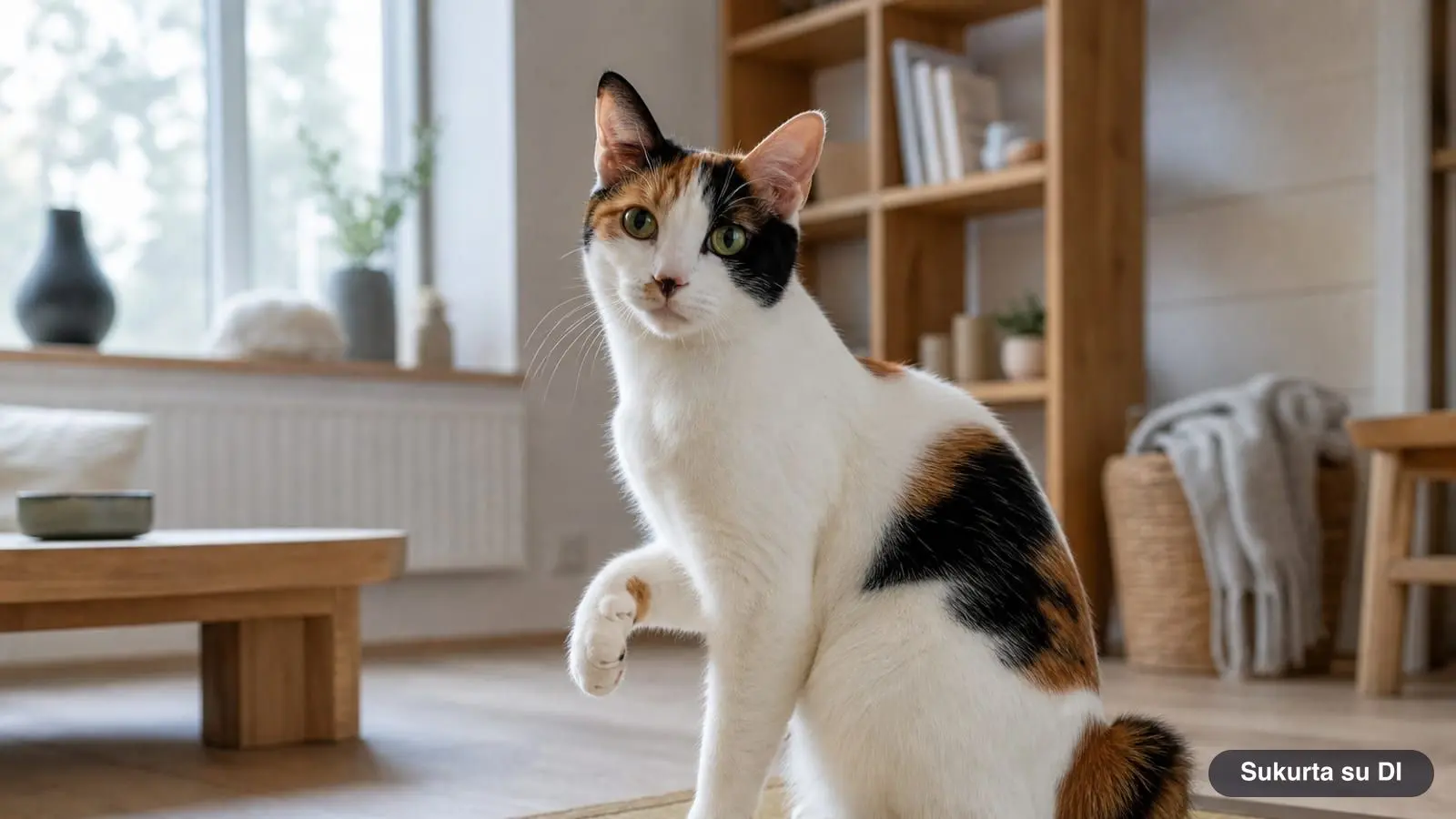
- The tricolor mi-ke (calico) pattern is considered the luckiest and is famously depicted in maneki-neko statues.
This article is part of the 77.today cat breeds guide, prepared by the 77.today editors from the sources listed at the end.
The Japanese Bobtail is an elegant, long-legged cat whose short tail with a fluffy "pom-pom" looks more like a bunny's tail than a feline's. Living in Japan for centuries, the breed was depicted in ancient scrolls, woodblock prints, and carvings, and today we recognize it from the lucky maneki-neko figurines. In our cat breeds guide, you will find their history, tail characteristics, appearance, personality, and care needs.
| Origin | Japan; ancestors from Southeast Asia and Southern China |
|---|---|
| Recognition | CFA (shorthairs 1976, longhairs 1993); FIFe (shorthairs only, since 1989) |
| Weight | typically 6–9 lbs, males are larger |
| Body | medium, long, lean, muscular |
| Head | equilateral triangle, high cheekbones |
| Coat | short or semi-long, silky, no undercoat |
| Tail | short, kinked, no longer than ~3 inches |
| Colors | all colors; mi-ke (tricolor) is the most prized |
| Lifespan | 9–15 years |
The Japanese Bobtail arrived from Southeast Asia
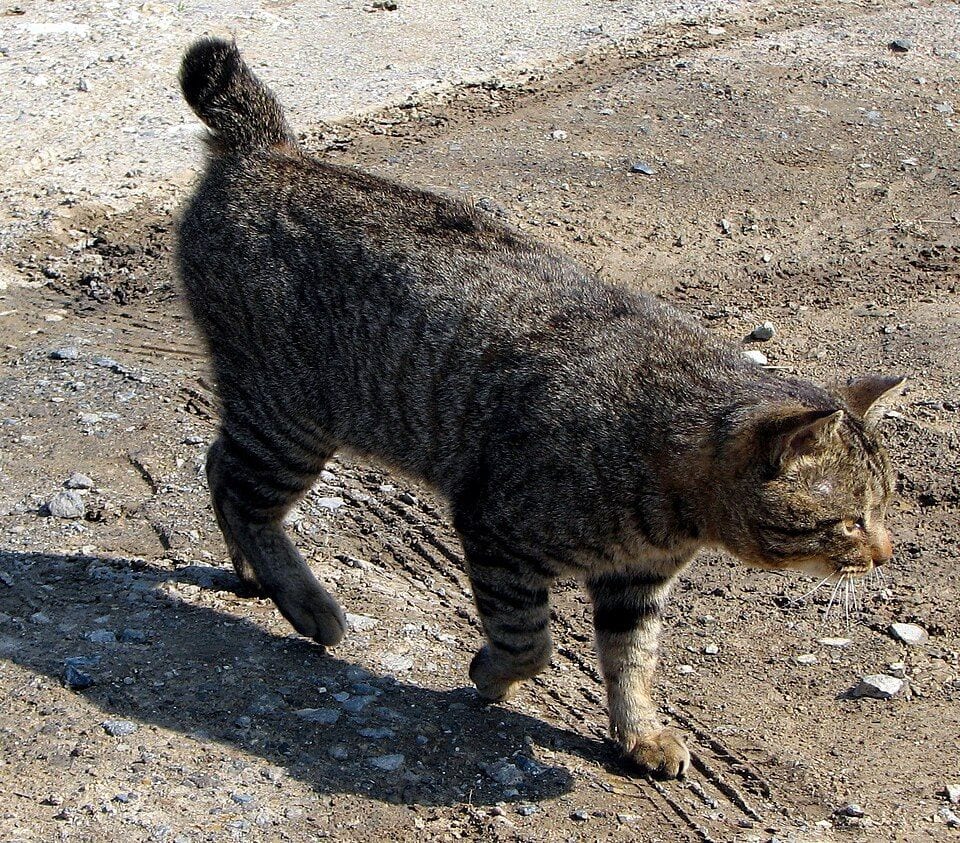
Cats with short, kinked tails were widespread in Southeast Asia and Southern China long before modern breeds emerged. In Southern China, they were called "chilin tails" and considered symbols of luck and wealth, while Charles Darwin wrote in 1868 that in the Malay Archipelago, Siam, and Burma, all cats had their tails shortened by about half, often with a knot at the end. A 2016 study showed that the tails of these cats and Japanese Bobtails are caused by the same HES7 gene mutation, meaning the Bobtail's ancestors likely arrived in Japan already sporting short tails.
It is believed that cats entered Japan in the 6th century alongside Buddhist monks, who kept them to protect paper scrolls from rats; initially, they were a luxury item, and the first documented mention was in Emperor Uda's diary in 889. In 1602, the government, saving the silkworm industry from rodents, ordered all cats to be set free, and buying or selling them was banned. This is how Bobtails became Japan's street and farm cats. In 1968, Elizabeth Freret was the first to bring Japanese Bobtails to the US; the CFA granted shorthairs championship status in 1976, and longhairs in 1993. Under the FCI standard, FIFe has recognized the shorthaired Japanese Bobtail since 1989, but not the longhaired variety. The breed remains rare: in FIFe's 2025 statistics, there were only 3 kittens.
The tail is as unique as a fingerprint
The Japanese Bobtail's tail has fewer vertebrae, some of which are fused together, making the tail short and kinked. It is not docked—they are born this way, and each cat's tail is different, much like a human fingerprint. In shows, the tail must be clearly visible and extend no more than about 3 inches, though it may be longer if straightened out. Some tails are rigid, others are more flexible, but all are sensitive. The fluffy hair at the end of the tail forms a "pom-pom" that hides the bone structure. Importantly, unlike the gene found in the Manx, the Bobtail's tail mutation is not associated with skeletal disorders.
Appearance: Japanese profile and mi-ke color
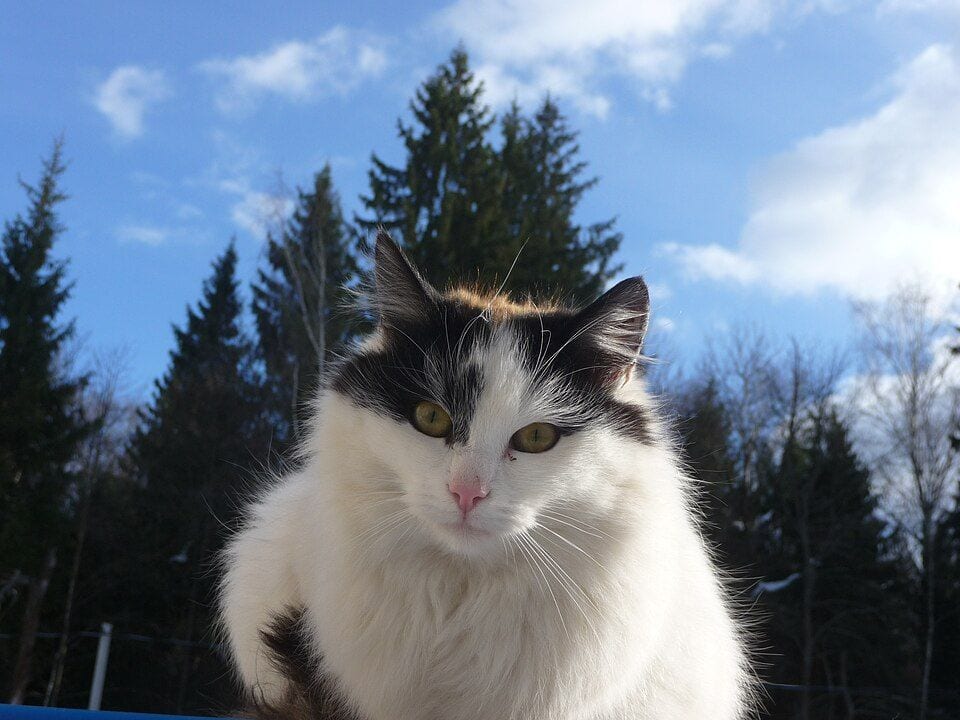
The Japanese Bobtail is a medium-sized cat with clean lines, muscular but more elongated and slender than massive; they typically weigh 6–9 lbs. The head is an equilateral triangle with high cheekbones, a long and parallel nose, and large, oval, noticeably slanted eyes—giving the face a distinctively Japanese expression. The ears are large, upright, and set wide apart. The legs are long, with the hind legs longer than the front ones, allowing Bobtails to jump incredibly high.
The shorthair's coat is medium-length, soft, and silky, while the longhair's coat gradually lengthens toward the rump but resists matting. All colors are recognized, but the most prized are bicolors and tricolors, known as mi-ke (Japanese for "three furs"). White Bobtails sometimes have odd eyes—one blue and one yellow; this trait is more common in the breed than in most others, except for the Turkish Van.
Personality: An active, vocal, and eager-to-learn cat
Japanese Bobtails are active, intelligent, and highly people-oriented, learning tricks, fetch, and harness walking more easily than most breeds. The CFA calls them curious problem solvers who excel in feline agility competitions. They are observant, notice everything, and "speak" in a soft voice that produces a wide range of tones—which is why it is often said that Bobtails can sing. FIFe notes that they are great for families with children and are often drawn to water. Other cats sometimes need time to get used to a "tailless" newcomer, while Bobtails themselves demand a lot of attention and will loudly ask for it.
Health and care
Japanese Bobtails are considered a sturdy, natural breed with no specific health issues, and studies show they are one of the most genetically diverse pedigreed cats. Litters are smaller, but the kittens are born relatively large, develop quickly, and have a low mortality rate. Their lifespan is about 9–15 years. To maintain genetic diversity, US breeders are allowed to import cats directly from the streets of Japan.
- Coat. They have no undercoat and shed very little—shorthairs only need to be brushed a few times a month, while longhairs require slightly more frequent grooming.
- Weight. They love to climb but can be prone to obesity—feed them in moderate portions.
- Tail. Handle with care, and never pull on it.
The Japanese Bobtail and other short-tailed breeds
| Breed | Origin | Tail | FIFe kittens in 2025 |
|---|---|---|---|
| Japanese Bobtail | Japan | bunny tail, up to ~3 inches | 3 |
| Kurilian Bobtail | Kuril Islands | short, kinked | 38 (KBS) + 158 (KBL) |
| Manx | Isle of Man | from none to long | 5 |
How to find a Japanese Bobtail kitten
Because the breed is rare, you may have to wait for a kitten or travel to find one. Ask the breeder which organization the kitten is registered with—for instance, the CFA and TICA recognize both hair lengths, while under the FCI standard, FIFe only registers shorthairs. Always ask to meet the parents and ensure the kitten is fully vaccinated before going home; reputable breeders usually do not let kittens leave before they are 14 weeks old. It is also highly recommended by US veterinarians to have your cat microchipped and registered.
You can find other short-tailed breeds in the profiles for the Kurilian Bobtail, American Bobtail, and Manx.
Frequently asked questions
Why is the Japanese Bobtail's tail short?
The short, kinked tail is caused by a natural mutation that reduces the number of tail vertebrae and partially fuses them. A 2016 study linked this to a mutation in the HES7 gene, which is also found in short-tailed cats from Southeast Asia. The tail is not docked—they are born this way, and each tail is unique.
Is the Japanese Bobtail's tail linked to spinal issues?
No. Unlike the gene found in the Manx, the Japanese Bobtail's tail mutation is not associated with skeletal disorders, and the CFA notes there are no known abnormalities linked to this tail. However, the tail is sensitive and should be handled with care.
What is a maneki-neko?
The maneki-neko ("beckoning cat") is a Japanese figurine depicting a seated Japanese Bobtail with a raised paw. It is considered a good luck charm and is often placed at the entrances of shops or homes. It most commonly depicts a tricolor mi-ke cat.
Does FIFe recognize the longhaired Japanese Bobtail?
No. Since 1989, FIFe has only recognized the shorthaired Japanese Bobtail, whereas the CFA (since 1993) and other organizations recognize the longhaired variety. In FIFe's 2025 statistics, only 3 Japanese Bobtail kittens were registered.
What is the Japanese Bobtail's temperament like?
They are active, intelligent, people-oriented cats that easily learn tricks, play fetch, and walk on a harness. They "speak" in a soft, multi-toned voice, which is why people often say that Bobtails can sing.
Log in to comment
No comments yet. Be the first.