Ocicat Cat: Size, Temperament, Colors, Care & Health
- The first Ocicat, Tonga, was born in Michigan in 1964 when Virginia Daly crossed Abyssinian and Siamese cats.
- American Shorthairs were later introduced to the breed for a sturdier build and silver coloring.
- The Ocicat is a 100% domestic breed featuring thumbprint-shaped spots and 12 recognized colors.
- The CFA granted championship status in 1987, TICA recognized them in 1986, and FIFe in 1992.
- Adult Ocicats weigh 5.5–14.5 lbs; the breed is prone to urate bladder stones and pyometra.
This article is part of the 77.today cat breeds guide, prepared by the 77.today editors from the sources listed at the end.
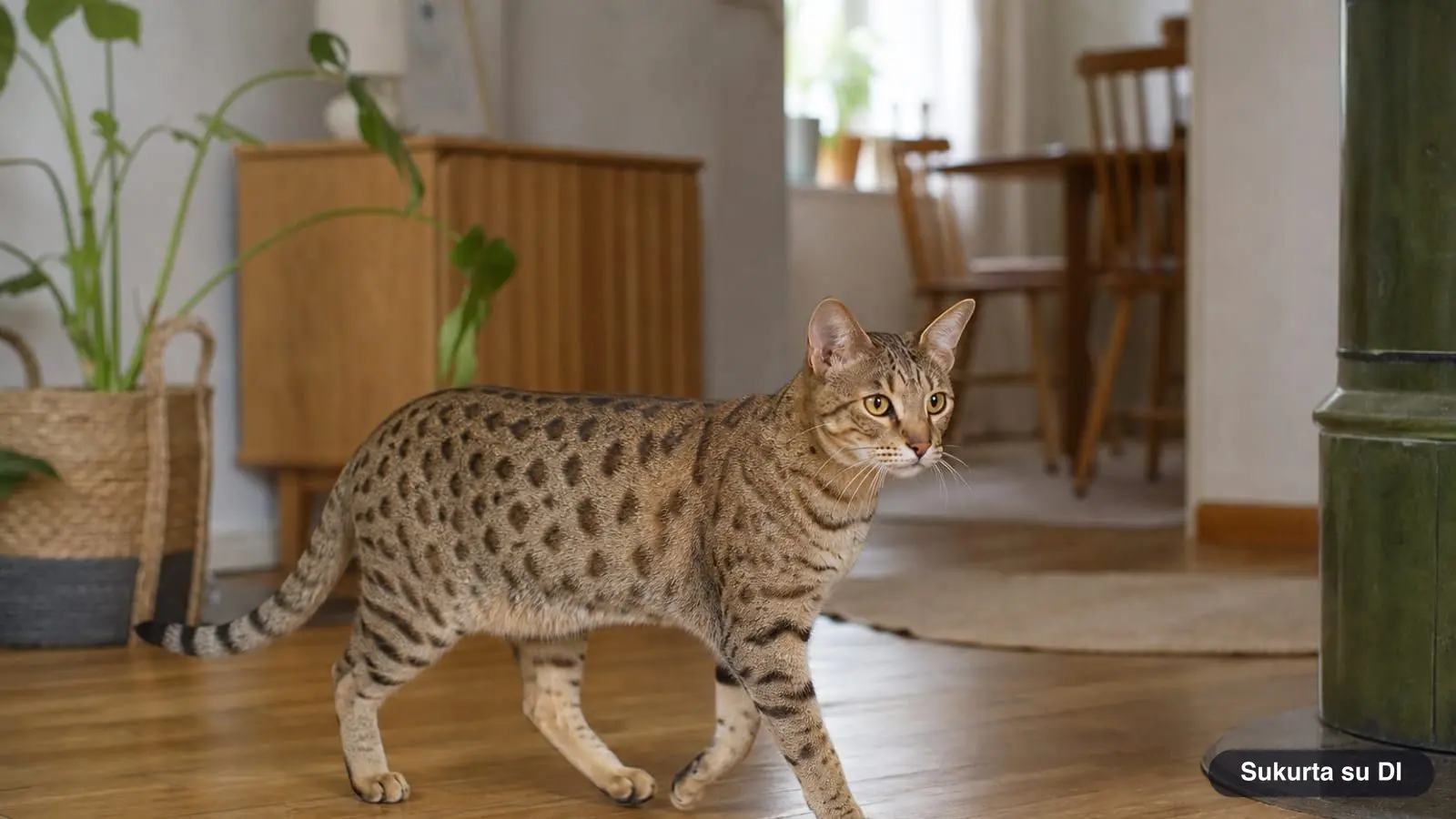
The Ocicat looks like a small jungle predator: a muscular, athletic body, large dark thumbprint-shaped spots on a lighter background, and a broad, slightly squared muzzle. It got its name due to its resemblance to the South American ocelot. However, the CFA emphasizes that the Ocicat is not wild at all—it is a 100% domestic breed developed from three popular cat breeds. In our cat breeds guide, you will find the history, appearance, temperament, and health profile of the Ocicat.
| Origin | US, Michigan; Abyssinian × Siamese, later American Shorthair |
|---|---|
| Recognition | CFA registered 1966, championship 1987; TICA 1986; FIFe 1992; GCCF 2006 |
| Weight | 5.5–14.5 lbs |
| Body | medium to large, muscular, athletic |
| Coat | short, ticked, with distinct spots |
| Colors | 12: tawny, blue, chocolate, lilac, cinnamon, fawn, and their silver variants |
| Eyes | large, almond-shaped; any color except blue |
| Temperament | dog-like, social, trainable |
| Grooming | minimal |
The Ocicat was born by accident while pursuing a different goal
In 1964, Michigan breeder Virginia Daly wanted to create a Siamese-type cat with Abyssinian ticked points. She crossed an Abyssinian male with a Siamese female, and then bred a resulting Abyssinian-like daughter, Dalai She, to a chocolate point Siamese male. One kitten in this litter was unusual—featuring cinnamon spots on an ivory background. Daly's daughter mentioned that he looked like an ocelot and suggested the name "Ocicat." The kitten, named Tonga, was neutered and sold as a pet for $10.
Geneticist Dr. Clyde Keeler, who was interested in breeding domestic cats that resembled endangered wild species, saw a photo of Tonga and advised repeating the breeding. Daly paired Tonga's parents again and produced a spotted male, Dalai Dotson, and other breeders soon began using the same "recipe." American Shorthairs were later introduced for a sturdier body, heavier boning, and silver coloring. The CFA registered the breed in 1966 but only granted championship status in 1987, while TICA recognized them in 1986 and FIFe in 1992. The first Ocicats arrived in Great Britain in 1988.
Thumbprint spots and 12 colors
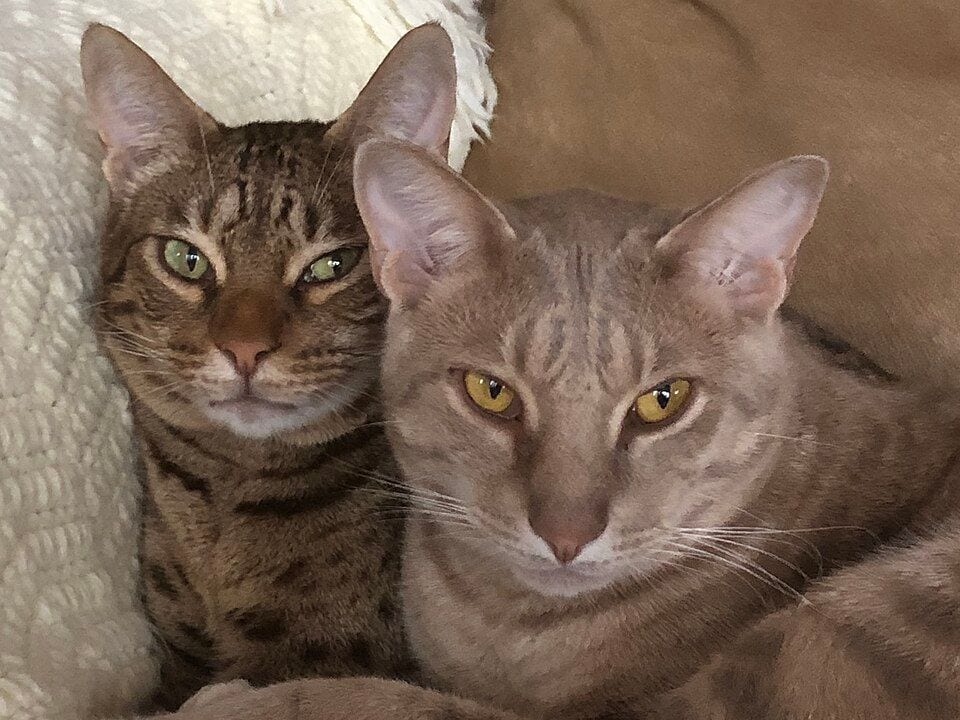
The Ocicat is a medium to large, athletic, muscular, and agile cat; even females feel surprisingly heavy when picked up. The muzzle is broad and well-defined with a hint of squareness, the head is a modified wedge, and the ears are set at about a 45-degree angle. The eyes are large, almond-shaped, and set wide apart; all colors are permitted except blue. The legs are medium to long, and the tail is long, thin, and dark-tipped.
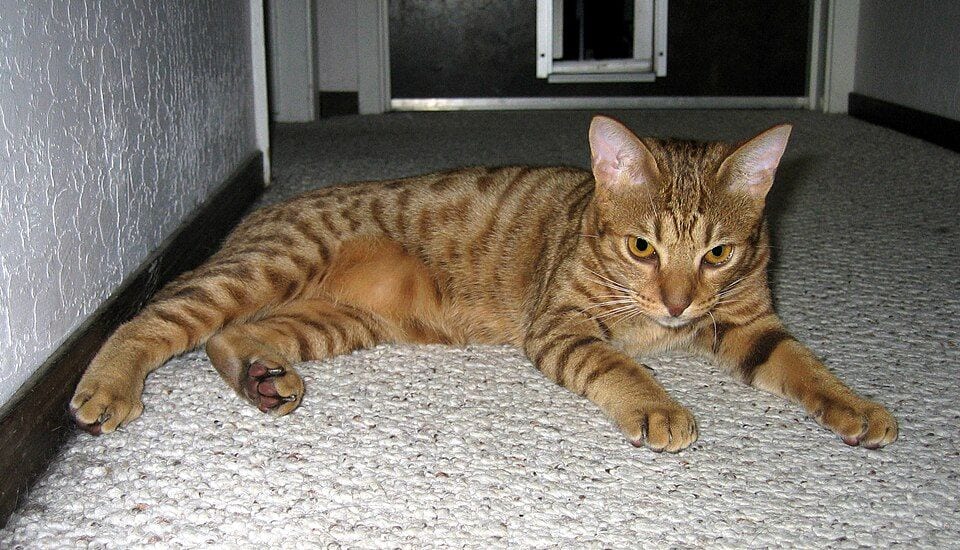
Only the spotted pattern is allowed. The spots are large, thumbprint-shaped, and contrast sharply with a lighter background; on show cats, the spots on the flanks form a "bullseye" pattern around a central spot. There is an "M" on the forehead and "mascara" lines around the eyes and cheeks. There are 12 recognized colors: tawny, blue, chocolate, lilac, cinnamon, and fawn, plus the silver version of each. The most common are tawny, chocolate, and cinnamon. The GCCF recognized a classic tabby variant called the Aztec in 2013, which was merged back into the Ocicat breed as the Ocicat Classic in 2024.
Temperament: A dog in a cat's body
The Ocicat's temperament is often described as a "dog in a cat's body." Most of them learn to fetch, walk on a leash and harness, come when called, "speak," sit, and lie down on command. The CFA notes that Ocicats are devoted to their owners but are not clingy or demanding. They are natural extroverts who gladly welcome strangers and make excellent travelers.
They are alert, agile, and energetic, though their baseline activity level is lower than that of Abyssinians or Siamese cats. Ocicats appreciate interaction but do not demand it constantly, and they only raise their voices occasionally. Importantly, they are not happy being left alone for long periods—they do best when there are other pets in the house or someone works from home.
Health: Bladder stones and parent breed risks
- Urate bladder stones. In a US review of over 5,000 cases, the Ocicat's risk ratio was about 16.8—significantly higher than most breeds. It is important to encourage plenty of water intake and follow your vet's dietary recommendations.
- Pyometra. In a Swedish study, intact female Ocicats experienced this purulent uterine infection six times more often than the general cat population.
- Parent breed diseases. The CFA mentions hypertrophic cardiomyopathy (HCM), amyloidosis (which affects the kidneys or liver), and progressive retinal atrophy (PRA), which can now be managed with genetic testing.
Because the breed originated from three different breeds, the CFA notes that Ocicats possess a significant amount of genetic diversity.
Care: A chamois cloth and plenty of play
- Coat. Ocicats shed very little. The CFA recommends occasionally running a rubber brush or a chamois cloth over their coat, which removes loose hair and adds shine. Bathing is rarely necessary.
- Training. Tricks and commands using treats—the Ocicat learns easily.
- Water. Due to the risk of bladder stones, a pet water fountain and wet food are highly recommended.
- Spaying. For non-breeding females, this prevents pyometra.
Ocicat, Egyptian Mau, and Bengal
| Feature | Ocicat | Egyptian Mau | Bengal |
|---|---|---|---|
| Origin | Abyssinian × Siamese × American Shorthair | natural, Egypt | hybrid with Asian leopard cat |
| Spots | thumbprint, "bullseye" on flanks | random | rosettes or marbled |
| Colors | 12 | 3 | many |
| FIFe kittens in 2025 | 164 | 103 | 3,535 |
How to choose an Ocicat kitten
Ask the breeder for the parents' PRA test results, heart screenings, and inquire if there is any history of bladder stones or amyloidosis in the bloodline. Evaluate the clarity of the parents' spots and their temperament, as an Ocicat's personality is largely inherited. Reputable breeders usually let kittens go to their new homes no earlier than 12 to 14 weeks of age. We discussed standard microchipping and registration recommendations in the introduction to our cat breeds guide.
You can find other spotted breeds in the Egyptian Mau and Bengal profiles, and the Ocicat's parent breeds in the Abyssinian and Siamese descriptions.
Frequently asked questions
Does the Ocicat have wild cat blood?
No. While the Ocicat resembles an ocelot, it was bred entirely from domestic cats—Abyssinians, Siamese, and American Shorthairs. There are no recent wild genes in its gene pool, making it a fully domestic breed, not a hybrid.
What colors do Ocicats come in?
There are 12 recognized colors: tawny, blue, chocolate, lilac, cinnamon, and fawn, plus the silver version of each. All feature a spotted pattern, and the darkest point must be the tip of the tail.
Why is the Ocicat called a "dog in a cat's body"?
Most Ocicats learn to fetch, walk on a harness, come when called, "speak," sit, and lie down on command. The CFA notes that they are devoted to their owners but are not overly clingy.
Can an Ocicat be left alone?
Not really. The CFA states that Ocicats do best in homes with other pets or where someone works from home, as they do not like being left alone for long periods.
What health issues are common in Ocicats?
In a US review of urate bladder stones, the Ocicat's risk ratio was about 16.8, and a Swedish study found pyometra (a uterine infection) occurred six times more often in them than in all cats. The CFA also mentions HCM, amyloidosis, and PRA, which are inherited from their parent breeds.
Log in to comment
No comments yet. Be the first.