Persian Cat: Temperament, Grooming, Flat Face & Health
- The first longhaired cats were brought to Europe from the Middle East in the 17th century, with many exported from Afghanistan and Iran in the 19th century.
- The Persian was featured in the very first London cat show in 1871; FIFe has recognized the breed since its founding in 1949.
- Modern flat-faced Persians are prone to breathing, eye, dental, and birthing issues due to their extremely short muzzles.
- Polycystic kidney disease (PKD) once affected 36–49% of Persians; DNA testing has allowed responsible breeders to nearly eradicate it from their lines.
- Their long coat requires daily combing, and the corners of their large eyes must be wiped with a damp cloth.
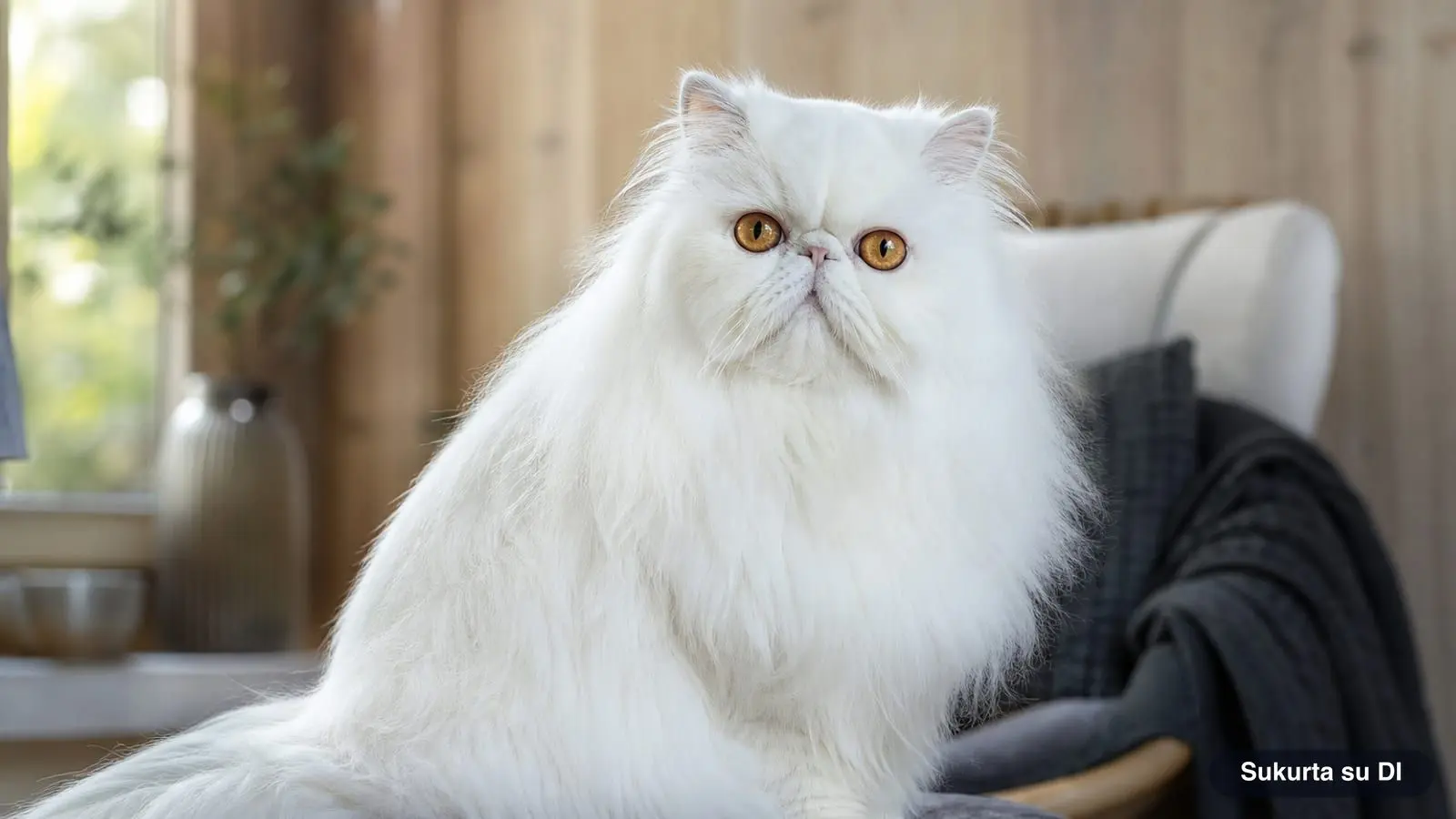
- Persian – the ideal of roundness with a long coat
- Traditional "doll-face" and modern flat-faced Persian
- History: from Khorasan cats to the Crystal Palace show
- Temperament: the calmest house cat
- Health: short muzzles and polycystic kidney disease
- Grooming: daily combs, eye cleaning, and vacuuming
- Persian, Himalayan, and Exotic Shorthair – one family
- How to choose a healthy Persian kitten
This article is part of the 77.today cat breeds guide, prepared by the 77.today editors from the sources listed at the end.
The Persian is the aristocrat of the cat world: a long, fluffy coat, a round head, small ears, large round eyes, and a calm, dignified, lazy demeanor. The CFA notes that for over a century, it has been the symbol of feline beauty, and in terms of popularity, Persians have consistently ranked among the top ten most registered CFA breeds. It is also a breed that sparks much debate due to its excessively flat face and associated health issues. In our cat breeds guide, you will find the Persian's origins, types, temperament, grooming needs, and major health risks.
| Origin | Middle East (Afghanistan, Iran); breed developed in Great Britain |
|---|---|
| Recognition | FIFe since 1949; one of the six original CFA breeds (1906) |
| Body | cobby, broad chest, short thick legs |
| Head | round, small ears, large round eyes, short muzzle |
| Coat | long, with a dense undercoat, "ruff" |
| Colors | numerous: solid, tabby, silver and golden, bicolor, pointed |
| Temperament | very calm, gentle, undemanding |
| Grooming | daily combing, occasional bathing |
| Hereditary diseases | PKD, brachycephalic syndrome, HCM |
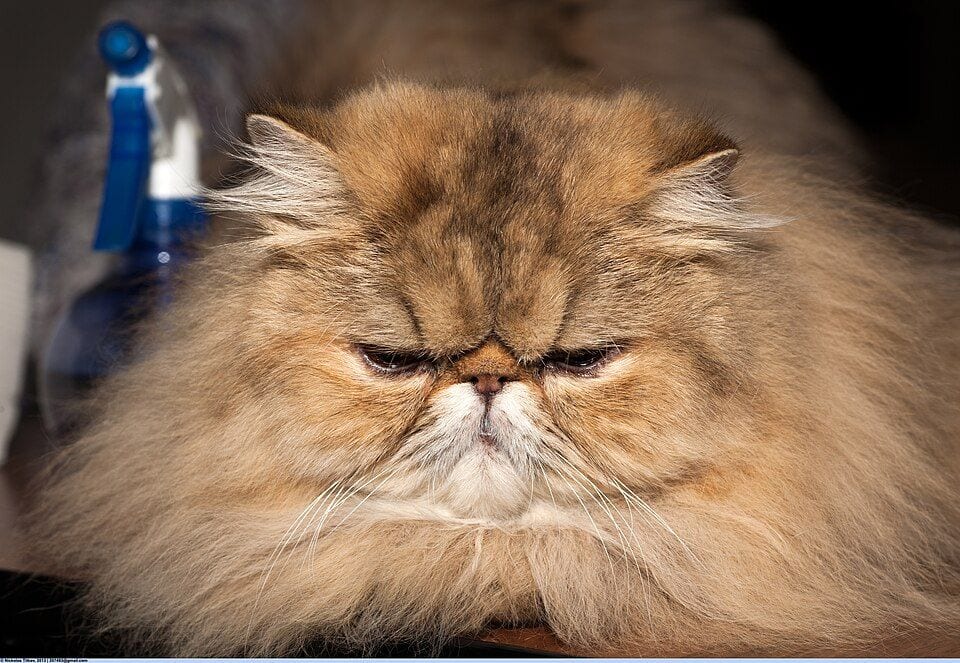
Persian – the ideal of roundness with a long coat
The CFA breed profile emphasizes that everything about the Persian should be round: the head, eyes, muzzle, body, and even the ear tips. The body is cobby, the chest is broad, and the legs are short and thick, like "tree trunks," while the tail is short and full. The ears are small—the smaller the better—and the large round eyes are set in the center of the face. The coat is long, with a dense, woolly undercoat and a prominent "ruff" around the neck. It is often noted that Persians look their most beautiful in the fall and winter, as they shed heavily in the spring and early summer.
There are so many colors that at CFA shows, Persians are divided into seven color divisions: solid, silver and golden, shaded and smoke, tabby, particolor, calico and bicolor, and Himalayan (pointed). One of the most famous varieties is the Chinchilla Persian, a line that began in England in 1882 with a male named Silver Lambkin.
Traditional "doll-face" and modern flat-faced Persian
In the 1950s, a spontaneous mutation appeared in red tabby Persians, creating a very flat face reminiscent of a Pekingese dog. It was initially considered a separate breed, but due to severe health problems, it quickly faded away. However, some breeders liked this look, and selective breeding eventually created the so-called ultra-type Persian with an extremely flat face. Since 2007, the CFA standard has required the forehead, nose, and chin to align vertically, while the British GCCF decided back in the 1990s to stop awarding kittens whose nose leather is higher than the lower edge of the eye.
The older type with a more prominent muzzle is now called the traditional, "doll-face," or "moon-face" Persian. It is still bred by a number of breeders, and the TICA standard does not require a flat face. It is often noted that while ultra-type cats tend to win at shows, pet buyers frequently prefer the traditional type.
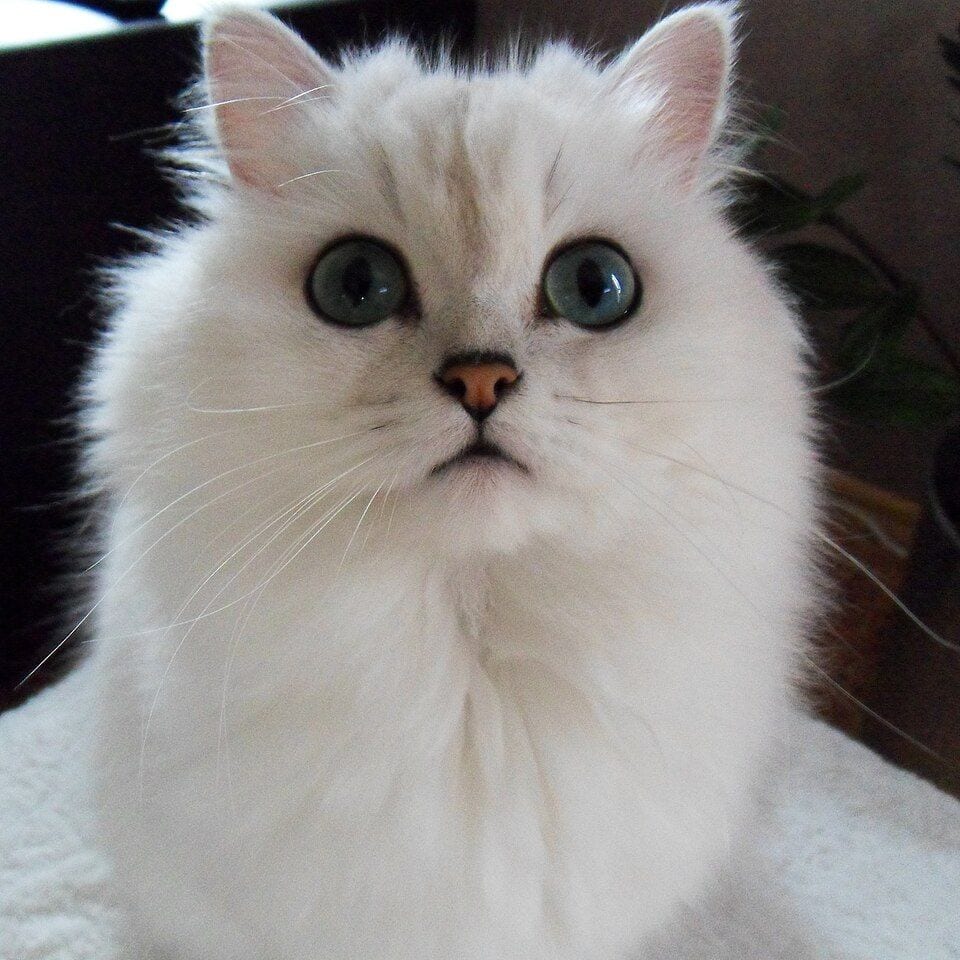
History: from Khorasan cats to the Crystal Palace show
The exact origins of longhaired cats remain unknown. In a 1620 letter, Italian traveler Pietro della Valle wrote about beautiful gray longhaired cats from Khorasan and intended to bring them back to Italy, while Frenchman Nicolas-Claude Fabri de Peiresc brought some from Damascus around the same time. In the 19th century, British travelers noted that the cats called "Persians" in Europe were actually mostly exported from Kabul. However, genetic studies show that today's Persian belongs to the Western European cat group and is most closely related to the British Shorthair, Chartreux, and American Shorthair.
The Persian was featured in the very first organized cat show at London's Crystal Palace in 1871, and in 1889, Harrison Weir published the first breed standard. Persians were crossed with Turkish Angoras and later became the foundation for many other breeds: they were used to develop the Himalayan and the Exotic Shorthair, and British Shorthairs also carry their bloodlines. In 2025, 1,825 Persian kittens were registered in the FIFe studbooks.
Temperament: the calmest house cat
The CFA describes Persians as playful but calm—they can be coaxed into chasing a toy, but they mostly just love receiving attention and affection. A Persian will not jump onto your kitchen counters or swing from your curtains; she prefers to keep all four paws firmly on the floor. Their quiet, even temperament allows them to get along well with children of all ages and other pets.
It is widely noted that Persians can spend hours lounging in their favorite spot. When things get too noisy, they simply retreat, and their voice is soft and rarely heard. They do well when left alone and generally have no desire to roam outside. Because grooming must be introduced from a young age, Persians are considered highly trainable: they quickly understand the word "no" and learn to respond to their names.
Health: short muzzles and polycystic kidney disease
The flat face of the modern Persian comes at a price. A brachycephalic skull leads to narrowed nostrils, an elongated soft palate, and airway obstruction, which can cause the cat to struggle for breath. Deformed tear ducts result in constant tearing, while inward-rolling eyelids and eyelashes growing into the cornea cause pain, infections, and corneal ulcers. Due to the shortened jaw, teeth often grow crooked, dental and gum diseases are common, and facial skin folds can become inflamed. Births are frequently difficult, with stillbirth rates reaching 16–22%.
The second major issue is polycystic kidney disease (PKD). It is caused by a dominant mutation in the PKD1 gene and previously affected 36–49% of Persians. Cysts growing in the kidneys eventually lead to kidney failure, typically around 7 years of age. The CFA notes that genetic testing and removing affected cats from breeding programs have helped manage the disease well, and most responsible breeders now only have PKD-free cats. Hypertrophic cardiomyopathy (HCM) is also observed in the breed.
In the US, there is growing awareness among veterinary organizations and breed clubs regarding the welfare of extreme brachycephalic breeds. While there are no nationwide bans, many veterinarians strongly advise against breeding cats with exaggerated, health-compromising physical traits. Therefore, when choosing a Persian, it is wise to prioritize moderate-type cats with open nostrils to ensure a healthier, more comfortable life for your pet.
Grooming: daily combs, eye cleaning, and vacuuming
- Coat. The CFA warns that owning a Persian requires a serious commitment to grooming and frequent vacuuming. You will need a steel or Teflon-coated comb with both wide and fine teeth; mats form especially quickly under the armpits, on the belly, and on the "britches."
- Eyes. Wipe the corners of their eyes daily with a soft, damp cloth to prevent the fur from staining.
- Bathing. Occasional baths are needed, but only after a thorough combing and nail trim. Many owners rely on professional groomers.
- Diet. Flat-faced cats have a harder time picking up food, so manufacturers offer specially shaped kibble.
- Heat. Short-nosed cats tolerate heat and physical exertion poorly—they need a cool, air-conditioned space in the summer.
Persian, Himalayan, and Exotic Shorthair – one family
| Trait | Persian | Himalayan | Exotic Shorthair |
|---|---|---|---|
| Coat | long | long | short, plush |
| Color | numerous | pointed only, blue eyes | numerous |
| Origin | Middle East, Great Britain | Persian and Siamese cross | Persian and American Shorthair cross |
| Grooming | daily | daily | once a week |
How to choose a healthy Persian kitten
The two most important factors are the PKD test and the shape of the muzzle. Ask for the PKD1 DNA test results of both parents (both should be negative) and evaluate whether the parents have open nostrils, breathe without wheezing, and have clear, non-watery eyes. Inquire about how the mother delivered the litter—whether a C-section was necessary. A kitten accustomed to grooming from an early age will not fear it as an adult. Reputable breeders typically do not let kittens go to their new homes until they are at least 14 weeks old and fully vaccinated. We discuss general recommendations for finding a responsible breeder, checking CFA or TICA registration, and the importance of microchipping in the guide introduction.
If you love the Persian's temperament but do not want to comb them daily, consider an Exotic Shorthair; if you want a long coat but with far fewer mats, look into a Birman or a Ragdoll.
Frequently asked questions
How long do Persian cats live?
In a 2024 UK study, the life expectancy of Persian cats was 10.9 years, compared to 11.7 years for all cats. According to Swedish insurance data, the median lifespan for the Persian group (Persians, Chinchillas, Himalayans, and Exotics) exceeded 12.5 years, with 76% reaching at least 10 years of age.
Why do Persian cats' eyes water?
Their short muzzles deform their tear ducts, causing tears to run down their faces (epiphora). This is mostly a cosmetic issue, but the fur near the nose can become stained and requires daily cleaning. More dangerous are inward-rolling eyelids and eyelashes rubbing against the cornea, which can cause ulcers.
What is the difference between a traditional and a modern Persian cat?
The traditional, or 'doll-face,' Persian has a more prominent muzzle and breathes more easily. The modern, or 'peke-face' ultra type, has a very flat face where the forehead, nose, and chin form an almost vertical line. The CFA standard aligns with the modern type, while the TICA standard does not require a flat face.
Are Persian cats hard to groom?
Yes, they are one of the most high-maintenance breeds. Their long coat has a dense undercoat that mats easily, requiring daily grooming with a steel comb, occasional baths, and regular eye cleaning. Many owners rely on professional groomers.
Can a Persian cat be left alone?
Persian cats are calm and independent, so they generally tolerate being left alone for a few hours quite well. They prefer a peaceful environment and will retreat to a quiet spot to escape loud noises.
Sources
- Wikipedia: Persian cat
- FIFe: Persian breed standard
- CFA: Persian breed profile
- Wikipedia: Polycystic kidney disease
- Wikipedia: Brachycephaly
- FIFe Breeding Statistics 2025
- FIFe Breeding & Registration Rules
- Wikimedia Commons: Longhaired Persian cat at a cat show
- Wikimedia Commons: Silver Chinchilla Persian cat
Log in to comment
No comments yet. Be the first.