Chausie Cat: Temperament, Size, Care & Legal Restrictions
- The Chausie is a hybrid breed created by crossing domestic cats with the wild jungle cat (Felis chaus), taking its name from its wild ancestor's Latin name.
- TICA registered the breed in 1995 and granted it championship status on May 1, 2013; FIFe does not recognize the Chausie.
- Today, most Chausies are SBT (Stud Book Tradition) generation cats, meaning they are at least four generations removed from their wild ancestors and have domestic temperaments.
- Only three colors are allowed: solid black, black grizzled tabby, and black ticked tabby.
- Ownership of early-generation (F1–F4) hybrid cats is restricted or banned in certain US states, cities, and by some homeowners associations, so always check local laws before getting one.
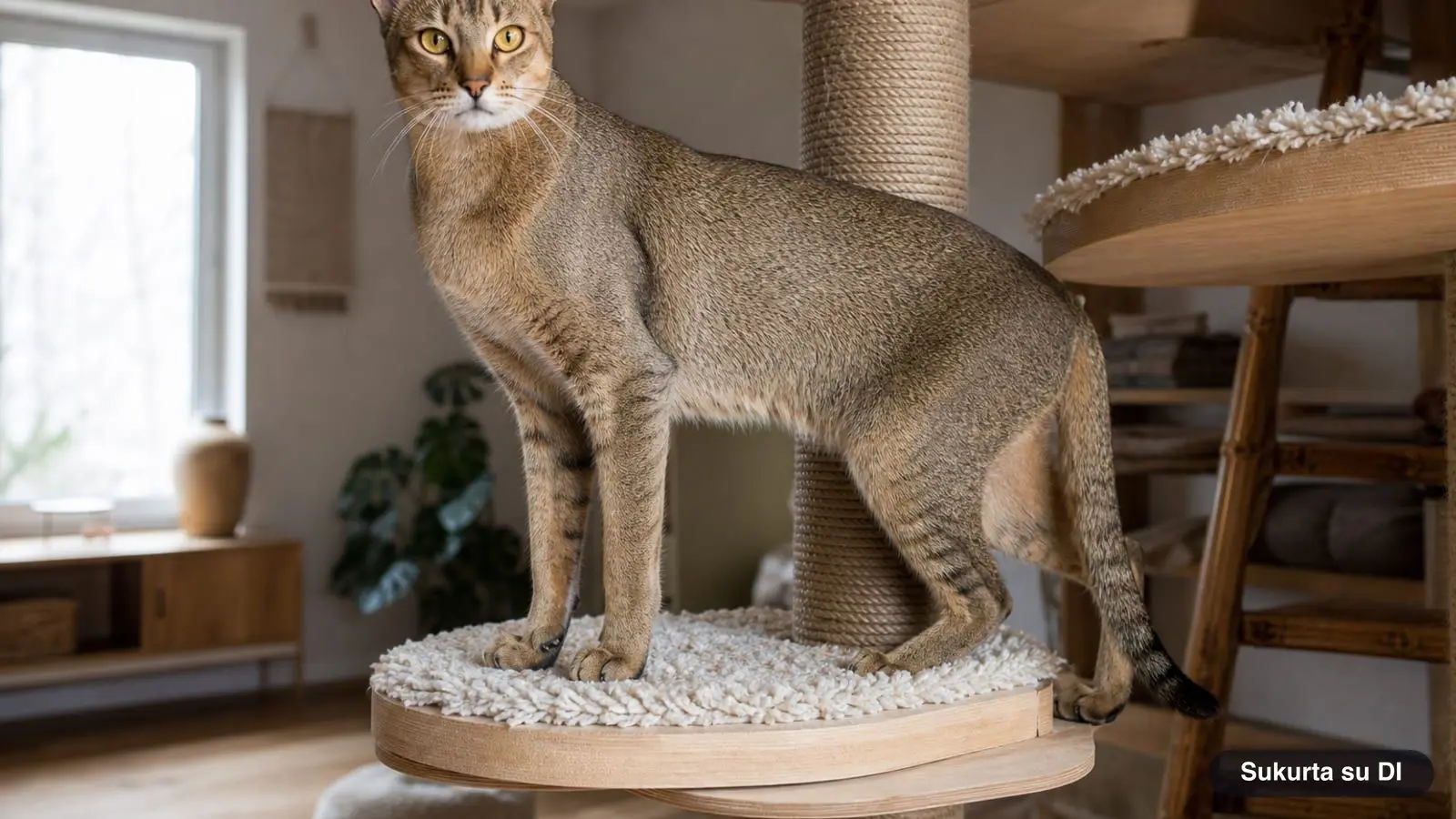
This article is part of the 77.today cat breeds guide, prepared by the 77.today editors from the sources listed at the end.
The Chausie is a slender, long-legged cat with large, high-set ears and prominent cheekbones, carrying the blood of the wild jungle cat (Felis chaus). Named after its wild ancestor, most of today's representatives are fully domestic in temperament, being several generations removed from their wild roots. However, their hybrid origins do mean they have special dietary needs and may face legal restrictions. In this cat breed guide profile, you will find the Chausie's history, generation system, appearance, temperament, and essential ownership rules.
| Origin | US; wild ancestor – jungle cat (Asia, Middle East, Nile Delta) |
|---|---|
| Recognition | TICA (registered 1995, championship status 2013); WCF – in recognition process; FIFe – not recognized |
| Weight | males 11–16.5 lbs, females 8–13 lbs |
| Body | long, long-legged, deep-chested, medium-boned |
| Head | prominent long cheekbones, wide high-set ears |
| Coat | short |
| Colors | solid black, black grizzled tabby, black ticked tabby |
| Eyes | gold or yellow preferred, light green allowed |
| Temperament | intelligent, active, athletic, affectionate |
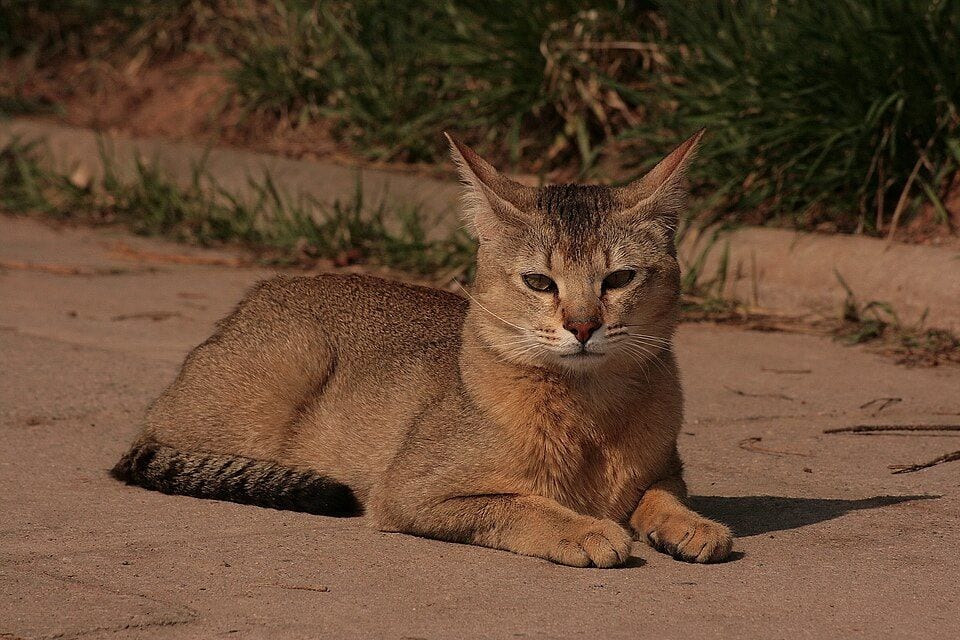
Chausie origins trace back to Ancient Egypt
The jungle cat is distributed across a vast territory from Southeast Asia and India to the Middle East, while in Africa, it only lives in the Nile Delta. It is fearless, often settling in abandoned buildings and near irrigation canals as long as there is enough prey and brush. Ancient Egyptians mummified not only domestic cats but sometimes jungle cats as well, leading to the belief that the first hybrids of these species may have been born in Egypt several thousand years ago.
In the 1960s and 1970s, a few enthusiasts attempted to cross jungle cats with domestic cats to create an intelligent alternative to keeping wild cats as pets. The true breed was born in the 1990s when a group of breeders named it the Chausie and developed a planned breeding program. TICA registered the breed in 1995. It was in the New Breed class from May 2001 to April 2013, and on May 1, 2013, it achieved championship status. Chausies are bred in North America and Europe, WCF has started their recognition process, and FIFe does not recognize the breed.
Generations: From F1 to SBT
Hybrid breed generations are denoted by numbers: F1 is the direct offspring of a jungle cat and a domestic cat, F2 is the next generation, and so on. Registration documents use letters: A and B generations usually indicate a recent outcross to another domestic breed, C means at least the fourth generation, and SBT (Stud Book Tradition) signifies at least four generations removed from the wild ancestor with three generations of registered Chausie ancestors. Only SBT cats compete for championship titles at TICA shows.
When developing the breed, breeders were officially allowed to outcross with Abyssinians and domestic shorthairs, but in practice, they used various vigorous, active domestic breeds, such as Oriental Shorthairs. As a result, the breed's genetic foundation is diverse and healthy. From about the fourth or fifth generation onward, Chausies are fully fertile and have a domestic temperament.
Appearance: A runner's body and a unique grizzled pattern
Chausies are medium to large cats built for running and jumping: they have a long body, long legs, medium boning, a deep chest, and flat sides. The ears are wide, tall, and set high, about two fingers' width apart. The cheekbones are prominent, long, and angular, while the eyes are flattened on top and form a half-oval on the bottom.
The TICA standard allows only three colors. Solid black – kittens may have faint "ghost" stripes that fade with age. Black grizzled tabby – among domestic cats, this is found only in the Chausie, as the pattern is inherited from the jungle cat: kittens are born almost black, and later whitish bands appear on individual hairs, first on the neck, chin, belly, and inside the ears; the "grizzling" usually finishes developing by three years of age. Black ticked tabby – black ticking over a sandy, golden, fawn, or even cool gray background, with breeders avoiding the overly reddish tones typical of Abyssinians.
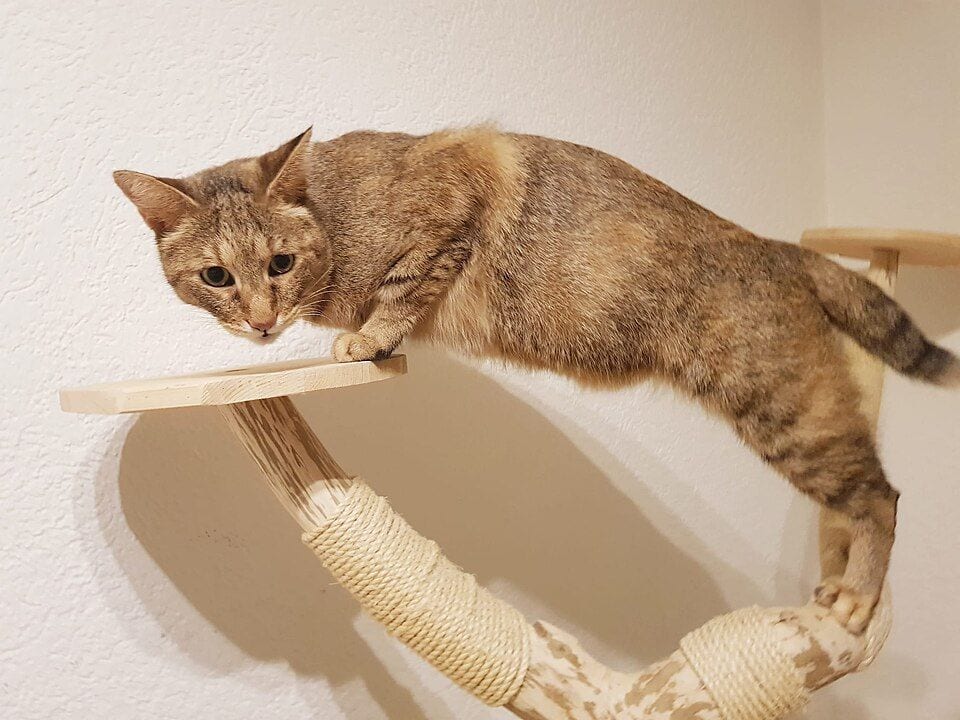
Temperament: Intelligent and dislikes being alone
Because the wild jungle cat was crossed mostly with intelligent and social breeds, Chausies are highly capable, active, and athletic cats. Kittens are often very "busy," and while adults settle down a bit, they retain their playfulness and curiosity throughout their lives. Chausies do not like being alone—they need the company of another cat or a human for most of the day. They get along well with dogs, especially if raised together. They form strong bonds with their people and are incredibly loyal, which can make it harder for adult Chausies to adjust to a new home.
Health and diet
Like other hybrid breeds, some Chausies may inherit a shorter intestinal tract similar to their wild ancestors. A shorter gut is less efficient at digesting plant-based ingredients, and certain food components can cause chronic inflammation and eventually inflammatory bowel disease. Chausies are known to be prone to food allergies, so it is highly recommended to choose a meat-based diet and discuss nutrition with your veterinarian.
- Coat. Their short coat only needs to be brushed once a week.
- Exercise. Tall cat trees, shelves, long play sessions, and walks on a harness.
- Companionship. Another active cat or a dog is ideal if owners are away from home for long hours.
Legal restrictions: US laws on hybrid breeds
While late-generation Chausies are widely accepted as domestic pets, early-generation hybrids (F1–F4) face strict legal restrictions across the United States. State laws, county regulations, and local city ordinances vary dramatically—some completely ban the ownership of any hybrid cat, while others require special permits or only restrict the first few generations. Furthermore, many landlords, homeowners associations (HOAs), and homeowners insurance policies have breed-specific restrictions that prohibit hybrid cats. It is crucial to thoroughly check your local laws and housing agreements before bringing a Chausie home, as the legal landscape for hybrids is constantly evolving.
| Hybrid breed | Wild ancestor | TICA championship status | FIFe |
|---|---|---|---|
| Chausie | jungle cat | 2013 | not recognized |
| Bengal | Asian leopard cat | 1991 | recognized (1999) |
| Savannah | serval | 2012 | not recognized |
What to check before getting a Chausie
Only buy from a TICA-registered breeder and always ask for the pedigree paperwork that clearly states the generation. To avoid legal issues and ensure a domestic temperament, it is smartest to choose a cat whose pedigree shows they are a fifth-generation (F5) or later. Ask the breeder what food the cat is currently eating and if there is any history of intestinal diseases in their bloodline. Be very cautious of breeders offering F1 or F2 kittens, as their ownership is heavily restricted in many areas and they require highly specialized care. A reputable breeder will provide health guarantees, a clear contract, and ensure the kitten is microchipped and fully vetted before going to its new home, as outlined in our guide introduction.
You can find other hybrid breeds in our Savannah and Bengal profiles, and read about one of the breeds used to develop the Chausie in the Abyssinian guide.
Frequently asked questions
Is the Chausie a wild cat?
No. While the breed's ancestor is the wild jungle cat, most Chausies bred today are late-generation (C or SBT) cats, four or more generations removed from their wild roots. From about the fourth or fifth generation onward, Chausies are fully fertile and have a completely domestic temperament.
What do F1, F4, and SBT mean?
F1 is the direct offspring of a jungle cat and a domestic cat, F2 is the second generation, and so on. Registration letters A, B, and C indicate how many generations a cat is removed from its wild ancestor. SBT (Stud Book Tradition) means at least four generations removed, with three generations of registered Chausie ancestors. Only SBT cats can compete for championship titles in TICA shows.
How much does a Chausie weigh?
Adult males typically weigh 11–16.5 lbs, while females weigh 8–13 lbs. Because of their long bodies and long legs, Chausies often appear much larger than they actually are.
Are Chausies legal to own in the US?
Laws regarding hybrid cats vary widely across the United States. While late-generation (SBT) Chausies are generally legal in most places, early generations (F1–F4) are often restricted or banned by state laws, local city ordinances, or breed-specific legislation. Additionally, some landlords and homeowners insurance policies restrict hybrid breeds. Always check your local regulations before bringing a Chausie home.
Why is a Chausie's diet so important?
Some Chausies may inherit a shorter intestinal tract similar to their wild ancestors, which makes it harder for them to digest plant-based ingredients. The breed is known to be prone to food allergies and chronic intestinal inflammation, so a meat-based, grain-free diet is often recommended.
Log in to comment
No comments yet. Be the first.