Cornish Rex Cat: Size, Temperament, Care & Health
- The Cornish Rex originated from a curly-coated cream kitten named Kallibunker, born on a Cornwall farm in 1950.
- Their coat consists entirely of down hair with no guard hairs; the curls are caused by an LPAR6 gene mutation identified in 2013.
- Thanks to their slender, arched bodies and galloping gait, the breed is often called the Greyhound of the cat world.
- This is a highly active, curious, and affectionate cat that forms strong bonds with its humans and has a surprisingly large appetite.
- Their thin coat offers poor protection against cold and sun, and the Cornish Rex is not hypoallergenic.
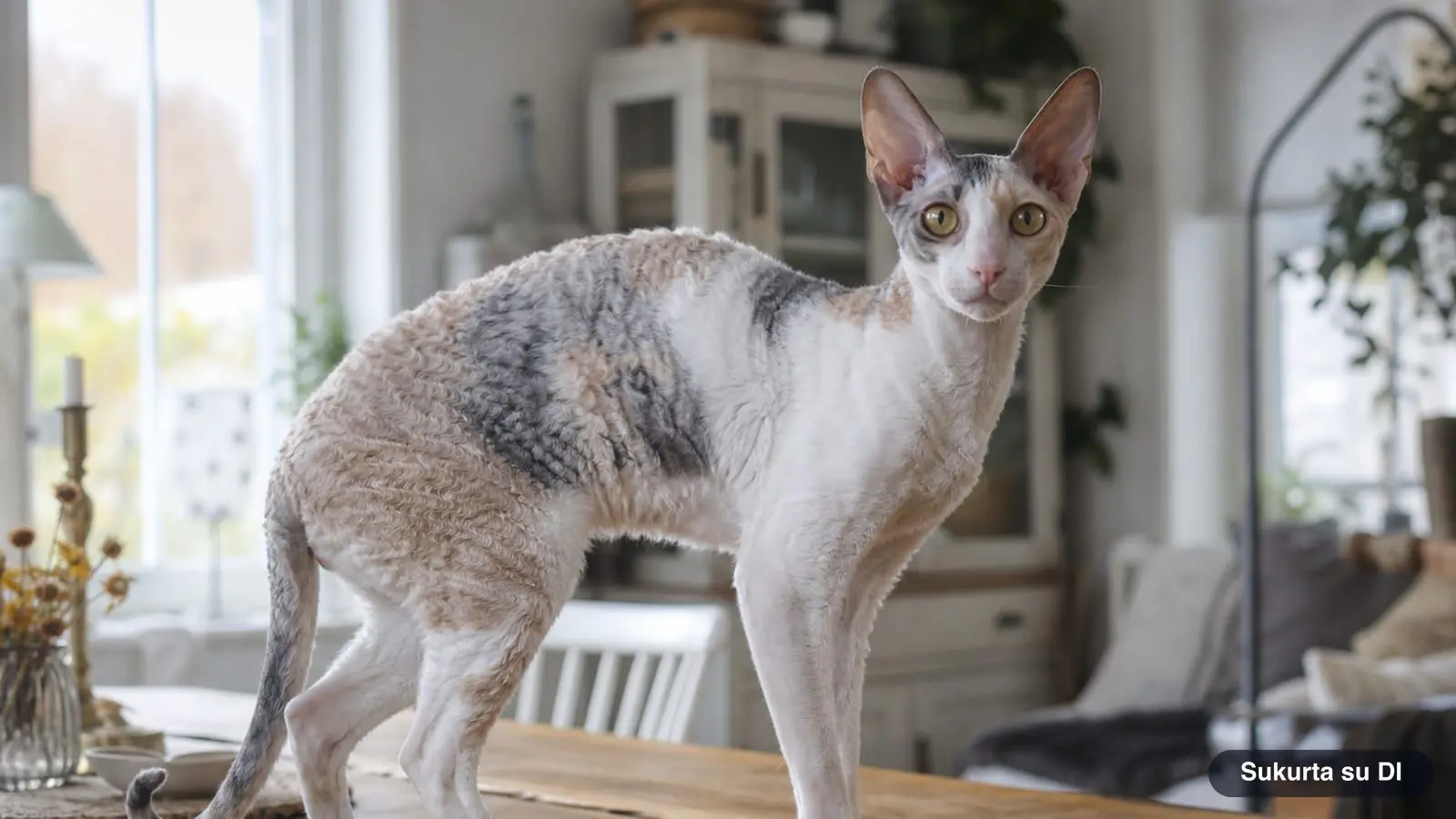
- The Cornish Rex coat consists entirely of curly down
- The Greyhound of the cat world: a lean body and galloping gait
- History: from Kallibunker to the American type
- Personality: a "Velcro" cat that never stops
- Health: a sturdy breed, but sensitive to cold and sun
- Care: skip the brush, but keep the cotton swabs handy
- Cornish Rex vs. Devon Rex: neighbors, but not relatives
- How to choose a Cornish Rex kitten
This article is part of the 77.today cat breeds guide, prepared by the 77.today editors from the sources listed at the end.
Imagine the elegance of a Greyhound, the personality of a clown, and all of it dressed in curls—this is how the CFA describes the Cornish Rex. With a slender, arched back, an egg-shaped head, a Roman nose, huge high-set ears, and a coat made entirely of soft, uniform curls. In our cat breed directory, you will find out where this breed originated, what makes its coat unique, its personality, and how to care for it.
| Origin | England, Cornwall, spontaneous mutation |
|---|---|
| Recognition | CFA registration 1962, championship status 1964; FIFe, TICA, GCCF |
| Body | small to medium, lean, muscular, arched back |
| Coat | down only, short, dense, uniformly wavy |
| Head | egg-shaped, Roman nose, large high-set ears |
| Colors | all |
| Eyes | medium-sized, oval, any color |
| Activity | very high |
| Care | do not brush; clean ears, bathe occasionally |
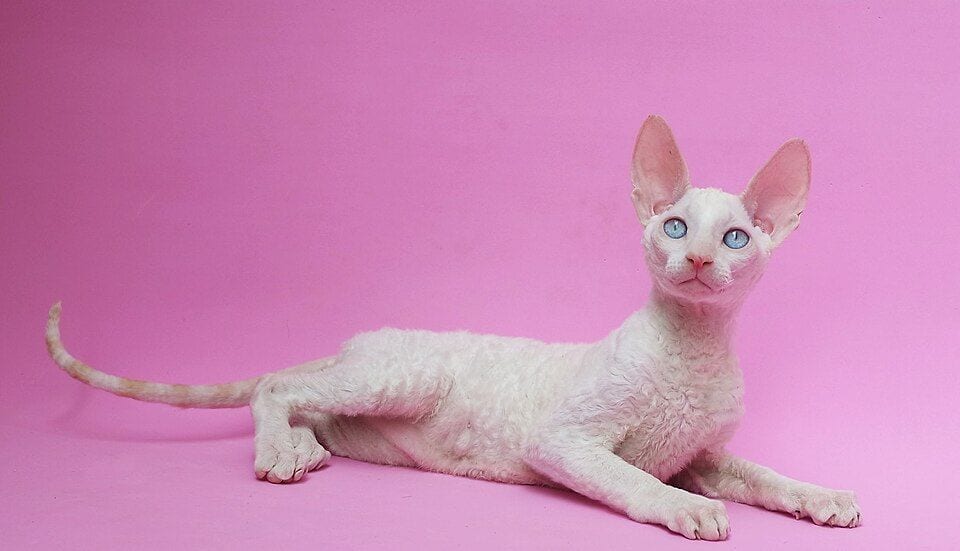
The Cornish Rex coat consists entirely of curly down
Most cats have three types of hair in their coats: long guard hairs, a middle awn layer, and about a half-inch (1 cm) of down. The Cornish Rex only has down hair. As a result, its coat is incredibly soft, silky, short, close-lying, and curled into uniform waves that resemble a washboard or a vintage "marcel" hairstyle. The CFA standard allocates a full 40 points to the coat, requiring it to be not only curly but also dense and soft. Even their whiskers and eyebrows are curly.
In 2013, researchers discovered that these curls are caused by an LPAR6 gene mutation—a four-nucleotide deletion that disrupts a receptor essential for hair structure. In humans, mutations in this gene cause woolly hair. The mutation is recessive, meaning Cornish Rex kittens are only curly if they inherit the gene from both parents. This mutation is unrelated to the curls of the Devon Rex.
The Greyhound of the cat world: a lean body and galloping gait
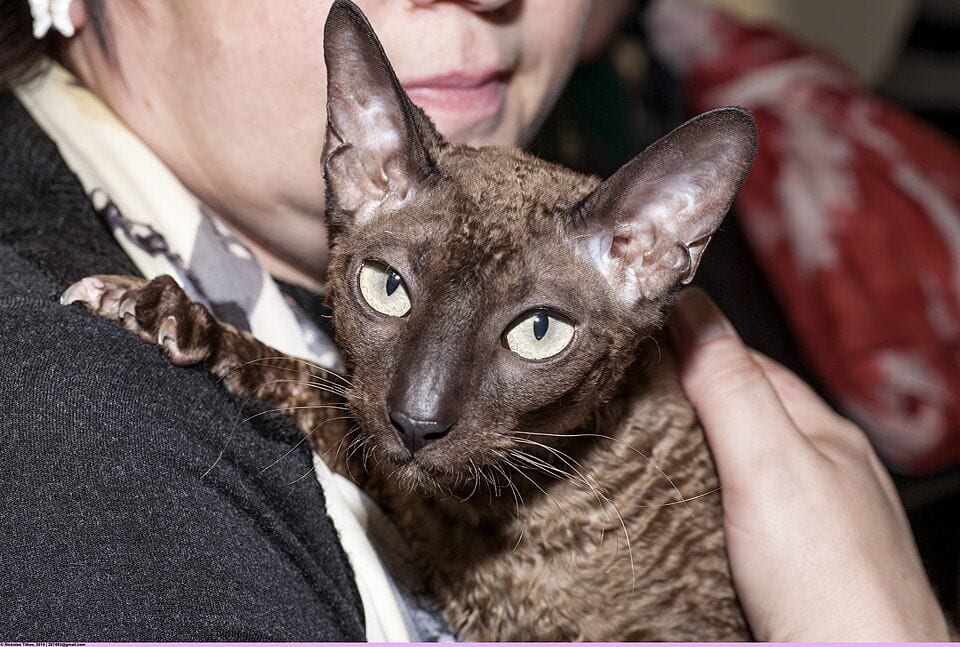
The Cornish Rex is small to medium in size, fine-boned, but muscular. The back is naturally arched, the belly is tucked up, the legs are long, the paws are small and oval, and the tail is long and thin like a whip. Because of this physique and their galloping run, the breed is often called the Greyhound of the cat world. The head is egg-shaped, longer than it is wide, with a prominent Roman nose. The eyes are oval, and the ears are large, wide at the base, and rounded at the tips—sometimes compared to a mussel shell.
Breed enthusiasts often distinguish between two types: the American Cornish Rex is typically smaller, leaner, and longer-legged with a slightly convex profile, while the European type is somewhat heavier with a straighter nose. Color is not important in the breed standard, so the Cornish Rex comes in all colors and patterns.
History: from Kallibunker to the American type
In 1950, on Nina Ennismore's farm in Cornwall, a cream-colored male with an unusual, very fine curly coat was born in a litter of barn cats. After consulting with a veterinarian and a geneticist, she bred Kallibunker back to his mother and produced two more curly kittens. Having had experience with Rex rabbits, she gave the cats the "Rex" name as well. Outcrosses with Burmese, Siamese, and British Shorthair cats proved the mutation was recessive and broadened the breed's genetic foundation.
In 1956, a California breeder purchased a pair of Cornish Rex cats from Ennismore. Lamorna Cove, a daughter of Kallibunker's son Poldhu, was crossed with a Siamese cat in America—this is where the long, thin tail and large ears originated. The CFA registered the breed in 1962 and granted it championship status in 1964.
Personality: a "Velcro" cat that never stops
The CFA calls the Cornish Rex "Velcro kitties" because they demand constant physical contact with their favorite humans. They are highly intelligent, adaptable, and love adventures, including travel. They have boundless energy and are always looking for new toys—often choosing things you never intended for them to play with. In a Cornish Rex household, fragile items are best kept behind closed doors.
The Cornish Rex loves entertaining children and happily plays with dogs. When they aren't playing or cuddling, they are likely looking for food: despite their slender build, their appetite is massive, and some will even eat vegetables and fruits. They are talkative but not overly loud. They struggle with being left alone for long periods, can learn to fetch objects and walk on a leash, but generally do not beg to go outside.
Health: a sturdy breed, but sensitive to cold and sun
The CFA describes the Cornish Rex as a sturdy, vigorous breed with no specific inherited diseases. However, their unique coat does present a few risks:
- Cold. Without guard hairs, the Cornish Rex gets cold quickly. They need a warm, dry home, and during cooler weather, a sweater and a heated bed are ideal.
- Sun. Their thin coat offers poor protection against ultraviolet rays, so prolonged sunbathing is not recommended.
- Ears and skin. Wax accumulates faster in their ears, and their skin produces oils that need to be wiped away.
- Weight. A large appetite means portion control is essential, even though these cats are highly active.
The Cornish Rex is not hypoallergenic. Allergies are triggered by the Fel d 1 protein found in saliva, skin oils, and urine, and the Cornish Rex grooms itself just as much as, if not more than, other cats. Some people report milder reactions, but it is worth spending time with the breed before bringing one home to test your sensitivity.
Care: skip the brush, but keep the cotton swabs handy
- Coat. Regular brushing is unnecessary and not recommended. They shed very little.
- Bathing. When the coat becomes greasy, bathe the cat with a mild shampoo and dry thoroughly with a towel. The CFA warns that using a hair dryer will ruin their curls.
- Ears. Clean them frequently with a cotton pad or swab.
- Enrichment. Provide tall cat trees, rotate their toys, and engage them in daily hunting games and puzzle feeders.
Cornish Rex vs. Devon Rex: neighbors, but not relatives
| Feature | Cornish Rex | Devon Rex |
|---|---|---|
| Guard hairs | None at all | Sparse, short, curly |
| Curls | Dense, uniform waves | Looser, uneven |
| Head | Egg-shaped, Roman nose | Short broad wedge, elf-like appearance |
| Ears | High-set | Low-set, on the sides of the head |
| Gene | LPAR6 | KRT71 |
How to choose a Cornish Rex kitten
Pay attention to the environment where the kittens are raised: warmth is especially important for the Cornish Rex, so a reputable breeder's home should be warm and dry. Ask to meet the parents to evaluate their temperament and coat condition—there shouldn't be excessive bald patches or overly greasy skin. A responsible breeder will provide health guarantees, a contract, and proof of veterinary care. Most major registries, such as the CFA or TICA, recommend that kittens stay with their mother until they are at least 14 weeks old. To ensure you are working with an ethical breeder, avoid pet stores and verify their standing with recognized cat associations, as we mentioned at the beginning of our guide.
If you are looking for a cat with looser curls and an elf-like appearance, check out the Devon Rex profile, or if you prefer a curly but large and plush cat, look into the Selkirk Rex.
Frequently asked questions
Is the Cornish Rex hypoallergenic?
There is no guarantee. Allergies are caused by the Fel d 1 protein, which cats produce in their saliva and sebaceous glands, not by hair length. The Cornish Rex grooms itself just as much as, or even more than, other cats, so it can still trigger allergies, though some people report milder reactions.
What is the difference between a Cornish Rex and a Devon Rex?
The Cornish Rex lacks guard hairs entirely, has dense and uniform curls, a long arched body, and an egg-shaped head with a Roman nose. The Devon Rex has sparse, short guard hairs, looser waves, and an elf-like head with low-set ears. Their curls are caused by different genes.
Does the Cornish Rex get cold easily?
Yes, their thin coat provides little warmth. The Cornish Rex is best suited for a warm, dry home, and the CFA suggests considering a sweater during cooler weather. They are also sensitive to the sun, as their coat does not protect against harsh rays.
How do you groom a Cornish Rex coat?
You should not brush them, as it can damage their delicate curls. More attention is needed for their ears, which accumulate wax quickly. If the coat gets greasy, the cat can be bathed and gently towel-dried. The CFA advises against using a hair dryer, as it ruins the curls.
When did the CFA recognize the Cornish Rex?
A pair of Cornish Rex cats was brought to the US in 1956. The CFA registered the breed in 1962 and granted it championship status two years later.
Sources
- Wikipedia: Cornish Rex
- FIFe (Fédération Internationale Féline): Cornish Rex breed standard
- CFA (Cat Fanciers' Association): Cornish Rex breed profile
- Wikipedia: Fel d 1
- FIFe Breeding & Registration Rules (2.3.3 - kittens no earlier than 14 weeks)
- Wikimedia Commons photo: White Cornish Rex lying on a pink background with an arched back
- Wikimedia Commons photo: Brown Cornish Rex with large ears cuddling with its owner
Log in to comment
No comments yet. Be the first.