Russian Blue: Temperament, Size, Care & Health
- The breed is linked to the port of Arkhangelsk in northern Russia; sailors brought these cats to Britain in the 19th century, where they were known as Archangel cats.
- The coat is double, dense, and plush; the blue hairs have silver tips that give the breed its characteristic shimmer.
- Their eyes are a striking emerald color, with the green deepening as they age; CFA, TICA, FIFe, and WCF only recognize the blue coat color.
- Their temperament is calm, intelligent, and sensitive; they can be reserved with strangers and appreciate a predictable daily routine.
- In 2025, there were 2,466 Russian Blue kittens registered in FIFe pedigree books (ranking tenth), and they remain a highly sought-after breed in the US.
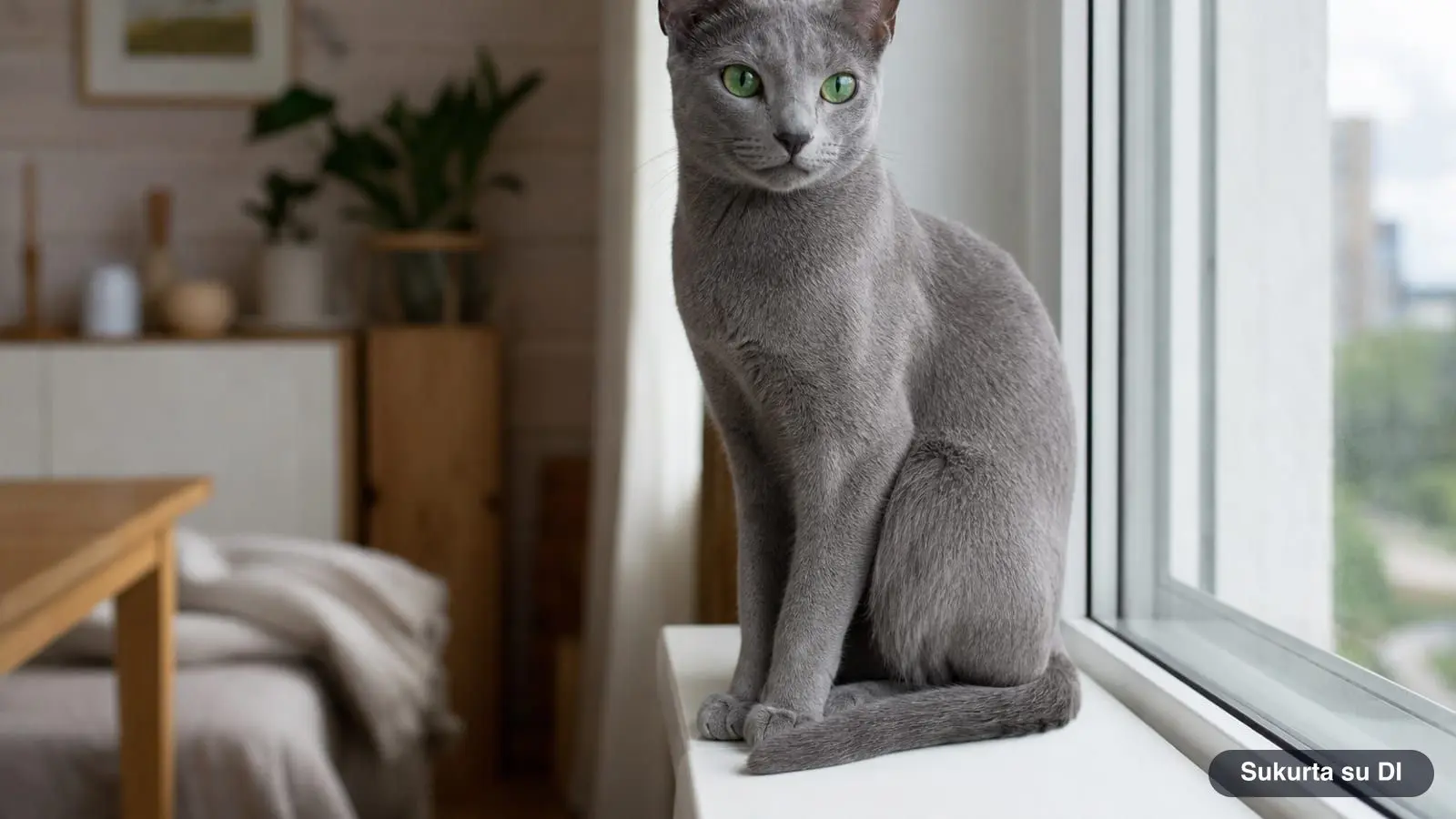
This article is part of the 77.today cat breeds guide, prepared by the 77.today editors from the sources listed at the end.
The Russian Blue is elegance in its purest form: a solid blue-gray coat with silver-tipped hairs that shimmer in the light, striking emerald green eyes, and slightly upturned corners of the mouth that give the face a gentle smile. The CFA considers them one of the most intelligent cat breeds. In our cat breeds guide, you will find the Russian Blue's origins, appearance, temperament, care needs, and how to tell them apart from other blue cats.
| Origin | Russia, linked to the port of Arkhangelsk; breed developed in Britain and Scandinavia |
|---|---|
| Recognition | All major organizations; FIFe since its founding in 1949 |
| Size | Medium; generally ranges from 8 to 15 lbs |
| Body | Medium length, graceful, fine-boned |
| Coat | Short, double, plush, with silver tips |
| Color | Blue only (some registries accept white and black) |
| Eyes | Vivid emerald green |
| Temperament | Calm, intelligent, reserved with strangers |
| Grooming | Brush 2–3 times a month |
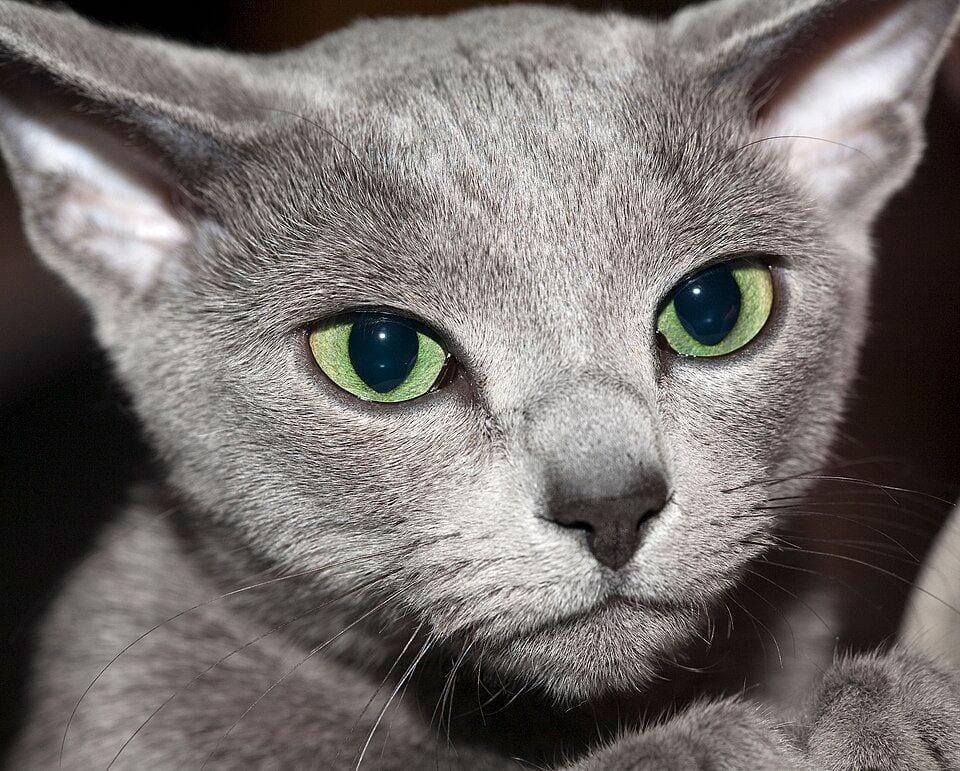
A Silver-Shimmering Coat and Emerald Eyes
The Russian Blue has a double coat: the soft, downy undercoat is the same length as the guard hairs, making the coat unusually dense and plush. The CFA notes that if you run your fingers through the coat, the patterns stay visible until smoothed over. The guard hairs are an even blue with distinct silver tips, which create a silvery sheen in the light. The body is a solid color, though faint tabby markings are sometimes visible on the tail. The paw pads are a mauve or pinkish-lavender shade.
The eyes are the breed's second hallmark: vivid emerald green or yellowish-green, with the green deepening as the cat matures. For an adult show cat, white spots or yellow eyes are considered a fault. The body is medium in length and graceful, the head is a modified wedge shape with a two-plane profile, and the ears are large, wide at the base, and set far apart.
History: Archangel Cats at the Crystal Palace
The breed is believed to have originated from a naturally occurring cat population near the port of Arkhangelsk in northern Russia, which is why early specimens were called Archangel Blues. Sailors brought them to Great Britain and Northern Europe around the 1860s. The first mention in the British press was in 1862, and in 1872, the Archangel cat was exhibited at the Crystal Palace show in London. Until 1912, Russian Blues competed alongside all other blue cats before finally receiving their own class. Following the Russian Revolution, British breeders often referred to the breed as the "Foreign Blue" until 1939.
Up until World War II, the breed was primarily developed in Britain and Scandinavia. After the war, so few of these cats remained that they were crossed with Siamese cats. The Siamese traits were later bred out, but some lines still carry the colorpoint gene. US breeders eventually combined the British and Scandinavian lines to create the modern Russian Blue type we see today. The Russian Blue was also used in the development of the Nebelung and the Havana Brown, and in Italy, they have been used to improve the health of Oriental Shorthairs.
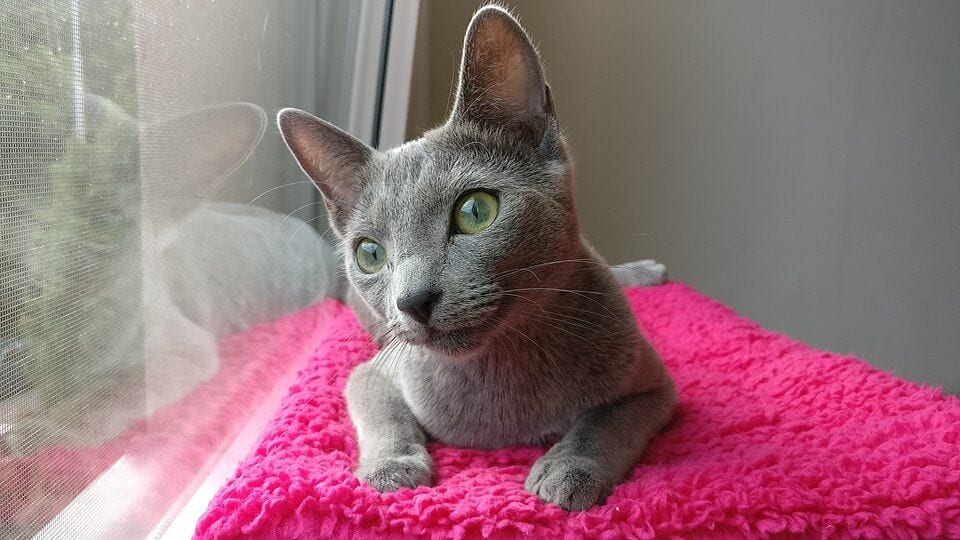
Temperament: Intelligent, Sensitive, and Routine-Oriented
The CFA points out that Russian Blues are particularly gifted when it comes to "mechanics": a closed cabinet, a drawer, or even a sealed container is just a puzzle waiting to be solved, so owners shouldn't be surprised to find doors left wide open. Puzzle toys and interactive games are essential for them. At the same time, they are affectionate companions who happily curl up on a lap or even ride on their owner's shoulder. They are highly attuned to human emotions and might act silly to cheer you up or purr softly next to a crying child.
Russian Blues are generally quiet and reserved around strangers. When guests arrive, they often hide under the sofa, though curiosity usually wins out eventually. They thrive in calm households, dislike sudden changes, and appreciate a predictable daily routine. They are a good fit for families with older children who allow the cat to warm up at its own pace. Kittens are highly energetic, and because the breed matures slowly, they retain their adolescent playfulness until they are 3 to 4 years old. Russian Blues also have an excellent memory—they remember where their favorite toys are hidden and recognize beloved visitors.
Health: A Sturdy Breed Prone to Weight Gain
The CFA describes the Russian Blue as a healthy, natural breed with no known specific genetic diseases. Some experts believe that a relatively small gene pool could increase susceptibility to certain conditions, but overall, they are robust. The biggest practical risk is obesity: Russian Blues have a hearty appetite, so without frequent active play, they can easily pack on extra pounds, which leads to other health issues. Portion control is highly recommended.
Because some lines carry the colorpoint gene from post-war crosses with Siamese cats, a litter from two carrier parents might produce pointed kittens. Most major registries do not register these kittens as standard Russian Blues.
Care: Brushing a Few Times a Month
- Coat. According to the CFA, Russian Blues are exceptionally clean, and brushing them 2 to 3 times a month is usually enough. If the coat becomes greasy, an occasional bath is fine.
- Nails, eyes, and ears. Trim their nails regularly, and gently wipe their eyes and ears as needed.
- Mental stimulation. Provide treat puzzles, teach them tricks, and rotate their toys to keep them engaged.
- Weight management. Measure their food portions carefully and engage in active play every day.
- Calm environment. Maintain a consistent daily routine and provide safe hiding spots where the cat can retreat when guests visit.
Four Blue Breeds: How to Tell Them Apart
| Trait | Russian Blue | British Shorthair (Blue) | Chartreux | Korat |
|---|---|---|---|---|
| Body | Graceful, medium length | Stocky, round | Sturdy, muscular | Medium, muscular |
| Head | Modified wedge | Round, chubby cheeks | Broad, "smiling" | Heart-shaped |
| Eyes | Emerald green | Copper | Copper to gold | Green |
| Origin | Russia, Britain | Great Britain | France | Thailand |
How to Choose a Russian Blue Kitten
The CFA warns that there are rarely enough breeders to meet the high demand, so you may have to wait on a list for a kitten. Sometimes, it is worth asking about retired adult show cats available for adoption. When speaking with a reputable breeder, ask if the parents carry the colorpoint gene and request to see the pedigree paperwork—a blue coat alone does not guarantee a Russian Blue, as there are many solid gray domestic shorthair mixes. Keep in mind that kittens' eyes change color, and the final vibrant green develops later. While FIFe rules state kittens should not leave the breeder before 14 weeks, responsible US breeders follow similar guidelines to ensure proper socialization. We also highly recommend discussing microchipping and registration with your vet to keep your pet safe, as local ordinances can vary. For more general advice on welcoming a new cat, check out the introduction to our cat breeds guide.
You can find more information about other blue breeds in our profiles for the British Shorthair, Chartreux, and Korat, as well as the Russian Blue's semi-longhaired relative, the Nebelung.
Frequently asked questions
How does the Russian Blue differ from the British Shorthair?
The British Shorthair (in its blue variety) is stocky and round-headed with copper eyes. The Russian Blue is leaner and more graceful, with a modified wedge-shaped head, large ears, vivid green eyes, and a blue coat that shimmers with silver tips.
What color are a Russian Blue cat's eyes?
Adult Russian Blues have vivid emerald green or yellowish-green eyes, and the green deepens with age. Kittens' eyes start out a different color, but yellow eyes in an adult show cat are considered a fault.
Is the Russian Blue good for apartment living?
Yes. The CFA notes that Russian Blues do not require a lot of space, are low-maintenance, and are easy to live with, especially in quieter homes. Interactive play and puzzle toys are important, as they are highly intelligent and prone to weight gain.
Do Russian Blue cats come in other colors?
In Australia, South Africa, and the UK (GCCF), Russian Whites and Russian Blacks are recognized, but major registries like the CFA, TICA, FIFe, and WCF only recognize the blue color.
How much does a Russian Blue cat weigh?
This is a medium-sized cat. While general estimates range from 8 to 15 lbs, the CFA notes that males rarely weigh more than 10 lbs, and females typically weigh between 5 and 8 lbs. Due to their hearty appetite, their weight must be monitored.
Log in to comment
No comments yet. Be the first.