American Bobtail: Temperament, Size, Care & Health
- The American Bobtail was developed in the US in the late 1960s, starting with a short-tailed tabby named Yodie.
- Their short tail is caused by a dominant mutation, unrelated to the genes of Japanese or Kurilian Bobtails.
- TICA recognized the breed in 1989; it holds championship status in TICA, CFA, and ACFA, though FIFe does not recognize it.
- They come in both shorthair and semi-longhair varieties and take 2–3 years to fully mature.
- Considered one of the most "dog-like" cats, they are friendly, playful, and easily adapt to leash walking and travel.
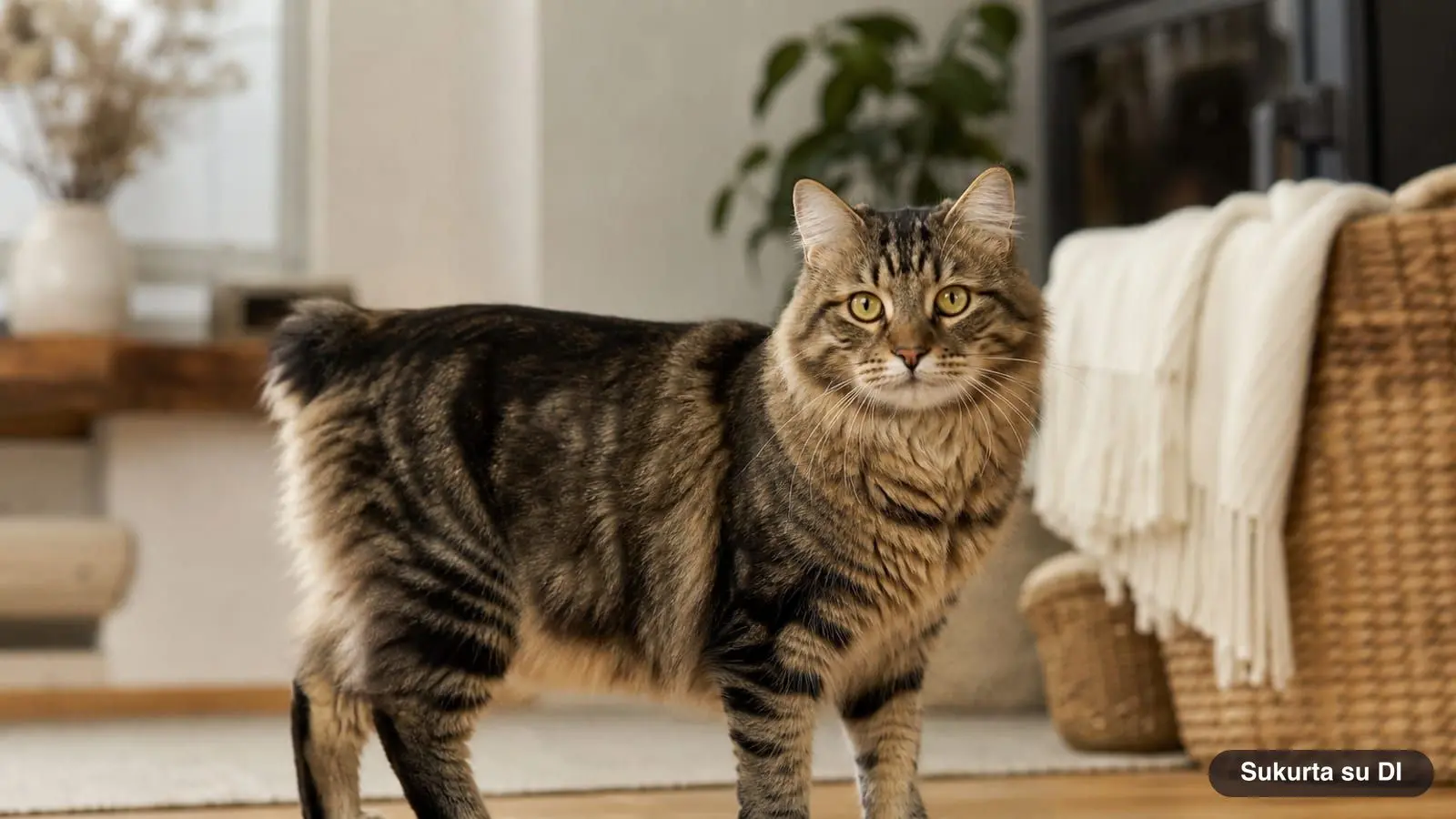
This article is part of the 77.today cat breeds guide, prepared by the 77.today editors from the sources listed at the end.
The American Bobtail is a sturdy, muscular cat with heavy brows, a "hunting gaze," and a short, seemingly cropped tail. It looks as though it just stepped out of the woods, but it is entirely domestic, calm, and deeply devoted to its people. Sometimes simply called the American short-tailed cat, this breed has a fascinating background. In our cat breeds guide, we explore their origins, explain their tail genetics, and cover their appearance, temperament, and care.
| Origin | USA (Arizona), late 1960s |
|---|---|
| Recognition | TICA in 1989; championship status in TICA, CFA, ACFA; WCF – registers only; FIFe – not recognized |
| Size | Medium to large, heavy boning |
| Body | Moderately long, broad chest, rectangular stance |
| Head | Broad wedge, prominent brow, wide muzzle |
| Coat | Shorthair or semi-longhair, with undercoat |
| Tail | Short – one-third to one-half of normal length |
| Colors | All colors; a "wild" tabby look is highly valued in shows |
| Temperament | Friendly, intelligent, adaptable |
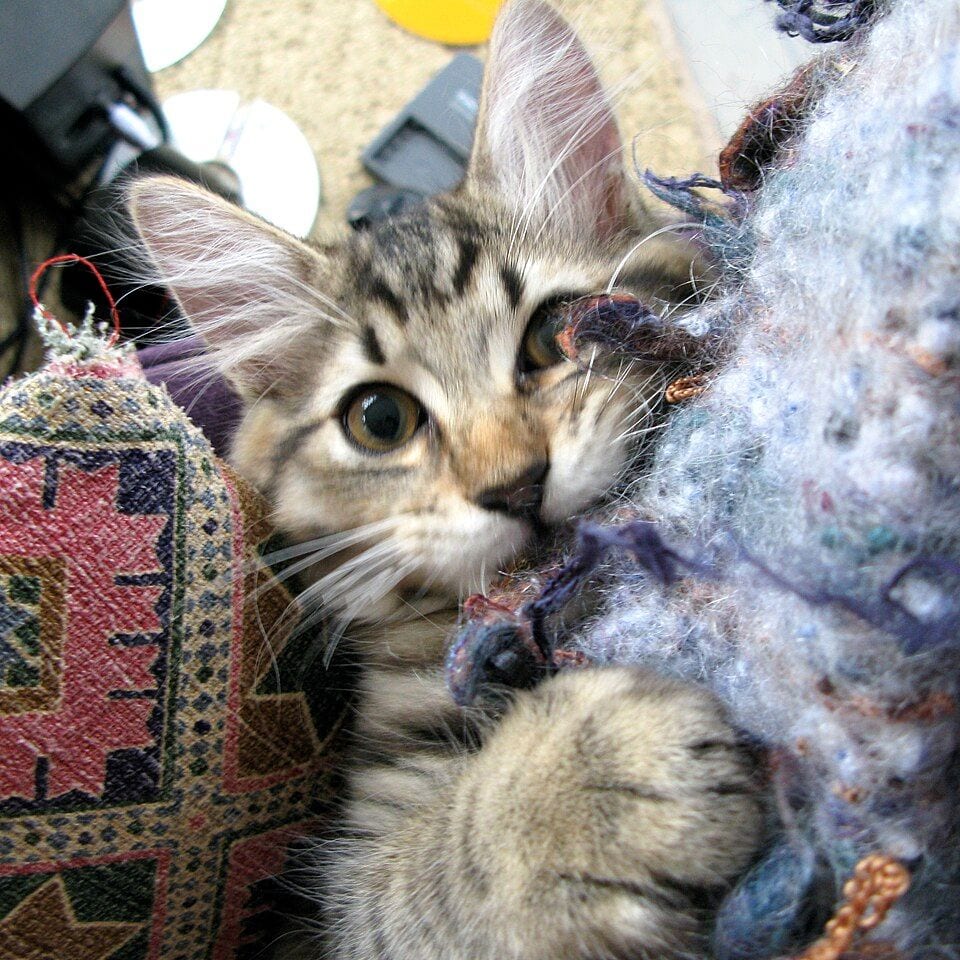
The American Bobtail's history started with a cat named Yodie
Legend has it that bobtails originated from a cross between a domestic tabby and a wild bobcat. In reality, the short tail is a spontaneous mutation that appeared in the domestic cat population, possibly related to the Manx cat gene, which is also dominant. In the late 1960s, a short-tailed brown tabby male named Yodie was found in Arizona. He was bred with a Siamese cat, and the resulting short-tailed kittens proved that a dominant short-tail gene existed in the feral cat population.
Most of the early lines died out, but breeders began working with short-tailed feral cats from all over the US and Canada, selecting those that had a slightly wild appearance. The CFA notes that cats living thousands of miles apart with no common ancestors were surprisingly similar. This led to the formation of one of the most genetically diverse breeds. TICA recognized the American Bobtail in 1989, and championship status was later granted by the CFA and ACFA. The WCF registers the breed as longhair and shorthair but does not judge them in shows, and FIFe does not recognize them at all.
Appearance: Head and body matter more than the tail
While the tail is the first thing to catch the eye, the CFA emphasizes that the head and body are the most important aspects of the breed. Prominent, fleshy brows highlight their nearly almond-shaped eyes, creating a characteristic "hunting gaze." The head is a broad modified wedge without flat planes, featuring visible cheekbones, a wide muzzle, and strong jaws. The ears are medium-sized, wide at the base, with rounded tips.
The body is moderately long and heavily boned, with a broad chest, hips almost as wide as the chest, and a rectangular stance. The hind legs are longer than the front legs, and the paws are large and round, sometimes with toe tufts. The tail is broad at the base, flexible, and reaches about one-third to one-half the length of a normal tail; it can be straight, slightly curved, or kinked. The coat is short or semi-long, more shaggy than dense, and can come in any color. The breed grows slowly, taking two to three years to fully mature.
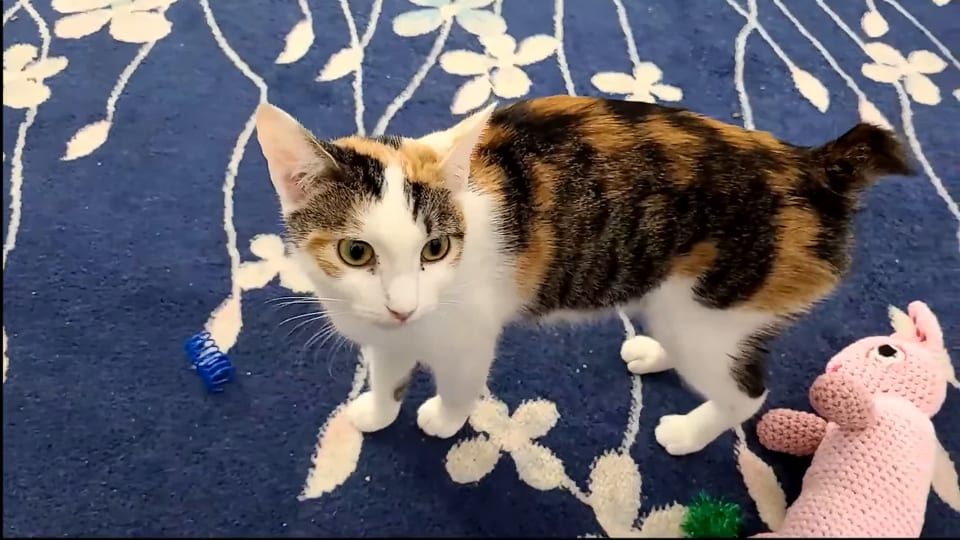
Temperament: A "dog-like" cat that loves to travel
American Bobtails are playful and social, and the kittens are highly energetic. They easily adapt to new environments, making them great for owners who travel. According to some sources, they are one of the most "dog-like" cat breeds: they boldly greet guests and never pass up a chance to play. They love to climb, explore, and stalk, often proudly carrying their "prey"—a toy—in their teeth. They also easily learn to walk on a leash.
The CFA notes that the breed is highly intelligent and independent, yet deeply attached to its family. They are tolerant of children, get along with dogs, and are said to be highly sensitive to human moods, often coming to comfort a sad owner. Because of this trait, Bobtails are used in therapy work with special-needs children and people experiencing anxiety or post-traumatic stress. They are relatively quiet, often chirping or clicking when interested.
Health and care
Because of their highly diverse origins, major hereditary problems are not expected in the breed, but the tail mutation can increase the risk of spinal and hip issues. Completely tailless cats sometimes suffer from incontinence, which is why responsible breeders remove them from breeding programs. Long-tailed kittens can also be born in litters—they are not judged in shows but make excellent pets and are an important part of breeding programs.
- Coat. Even for semi-longhairs, brushing once a week is usually enough.
- Bathing. Not strictly necessary, but it can help reduce shedding.
- Activity. Hunting games and walks with a harness are highly recommended.
- Vet visits. Monitor their movement and bathroom habits, as these indicate spinal health.
Short-tailed breeds: How their tail genes differ
| Breed | Tail gene | Origin | FIFe |
|---|---|---|---|
| American Bobtail | Dominant | USA | Not recognized |
| Japanese Bobtail | HES7 mutation | Japan (Southeast Asia) | Recognized (1989) |
| Kurilian Bobtail | Natural island mutation | Kuril Islands | Recognized (2004) |
| Manx | Dominant (M) | Isle of Man | Recognized |
Daily life with an American Bobtail
The American Bobtail is a highly adaptable cat, making it suitable for apartments, houses with yards, and families that travel frequently. The most important thing for them is interactive play: simulated hunting with a wand toy, hide-and-seek, and fetching balls. Since Bobtails are intelligent and get bored easily, it is a good idea to rotate their toys and use food puzzles. They generally get along well with other pets, including dogs, and are patient with children. Once fully mature, they become calmer but never lose their playful spirit.
How to find an American Bobtail kitten
While the breed was developed in the US, finding a reputable breeder can still take time, and you may need to join a waitlist. Always ask the breeder about the health of the parents, specifically regarding their spine and hips, and inquire if there were any completely tailless kittens in the litter and how they are doing. Pedigrees are typically issued by TICA or the CFA. When bringing a kitten home, ensure they have been vet-checked, and remember that microchipping is highly recommended by US veterinarians to keep your pet safe—you can read more in our guide introduction.
You can find other short-tailed breeds in our profiles for the Kurilian Bobtail, Japanese Bobtail, Manx, and Pixie-Bob.
Frequently asked questions
Is the American Bobtail descended from a bobcat?
No. An urban legend claims that the breed originated from crossing a domestic tabby with a bobcat, but the short tail is a spontaneous genetic mutation in domestic cats. The CFA emphasizes that the American Bobtail is an entirely domestic cat.
How long is an American Bobtail's tail?
The tail is typically about one-third to one-half the length of a normal cat's tail. When standing naturally, the tip is visible above the back but does not reach the hock. It can be straight or slightly curved, with bumps or kinks.
Is the American Bobtail related to the Japanese Bobtail?
No. The breeding programs for both breeds are completely unrelated, and their tails are caused by different mutations. A 2016 study linked the Japanese Bobtail's short, kinked tail to an HES7 gene mutation common in Southeast Asian cats.
Is the American Bobtail a good family cat for children?
Yes. The CFA describes the breed as calm, tolerant, and an excellent companion for children, getting along well with dogs too. These cats are highly sensitive to human emotions and are even used in therapy work with special-needs children.
Does the American Bobtail have health problems?
Thanks to a diverse genetic background, the breed is generally healthy, but the tail mutation can sometimes cause spinal and hip issues. Completely tailless cats may suffer from incontinence, so responsible breeders remove them from breeding programs.
Log in to comment
No comments yet. Be the first.