Scottish Fold Cat: Temperament, Health, Bans & Care
- The first folded-ear cat was a white barn cat named Susie, found in 1961 on a farm near Coupar Angus in Scotland.
- The folded ears are caused by a dominant TRPV4 gene mutation, which leads to feline osteochondrodysplasia (FOCD)—a cartilage and bone development disorder.
- Studies show that FOCD affects all Scottish Folds, though severity varies greatly; cats with two copies of the gene suffer the most severe symptoms.
- FIFe and the GCCF do not recognize the breed, and breeding Scottish Folds is banned in the Netherlands, Austria, Flanders, and other regions.
- Kittens with straight ears are called Scottish Straights; the CFA has recognized them as a division of the breed since 2022.
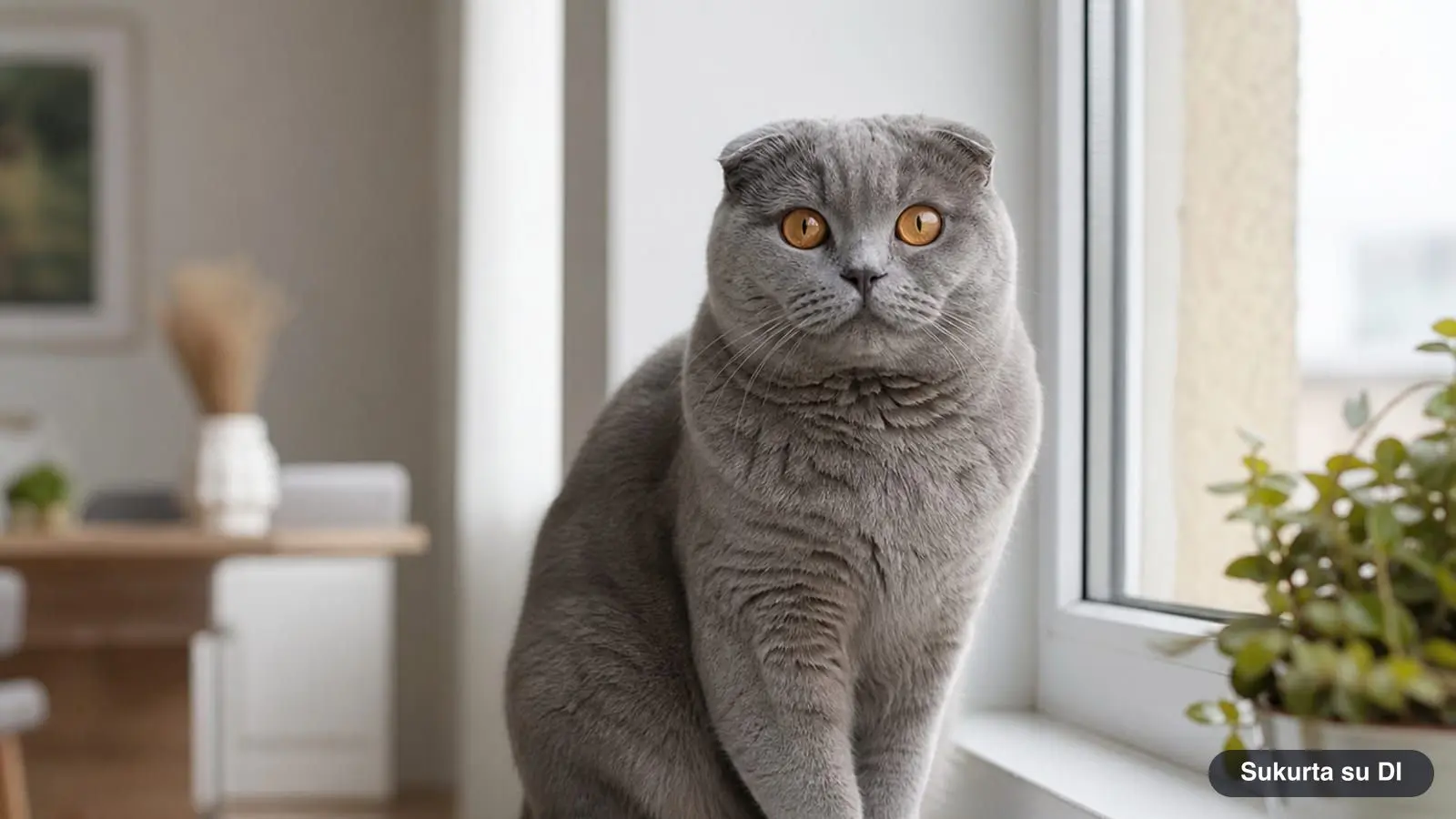
- Folded ears are a sign of cartilage disease
- Unrecognized by FIFe, banned from breeding in some countries
- The Scottish Straight – the same breed with straight ears
- Temperament: Calm, affectionate, and quiet homebodies
- Care: Monitor joints and tail flexibility
- Scottish Fold, British Shorthair, and Exotic Shorthair
- What to know before getting a Scottish Fold
This article is part of the 77.today cat breeds guide, prepared by the 77.today editors from the sources listed at the end.
A round head, large round eyes, and small ears folded forward and downward, lying on the head like a cap—this is the Scottish Fold. Because of this appearance, it is often compared to an owl and is one of the most highly desired breeds on social media. However, it is also one of the most controversial: the same gene that folds the ears disrupts cartilage and bone development throughout the body. In our cat breed directory profile, we honestly discuss both the breed's charm and the risks you must know before getting one.
| Origin | Scotland, Tayside (Coupar Angus), 1961 |
|---|---|
| Recognition | CFA (shorthairs 1978, longhairs 1992, straights 2022), TICA; FIFe and GCCF do not recognize |
| Weight | males 9–13 lbs, females 6–9 lbs |
| Ears | folded forward and downward or straight (Straights) |
| Coat | short or semi-long, dense |
| Colors | almost all, including white and calico |
| Eyes | large, round |
| Hereditary disease | osteochondrodysplasia (FOCD) |
| Temperament | calm, affectionate, quiet |
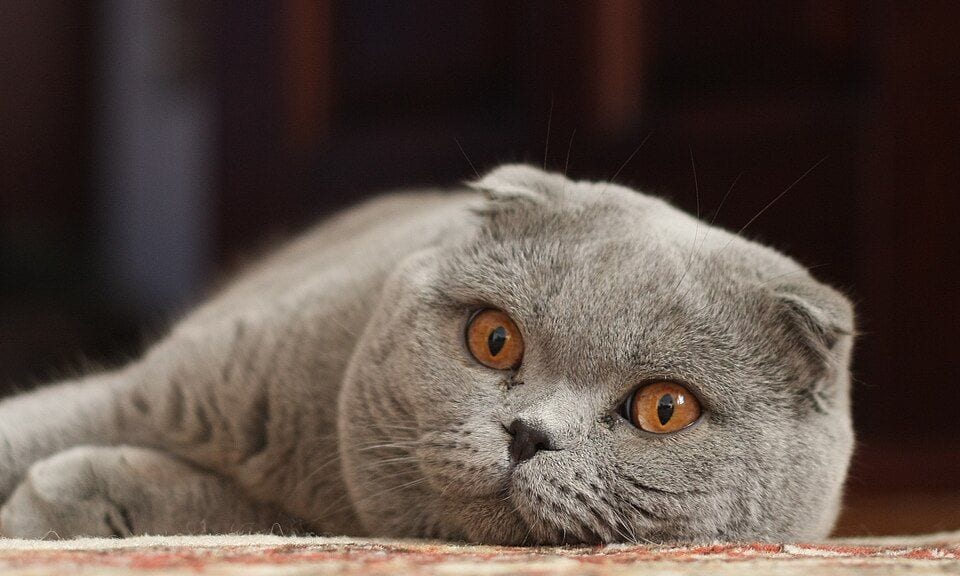
Folded ears are a sign of cartilage disease
The first Scottish Fold was a white barn cat named Susie, spotted in 1961 on a farm near Coupar Angus in Scotland by a shepherd and cat fancier named William Ross. Her ears were folded in the middle. The breed began with Susie's daughter, Snooks, who was mated with a domestic tomcat and a British Shorthair. Over the first three years, 76 kittens were born—42 with folded ears and 34 with straight ears, establishing that the trait is caused by a simple dominant gene.
In 2016, researchers identified this as a TRPV4 gene mutation, which causes feline osteochondrodysplasia (FOCD). This disorder affects not only the ear cartilage but also the joints, limbs, and tail bones. Studies show that it affects all Scottish Folds: cats with one copy of the gene develop progressive arthritis of varying severity, while those with two copies suffer from severe arthritis much earlier. Bony growths can form around the heel and foot joints, the cat may begin to limp, and the tail can become short and stiff. For some cats, the disease is so severe that they have to be euthanized at a young age.
The severity varies greatly among cats. In a 2021 study, radiologists evaluated X-rays of 22 Folds and Straights without knowing their ear shape: Folds received worse scores on average, but the changes were milder than in previous studies. However, there are documented cases where even the offspring of Folds and Straights or British Shorthairs became severely ill. Some researchers recommend abandoning the breeding of Scottish Folds entirely.
Unrecognized by FIFe, banned from breeding in some countries
The GCCF stopped registering Scottish Folds back in 1971 due to fears of limb and tail deformities, ear infections, and deafness. FIFe also does not recognize the breed and prohibits registering or showing them at exhibitions. During FIFe discussions, breeders were offered free X-rays for 300 cats to find a Fold with healthy hind legs, but the offer was not taken up. The GCCF bluntly advises the public against trying to acquire cats of this breed.
Breeding Folds, and in some places selling or keeping them, has been banned in the Netherlands (2014), Austria (2020), Flanders in Belgium (2021), Victoria in Australia, and Scotland. In Norway and Sweden, the breed is indirectly banned by laws preventing the breeding of animals likely to produce unhealthy offspring. While the US does not have federal bans on specific cat breeds, animal welfare advocates and some veterinary organizations strongly caution against breeding cats with extreme physical traits that pose significant health risks. Prospective owners should always check local ordinances, as animal welfare laws and breeding regulations can vary by city and state.
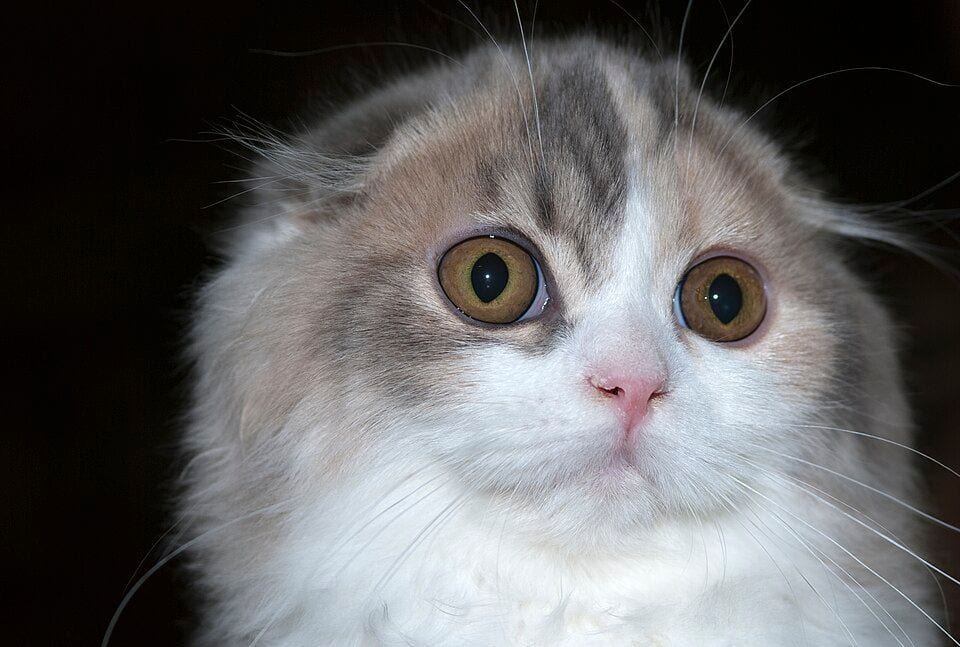
The Scottish Straight – the same breed with straight ears
All kittens are born with straight ears, and the ears of Folds begin to bend at 3 to 4 weeks of age. Kittens that do not inherit the fold gene continue to have straight ears—they are called Scottish Straights. The CFA has recognized Straights as a separate division of the breed since 2022, so it now has four divisions: shorthair and longhair, fold and straight. Longhaired Folds are called Highland Folds, Longhair Folds, or Coupari by various organizations.
It is suspected that some Straights are genetically Folds whose ears remain straight due to weak gene expression. Therefore, genetic testing is recommended when breeding Straights. Because the ancestors of Folds are British Shorthairs, the Scottish Straight looks very similar to the British Shorthair.
Temperament: Calm, affectionate, and quiet homebodies
The CFA describes Scottish Folds as cozy indoor cats that love to interact but do not demand attention. They are quiet but not lethargic: they will happily play fetch, but they will not wake you up at three in the morning. These curious cats sometimes stand on their hind legs like a prairie dog to get a better view of something interesting. They are patient with children, and can initially be reserved with strangers and other cats—other felines sometimes mistake their folded ears for a sign of hostility.
Breed experts emphasize that Folds are docile, hard to annoy, and can be left alone for a few days, though the CFA notes that prolonged loneliness does not suit them. The folded ears do not affect their hearing: the cat can pivot them, lay them back when angry, or prick them up at the rustle of a treat bag.
Care: Monitor joints and tail flexibility
- Movement and pain. Watch to see if the cat limps, avoids jumping, or has difficulty climbing stairs. The CFA advises gently and frequently checking the tail's flexibility—stiffness can be an early sign of the disease.
- Veterinarian. Have their joints checked regularly; if there is pain, a vet may prescribe pain relief medication, or in severe cases, surgery.
- Weight and environment. A lean body reduces stress on the joints, while pet stairs next to the sofa and low shelves make movement easier.
- Coat and ears. Shorthairs only need brushing once a week, while longhairs require more frequent grooming; the folded ears must be regularly inspected and cleaned.
Polycystic kidney disease (PKD) also occurs in the breed: in a Japanese study, 54% of tested Folds suspected of having kidney problems had the PKD1 mutation. Genes associated with hypertrophic cardiomyopathy have also been found.
Scottish Fold, British Shorthair, and Exotic Shorthair
| Trait | Scottish Fold | British Shorthair | Exotic Shorthair |
|---|---|---|---|
| Ears | folded (or straight) | small, straight | small, straight |
| Hereditary skeletal disease | yes, FOCD | no | no (but flat face) |
| FIFe recognition | no | yes | yes |
| Temperament | calm, affectionate | calm, independent | calm, affectionate |
What to know before getting a Scottish Fold
Before buying, it is worth honestly considering whether you want to support breeding that some countries have banned due to animal welfare concerns. If you do decide to proceed, insist that two Folds are never mated together: CFA breeders state that only Fold-to-Straight pairings reduce the risk of severe skeletal changes, and a genetic TRPV4 test of the parents can confirm this. Ask for X-rays of the parents' limbs or a veterinary report, inquire about PKD testing, and check if the kitten's tail is flexible. A great alternative is a Scottish Straight or a British Shorthair, which have a similar look and temperament but without the ear mutation. You can find general buying advice on our main guide page.
Other breeds with unusual ears include the American Curl (ears curled backward) and the owl-eyed Exotic Shorthair.
Frequently asked questions
Are Scottish Fold cats unhealthy?
The folded ears are caused by the same gene that causes feline osteochondrodysplasia (FOCD), a cartilage and bone development disorder. Studies show it affects all Scottish Folds, but the severity varies greatly: some have changes only visible on X-rays, while others develop painful arthritis, a stiff tail, and lameness. Cats that inherit the gene from both parents are the most severely affected.
What is the difference between a Scottish Fold and a Scottish Straight?
Both belong to the same breed. Kittens that do not inherit the fold gene have straight ears and are called Scottish Straights. All kittens are born with straight ears, and the ears of Folds begin to bend at 3 to 4 weeks of age.
Why doesn't FIFe recognize Scottish Folds?
FIFe and the British GCCF do not recognize the breed due to welfare concerns related to osteochondrodysplasia. The GCCF stopped registering them back in 1971. FIFe stated it would not consider recognition until breeders allowed their cats to be independently tested.
Where is breeding Scottish Folds banned?
Breeding or even selling them is restricted or banned in the Netherlands (since 2014), Austria (2020), Flanders in Belgium (2021), Victoria in Australia, and Scotland. In Norway and Sweden, they are indirectly banned by animal welfare laws that prohibit breeding animals likely to produce unhealthy offspring.
Do Scottish Folds have worse hearing?
No. The CFA notes that the folded ears do not affect their hearing, and the cat can pivot, lay back, or prick them up just like other cats. However, the ear cartilage deformity indicates broader cartilage damage throughout the body.
Log in to comment
No comments yet. Be the first.