Toyger Cat: Temperament, Size, Care & Health
- The Toyger was developed in the US in the 1980s by Judy Sugden, daughter of Bengal creator Jean Mill.
- The breed was created from striped domestic shorthairs, Bengals, and at least one cat imported from India; no wild blood was directly introduced.
- TICA registered the Toyger in 1993 and granted it full championship status in 2007; the breed is not recognized by the FIFe or CFA.
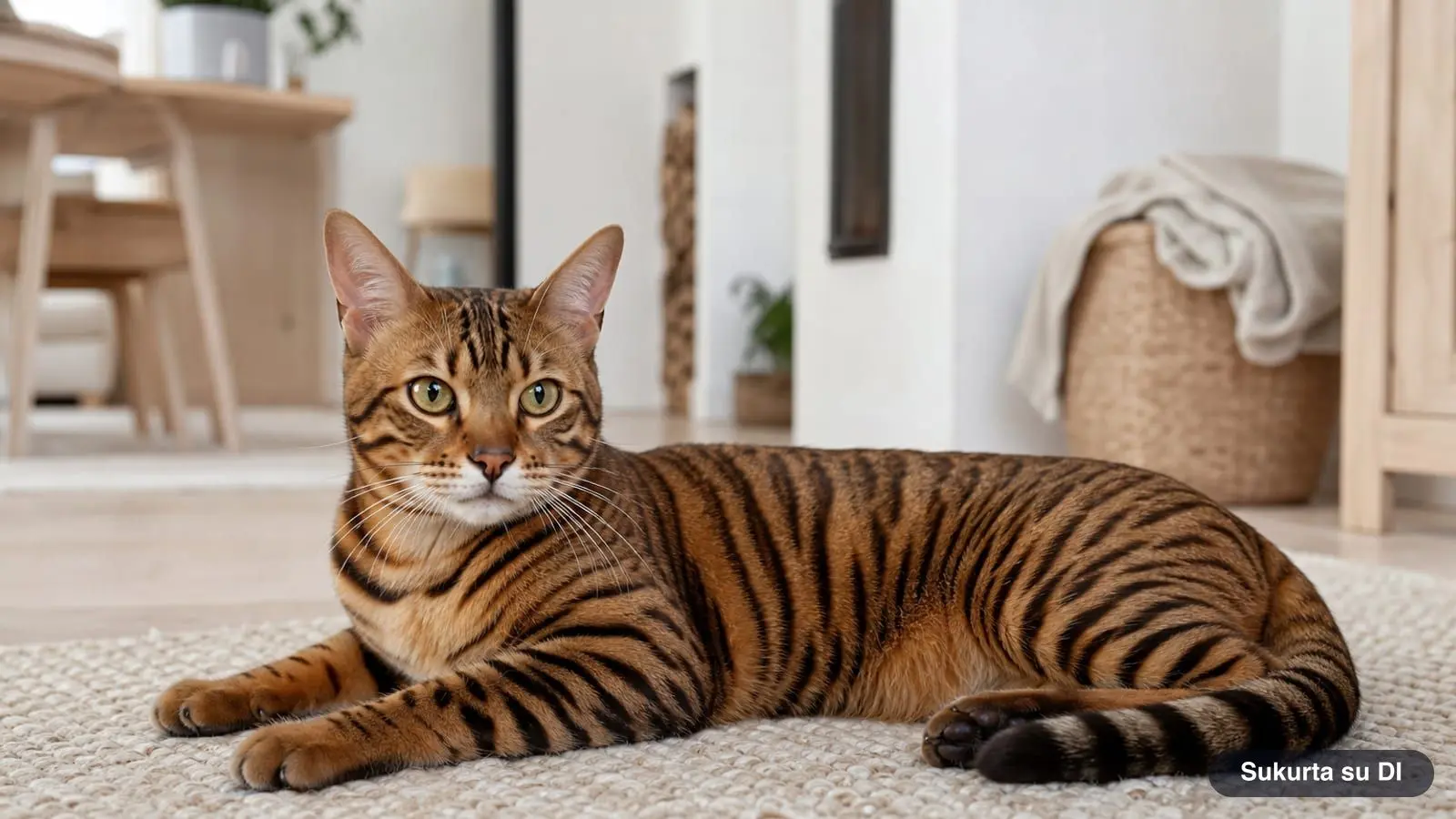
- The standard requires tiger-type stripes: vertical on the body and circular around the face, standing out against a light or pumpkin-colored background.
- The breed is rare: as of 2024, the Toyger Cat Society database listed around 30 active breeders.
This article is part of the 77.today cat breeds guide, prepared by the 77.today editors from the sources listed at the end.
The Toyger is a cat that looks like a little tiger on your couch: a muscular, long body, bold dark stripes on an orange, pumpkin-colored background, circular patterns around the face, and black "makeup" around the eyes. The name comes from "toy tiger." It is a new and rare breed, created by the same family that developed the Bengal. In this cat breed guide profile, you will find out how the Toyger came to be, what its standard requires, its temperament, and how to care for it.
| Origin | USA |
|---|---|
| Creator | Judy Sugden (daughter of Jean Mill) |
| Recognition | TICA (registered in 1993, championship status in 2007); FIFe – not recognized |
| Body | long, muscular, athletic, large-boned |
| Head | oval, long broad muzzle, small round ears |
| Coat | short, dense |
| Pattern | mackerel tabby – vertical stripes, circular facial markings |
| Color | dark stripes on a pumpkin or light background |
| Eyes | medium, round, deep color |
The Toyger Was Created as a "Toy Tiger"
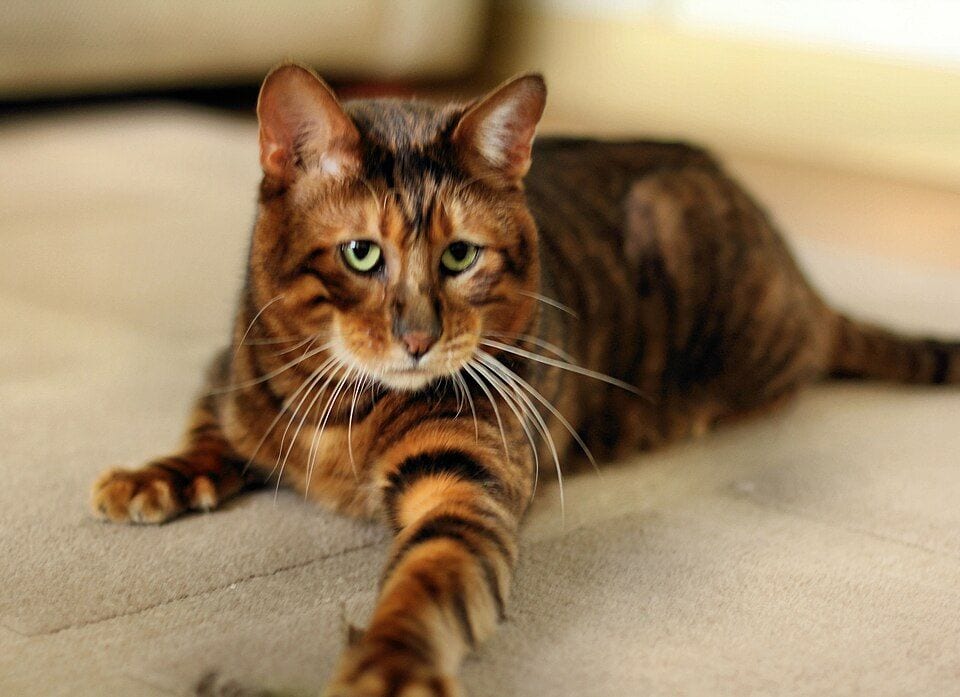
In the 1980s, US breeder Judy Sugden, who was aiming for bolder mackerel tabby patterns, noticed unusual spots on the temples of one of her cats—an area where tabby cats typically do not have markings. This proved that a circular, tiger-like facial pattern was genetically possible in a domestic cat. After bringing back a tomcat from the streets of India whose head spots broke up the usual tabby lines, Sugden seriously set out to create a "toy tiger."
Over several years, about forty cats from various countries were selected for the initial breeding program: Bengals, unpedigreed striped domestic shorthairs, and at least one cat from India chosen for its ear markings. Each contributed a specific desired trait. Judy Sugden is the daughter of Jean Mill, the creator of the Bengal. TICA began registering the Toyger in 1993, allowed it to be shown in new breed classes in 2000, and granted it full championship status in 2007. In 2020, TICA recognized the Toyger breed club. Sugden herself stated that she developed the breed to inspire people to care about wild tiger conservation.
The Standard: Stripes, "Makeup," and an Inverted Heart
The TICA standard (2008) is highly detailed. The head is medium-sized and oval, with a dominant, deep, long, and broad muzzle that resembles an inverted heart from the front. The nose is long, broad, and rounded. The ears are small, round, and set wide toward the back of the head; lynx tips are undesirable, while light "thumbprints" on the back of the ears are preferred. The eyes are medium, round, deep-set, and rich in color.
The body is long, deep, and muscular with rounded contours and very heavy boning. The tail is very long, not thick, with a blunt tip. The most important feature is the pattern. Only the mackerel tabby pattern is allowed, featuring highly contrasting, sharply defined stripes: they must be vertical on the body and form rings on the neck, legs, and tail. Bold, braided, and uneven stripes are desired. On the head, the markings should form circular patterns around the face rather than radiating away from it like a typical tabby. The belly and inside of the legs must also be striped, and the paw pads and tail tip must be black. The eyes are outlined with black "mascara" markings and light "spectacles," and the lips are black.
The Toyger and Bengal: Two Breeds from the Same Family
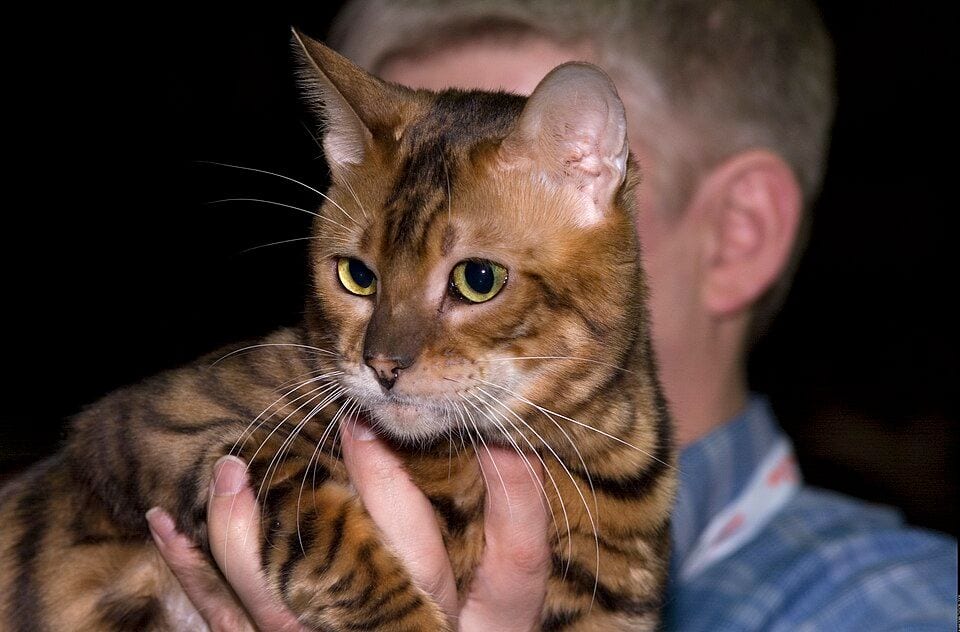
Both breeds were created to achieve the look of a wild big cat, but through different paths. The Bengal originated from crosses with the Asian leopard cat, which is why its early generations are considered hybrids, and its pattern features leopard-like spots and rosettes. The Toyger was developed from domestic cats, and its pattern consists of tiger-like stripes. Toygers do have Bengal blood, as Bengals were among the foundation cats, but these are late-generation, fully domestic cats.
Temperament: A Calm Companion with a Wild Look
The Toyger was developed as a household companion from domestic cats, rather than by crossing with wild species, so its temperament is expected to be that of a domestic cat, not a wild predator. However, there is almost no independent research on the breed's temperament, and descriptions from breeders themselves can be embellished, so it is best to evaluate their personality by meeting the specific parents and their kittens. Like other muscular, athletic cats, the Toyger will need daily exercise, hunting games, and high vantage points to observe its surroundings.
Criticism and Rarity
Not everyone is thrilled with new "wild-looking" breeds. Conservationist and Big Cat Rescue owner Carole Baskin called Toyger owners selfish and argued that creating new breeds exacerbates the homeless cat problem. The breed remains rare: in 2020, the PawPeds database had 469 registered Toygers, and in 2024, the Toyger Cat Society listed around 30 active breeders. Because of this, kitten prices in the US can be high—prices up to $5,000 were mentioned in 2020.
Health and Care
There are no documented hereditary diseases specific to Toygers, but the breed is young and has a small gene pool, and its ancestors include Bengals. Therefore, it is worth asking breeders about heart screenings and diseases common in Bengals, such as pyruvate kinase deficiency or retinal atrophy. Care is straightforward:
- Coat. The short, dense coat only needs to be brushed or wiped with a grooming glove once a week.
- Exercise. For a muscular cat, provide hunting games, tall cat trees, and perhaps a cat exercise wheel.
- Diet. High-quality, protein-rich food and weight management.
- Veterinarian. Annual check-ups and vaccinations.
Toyger, Bengal, and Ocicat
| Trait | Toyger | Bengal | Ocicat |
|---|---|---|---|
| Pattern | vertical tiger stripes | spots, rosettes, or marble | thumbprint spots |
| Wild ancestor blood | only through distant Bengal ancestors | yes (Asian leopard cat) | no |
| Creator | Judy Sugden, USA | Jean Mill, USA | Virginia Daly, USA |
| FIFe | not recognized | recognized | recognized |
What to Know Before Getting a Toyger
Since the Toyger is not recognized by all major registries like the CFA or FIFe, they are primarily registered with TICA—always ask what pedigree papers you will receive. Due to the breed's rarity, you may have to search far from home and wait on a long list for a kitten. Ask for the parents' health test results, and observe their patterns and temperaments, keeping in mind that a kitten's stripes can change as they age. When bringing a kitten home, ensure they are microchipped and registered as recommended by veterinarians—we cover more on finding a reputable breeder in our guide introduction.
You can find other wild-looking breeds in our profiles for the Bengal, Ocicat, and Egyptian Mau.
Frequently asked questions
Is the Toyger a hybrid?
No. The Toyger was bred from domestic cats—striped shorthairs, Bengals, and a cat imported from India. Although Bengal ancestors include the Asian leopard cat, no wild species were used directly in breeding Toygers, making it a fully domestic breed.
How does the Toyger differ from the Bengal?
The Bengal has spots or rosettes resembling a leopard and originated from crosses with the Asian leopard cat. The Toyger has vertical stripes resembling a tiger and circular patterns around the face. Both breeds were created by the same family: Toyger creator Judy Sugden is the daughter of Bengal creator Jean Mill.
Why was the Toyger created?
Breed creator Judy Sugden stated she developed the Toyger to inspire people to care about wild tiger conservation. However, some conservationists, such as Carole Baskin, have criticized the creation of new breeds due to the existing homeless cat population.
Does the CFA or FIFe recognize the Toyger?
No, the Toyger is not currently recognized by the CFA or FIFe. The breed is recognized by TICA, which granted it full championship status in 2007.
What colors do Toygers come in?
The TICA standard only allows the mackerel tabby pattern with very dark, nearly black to brown stripes on a bright pumpkin or light background. The belly and inside of the legs must also be striped, while the paw pads and tail tip must be black.
Log in to comment
No comments yet. Be the first.