Exotic Shorthair Cat: Temperament, Size, Care & Health
- The Exotic Shorthair was developed in the US in the 1950s by crossing Persians with American Shorthairs; the CFA established the breed in 1966.
- The standard is identical to the Persian, differing only in the coat: short, dense, with a thick undercoat that stands away from the body.
- FIFe recognized the breed in 1986; in 2025, 975 kittens were registered in FIFe studbooks.
- Like Persians, this is a brachycephalic breed, making respiratory, eye, and birthing issues more common.
- Ultrasound studies have shown PKD prevalence in Exotics reaching 40–50%, making PKD1 DNA testing essential for breeding cats.
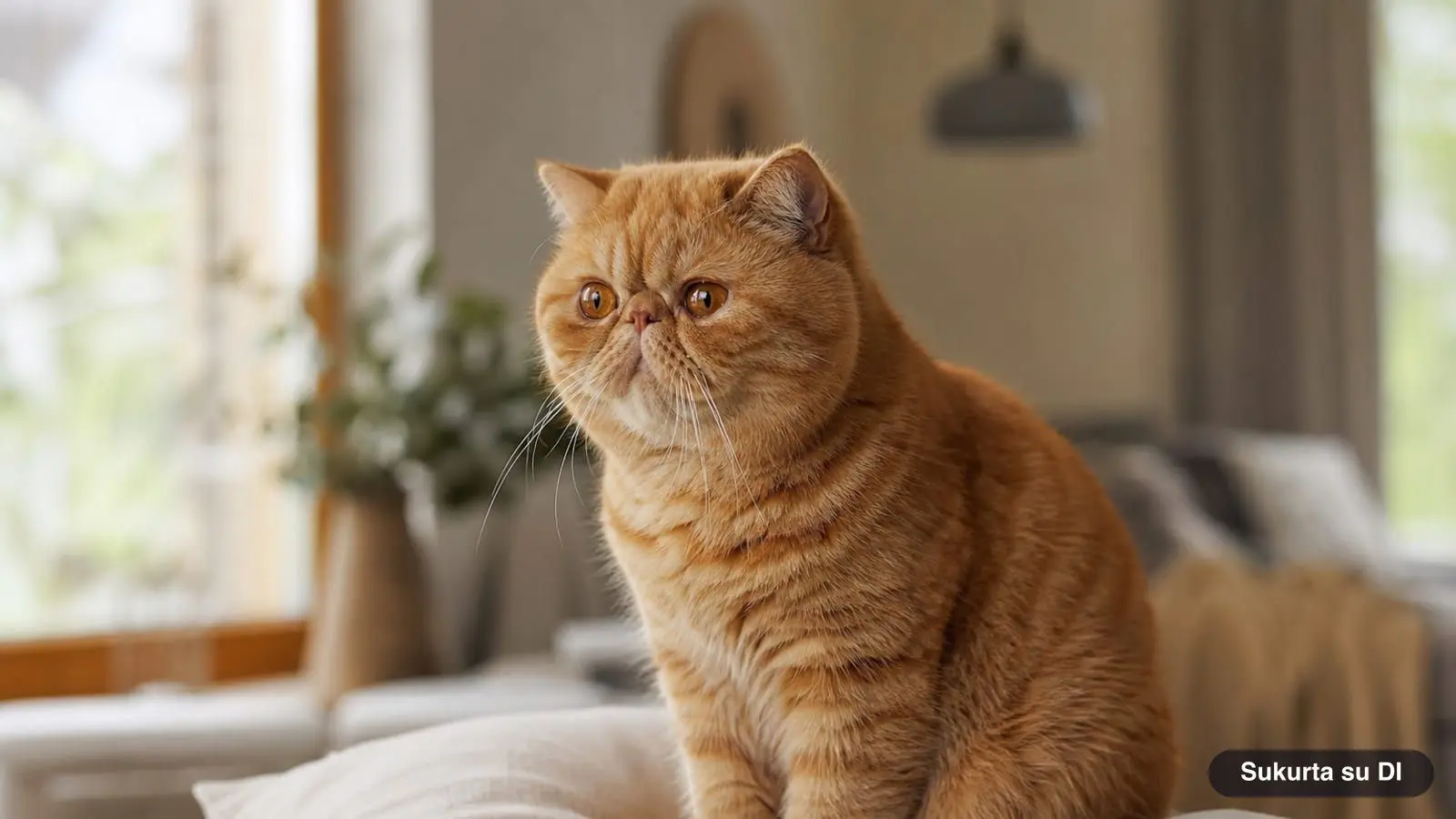
- The Exotic Shorthair – A Persian Type with a Short Coat
- Appearance: A Plush Teddy Bear with a Persian Face
- Longhaired Exotic Kittens
- Temperament: Calm, Loyal, and Undemanding
- Health: Consequences of a Flat Face and PKD
- Care: Easier Than a Persian, but Not Brush-Free
- Exotic, Persian, and British Shorthair
- How to Choose an Exotic Kitten
This article is part of the 77.today cat breeds guide, prepared by the 77.today editors from the sources listed at the end.
The Exotic Shorthair is a Persian that doesn't require daily combing. It has all the traits of a Persian cat: a round massive head, a short flat face, large round eyes, a cobby body, and a calm temperament, but the coat is short, dense, and stands away from the body, making the cat resemble a fluffy plush teddy bear. In the cat breeds catalog, you will find its history, temperament, care, and health risks.
| Origin | US, Persian × American Shorthair |
|---|---|
| Recognition | CFA in 1966 (champion status in 1967); FIFe in 1986 |
| Body | medium to large, cobby, short sturdy legs |
| Head | large, round, short nose with a deep break |
| Coat | short to medium, dense, plush, thick undercoat |
| Colors | all Persian colors |
| Eyes | large, round; color depends on coat |
| Temperament | calm, loyal, undemanding |
| Hereditary risks | brachycephaly, PKD |
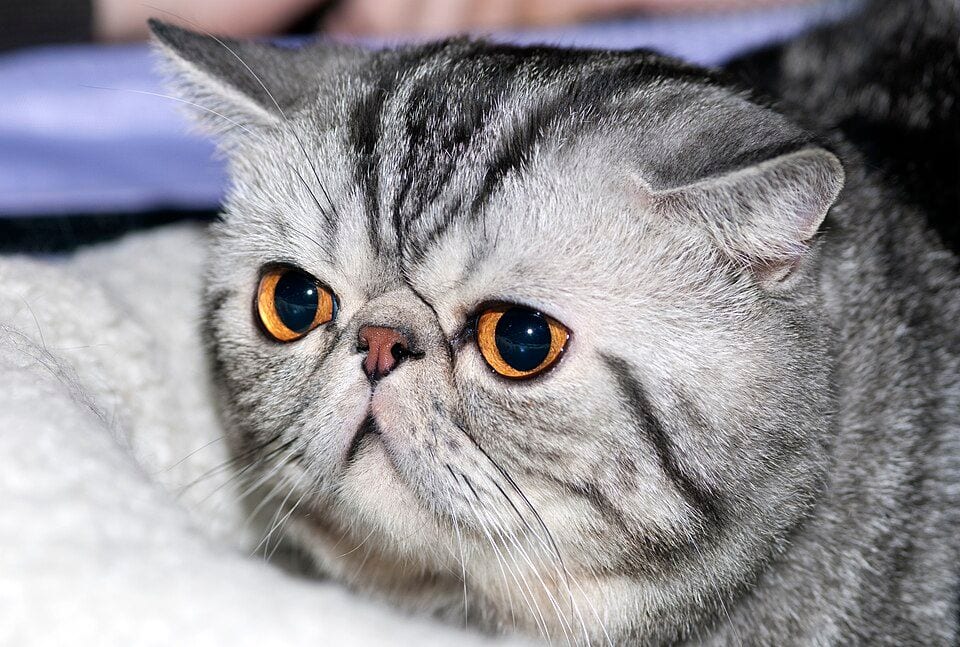
The Exotic Shorthair – A Persian Type with a Short Coat
In the 1950s in the US, some American Shorthair breeders secretly crossed their cats with Persians to improve body type; crosses were also made with Russian Blues and Burmese cats. Since the short hair gene is dominant, short-haired kittens were born with the Persian's round head, round eyes, and cobby body. American Shorthair breeders were unhappy with this and changed the standard to disqualify such cats. However, in 1966, the CFA established a new breed. Because many of the early cats were silver shaded or chinchilla—colors not found in shorthairs at the time—the breed was named the Exotic Shorthair.
After the initial outcrossing, Exotics were regularly bred back to Persians, and in 1987, the CFA banned outcrossing to other shorthairs, leaving only Persians as an acceptable outcross. Therefore, today Exotics and Persians differ only in their coat. The Exotic achieved CFA champion status in 1967, FIFe recognized it in 1986, and in 1991, an Exotic became the CFA Cat of the Year. The CFA notes that it now registers slightly more Exotics than Persians annually.
Appearance: A Plush Teddy Bear with a Persian Face
The Exotic standard is identical to the Persian, except for the coat. The body is short, sturdy, and muscular, the head is round and massive, the cheeks are full, the nose is short with a deep break between the eyes, and the ears are small, rounded at the tips, and set low. The tail is relatively short. The coat is of uniform length, dense, and plush, with a thick undercoat that lifts it away from the body. There are just as many colors as in Persians: in CFA shows, Exotics are divided into the same seven divisions—solid, tabby, silver and golden, particolor, shaded and smoke, calico and bi-color, and pointed.
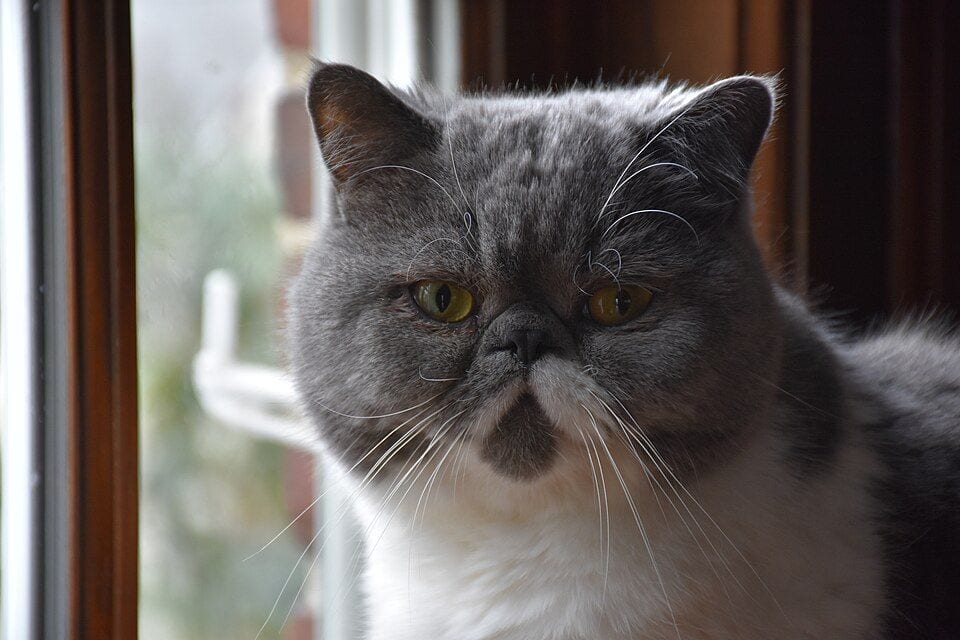
Longhaired Exotic Kittens
Because Exotics are regularly outcrossed to Persians, some of them carry the recessive longhair gene. When two carriers mate, each kitten has a 1 in 4 chance of being born longhaired. These kittens are registered differently across various organizations: the CFA does not consider them Persians, TICA accepts them as Persians, and some organizations, such as the ACFA, register them as a separate Exotic Longhair breed. For a buyer, this means that an Exotic pairing can produce a longhaired kitten whose coat will require daily combing.
Temperament: Calm, Loyal, and Undemanding
The CFA describes Exotics as quiet, loyal companions: devoted but undemanding, content to be nearby without needing to participate in every activity. Some feel they are slightly more active and playful than Persians—perhaps because they do not need to be trained to sit still for long grooming sessions. Exotics adapt to new homes at any age, are excellent with young children, and although they may be shy with other animals at first, they quickly learn to get along. They communicate with their eyes rather than their voices—you will hear purring often, but meowing rarely.
Health: Consequences of a Flat Face and PKD
- Brachycephalic airway obstruction syndrome. Narrowed upper airways increase breathing resistance, cause inflammation, and strain the heart. Weight management, surgery, and avoiding hot, humid environments can help.
- Corneal sequestrum – necrosis of corneal tissue of unclear origin.
- Difficult births due to the large, domed skull.
- Polycystic kidney disease (PKD). Ultrasound studies in developed countries have shown a prevalence of 40–50%; a PKD1 DNA test is highly recommended for all breeding Exotics.
In a review of urate urinary stones, Exotics, conversely, were found to be very rarely affected. In the US, reputable breeders and veterinary organizations strongly advise against breeding cats with overly extreme, health-compromising physical features. Therefore, it is wise to choose cats with a more moderate type and open nostrils to ensure better respiratory health.
Care: Easier Than a Persian, but Not Brush-Free
- Coat. The CFA notes that Exotics shed more seasonally than Persians. For most of the year, combing once a week with a steel comb is sufficient, but during shedding season, it is beneficial to bathe the cat to help remove the dead undercoat.
- Eyes. Due to the short face, their eyes may tear—clean the corners gently with a damp cloth.
- Heat. Provide a cool place during the summer and avoid strenuous activity.
- Weight. It is important for this calm cat not to gain excess weight, as staying lean makes breathing easier.
Exotic, Persian, and British Shorthair
| Trait | Exotic Shorthair | Persian | British Shorthair |
|---|---|---|---|
| Face | short, flat | short, flat | short, but distinct |
| Coat | short, plush | long | short, crisp |
| Grooming | once a week, bathing in season | daily | once a week |
| FIFe kittens in 2025 | 975 | 1,825 | 16,207 |
How to Choose an Exotic Kitten
Ask for the PKD1 DNA test results of both parents and evaluate the shape of the parents' faces: check if the nostrils are open, if the cat breathes without wheezing, and if the eyes are excessively tearing. Ask how the mother delivered the litter. Keep in mind that longhaired kittens can also be born in the litter. Reputable breeders typically do not let kittens go to their new homes until they are at least 12 to 14 weeks old. Be sure to look for breeders registered with major organizations like the CFA or TICA, and ensure the kitten is microchipped and has received its initial veterinary exams and vaccinations, as outlined in the guide introduction.
You can find its longhaired relative in the Persian profile, and a shorthair with similar roundness but a longer muzzle in the British Shorthair description.
Frequently asked questions
How does the Exotic Shorthair differ from the Persian cat?
Only by their coat. The Exotic standard is identical to the Persian, except for the coat description: the Exotic's coat is short, dense, and plush, while the Persian's is long. Because Exotics are regularly outcrossed to Persians, their temperament and build are practically identical, though some feel Exotics are slightly more playful.
Why is the Exotic called the 'lazy man's Persian'?
Because it has the look and personality of a Persian, but its short coat does not require daily combing. However, the CFA notes that Exotics shed more seasonally than Persians, so they still need regular brushing and occasional bathing during shedding season.
Are Exotic Shorthair cats healthy?
Like Persians, Exotics are brachycephalic (flat-faced), making them more prone to brachycephalic airway obstruction syndrome, corneal sequestrum, difficult births, and polycystic kidney disease (PKD). Choose a breeder who performs PKD1 testing and selects cats with less extreme facial features.
Are there longhaired Exotic cats?
Yes. Because Exotics are outcrossed to Persians, some carry the recessive longhair gene. In a litter from two carriers, each kitten has a 1 in 4 chance of being born longhaired. Various registries classify them differently, either as Persians or as a separate Exotic Longhair breed.
Is the Exotic Shorthair a good family cat?
Yes. The CFA considers the Exotic an excellent pet for families with children: it is calm, adaptable, loyal, but not demanding. It may be shy with other animals at first but quickly learns to coexist peacefully.
Log in to comment
No comments yet. Be the first.