Turkish Angora: Temperament, Colors, Care & Health
- The Turkish Angora originated in central Anatolia (Ankara province) and has been documented in Europe since the 17th century.
- In the 20th century, a preservation program began at the Ankara Zoo in Turkey, specifically valuing white cats with odd eyes.
- Initially, only white Angoras were recognized; today, almost all colors are accepted except chocolate, lilac, and pointed patterns.
- The CFA granted the breed championship status in 1973, and FIFe recognized it in 1988.
- White Angoras, especially those with blue eyes, have a higher risk of deafness, making BAER hearing tests important for breeding.
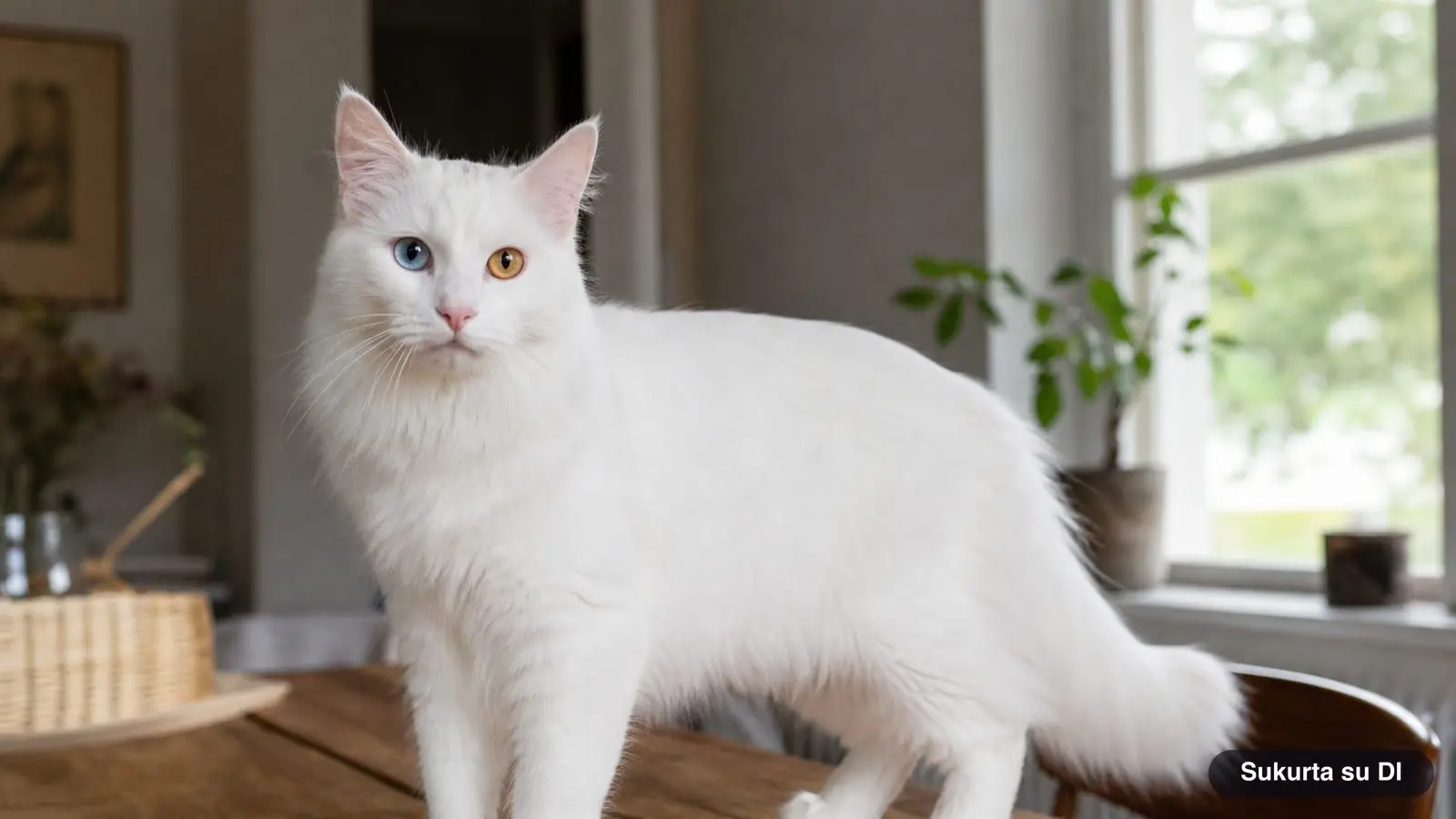
- The Turkish Angora: The Ballerina of the Cat World
- History: From Ankara to the French Royal Court
- American and Turkish Angoras: Distinct Populations
- Temperament: Interactive, Intelligent, and Always "Helping"
- Health: Deafness in White Cats and HCM
- Care: One of the Easiest Longhaired Breeds to Groom
- Turkish Angora, Turkish Van, and Persian
- How to Choose a Turkish Angora Kitten
This article is part of the 77.today cat breeds guide, prepared by the 77.today editors from the sources listed at the end.
The Turkish Angora is elegance and history combined: a slender, flexible cat with a silky coat that shimmers in the light, large erect ears, a plumed tail often carried perpendicular to the back, and frequently, odd-colored eyes. In Turkey, it is called the Ankara kedisi—the Ankara cat—and is considered a national treasure. The CFA calls it the oldest known longhaired breed and the likely ancestor of other longhaired breeds. In our cat breed directory, you will find the Turkish Angora's history, appearance, temperament, and care needs.
| Origin | Turkey, central Anatolia (Ankara) |
|---|---|
| Recognition | CFA championship in 1973 (colored since 1978); FIFe in 1988 |
| Size | Small to medium, long muscular body |
| Coat | Semi-long, single coat, silky |
| Head | Wedge-shaped, large high-set ears |
| Colors | Almost all, except chocolate, lilac, and pointed patterns |
| Eyes | Almond-shaped: blue, green, amber, yellow, or odd-eyed |
| Temperament | Playful, intelligent, affectionate |
| Grooming | 2–3 times a month |
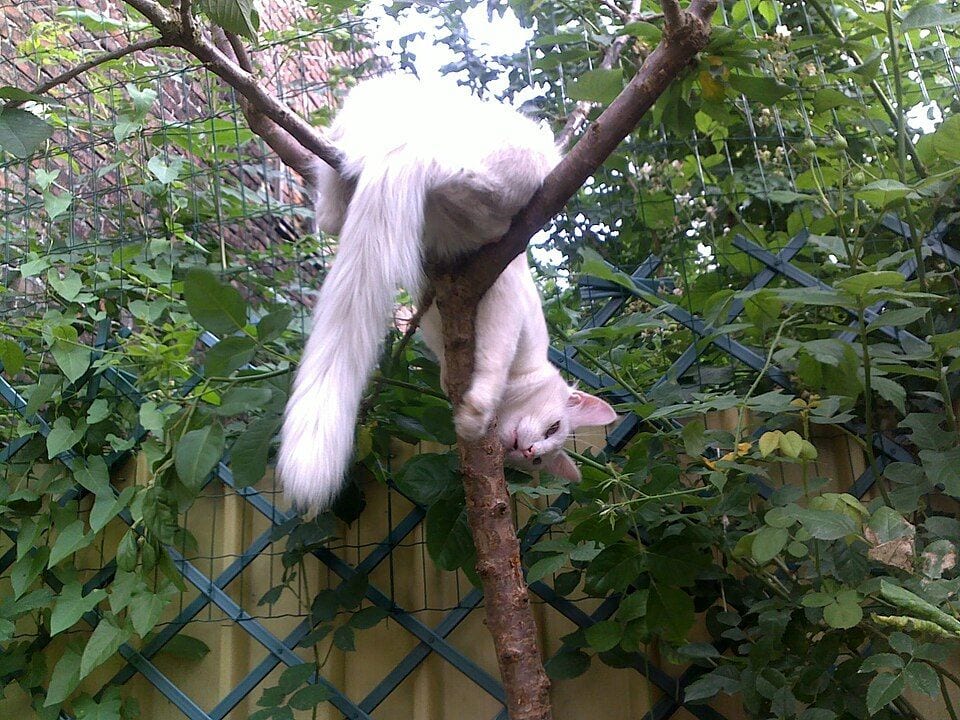
The Turkish Angora: The Ballerina of the Cat World
FIFe refers to the Turkish Angora as the "ballerina" of the cat world: it is highly proportionate, graceful, and flexible, creating an impression of fluid movement. Atop a slender, graceful neck sits a wedge-shaped head, wide at the top and tapering slightly toward the chin, with a profile formed by two straight planes. The ears are large, pointed, set high and close together—the CFA notes that they give the cat a rabbit-like expression. The eyes are large and almond-shaped, and can be blue, green, amber, yellow, copper, or odd-eyed (two different colors), with the latter being especially prized.
The coat is semi-long, single-layered, very fine, and soft with a silky sheen, growing longer on the ruff and tail. While the Angora is famous for its snow-white coat, almost all colors and patterns are now recognized—red, black, cream, blue, tabby, tortoiseshell, and bicolor. Only chocolate, lilac, and pointed patterns are not allowed. Despite its delicate appearance, the Angora is a muscular and strong-willed cat.
History: From Ankara to the French Royal Court
Like all domestic cats, Turkish Angoras descend from the African wildcat, domesticated in the Fertile Crescent. Longhaired cats from Asia Minor, Persia, and Russia were brought to Britain and France as early as the late 16th century, and by the 17th century, the Angora was considered a distinct breed in Europe. Historical records note that Italian merchants gifted them to influential figures, such as the King of France, and the CFA mentions that Angoras are believed to have lived with Marie Antoinette.
Angoras and Persians were closely linked for a long time: in a 1788 book, the "Persian cat" and "Angora cat" were used interchangeably, and FIFe points out that the Persian was developed from Angoras. As British cat shows grew in popularity, Angoras were crossbred so heavily with Persians that they nearly disappeared as a distinct breed. In the 1920s, Turkey started a preservation program at the Ankara Zoo, specifically valuing white cats, especially those with odd eyes. The first Angoras arrived in the US in 1954, and in Canada in 1963. The CFA granted the breed championship status in 1973, but only recognized white cats until 1978. FIFe has recognized the Angora since 1988.
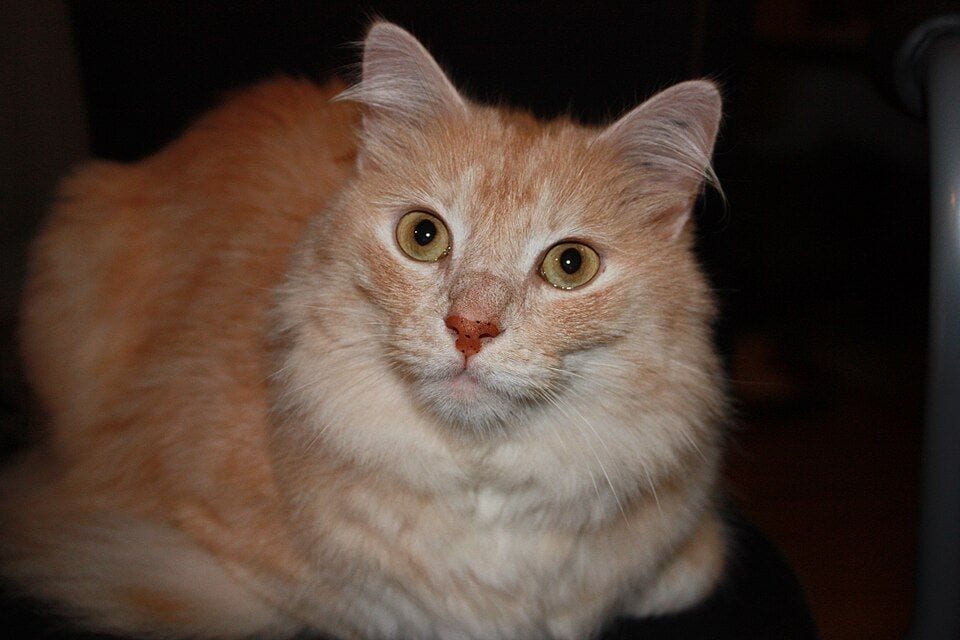
American and Turkish Angoras: Distinct Populations
Genetic studies reveal an interesting detail: Turkish Angoras registered in the US and Europe are genetically closer to European cat populations, while cats imported directly from Turkey belong to the Eastern Mediterranean group. A 2012 study evaluated Turkish and American Angoras as distinct breed populations. Turkish breeders sometimes argue that the finer-boned Western Angoras do not accurately represent the sturdier native cats of Turkey. Despite their geographical proximity, the Angora is not genetically related to the Turkish Van.
Temperament: Interactive, Intelligent, and Always "Helping"
Turkish Angoras are playful, intelligent, athletic, and curious about everything. FIFe notes that they often choose one family member as their constant companion, becoming highly protective of them, trying to "help" in every way possible, and sometimes showing surprising problem-solving skills. Energetic Angoras seek out high places to survey their home, and some even enjoy riding on their owner's shoulders. The CFA jokes: "If you can't find your Angora, look up!"
The CFA considers the Angora one of the most interactive and affectionate breeds: once you let an Angora into your life, you won't do anything without their "help." At the same time, they are independent enough to be left alone while their owners are at work, greeting them at the door upon return to "tell" them all about their day. Most Angoras get along well with other pets and children, thriving in active households. Many are also fascinated by water—whether it is a dripping faucet or even joining their owner in the shower.
Health: Deafness in White Cats and HCM
- Deafness. The gene responsible for a white coat and blue eyes can cause deafness, especially in cats with two blue eyes. The CFA recommends mating white cats with colored ones, and in some regions, BAER hearing tests are required for white kittens.
- Ataxia. There have been reports of a hereditary movement coordination disorder in kittens.
- Hypertrophic Cardiomyopathy (HCM). This heart condition has been diagnosed in adult Angoras, so it is wise to ask breeders about the parents' cardiac screening results.
The CFA notes that if you choose a colored Angora, the issue of deafness is essentially nonexistent, and these kittens are often more affordable than white ones.
Care: One of the Easiest Longhaired Breeds to Groom
- Coat. The single coat does not mat easily. The CFA recommends brushing young Angoras 2–3 times a month, though older cats may need more frequent grooming.
- Bathing. If necessary, Angoras usually tolerate baths well—many of them actually enjoy water.
- Vertical Space. Tall cat trees and shelves are a must, as the Angora loves to observe from above.
- Playtime. Laser pointers, feather wands, and puzzle toys are great for this intelligent cat.
Turkish Angora, Turkish Van, and Persian
| Feature | Turkish Angora | Turkish Van | Persian |
|---|---|---|---|
| Body | Slender, graceful | Large, muscular | Cobby, round |
| Coat | Single coat, silky | No undercoat, cashmere-like | Long, dense undercoat |
| Head | Wedge-shaped, large ears | Broad medium wedge | Round, short muzzle |
| FIFe kittens in 2025 | 88 | 74 | 1,825 |
How to Choose a Turkish Angora Kitten
The CFA notes that there are not enough breeders to meet demand, and you may have to wait a year or more for a pure white kitten; colored kittens are generally easier to find. If you are choosing a white kitten, especially one with blue or odd eyes, ask the breeder for BAER hearing test results. You should also inquire about the parents' cardiac screenings. It is also worth considering a retired adult show cat. Reputable breeders usually allow kittens to go to their new homes between 12 and 16 weeks of age. When bringing a new cat home, veterinarians strongly recommend microchipping and ensuring your pet is registered according to your local city or state ordinances.
If you are looking for a larger cat of Turkish origin, check out our Turkish Van profile, and for a breed developed from the Angora, read our Persian guide.
Frequently asked questions
How does the Turkish Angora differ from the Persian?
Both are historically linked: FIFe notes that the Persian was developed from the Turkish Angora by British and American breeders. However, the Angora is slender and graceful with a wedge-shaped head, large ears, and a silky single coat, while the Persian is cobby and round-headed with a dense double coat and a short muzzle.
Are all Turkish Angoras white?
No. For a long time, only white Angoras were considered authentic, and the CFA only recognized the white color until 1978. Today, almost all colors and patterns are accepted, except chocolate, lilac, and pointed patterns.
Are white Turkish Angoras deaf?
The gene responsible for a white coat and blue eyes can cause deafness, especially in cats with two blue eyes. Therefore, it is recommended to mate white cats with colored ones, and in some regions, BAER hearing tests are required for white kittens.
Why is the Turkish Angora called the "ballerina of the cat world"?
Because of its graceful, well-proportioned, and flexible figure: a long but muscular body, a slender neck, long legs, and fluid movements. The CFA compares the Turkish Van to an Olympic swimmer and the Angora to a ballerina.
Is the Turkish Angora hard to groom?
No. The single coat does not mat easily, making the Angora one of the easiest longhaired breeds to maintain according to the CFA. Brushing 2–3 times a month is usually enough for young cats, though older cats may need more frequent grooming.
Log in to comment
No comments yet. Be the first.