British Shorthair: Size, Temperament, Colors & Care
- The British Shorthair is one of the oldest cat breeds, descending from British domestic cats; it was first shown at a London exhibition in 1871.
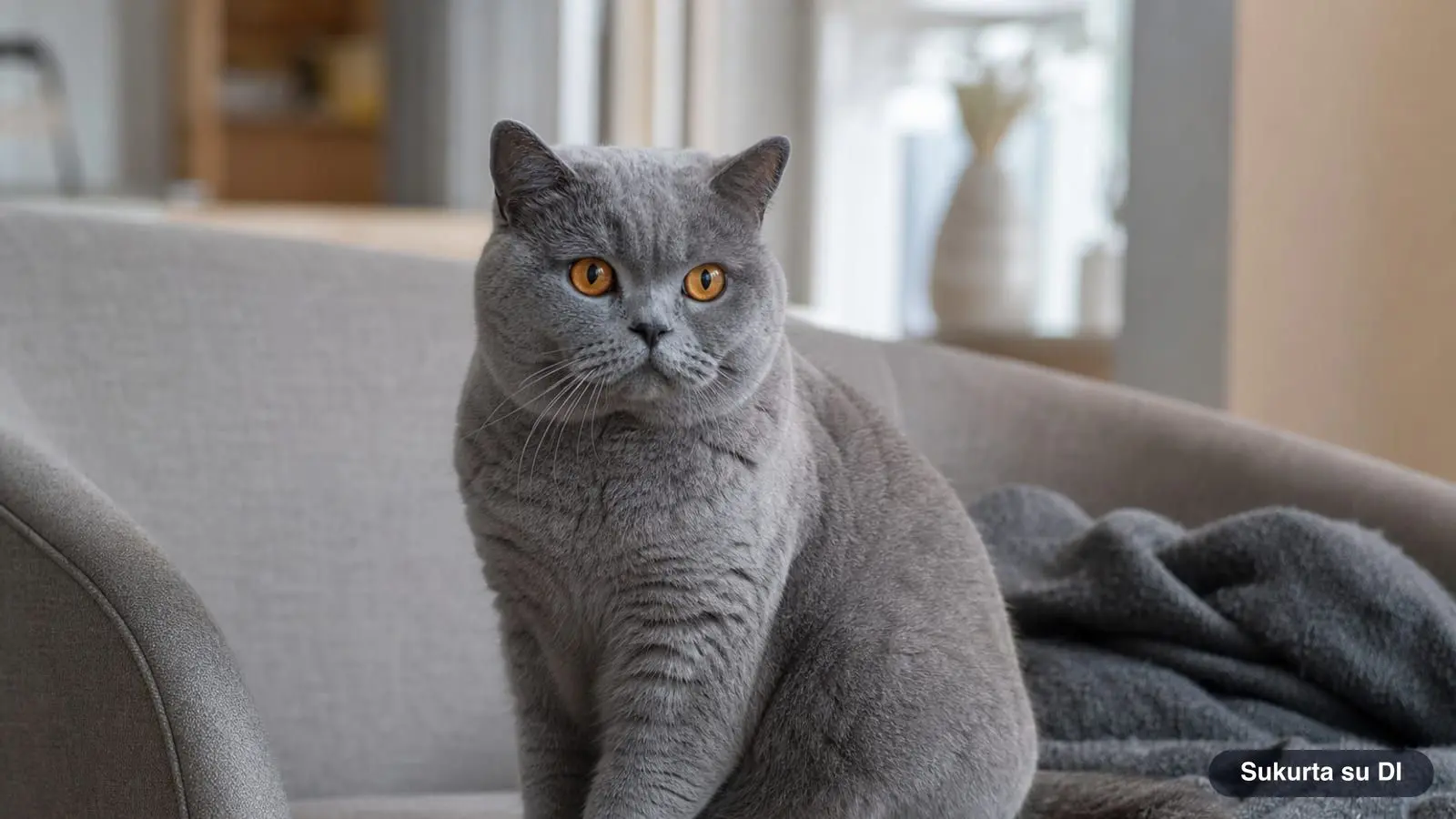
- The most famous color is solid blue-gray (British Blue) with copper eyes, but over 100 color and pattern combinations are recognized.
- Males weigh 9–18 lbs, and females weigh 7–11 lbs; the cat reaches its full size at about three years of age.
- Their temperament is calm, independent, and friendly; they like being nearby but generally dislike being carried.
- According to 2025 FIFe statistics, it is the second most popular breed globally (16.7% of kittens); hypertrophic cardiomyopathy and polycystic kidney disease are monitored.
- The British Shorthair has the densest coat among cats
- A stocky, round-headed, and slow-maturing cat
- Temperament: Calm, independent, and loyal, but not a lap cat
- History: From Roman times to the Crystal Palace exhibition
- Health: HCM, PKD, and blood type B
- Care: Weekly brushing and moderate diet
- The British Shorthair, Scottish Straight, and Chartreux look similar
- How to choose a British Shorthair kitten
This article is part of the 77.today cat breeds guide, prepared by the 77.today editors from the sources listed at the end.
A round head, chubby cheeks, small ears, and large copper eyes—the British Shorthair is often compared to a plush teddy bear. It is one of the most popular breeds in Europe and the most popular in its homeland, where, according to the GCCF, it accounts for roughly half of all pedigreed kittens registered annually. In our cat breeds guide profile, you will find out about this cat's temperament, how much it weighs, what colors it comes in, and how to care for it.
| Origin | Great Britain, old domestic cat populations |
|---|---|
| Recognition | all major organizations (CFA, FIFe, TICA) by the late 1970s |
| Weight | males 9–18 lbs, females 7–11 lbs |
| Body | stocky, broad chest, short sturdy legs |
| Coat | short, very dense, plush |
| Colors | blue (British Blue) and many other solid, tabby, bicolor, silver, and spotted varieties |
| Eyes | large, round; blue cats have copper or orange eyes |
| Activity | low–medium |
| Grooming | brush once a week |
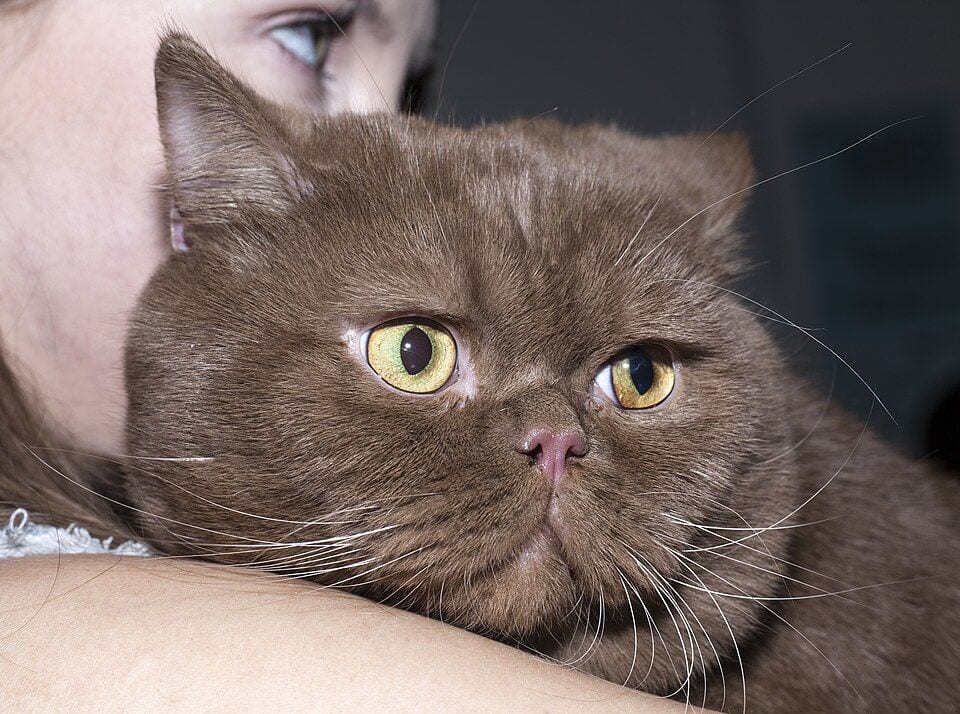
The British Shorthair has the densest coat among cats
The most important feature of this breed is its coat. The CFA notes that it has more hairs per square inch than any other cat breed. The coat is short, straight, even in length, and dense, with a firm texture that "breaks" like plush when the cat moves. In shows, the coat accounts for a full 35 out of 100 judging points.
The best-known variety is the solid blue-gray British Blue with deep copper eyes. This is exactly what most people picture when they hear "British cat." However, all organizations recognize white, black, blue, red, cream, cinnamon, and fawn colors, while FIFe, GCCF, and TICA also accept chocolate and lilac. All of these can be solid, tabby (four patterns), with a silver or golden undercoat, bicolor with white, tortoiseshell, or colorpoint, resulting in over 100 combinations in total. White pedigreed British Shorthairs are tested for hearing, as they can be deaf in one ear.
A stocky, round-headed, and slow-maturing cat
The British Shorthair is a large and powerful-looking cat: a broad chest, muscular body, short thick legs, and round paws. The tail is medium in length, thick at the base, and rounded at the tip. The head is large and round, the muzzle is short, the cheeks are chubby (especially in mature males), and the neck is so short it is almost invisible. The ears are small to medium, set wide apart, and the eyes are large and round.
The breed exhibits strong sexual dimorphism: males weigh 9–18 lbs, while females weigh 7–11 lbs. The British Shorthair matures slowly and only reaches its full size at about three years of age. It is believed that Lewis Carroll's Cheshire Cat from "Alice in Wonderland" was a tabby British Shorthair.
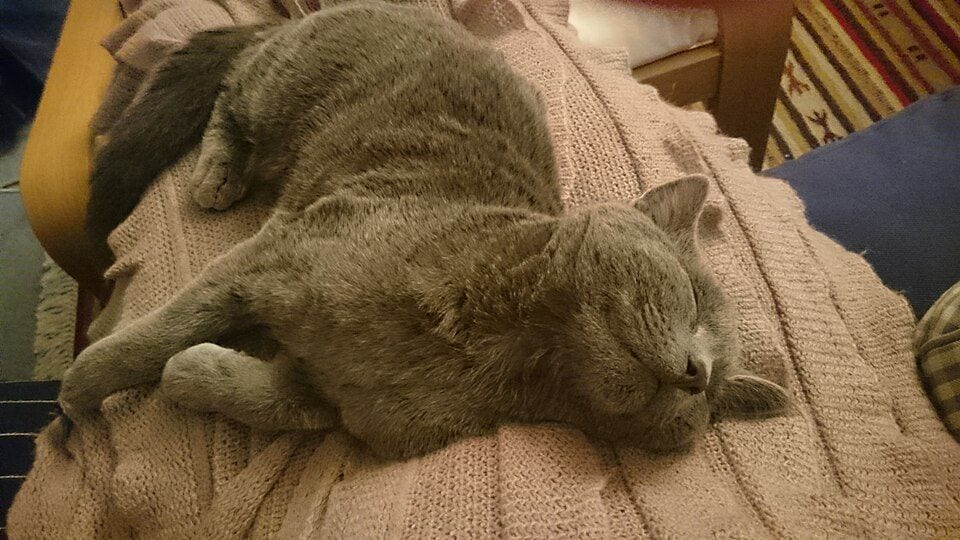
Temperament: Calm, independent, and loyal, but not a lap cat
The British Shorthair is an ideal choice for those who want a calm companion. They are interested in everything their owners do, follow them from room to room, and learn the daily routine, but they prefer to participate by observing from the sidelines. The CFA notes that a British Shorthair is more likely to wait for an invitation to sit next to you on the sofa than to jump on your lap uninvited, and they share their affection with all family members. They are not very vocal and will show their displeasure with a gentle touch of a paw.
British Shorthairs are patient with children but will retreat in noisy situations. It is worth teaching children early on that these cats do not like being carried. They usually get along easily with dogs and other animals, though they often become the "boss" of the house. Young British Shorthairs are quite playful up to 2–3 years of age, after which they settle down. Because of their heavy bodies, they prefer staying on the floor rather than jumping onto kitchen counters.
History: From Roman times to the Crystal Palace exhibition
Exactly how cats arrived in the British Isles is unknown, but it is believed they lived there even before the Roman invasion. On the isolated island, they developed into large, sturdy cats with a short but very dense coat. In the 19th century, artist and cat show pioneer Harrison Weir began selecting the best domestic cats, and at the first organized cat show at London's Crystal Palace in 1871, British Shorthairs were among the main participants.
In the early 20th century, Persians and other longhaired cats became fashionable, and during World War I, very few pedigreed British Shorthairs remained. Breeders introduced Persian, Russian Blue, Burmese, and Chartreux bloodlines into their breeding programs. The longhair genes inherited from Persians later became the foundation for the British Longhair. In the 1950s, a blue male named Brynbuboo Little Monarch became the first GCCF Grand Champion, and most of today's British Shorthairs are his descendants. In 1982, FIFe separated the Scandinavian-type cats, which had not been crossed with Persians, into a distinct European Shorthair breed.
Health: HCM, PKD, and blood type B
- Hypertrophic cardiomyopathy (HCM). In a Danish study of over 329 cats, HCM was found in 20.4% of males and 2.1% of females. The Danish FIFe member Felis Danica has made HCM testing mandatory for breeding males.
- Polycystic kidney disease (PKD). Due to the Persian blood in the breed, this is considered a risk, so breeding cats undergo a PKD1 genetic test.
- Blood type B. The CFA points out that many British Shorthair lines carry the rarer type B blood. Owners should know their cat's blood type in case a transfusion is ever needed, and it is crucial for breeders to prevent neonatal isoerythrolysis in kittens.
- Obesity. A calm and relatively inactive cat can easily gain weight, so it is a good idea to measure their food portions.
Interestingly, in a study conducted in England, British Shorthairs were diagnosed with diabetes mellitus less than half as often as mixed-breed cats (0.24% compared to 0.58%).
Care: Weekly brushing and moderate diet
- Coat. The dense coat sheds, especially in the spring and fall, but because it is short and firm, maintenance is simple: the CFA suggests a quick brushing once a week is enough. Brush more frequently during shedding seasons.
- Nails and ears. Regularly trim their nails and occasionally check and clean their ears.
- Diet. Cat care experts emphasize that a balanced calcium-to-phosphorus ratio is important for the breed's heavy skeleton. High-quality, complete cat food provides this; do not give supplements without a veterinarian's advice.
- Exercise. British Shorthairs are not naturally inclined to work out, so encourage them daily with short hunting games.
The British Shorthair, Scottish Straight, and Chartreux look similar
| Feature | British Shorthair | Scottish Straight | Chartreux |
|---|---|---|---|
| Ears | small, straight | straight | medium, set high |
| Colors | over 100 combinations | various | blue only |
| Eyes | mostly copper | various | copper to gold |
| Origin | Great Britain | Scotland, from Fold lines | France |
How to choose a British Shorthair kitten
The British Shorthair is highly popular, and classified ads are often full of "British" kittens of unclear origins. Choose a reputable breeder registered with major organizations like the CFA or TICA, who provides pedigree papers, a PKD1 test for both parents, and a recent echocardiogram report (especially for the sire). If blood type is important to you, ask the breeder for this information. A blue kitten's eyes are initially blue or gray, with the copper color developing later. A kitten should be no younger than 14 weeks before going to a new home, as recommended by major cat registries. We explain how to verify a breeder, check for microchipping, and ensure proper registration on our main guide page.
You can find the semi-longhaired variant in the British Longhair profile, and a cat with similar roundness but a flat face in the Exotic Shorthair description.
Frequently asked questions
How much does a British Shorthair weigh?
Adult males typically weigh 9–18 lbs, while females weigh 7–11 lbs. The breed has pronounced sexual dimorphism: males are larger with broad cheeks. A British Shorthair reaches its final size at around three years of age.
Can a British Shorthair cat be left alone at home?
They are considered one of the most independent cats: they calmly tolerate a few hours without their owners and are not clingy. However, they still need daily interaction and play, especially in their youth when they are quite playful.
Does the British Shorthair like to cuddle?
They usually like to be nearby and will follow their owner from room to room, but they prefer sitting next to you on the sofa rather than on your lap. The CFA notes that many British Shorthairs do not like being carried.
How long do British Shorthair cats live?
According to Swedish insurance data, 82% of British Shorthairs reached at least 10 years of age, with a median lifespan exceeding 12.5 years. A UK veterinary records study found the life expectancy of British Shorthairs and Longhairs to be 9.6 years.
What is the difference between a British Shorthair and a Scottish Straight?
Scottish Straights are cats of the Scottish Fold breed with straight ears; their ancestors are Scottish Folds and British Shorthairs, so their appearance is very similar. The British Shorthair is a separate, old breed with no Scottish Fold cats in its ancestry.
Sources
- Wikipedia: British Shorthair
- FIFe: British Longhair / Shorthair breed standard
- CFA: British Shorthair breed profile
- FIFe Breeding Statistics 2025 (registrations by breed and country)
- Wikipedia: Polycystic kidney disease
- FIFe Breeding & Registration Rules (2.3.3 - kittens no earlier than 14 weeks)
- Wikimedia Commons: Brown-tinted British Shorthair with chubby cheeks and round eyes
- Wikimedia Commons: British Blue and Russian Blue cats sitting side by side
Log in to comment
No comments yet. Be the first.