American Curl Cat: Size, Temperament, Care & Health
- The American Curl originated in California: in 1981, Joe and Grace Ruga took in a black stray kitten named Shulamith in Lakewood.
- The curled ears are caused by the autosomal dominant Cu gene; in 1989, geneticist Roy Robinson analyzed 383 kittens and found no defects.
- Kittens are born with straight ears that begin to curl within a few days and fully set at about 16 weeks of age.
- TICA granted championship status to longhairs in 1992, the CFA recognized both varieties in 1999, and FIFe accepted the breed in 2003.
- Temperament: friendly, curious, and people-oriented, this cat remains as playful as a kitten well into adulthood.
- All American Curls descend from Shulamith
- Curled ears are caused by a dominant gene
- Appearance: elegant and easy to groom
- Temperament: the eternal kitten
- Care: special attention to the ears
- The American Curl and other unusual-eared breeds
- Daily life with an American Curl
- How to choose an American Curl kitten
This article is part of the 77.today cat breeds guide, prepared by the 77.today editors from the sources listed at the end.
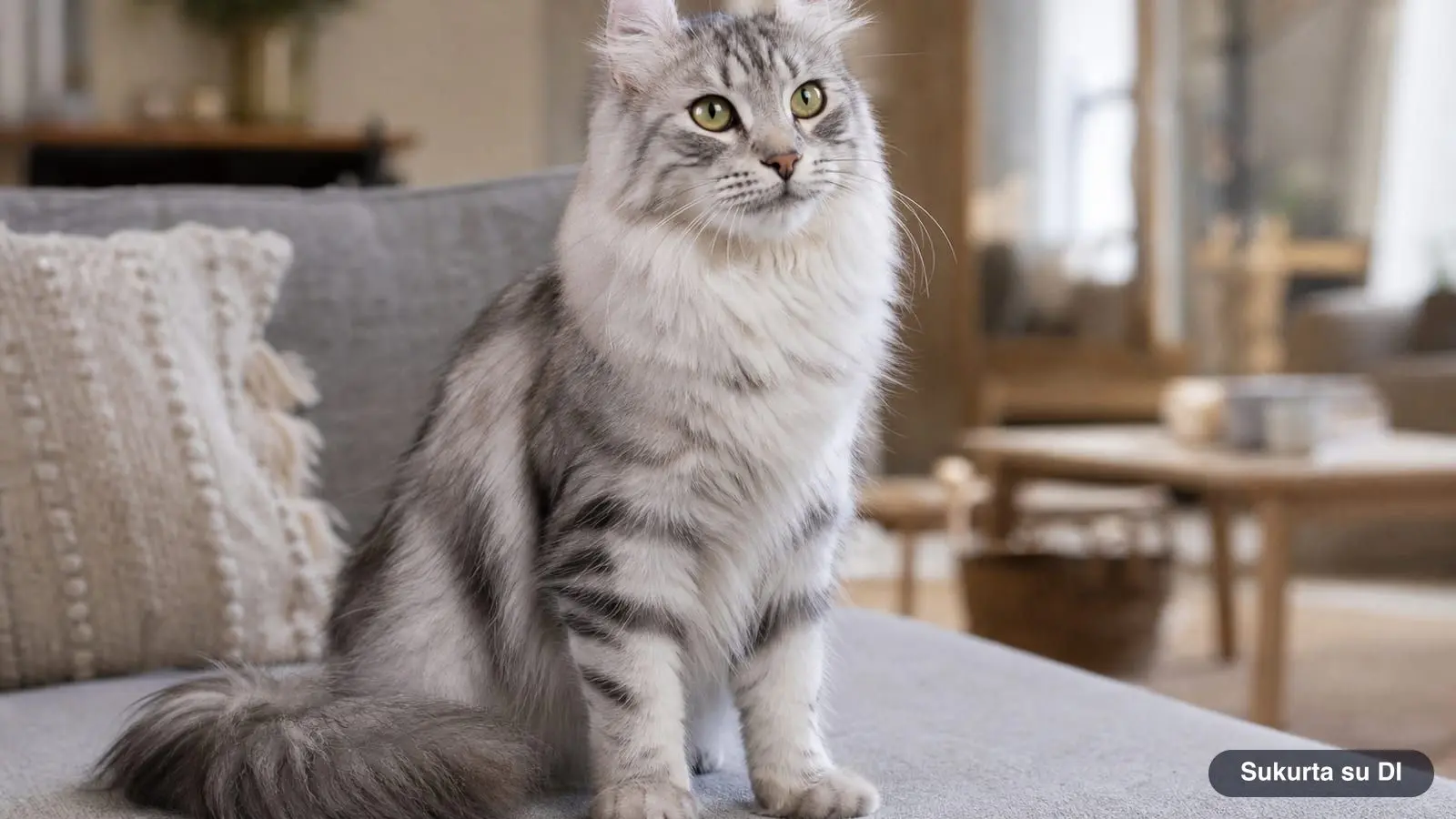
The American Curl is a medium-sized, elegant, muscular cat whose ears look as if they were swept back: they curl away from the face toward the center of the base of the skull, with tufts of hair sprouting from them. Due to its forever-playful temperament, FIFe calls it the Peter Pan of cats—the boy who never grows up. In this cat breeds guide profile, you will find the American Curl's history, ear genetics, appearance, temperament, and care tips.
| Origin | Lakewood, California, USA, 1981 |
|---|---|
| Recognition | TICA (longhairs – championship status in 1992); CFA in 1999; FIFe since 2003 |
| Weight | females 5–8 lbs, males 7–10 lbs |
| Body | medium, rectangular, muscular |
| Head | gentle modified wedge, straight medium-length nose |
| Ears | curled back 90–180°, with tufts |
| Coat | semi-long or short, silky, almost no undercoat |
| Eyes | large, walnut-shaped |
| Colors | all |
All American Curls descend from Shulamith
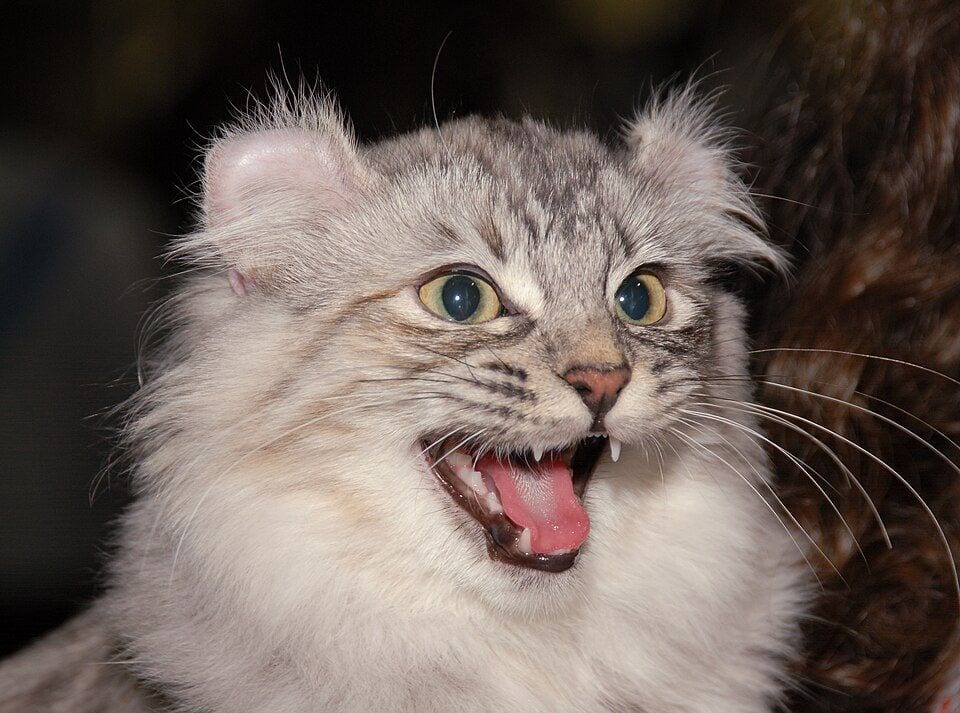
In June 1981, a black longhaired stray kitten with unusual, backward-curling ears wandered to the door of Joe and Grace Ruga in Lakewood, California. The owners named her Shulamith, and in her litter born that December, two kittens also had curled ears. Shulamith became the foundation of the breed—she is in the pedigree of every purebred American Curl.
The Rugas consulted with CFA judges and drafted a standard based on other breeds but describing a cat unlike any existing breed. The curled-ear cats were then outcrossed with domestic shorthairs and longhairs. In 1986, the American Curl was first exhibited at a cat show, in 1992 TICA granted championship status to the longhairs, and in 1999 it became the first breed admitted to the CFA Championship Class with both longhair and shorthair divisions simultaneously. FIFe has recognized the breed since 2003. Outcrossing to non-pedigreed cats was permitted until 2015, making its genetic pool one of the most diverse.
Curled ears are caused by a dominant gene
Breeding curled-ear and straight-ear cats revealed that the ear shape is determined by an autosomal dominant gene, designated Cu (for curl): a single copy is enough for a kitten to have curled ears, and the trait is not sex-linked. Renowned British feline geneticist Roy Robinson analyzed 81 litters and 383 kittens, announcing in 1989 that he found no defects. This is a crucial difference from the Scottish Fold: their Fd gene causes osteochondrodysplasia, whereas American Curls, even those with two copies of the Cu gene observed over two years, showed no anomalies.
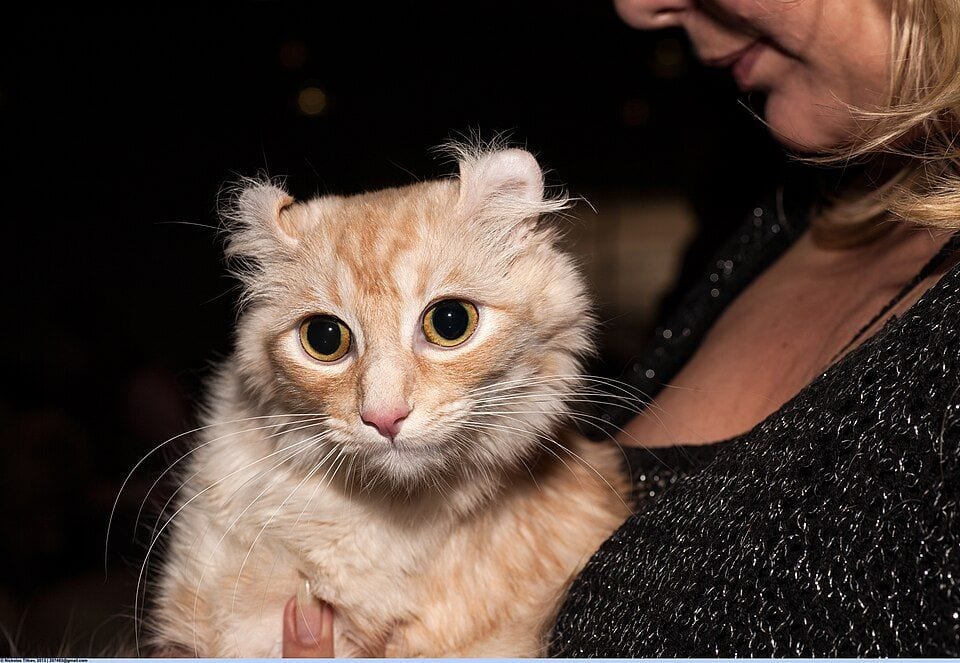
Kittens are born with straight ears. Within 2 to 5 days, they begin to curl backward, gradually changing shape until they "set" at about 16 weeks of age: they become firm at the base while the tips remain flexible. The degree of curl varies greatly—from almost straight ears to the 90–180 degree arc required for show cats.
Appearance: elegant and easy to groom
The American Curl is a medium-sized, elegant, and muscular cat with a rectangular body and a long tail, roughly equal to the body's length. The head is a gentle modified wedge shape, the nose is straight and of medium length, and the top of the head and base of the skull are rounded. The eyes are large, bright, and walnut-shaped; their color depends on the coat, with pointed cats having blue eyes. The longhair's coat is semi-long, soft, silky, and lies flat with minimal undercoat, while the tail is full and plumed. The shorthair's coat is short, soft, and silky. All colors and patterns are recognized. The breed reaches full maturity in two to three years.
Temperament: the eternal kitten
American Curls are highly people-oriented, curious, loyal, and affectionate. FIFe notes that they adapt surprisingly quickly to other animals, children, and new situations, participate in all household affairs, easily learn tricks, and find opening cabinets or doors to be child's play. The CFA describes how the cat will bounce between wanting to help prepare dinner, sort the mail, or catch their owner's shoelaces. They "comment" on their owner's activities with quiet trills and coos but do not meow unnecessarily. They have enough activity to be entertaining but not overwhelming, and their kitten-like temperament lasts well into adulthood—making them great companions for children of all ages, other cats, and dogs.
Care: special attention to the ears
- Coat. Due to the minimal undercoat, grooming is easy—brushing two or three times a month is sufficient.
- Ears. Clean carefully with a cotton swab and ear cleaner, wiping upward and away from the canal; do not stretch the cartilage or try to straighten the ears.
- Play. Regular playtime with the owner, puzzle toys, and trick training.
- Health. No breed-specific diseases have been identified, but breeders perform genetic tests.
The American Curl and other unusual-eared breeds
| Trait | American Curl | Scottish Fold | Lykoi |
|---|---|---|---|
| Ears | curled backward | folded forward | normal |
| Gene | Cu, dominant | Fd, dominant | – |
| Cartilage diseases | none identified | osteochondrodysplasia | – |
| FIFe | recognized (2003) | not recognized | preliminary (2023) |
Daily life with an American Curl
The American Curl is well-suited for both apartments and larger homes—the most important thing is having people nearby. They adapt easily to new situations, making them tolerant of moving or having guests over. Since the cat can learn to open cabinets and doors, it is worth installing childproof locks where medications or household chemicals are kept. Dedicate time daily for play, and explain to children that the cat's ears must never be bent or pulled, as the cartilage is sensitive.
How to choose an American Curl kitten
Because the ears only set at about 16 weeks, a responsible breeder can only fully evaluate a kitten's quality at that time. This aligns with standard practices among reputable breeders and registries like TICA and CFA, which recommend kittens stay with their mother until they are at least 14 to 16 weeks old. When looking for a kitten, ask to see the parents, pedigree papers, and health test results. Avoid pet stores or puppy mills, and ensure the kitten is microchipped and registered. For more on finding a reputable breeder or adopting through a rescue, see our cat breeds guide introduction.
You can find other breeds with unusual ears or coats in the Scottish Fold and Lykoi profiles, and discover more US-origin breeds in the American Bobtail guide.
Frequently asked questions
Do American Curl ears cause health problems?
No breed-specific health issues have been identified so far. Unlike the Scottish Fold's Fd gene, which causes osteochondrodysplasia, the Cu gene does not cause cartilage or bone defects. Even observing cats with two copies of the gene showed no anomalies.
When do the kitten's ears set?
Kittens are born with straight ears. Within 2 to 5 days, they start curling backward, and by about 16 weeks (4 months) of age, they are fully formed—firm at the base while the tips remain flexible. Only then can breeders evaluate if a kitten is show quality.
How curled should the ears be?
The degree of curl varies widely, from almost straight ears (pet quality) to a 90–180 degree arc for show cats. The ears must curl evenly, with the tips pointing toward the center of the base of the skull.
How much does an American Curl weigh?
It is a medium-sized cat: females typically weigh 5–8 lbs, and males weigh 7–10 lbs. They reach full maturity in two to three years.
How do you clean an American Curl's ears?
Ears should be cleaned carefully: use a cotton swab moistened with ear cleaner, wiping upward and outward away from the ear canal. Never stretch the fragile cartilage or try to straighten the ears.
Log in to comment
No comments yet. Be the first.