Peterbald Cat: Hairless Oriental, Temperament & Care
- The Peterbald was developed in St. Petersburg in 1994 by crossing a Donskoy with an Oriental Shorthair; the breed was created by felinologist Olga Mironova.
- Their hairlessness is caused by a dominant gene inherited from the Donskoy, meaning kittens can be born bald, with a flock or velour coat, a wiry "brush" coat, or even a normal straight coat.
- They share the Oriental body type: slender and muscular with long legs, a whip-like tail, a long, narrow head, and large ears.
- The breed is recognized by TICA (1997), WCF (2003), and FIFe (2012).
- Their temperament is affectionate, calm, and curious; as hairless cats, they require warmth, sun protection, and regular skin cleaning.
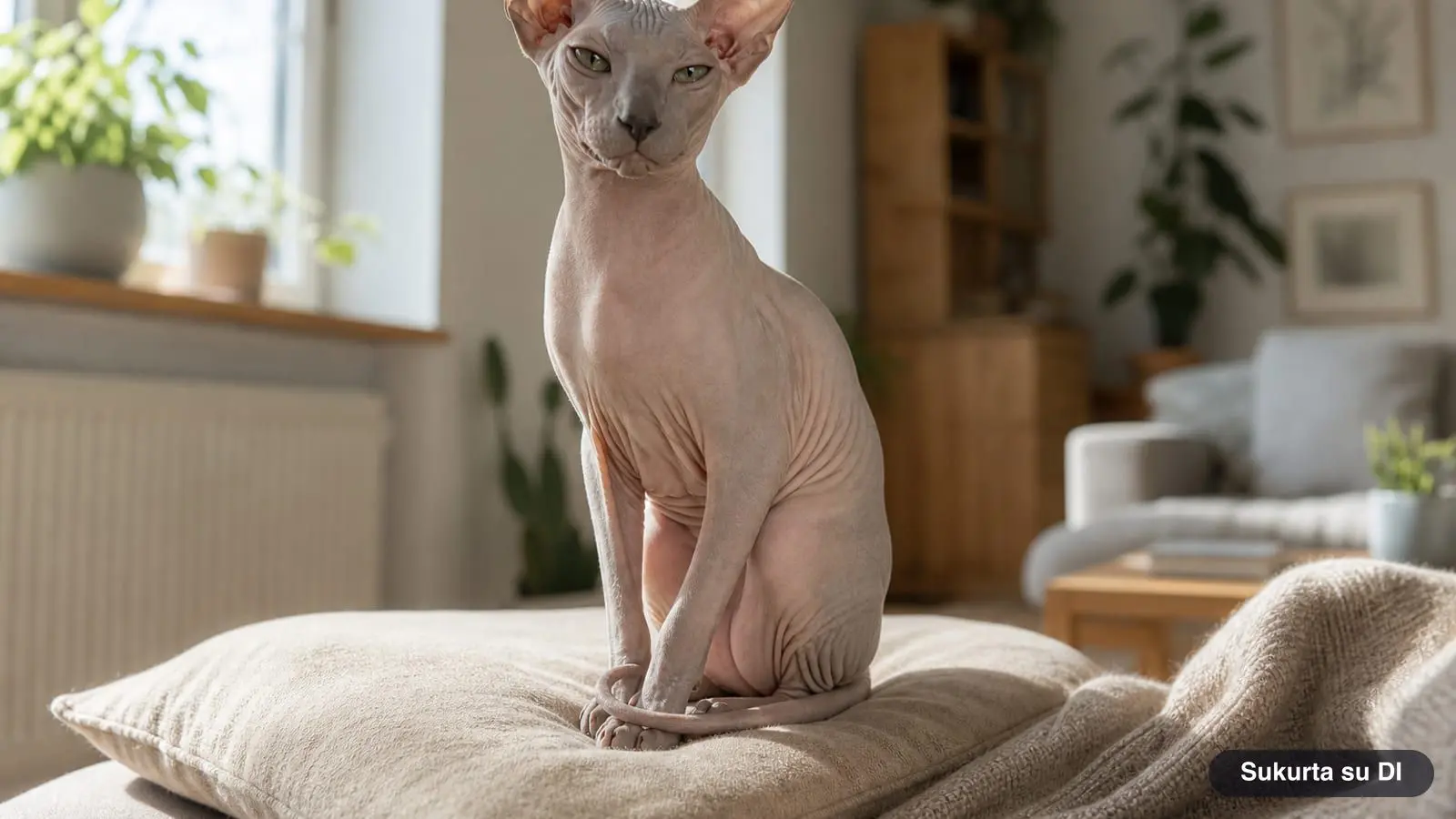
- The Peterbald Was Born from a Donskoy and an Oriental Shorthair
- From Completely Bald to "Brush": Five Coat Types
- An Oriental Body and Webbed Toes
- Temperament: Affectionate, Calm, and Always by Your Side
- Health and Welfare: Hairless Cats Need Special Care
- Care: Warmth, Sun Protection, and Skin Cleaning
- The Peterbald, Sphynx, and Donskoy
- How to Choose a Peterbald Kitten
This article is part of the 77.today cat breeds guide, prepared by the 77.today editors from the sources listed at the end.
The Peterbald is like a hairless Oriental Shorthair: it features a slender, long-legged body, a long, narrow head with a straight profile, giant bat-like ears, and warm, soft, velvet-like skin. Sometimes referred to as the St. Petersburg Sphynx because it originated in St. Petersburg, Russia, it is one of the youngest recognized cat breeds. In this cat breed guide profile, we explain where Peterbalds come from, why some are born with fur, how they differ from other hairless cats, and how to care for them.
| Origin | St. Petersburg, Russia |
|---|---|
| Founders | Donskoy Afinogen Myth × Oriental Shorthair Radma von Jagerhov |
| Recognition | TICA in 1997, WCF in 2003, FIFe in 2012 |
| Body | slender, muscular, long legs, whip-like tail |
| Coat types | bald, flock, velour, brush, straight |
| Hairless gene | dominant (from the Donskoy) |
| Colors | all colors and patterns, visible on the skin |
| Eyes | almond-shaped, usually green-gold |
| Temperament | affectionate, calm, curious, energetic |
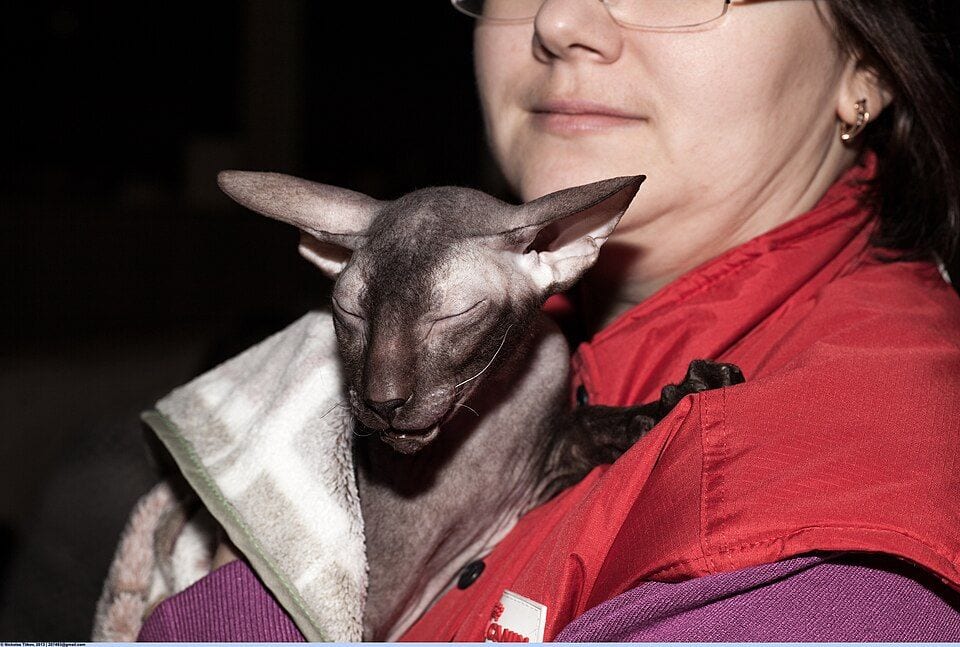
The Peterbald Was Born from a Donskoy and an Oriental Shorthair
In late 1994 in St. Petersburg, Russian felinologist Olga Mironova mated a Donskoy named Afinogen Myth with an Oriental Shorthair world champion named Radma von Jagerhov. The first two litters produced four kittens—Mandarin, Muscat, Nezhenka, and Nocturne iz Murino—who became the foundation of the entire breed. The Russian SFF accepted the breed and its standard in 1996, followed by TICA in 1997, the WCF in 2003, and FIFe in 2012. In the US, the Peterbald is registered by TICA.
Today, Peterbalds are being developed toward the modern Oriental and Siamese type: a long muzzle, large, widely set ears, flat cheekbones, and an elegant body on long legs. Because of this, breed standards encourage outcrossing Peterbalds with Oriental Shorthairs and Siamese cats; semi-longhaired Balinese and Javanese cats were removed from the list of permitted outcrosses in 2005.
From Completely Bald to "Brush": Five Coat Types
The Peterbald's hairlessness is determined by a dominant gene inherited from the Donskoy. As a result, a single litter can produce very different kittens:
- Bald – Completely hairless, rubbery, warm, and sometimes wrinkled skin.
- Flock – A barely noticeable fuzz that feels like a peach.
- Velour – A short, denser fuzz that often falls out as the cat ages.
- Brush – A wiry, wavy, sparse coat with bald patches; TICA has allowed brush-coated Peterbalds in championship classes since 2008.
- Straight – A normal, standard coat; these kittens do not carry the hairless gene and keep their fur for life.
Peterbalds born with hair (except for the straight-coated ones) often gradually lose it over time. Their skin color matches their genetic coat color, meaning Peterbalds come in all colors and patterns. Smoke and shaded colors, which require a hair shaft to display properly, are not present in completely bald Peterbalds. Their eyes are usually green-gold, while white and pointed cats typically have blue eyes.
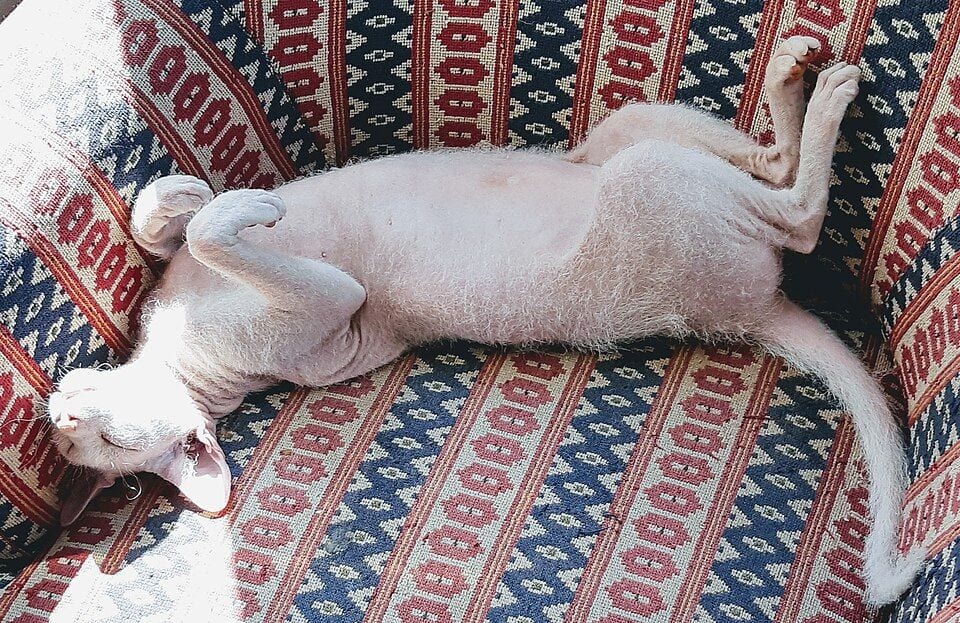
An Oriental Body and Webbed Toes
The Peterbald's body is slender yet muscular, featuring long, straight lines. The head is narrow and long with a straight profile, almond-shaped eyes, a wedge-shaped muzzle, and large, widely set ears. The tail is long and thin like a whip. Their paws are particularly unique: they are oval with long toes and webbing between them, allowing Peterbalds to grasp objects and even open doors with lever handles.
Temperament: Affectionate, Calm, and Always by Your Side
FIFe describes Peterbalds as sweet-tempered, affectionate, peaceful, curious, intelligent, and energetic. They are moderately vocal, love to follow their owners around, and thrive on companionship. Peterbalds generally get along well with other cats, pets, and children. Like other hairless cats, they absolutely love warmth—whether it is on your lap, under a blanket, or next to a radiator.
Health and Welfare: Hairless Cats Need Special Care
There are not many hereditary diseases specifically documented for Peterbalds, but because their body structure is closely related to Orientals and Siamese cats, it is worth checking if their lineage has a history of conditions common to those breeds, such as progressive retinal atrophy. The most significant risk comes from their hairlessness itself: without a coat, the cat has a harder time regulating its body temperature, its skin is highly sensitive to the sun and scratches, and it accumulates more skin oils and ear wax.
The lack of a protective coat raises ethical discussions within the veterinary community regarding the welfare of hairless breeds. While there are no widespread bans on breeding Peterbalds in the US as there are in some European countries, ethical breeders prioritize the health and quality of life of their cats. TICA, the main US registry for the breed, maintains a strict breed standard, and responsible breeders work to ensure that extreme physical traits do not compromise the cats' overall well-being.
Care: Warmth, Sun Protection, and Skin Cleaning
- Skin. Regularly wipe their bald skin with a damp cloth or give them an occasional bath with a mild cat shampoo to prevent oil buildup. For brush and velour Peterbalds, a gentle grooming glove is usually enough.
- Warmth. Keep your Peterbald in a warm home, and offer a cat sweater and a heated bed during the winter.
- Sun. Prolonged exposure to the sun can cause their bare skin to burn, so they need access to shade during the summer.
- Ears and nails. Wax builds up quickly in their large ears, and oils collect under their nail beds, requiring regular cleaning.
- Enrichment. Provide this energetic and intelligent cat with climbing shelves, puzzle toys, and daily interactive playtime.
The Peterbald, Sphynx, and Donskoy
| Trait | Peterbald | Sphynx | Donskoy |
|---|---|---|---|
| Origin | St. Petersburg, 1994 | Toronto, 1966 | Rostov-on-Don, 1987 |
| Body | slender, Oriental | sturdy, round belly | medium, sturdy |
| Hairless gene | dominant | recessive | dominant |
| FIFe kittens in 2025 | 81 | 1,767 | 125 |
How to Choose a Peterbald Kitten
Because a kitten's coat can change as they grow, ask the breeder to explain what type of coat is expected in adulthood, and always ask to meet both parents. Inquire about how the breeder ensures the kittens' warmth and health during their first few weeks, and verify that the parents have been health-tested for genetic conditions common in the Oriental breed group. Reputable breeders registered with TICA will provide a clear contract, health guarantees, and will never sell to pet stores or puppy mills. Kittens should typically stay with their mother until they are at least 14 weeks old to ensure proper socialization and immune development.
If you are looking for a stockier hairless cat, check out the Sphynx profile. If you prefer the slender Oriental look but with a beautiful coat, read our guides on the Oriental Shorthair and Siamese cats.
Frequently asked questions
How does the Peterbald differ from the Sphynx?
The Peterbald is a slender, Oriental-type cat with a long, narrow head, straight profile, and long legs, whereas the Sphynx is stockier with a round belly and lemon-shaped eyes. Additionally, the Peterbald's hairlessness comes from a dominant gene (inherited from the Donskoy), while the Sphynx's is recessive.
Are Peterbalds always completely bald?
No. Peterbalds can be born completely bald, with a barely noticeable peach fuzz (flock), a slightly longer fuzz (velour), a wiry and sparse "brush" coat, or a standard straight coat. Those born with hair (except for the straight-coated ones) often gradually lose it over time. Straight-coated Peterbalds keep their fur for life.
Are Peterbalds hypoallergenic?
No. Cat allergies are triggered by the Fel d 1 protein, which cats produce in their saliva and sebaceous glands, so being hairless does not make them hypoallergenic. Some allergy sufferers tolerate hairless cats better, but you should always spend time with the breed before bringing one home to test your reaction.
Are there restrictions on breeding Peterbalds in the US?
Unlike some European countries that have strict regulations on breeding animals with extreme physical traits, there are no widespread bans on breeding Peterbalds in the US. However, ethical breeders and registries like TICA prioritize health. Reputable breeders carefully manage the genetic pool to ensure that the lack of a protective coat does not compromise the cats' overall welfare and quality of life.
What colors do Peterbalds come in?
They come in all colors and patterns, which are visible directly on their skin. While smoke and shaded colors (which require a hair shaft) are not present in completely bald Peterbalds, the breed standard generally accepts all variations. Their eyes are usually green-gold, though white and pointed cats often have blue eyes.
Log in to comment
No comments yet. Be the first.