Tonkinese Cat: Temperament, Colors, Care & Health
- The Tonkinese was developed by crossing Siamese and Burmese cats; most trace their ancestry back to Wong Mau, the founding mother of the Burmese breed.
- The breed was first recognized in Canada (1960–1965), and the CFA granted championship status to the mink pattern in 1984.
- They come in three patterns: mink with aqua eyes, point with blue eyes, and solid (sepia) with green or gold eyes.
- The mink pattern is an intermediate trait: the cat inherits one Siamese and one Burmese pattern gene, meaning a litter from two mink cats will produce a variety of kitten patterns.
- This is a genetically diverse and sturdy breed; the CFA only notes a tendency toward gingivitis in older age. The breed is not recognized by the FIFe.
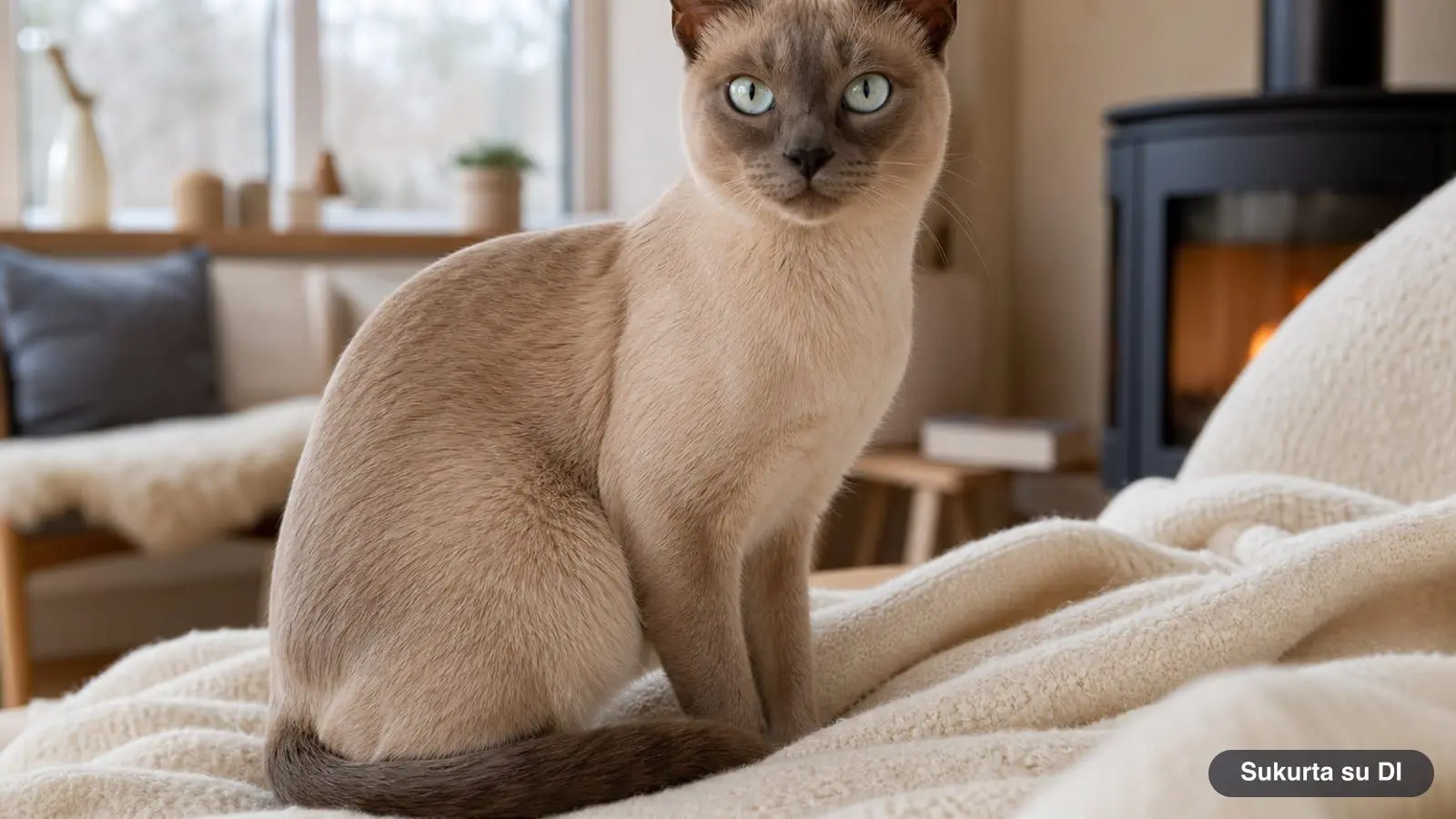
- Tonkinese – Between Siamese and Burmese
- Three Patterns and Simple Genetics
- Appearance: Neither Cobby Nor Svelte
- Temperament: Part Puppy, Part Monkey, Part Elephant
- Health: Diverse Genetics, Sturdy Breed
- Care: A Rubber Brush and Lots of Interaction
- Tonkinese, Siamese, and Burmese
- How to Choose a Tonkinese Kitten
This article is part of the 77.today cat breeds guide, prepared by the 77.today editors from the sources listed at the end.
If the Siamese is too vocal and svelte for you, and the Burmese is a bit too compact, the CFA suggests a "happy medium"—the Tonkinese. Developed by crossing Siamese and Burmese cats, this breed is medium-built, muscular, and surprisingly heavy, featuring a soft mink-colored coat and striking aqua eyes. In this cat breed guide, you will discover the history, coat genetics, temperament, and care needs of the Tonkinese.
| Origin | Canada and the US, Siamese × Burmese |
|---|---|
| Recognition | Canada 1960–1965; CFA 1984 (point and sepia in 2002); GCCF 1991; FIFe – not recognized |
| Body | medium, muscular, heavy for its size |
| Head | modified wedge, round muzzle |
| Coat | short, silky, glossy (semi-longhair variants exist) |
| Patterns | mink, point, solid (sepia) |
| Eyes | mink – aqua, point – blue, sepia – green or gold |
| Temperament | social, vocal, playful |
| Grooming | rubber brush 2–3 times a month |
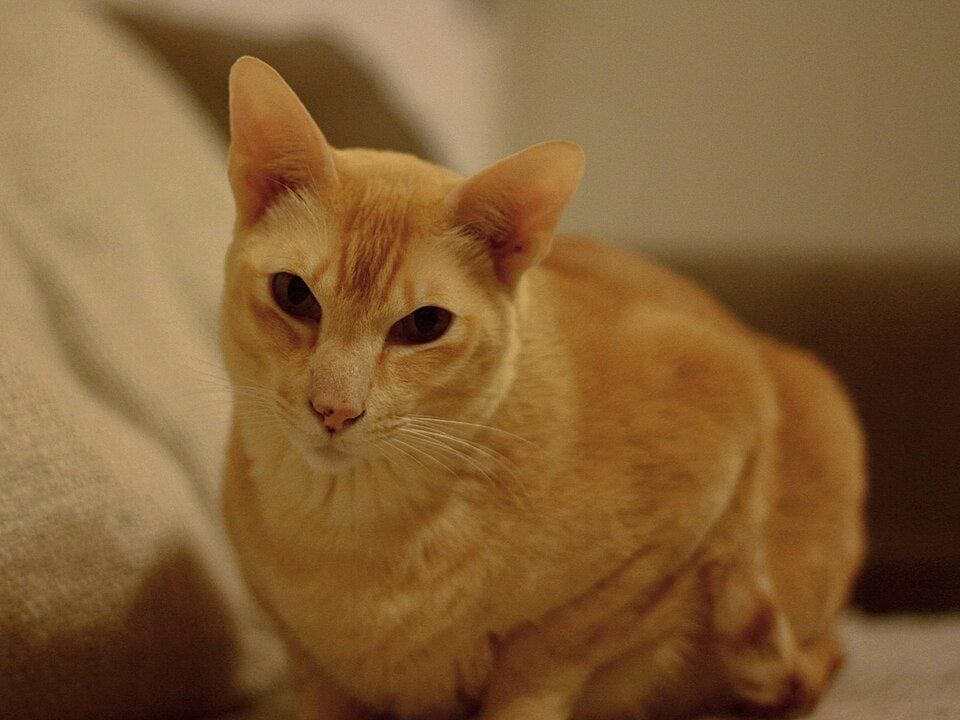
Tonkinese – Between Siamese and Burmese
Darker than the Siamese and boasting aqua eyes, these cats were known in the West as early as the 19th century as "chocolate Siamese." In 1901, the Siamese Cat Club even recognized them as a chocolate-type Siamese. The CFA notes that the ancestor of most modern Tonkinese cats is Wong Mau, a cat brought to the US from Burma in 1930, who was later recognized as a natural mink-patterned Tonkinese. When bred with a Siamese, she produced three types of kittens: solid brown ones that became the foundation of the Burmese breed, and kittens resembling their mother, which became the foundation of the Tonkinese.
For a long time, these kittens were registered as either Burmese or Siamese, and breeders only began taking a dedicated interest in them in the 1950s. The modern Tonkinese was developed by two breeders working independently: Margaret Conroy in Canada and Jane Barletta in the US. The breed was first recognized in Canada. The CFA registered it in 1982, granted championship status to the mink pattern in 1984, and finally accepted the pointed and sepia patterns for championship in 2002. The UK's GCCF recognized the breed in 1991. The name refers to the Tonkin region in Indochina, although the cats have no actual connection to that area.
Three Patterns and Simple Genetics
A Tonkinese cat's color depends entirely on the genes it inherits:
- Mink – one Siamese and one Burmese gene: a lighter body color that harmonizes with the points, and aqua eyes.
- Point – like the Siamese: a dark face, ears, legs, and tail on a light background, with blue eyes.
- Solid (sepia) – like the Burmese: an almost uniform color with green or gold eyes.
In a litter from two mink parents, on average, half the kittens will be mink, a quarter will be pointed, and a quarter will be sepia. Breeding a pointed cat to a sepia cat will always result in a litter of 100% mink kittens. The CFA and WCF recognize four base colors (natural/seal, blue, champagne/chocolate, and platinum/lilac), while the GCCF and TICA also accept cinnamon, fawn, red, cream, as well as tabby and tortoiseshell variations. In Europe—especially in the Netherlands, Germany, and France—a semi-longhaired variety is also popular.
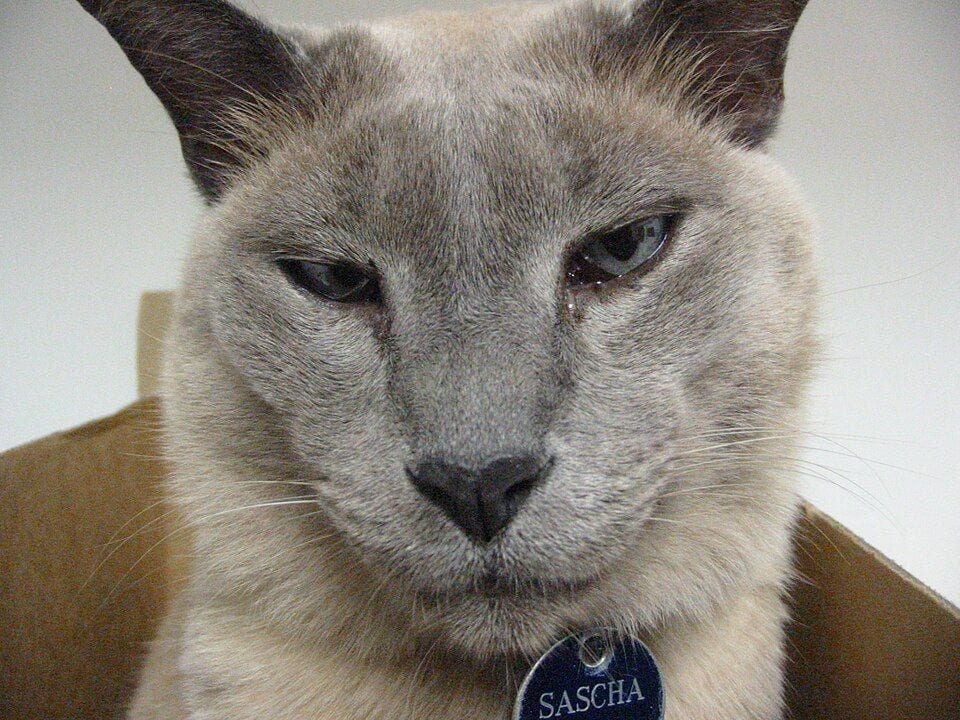
Appearance: Neither Cobby Nor Svelte
The CFA describes the Tonkinese as a medium-sized cat that is not as cobby as the Burmese, nor as svelte as the Siamese. Its dense, muscular body is surprisingly heavy when picked up. The head is a modified wedge, slightly longer than it is wide, with gently flat cheekbones and a rounded muzzle. The ears have a broad base and oval tips, set equally on the sides and top of the head. The eyes are an open almond shape, while the legs and tail are slim, ending in oval paws. Kittens are born light and their coats gradually darken as they age.
Temperament: Part Puppy, Part Monkey, Part Elephant
The CFA quotes owners who describe the Tonkinese as "part puppy, part monkey, and part elephant"—the latter due to their habit of thundering through the house. Tonks are highly intelligent, social, and affectionate: they will gladly take over your lap or shoulder and supervise your every move. They have excellent memories, quickly learn what they are not allowed to do (and do it anyway when you are not looking), and are highly attuned to their owner's moods. They get along wonderfully with dogs, other pets, children, and guests, often greeting visitors right at the door. Like the Burmese, they love playing fetch and jumping to high places.
The Tonkinese voice is similar to the Burmese—persistent, but softer and sweeter than the Siamese. Like both parent breeds, they easily become bored and lonely if left by themselves, making companionship a must.
Health: Diverse Genetics, Sturdy Breed
The CFA notes that thanks to their hybrid origins, Tonkinese cats are genetically diverse and generally sturdy and healthy. Reputable breeders actively share health and genetic testing information. The only breed-specific issue occasionally noted is a tendency toward gingivitis in older age; this can be prevented by getting the cat used to regular teeth brushing from a young age. In a large review of urate urinary stones involving 365 Tonkinese cats, only one case was reported. Because the breed is descended from the Siamese and Burmese, it is also wise to ask breeders about health screenings typical for those parent breeds.
Care: A Rubber Brush and Lots of Interaction
- Coat. Tonkinese shed seasonally; the CFA recommends running a rubber brush over their coat 2–3 times a month, and using a chamois cloth to bring out the shine. Bathing is rarely necessary.
- Teeth. Get them used to tooth brushing from kittenhood, and schedule regular dental checkups with your vet as they age.
- Activity. Fetch games, tall cat trees, and puzzle toys are essential.
- Companionship. A second cat or another pet is highly recommended if the house is empty for long periods.
Tonkinese, Siamese, and Burmese
| Trait | Tonkinese | Siamese | Burmese |
|---|---|---|---|
| Body | medium | svelte, long | compact |
| Pattern | mink, point, or sepia | point only | sepia |
| Eyes | aqua (mink) | blue | gold or green |
| FIFe | not recognized | recognized | recognized |
How to Choose a Tonkinese Kitten
Decide which coat pattern you prefer and ask the breeder what kind of kittens they expect from a specific pairing. When looking for a Tonkinese in the US, seek out reputable breeders registered with major organizations like the CFA or TICA. A responsible breeder will provide a clear contract, let you meet the kitten's parents, and share comprehensive health-test results, particularly regarding dental health and any genetic conditions common to the parent breeds. Avoid pet stores or kitten mills. Before bringing your new pet home, ensure they are microchipped, as recommended by veterinarians, and check your local ordinances regarding pet registration.
You can learn more about both parent breeds in our Siamese and Burmese guides.
Frequently asked questions
What is the mink pattern?
It is an intermediate pattern between the pointed Siamese and the solid sepia Burmese. The body is lighter but harmonizes with the point color, and the contrast is softer than that of a Siamese. Cats with the mink pattern have distinct aqua (blue-green) eyes.
Why do two mink cats produce different kittens in the same litter?
The mink pattern occurs when a cat inherits one Burmese (sepia) gene and one Siamese (pointed) gene. When breeding two mink cats, on average, half the kittens will be mink, a quarter will be pointed, and a quarter will be sepia. Breeding a sepia cat to a pointed cat will always produce an all-mink litter.
Are Tonkinese cats talkative?
Yes, but their voices are softer than those of the Siamese. Their vocalization is similar to the Burmese—persistent but milder, sometimes compared to the quiet quacking of a duck. The CFA jokes that Tonks speak in full sentences and expect you to answer.
Can a Tonkinese cat be left alone?
They do not like it. Like both parent breeds, Tonkinese are highly people-oriented and quickly become bored or depressed if isolated. If you work outside the home, it is highly recommended to get two cats to keep each other company.
Does the FIFe recognize the Tonkinese?
No, the Tonkinese is not on the list of breeds recognized by the FIFe. However, it is fully recognized by the CFA, TICA, GCCF, WCF, and many other major cat registries.
Log in to comment
No comments yet. Be the first.