Manx Cat: Size, Temperament, Tail Types & Health
- The Manx originates from the Isle of Man, where tailless cats became common due to a spontaneous dominant mutation in an isolated population.
- Tail lengths range from completely missing (rumpy) to nearly normal (longy), and the length is random within a litter.
- Two copies of the tailless gene are fatal, and tailless cats can develop Manx syndrome—a condition affecting the hind legs, bladder, and bowels.
- The Manx is one of the oldest show breeds: the first standard was published in 1903, and it has been recognized by FIFe since 1949 and the CFA since its founding.
- Temperament: Calm, affectionate, and dog-like. They enjoy playing fetch and tend to bond closely with one or two people.
This article is part of the 77.today cat breeds guide, prepared by the 77.today editors from the sources listed at the end.
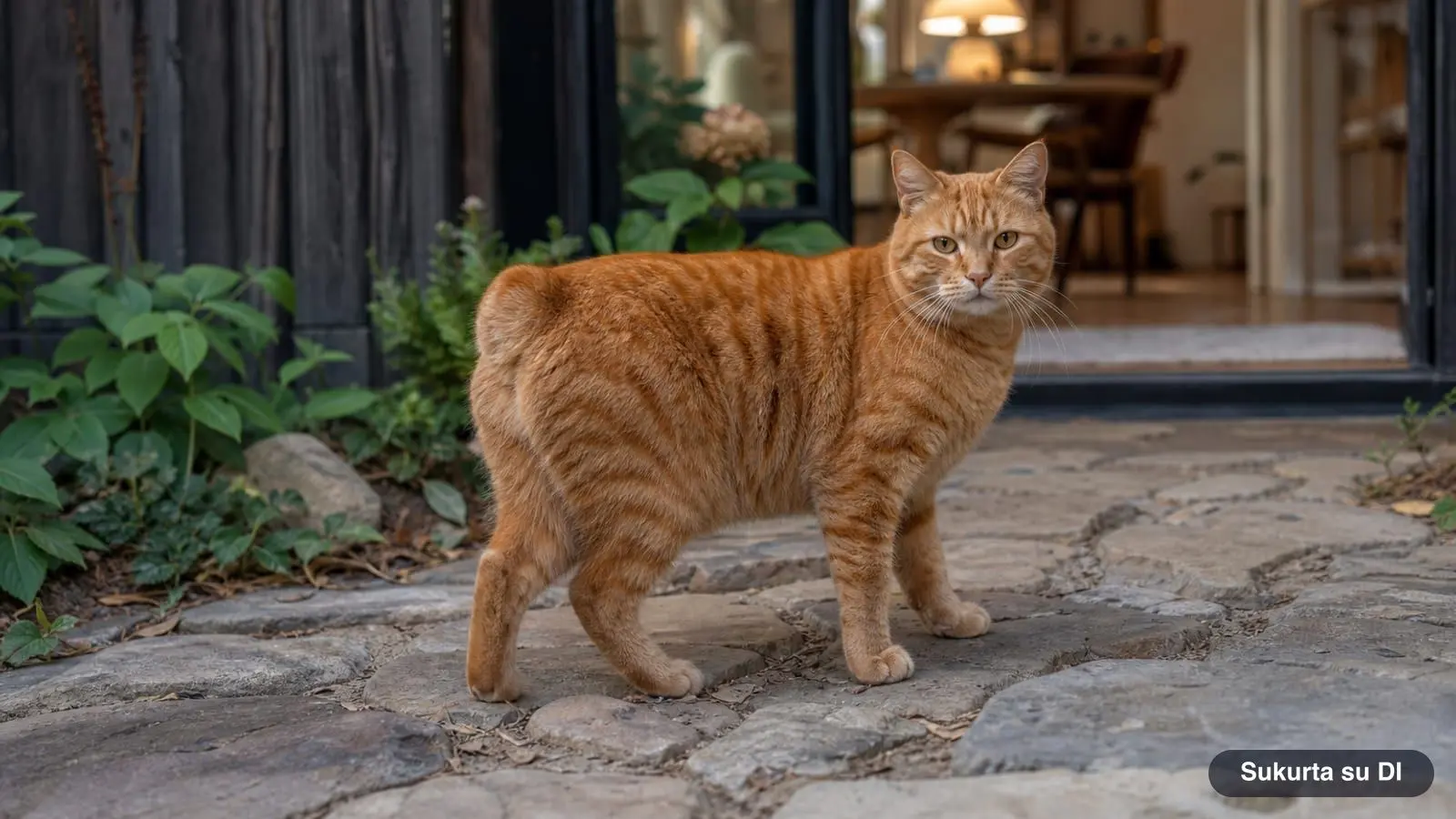
The Manx is a round, compact cat with high hind legs and, most famously, no tail. The CFA jokingly calls them a "furry bowling ball" that sometimes rolls away unexpectedly—after lying quietly all evening, they can reach the top of the refrigerator in a single bound. This historic breed originates from the Isle of Man in the Irish Sea, and their taillessness is both their charm and a major responsibility for breeders. In this cat breed guide profile, you will discover the Manx cat's history, tail types, health risks, appearance, and temperament.
| Origin | Isle of Man (Irish Sea) |
|---|---|
| Recognition | FIFe since 1949; CFA registered since its founding |
| Weight | males 10–12 lbs, females 8–10 lbs |
| Body | short, round, deep flanks, heavier than it appears |
| Legs | hind legs longer, rump higher than shoulders |
| Head | round, round cheeks, large round eyes |
| Coat | short, dense, double coat; longhaired variety is the Cymric |
| Tail | ranging from none (rumpy) to normal length (longy) |
| Colors | almost all colors |
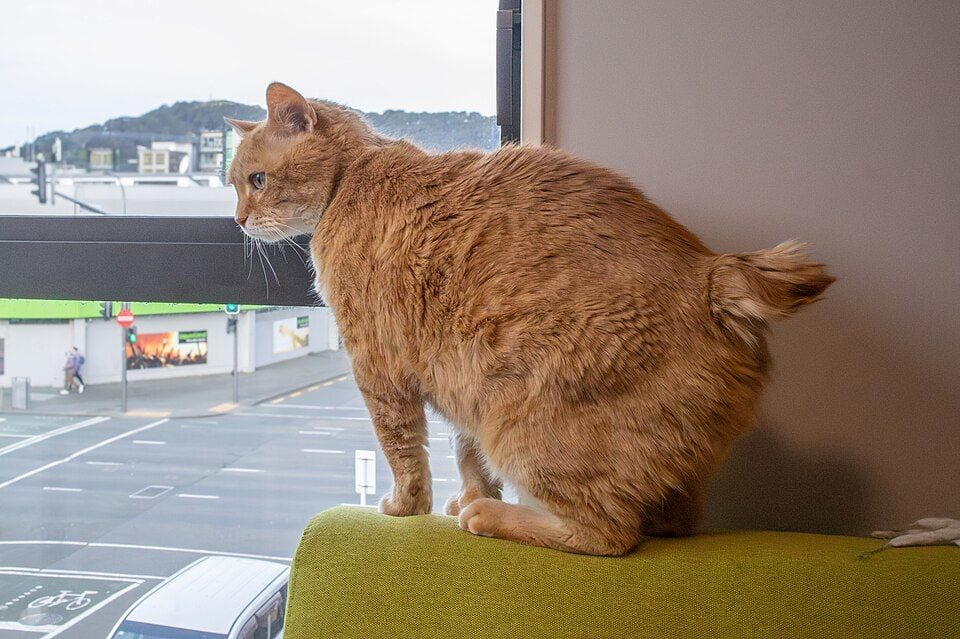
The Manx originates from the Isle of Man
Tailless cats, known locally as stubbin, were already recognized as Isle of Man cats by the early 19th century; the CFA notes that sailors visiting the island described them as far back as the 16th century. Like all domestic cats, they descend from the African wildcat brought over from the mainland. Their taillessness was caused by a spontaneous dominant mutation that spread across the island due to limited genetic diversity—a classic example of the founder effect. A significant number of tailless cats still live on the island today, though their proportion is declining.
Many later legends were invented to explain the missing tail: that the cat was late to Noah's Ark and the door slammed on its tail, that it swam ashore from a wrecked Spanish Armada ship, or that it is a hybrid of a cat and a rabbit. All of these are genetically impossible. Manx cats have been exhibited in cat shows since the late 19th century, and the first unofficial standard was published in 1903 by Charles Henry Lane. The Manx was among the first breeds recognized by the CFA, and FIFe has recognized it since its inception in 1949. The CFA suggests that the longhair gene may have been introduced to the island by the ancestors of the Norwegian Forest Cat, brought over by Vikings.
Tail types: from rumpy to longy
The most defining feature of the Manx is its tail length, which can vary significantly even among kittens in the same litter. Kittens are classified by their tail type, and the relative length does not change after birth:
| Type | Tail | In Shows |
|---|---|---|
| Rumpy | completely missing, sometimes just a dimple or tuft of hair | yes |
| Rumpy riser | a bump of cartilage under the coat | usually yes |
| Stumpy | fused vertebrae, up to about 1 inch | depends on the registry |
| Stubby | short, up to half a normal tail | no |
| Longy | half to normal length | no |
Fully tailed purebred Manx cats do not carry the dominant tailless gene and therefore cannot pass it on, but they are incredibly valuable for breeding programs. Tail docking in kittens, a practice once used to make cats look more "authentic," is now banned in many countries and heavily frowned upon by reputable breeders.
Health: Manx syndrome and responsible breeding
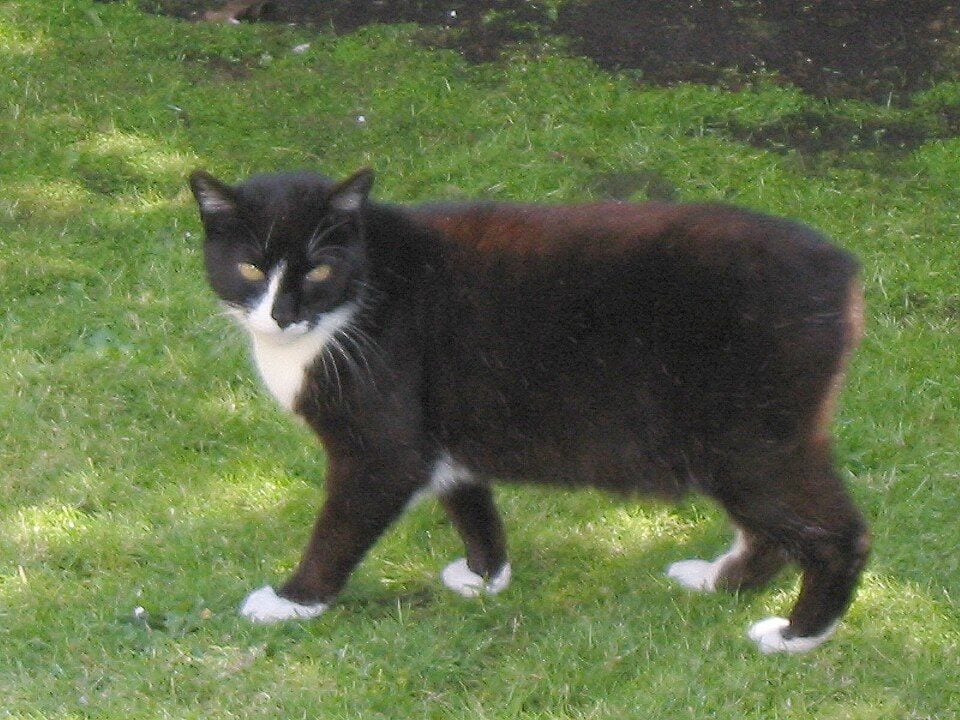
The gene that suppresses the tail is not harmless. Kittens that inherit two copies of the gene die before birth, which means breeding two tailless cats together reduces litter sizes and increases the risk of severe birth defects. Tailless cats can also suffer from Manx syndrome—a condition involving hind leg dysfunction, as well as bladder and bowel issues, caused by deformities in the lower spine. These symptoms typically appear by 4 months of age, which is why responsible breeders keep kittens longer before placing them in new homes and regularly use fully tailed Manx cats in their programs to maintain a healthy, diverse gene pool.
In the United States, ethical breeding practices are strongly emphasized by registries like the CFA and TICA to prevent the propagation of extreme physical traits that compromise animal welfare. While there are no nationwide federal bans on breeding tailless cats, reputable breeders voluntarily adhere to strict health testing protocols. They carefully track pedigrees and avoid pairing two completely tailless cats to minimize the risk of spinal defects. Responsible Manx breeding today relies heavily on genetic diversity and prioritizing the overall health of the cat over extreme show features.
Appearance: round, compact, and rabbit-like
The Manx is a medium-sized cat with a broad chest, deep flanks, and a solidly muscular but not fat or blocky build. The body is short, and when picked up, the cat feels surprisingly heavy. The hind legs are longer than the front legs, causing the rump to sit higher than the shoulders. A continuous arch runs from the shoulders to the rump, giving the cat a distinctively round appearance that is sometimes compared to a rabbit. The head is round with full cheeks, and the ears are fairly large, wide at the base, and rounded at the tips. The eyes are large and round, with the outer corners set slightly higher than the inner corners.
The shorthaired variety has a dense, double coat featuring a soft undercoat and longer, coarser guard hairs. The longhaired version—known as the Cymric—has a semi-long, silky coat with full "britches," a neck ruff, and tufts of hair between the toes. The original island cats were mostly orange, cream, and bicolor, but today, due to outcrossing, almost all colors and patterns can be found.
Temperament: calm, loyal, and dog-like
Manx cats are affectionate and highly intelligent. They typically bond strongly with one or two family members, meaning they may take a little time to warm up to strangers. They love playing fetch and engaging in interactive games, earning them a reputation for being "dog-like." They generally get along well with dogs and other cats. The CFA notes that Manx cats are patient with children—if squeezed too tightly, they are more likely to use their powerful hind legs to push away and escape rather than attack. They are vocal but not loud, communicating with sweet trills, chirps, and head bumps. Historically valued as excellent hunters, they were popular choices for farmers and sailors on ships.
Care
- Coat: Brush shorthairs 2 to 3 times a month, and Cymrics weekly, paying special attention to the armpits and the sides of the face to prevent matting.
- Veterinary care: Monitor their gait, urination, and bowel movements closely, as issues in these areas are often the first signs of spinal problems.
- Activity: Provide tall cat trees and jumping games to satisfy their natural athleticism.
How to choose a Manx kitten
Manx cats are relatively uncommon, so finding a reputable breeder in the US may require some patience. Always ask the breeder about any history of Manx syndrome in their lines and whether they incorporate fully tailed cats into their breeding program. It is best to bring a kitten home after they are 4 months old, as any severe spinal issues will usually have surfaced by then. If you are not looking for a show cat, consider a stumpy or fully tailed Manx—they have the exact same wonderful personality. When buying a kitten, ensure the breeder provides a contract, health guarantees, CFA or TICA registration papers, and proof of veterinary care. Microchipping is also highly recommended by US veterinarians to keep your pet safe, as detailed in our guide introduction.
You can find other short-tailed breeds in the profiles for the Kurilian Bobtail, Japanese Bobtail, American Bobtail, and Pixie-Bob.
Frequently asked questions
Why does the Manx cat have no tail?
The lack of a tail is caused by a dominant spontaneous spinal mutation that spread on the Isle of Man due to a small, isolated population (the founder effect). Stories about Noah's Ark doors or breeding with rabbits are just myths.
Are all Manx cats tailless?
No. Tail length is random in a litter: rumpy (no tail), rumpy riser (a bump of cartilage), stumpy (up to about an inch of fused vertebrae), stubby (up to half a normal tail), and longy (half to normal length). Shows usually only allow tailless or very short-tailed cats.
What is Manx syndrome?
It is a condition affecting tailless cats that causes hind leg, bladder, and bowel dysfunction due to lower spine deformities. Symptoms usually appear by 4 months of age, which is why reputable breeders wait to place kittens until their health is certain.
What is the difference between a Manx and a Cymric?
The Cymric is a longhaired Manx with a semi-long, silky double coat, britches, and a neck ruff. The CFA considers it a variety of the Manx, while TICA recognizes it as a separate breed. FIFe registers both Manx and Cymric cats.
Do Manx cats have trouble balancing without a tail?
No. A cat's balance is primarily controlled by the inner ear. While a tail helps, it is not essential. Manx cats are excellent jumpers and skilled hunters.
Log in to comment
No comments yet. Be the first.