Sphynx Cat: Temperament, Care, Health & Hypoallergenic Myths
- The Sphynx originated from a natural mutation: in 1966, a regular cat in Toronto gave birth to a hairless kitten named Prune.
- Hairlessness is caused by a recessive KRT71 gene mutation, making the hair weak and prone to falling out; fine fuzz often remains on the nose, ears, and tail.
- Sphynx cats are not hypoallergenic: allergies are triggered by the Fel d 1 protein found in saliva and skin oils, not the hair itself.
- Their oily skin requires regular bathing, as well as cleaning of the ears and skin folds; they also need protection from the cold and sun.
- Heart disease is common in the breed: a 2012 study found that 34% of 114 Sphynx cats had HCM or mitral valve dysplasia.
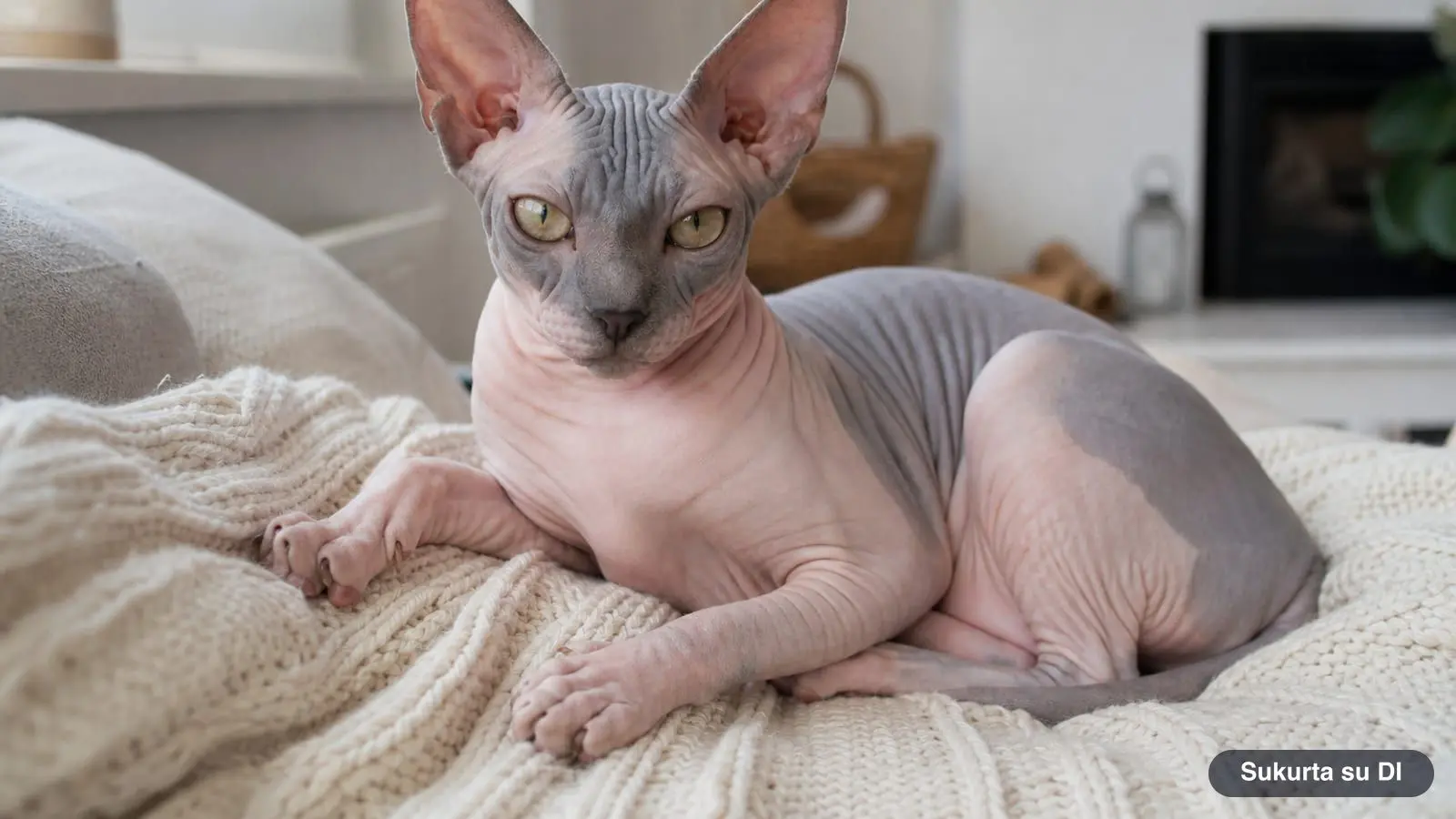
- Sphynx Hairlessness is Caused by a KRT71 Gene Mutation
- Bare Skin Reveals All Cat Colors
- Temperament: Heat-Seeking, Vocal, and Highly Social
- Care: Skin Requires More Work Than a Coat
- Health: Heart Disease and Sensitive Kittens
- Sphynx, Donskoy, and Peterbald: Different Genes
- Spend a Few Hours With a Sphynx Before Buying
This article is part of the 77.today cat breeds guide, prepared by the 77.today editors from the sources listed at the end.
When you first see a Sphynx, your eyes are immediately drawn to its bald, wrinkled skin, huge bat-like ears, and lemon-shaped eyes. But when you touch one, something else surprises you: their skin is as warm and soft as suede, and the cat itself is one of the friendliest and most human-oriented breeds around. The Sphynx is the most famous hairless cat breed. In this cat breed guide profile, we explain why the Sphynx is bald, whether they are suitable for allergy sufferers, how to care for their skin, and what health tests you should demand from a breeder.
| Origin | Canada (Toronto) and US (Minnesota), natural mutation |
|---|---|
| Recognition | CFA registry in 1998, championship status in 2002; TICA and other organizations |
| Size | Medium, heavy-boned and muscular; males are larger |
| Skin | Hairless or with barely perceptible fuzz, wrinkled, warm |
| Colors | All cat colors and patterns are visible on the skin |
| Eyes | Large, lemon-shaped |
| Temperament | Social, vocal, highly affectionate |
| Care | Regular bathing, cleaning of ears and skin folds |
| Hypoallergenic | No – Sphynx cats also produce the Fel d 1 protein |
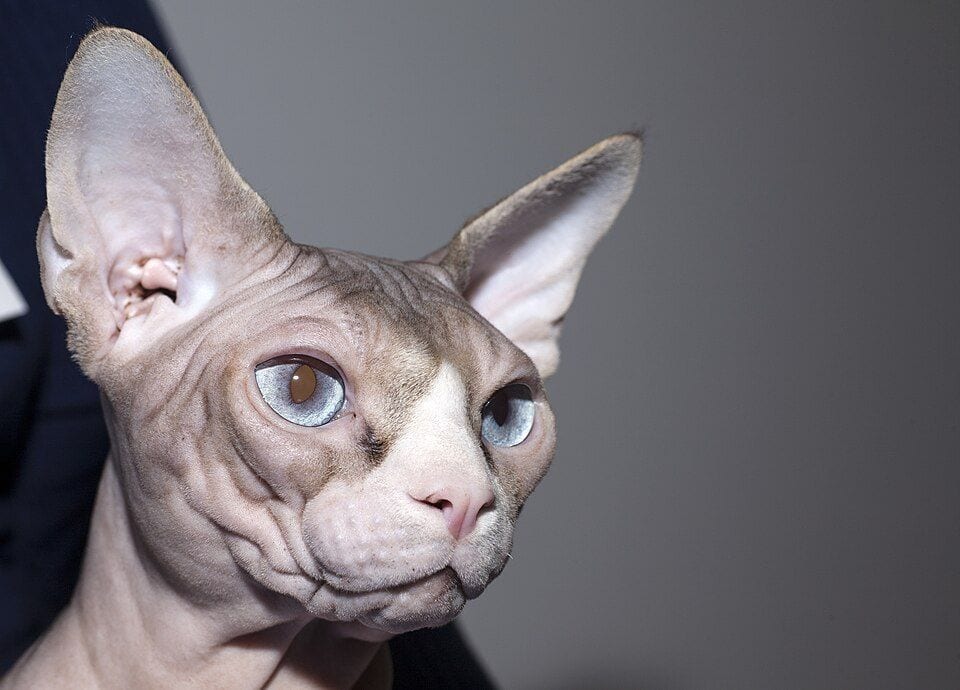
Sphynx Hairlessness is Caused by a KRT71 Gene Mutation
Hairless kittens have been born sporadically throughout history, but the modern breed began in 1966 in Toronto when a black-and-white domestic cat named Elizabeth gave birth to a bald kitten named Prune. Later, two other spontaneous lines contributed to the breed: hairless kittens Epidermis and Dermis, born on a Minnesota farm in 1975–1976, and Bambi, Punkie, and Paloma, found on the streets of Toronto in 1978. Punkie and Paloma were later sent to the Netherlands and crossed with a white Devon Rex, forming a new branch of the breed in Europe.
The hairlessness is caused by a mutation in the KRT71 gene, which is responsible for the keratinization of the hair follicle. In the case of the Sphynx, it completely ruins the hair structure: the hair lacks a strong root, so it breaks and falls out. In 2010, DNA testing showed that the same gene, just a different allele, is responsible for the curly coat of the Devon Rex. Both forms are recessive, which means that two Sphynx cats will always produce bald kittens, while crossing them with regular cats can result in coated Sphynx kittens. The CFA notes that these coated Sphynx cats are sometimes sold for less, but their temperament is exactly the same.
Bare Skin Reveals All Cat Colors
The Sphynx is not fragile: it is a medium-sized, heavy-boned, and muscular animal with a broad chest and a round belly, looking as if it just ate a large meal. According to the TICA standard, the head resembles a wedge with prominent cheekbones, the eyes are large and lemon-shaped, the ears are very large, the neck is muscular, and the tail is as thin as a whip. Their paw pads are thicker than those of other cats, making it look like the Sphynx is walking on cushions, and their toes are long. Wrinkles are especially abundant on the head, often giving the cat a worried expression.
The skin color matches what the coat would be: black, blue, red, cream, white, pointed, tabby, or tortoiseshell. The pattern lines are visible right on the skin. Short hairs usually remain on the nose, ears, tail, and toes, and some cats have their entire bodies covered in a barely perceptible peach fuzz. Whiskers may be completely absent, broken, or intact.
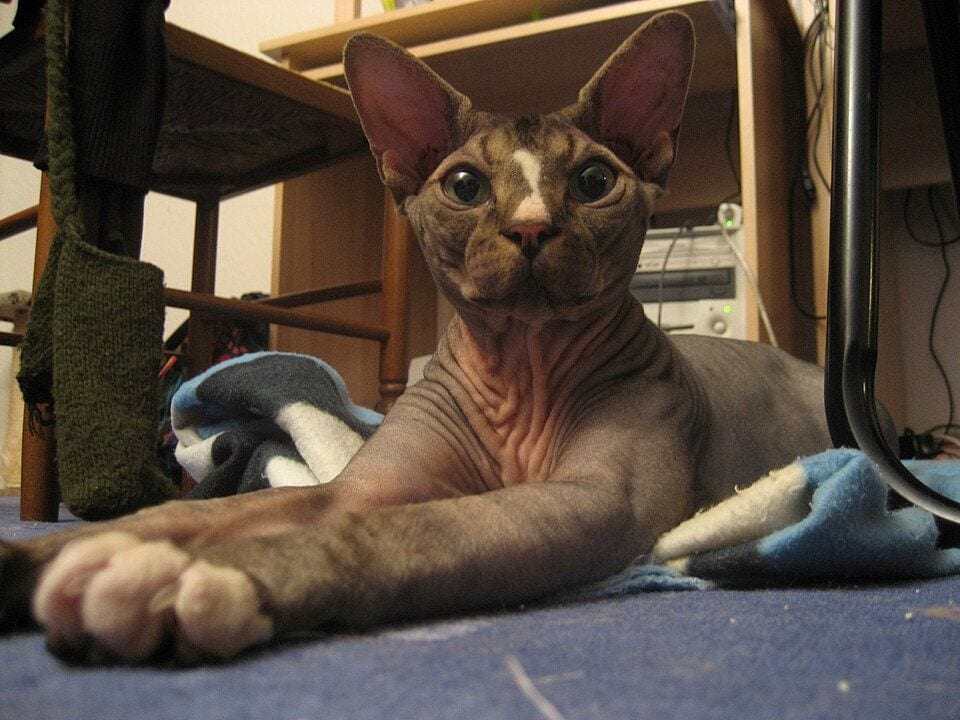
Temperament: Heat-Seeking, Vocal, and Highly Social
Sphynx cats are famous for their extroverted personalities. They are energetic, curious, and intelligent, often greeting their owners at the door and welcoming unfamiliar guests without fear—which is why they are known as one of the most "dog-like" cat breeds. The CFA describes them as anything but shy: a Sphynx will follow you from room to room and constantly "tell" you what they need. They are not overly loud, but you certainly cannot call them quiet.
Warmth is a necessity for a Sphynx, so they will spend hours cuddling with their owners, burrowing under blankets, and enjoying heated beds. They get along wonderfully with children, provided the children understand that their bare skin is sensitive and cannot tolerate rough play. The CFA emphasizes that this breed loves the company of other cats, especially other Sphynx, and does not handle long periods of loneliness well, so it is often recommended to keep them in pairs.
Care: Skin Requires More Work Than a Coat
It is a common myth that a hairless cat requires no grooming. In reality, a Sphynx demands more attention than most shorthaired cats:
- Bathing. Skin oils cannot be absorbed by a coat, so a sticky, brownish layer forms on the skin. Bathe them with a mild shampoo about twice a month, dry them thoroughly afterward, and do not let them get cold. There is no need to apply oils or lotions to their skin.
- Ears, eyes, and nails. Without hair in their ears, more wax accumulates—clean them regularly. Lacking eyelashes, the Sphynx tears up more often, so the corners of their eyes need to be wiped. Oils also build up in the nail beds and skin folds.
- Heat and sun. Keep your Sphynx warm; in the winter, you can dress them in a sweater. Prolonged sun exposure will cause their skin to burn just like human skin, so they need shade in the summer.
- Diet. To maintain their body heat, a Sphynx expends more energy and eats a bit more, but they should not be overfed. The CFA mentions that the breed can have a sensitive digestive system.
Health: Heart Disease and Sensitive Kittens
- Heart disease. In a 2012 study of 114 Sphynx cats, 34% had heart abnormalities: 23 cats were diagnosed with hypertrophic cardiomyopathy (HCM), and 16 with mitral valve dysplasia. The average age of the tested cats was just 2.6 years, and the disease appeared earlier and more severely in males. Therefore, annual echocardiograms are highly recommended for breeding cats.
- Congenital myasthenic syndrome (formerly known as Sphynx and Devon Rex myopathy) is an inherited muscle weakness disease that appears in kittens between 3 and 23 weeks of age.
- Kitten respiratory infections. Without a coat, kittens are more sensitive in their first few weeks, so it is recommended not to separate them from their mother before 14 weeks of age.
- Skin and teeth. The CFA notes issues like urticaria pigmentosa (a skin condition) and periodontal disease; prolonged sun exposure also increases the risk of skin cancer.
Sphynx, Donskoy, and Peterbald: Different Genes
| Trait | Sphynx | Donskoy | Peterbald |
|---|---|---|---|
| Origin | Canada, 1966 | Russia, Rostov-on-Don | Russia, St. Petersburg |
| Hairlessness gene | Recessive (KRT71) | Dominant | Dominant (from Donskoy) |
| Body type | Sturdy, round belly | Medium, sturdy | Slender, oriental |
| Kittens from two bald parents | Always bald | Can be born with hair | Can be born with hair |
Spend a Few Hours With a Sphynx Before Buying
The CFA reminds prospective owners that the Sphynx is one of the more expensive breeds, so you should never rush a purchase. If anyone in your family has allergies, spend a few hours with an adult Sphynx before making a decision. When looking for a reputable breeder, always ask for the latest echocardiogram results for both parents and inquire if there is any history of myopathy in the bloodline. A Sphynx kitten should never be separated from its mother before 14 weeks of age. Make sure to prepare your home in advance with a warm bed and a gentle pet shampoo. For more general advice on finding a responsible breeder, checking CFA or TICA registration, and avoiding pet stores or kitten mills, visit our main guide page.
If you love the Sphynx but prefer a slender, oriental body type, check out the Peterbald profile. If you are less concerned about complete baldness and just want a cat with minimal shedding, consider a Devon Rex or a Cornish Rex.
Frequently asked questions
Are Sphynx cats good for allergy sufferers?
Not always. Cat allergies are caused by the Fel d 1 protein, which is primarily found in saliva and sebaceous gland secretions, not the hair itself. Some allergy sufferers tolerate Sphynx cats better, especially right after a bath, but the CFA emphasizes that this does not make the Sphynx a low-allergen cat. It is worth spending time with a Sphynx before getting one.
How often should a Sphynx be bathed?
A Sphynx's skin secretes a lot of oil that cannot be absorbed by a coat, leading to a brown, sticky buildup. It is generally recommended to bathe them about twice a month with a mild pet shampoo, and to clean their ears, skin folds, and nail beds between baths.
Do Sphynx cats get cold?
Yes, without a coat, a Sphynx loses heat faster, so they constantly seek out warm spots and cuddle up to people and other cats. Your home should be kept warm, and in the winter, some owners dress their Sphynx in sweaters. A Sphynx should never be left outside alone.
Are Sphynx cats completely bald?
Not necessarily. Their skin can be entirely hairless or covered in a barely perceptible peach fuzz, and short hairs often remain on the nose, ears, tail, and toes. They may have no whiskers at all, or their whiskers might be broken or intact. Hairiness can also change depending on the season and hormones.
How does the Sphynx differ from the Donskoy and Peterbald?
The hairlessness of the Sphynx is caused by a recessive gene, whereas the Donskoy and the Peterbald (which was developed from the Donskoy) originate from Russia, and their hairlessness is caused by a different, dominant gene. The Peterbald also has a slender, oriental build.
Sources
- Wikipedia: Sphynx cat
- CFA (Cat Fanciers' Association): Sphynx Breed Profile
- Wikipedia: Fel d 1
- Wikipedia: Donskoy cat
- Wikipedia: Peterbald
- Wikipedia: Hypertrophic cardiomyopathy (HCM)
- Wikimedia Commons: Sphynx head with huge ears and wrinkled skin
- Wikimedia Commons: Hairless Sphynx lying stretched out on a rug
Log in to comment
No comments yet. Be the first.