Nebelung Cat: Temperament, Size, Care & Breed Info
- The Nebelung was developed in the US in the 1980s by Cora Cobb; the foundation cats were blue semi-longhaired kittens Siegfried (1984) and Brunhilde (1985).
- The name translates to "creature of the mist" and is derived from the German epic poem, the Nibelungenlied.
- TICA granted the breed new breed status in 1987 and full championship status in 1997; FIFe does not currently recognize the breed.
- In the 1990s, longhaired kittens also appeared in Russian Blue breeding programs, and these Russian lines helped expand the Nebelung population.
- Females weigh 7.5–11 lbs, while males weigh 10–14.5 lbs; it remains a very rare breed worldwide.
This article is part of the 77.today cat breeds guide, prepared by the 77.today editors from the sources listed at the end.
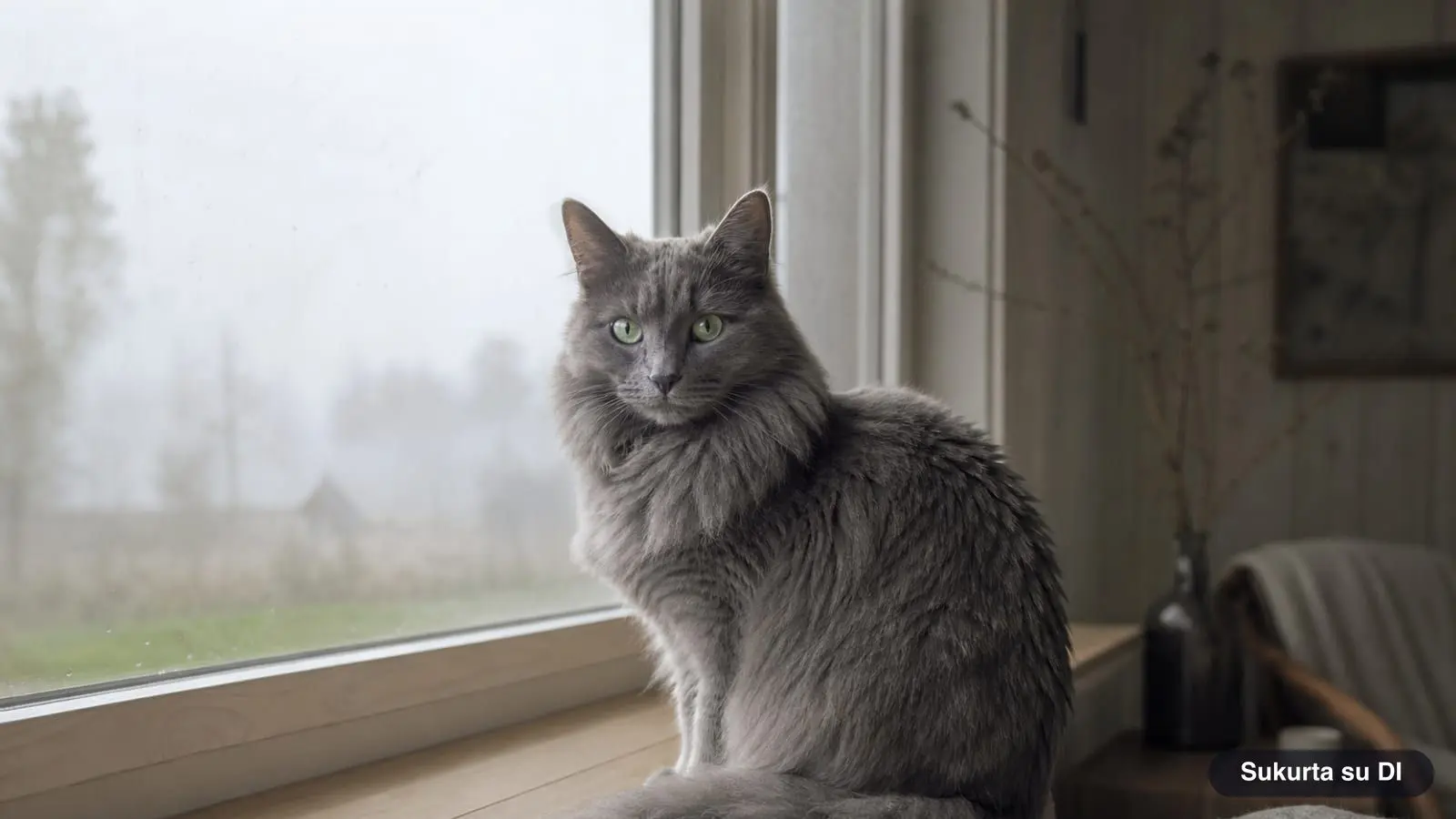
The Nebelung is a cat whose name means "creature of the mist," and it certainly looks the part: a solid blue, semi-long coat with silver-tipped hairs that shimmer in the light like mist, bright green eyes, and a long, graceful body. This rare breed is closely related to the Russian Blue and is sometimes incorrectly called a longhaired Russian Blue. In this cat breed guide profile, you will find the history, appearance, temperament, and care needs of the Nebelung.
| Origin | US (Nebelheim cattery), later Russia |
|---|---|
| Recognition | TICA (new breed 1987, championship 1997), ACFA, ACF, GCCF (preliminary), LOOF, WCF; FIFe – not recognized |
| Weight | females 7.5–11 lbs, males 10–14.5 lbs |
| Body | long, sturdy, muscular |
| Head | modified wedge, large pointed ears |
| Coat | semi-long, silky, with a fine undercoat |
| Color | solid blue with silver tips only |
| Eyes | bright green |
| Grooming | weekly brushing |
The Nebelung: A Cat of Mist from German Legend
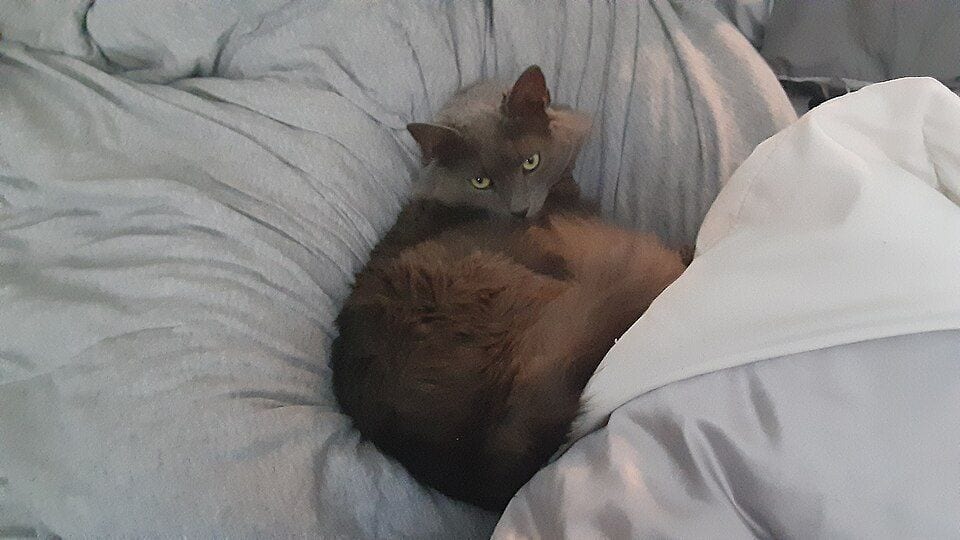
Blue longhaired cats resembling the Russian Blue were shown at the very first Crystal Palace cat shows in 1871, but they disappeared in the early 20th century. The modern breed began in the US in the 1980s when Cora Cobb of the Nebelheim cattery acquired two blue semi-longhaired kittens—Siegfried (1984) and Brunhilde (1985)—born to a black domestic shorthair named Elsa and a blue longhaired male. With the help of TICA geneticist Dr. Solveig Pflueger, Cobb drafted a breed standard and named the breed Nebelung, inspired by the German epic poem Nibelungenlied and the word "Nebel" (mist).
Initially, the standard was based on the Russian Blue, simply with a semi-long coat. However, when TICA Russian Blue breeders objected, it was rewritten as a distinct breed. TICA accepted the Nebelung as a new breed in 1987 and granted it championship status in 1997. In the early 1990s, longhaired kittens also began appearing in Russian Blue litters in Russia. In 1993, Dutch breeder Letty van den Broeck imported a Russian Blue named Timofeus from Russia, who turned out to be semi-longhaired. This confirmed that the longhair gene naturally existed in the Russian Blue population. Later, the Russian and US Nebelung lines were merged, and by the early 2000s, the breed had spread to Western Europe.
Appearance: Silvery Blue and Green Eyes
The Nebelung is a medium-sized cat of semi-foreign type. The head is a modified wedge, broad at eye level, with high cheekbones and a straight profile. The whisker pads are prominent, the chin is firm, and the ears are large and pointed, continuing the line of the wedge. The eyes are wide-set, oval or almond-shaped, and bright green in adults, though kittens may have yellow or mixed-color eyes.
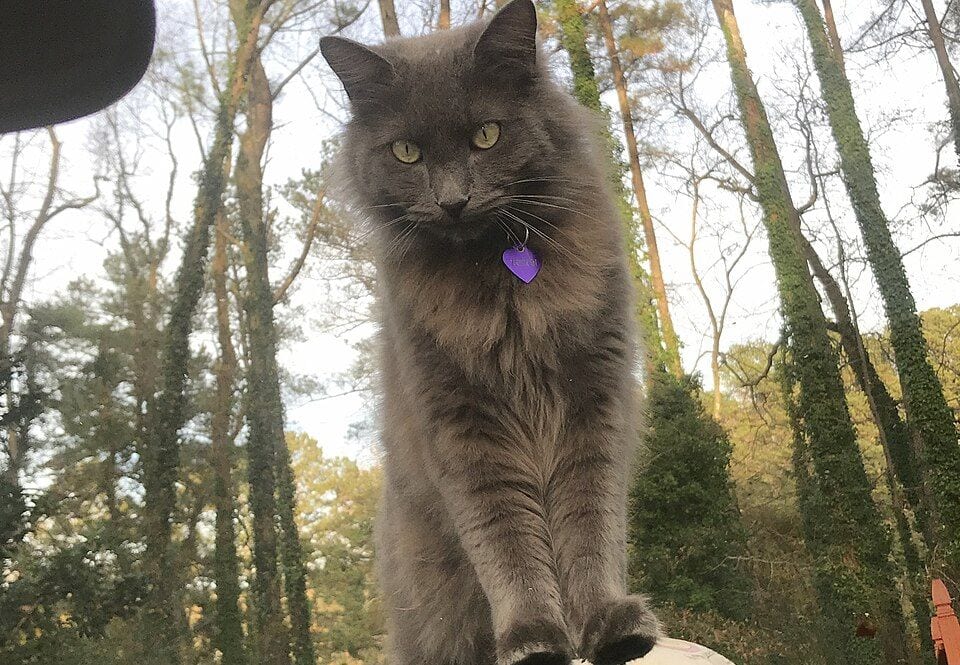
The body is long, sturdy, and muscular, with medium to long legs and round paws featuring tufts of fur between the toes. The tail is long and plumed. The coat is semi-long, soft, and silky, with a fine undercoat and longer guard hairs; it is denser in the winter and lighter in the summer. The fur is longer behind the ears, on the hind legs ("pantaloons"), and around the neck (a ruff), especially on males. The color is an even, medium blue down to the roots, while the silver tips of the guard hairs provide the characteristic luminous sheen. The nose leather and paw pads are slate gray.
A Coat That Changes with the Seasons
The Nebelung's coat is highly dependent on the season. In the winter, it is dense and fluffy, with prominent pantaloons, ear furnishings, and a full neck ruff, particularly on males. In the summer, the cat sheds much of its undercoat and appears much sleeker and slimmer. The silver tipping on the guard hairs is not equally pronounced everywhere, so the coat's sheen shifts depending on the lighting. The breed standard requires the color to be an even, medium blue all the way to the roots.
Temperament: Calm and Gentle
Nebelungs are described as calm, gentle cats. Because the breed is closely related to the Russian Blue—which is known for being intelligent, sensitive, and reserved around strangers—you can expect similar traits. They tend to bond closely with their people, appreciate a consistent daily routine, and can be somewhat cautious in new situations. However, because the breed is so small and there are no independent studies on their temperament, it is always a good idea to meet a breeder's cats in person before bringing one home.
Rarity: Why the Nebelung is Hard to Find
The Nebelung remains one of the rarest recognized cat breeds. As of 2025, there were only a handful of active breeders worldwide, mostly in Europe and Russia, with a few in Australia. In the UK, only 2 to 4 kittens were born between 2023 and 2024. In France, where the breed is slightly more popular, about 45 kittens were registered annually between 2018 and 2022—making up just 0.07% of all pedigreed cats in France. Between 1979 and 2013, TICA registered a total of only 413 Nebelungs. Most organizations allow Nebelungs to be outcrossed with Russian Blues to maintain genetic diversity.
Health and Care
There are no documented hereditary diseases specific to the Nebelung. Because the gene pool is very small, it is crucial that breeders carefully manage genetic diversity and avoid mating close relatives. Like Russian Blues, Nebelungs can be prone to obesity, so it is important to monitor their food portions.
- Coat. Brush their semi-long coat with its fine undercoat weekly, and more frequently during the spring and fall shedding seasons.
- Calm environment. They thrive in a stable home with a quiet place to retreat from noise.
- Play and mental stimulation. Provide puzzle feeders and interactive toys to keep them engaged.
- Veterinary care. Schedule annual checkups and keep a close eye on their weight.
Nebelung, Russian Blue, and British Longhair
| Trait | Nebelung | Russian Blue | British Longhair |
|---|---|---|---|
| Coat | semi-long, silky | short, double, plush | semi-long, dense |
| Color | blue only | blue only | many colors |
| Eyes | green | emerald green | usually copper |
| Body | long, graceful | graceful | cobby |
What to Know Before Getting a Nebelung
Because the Nebelung is not recognized by all major registries (like the CFA), they are typically registered with TICA or other international organizations in the US. Always ask a breeder what registration papers will be provided. Due to their extreme rarity, you will likely need to join a waitlist or even look internationally for a kitten. When evaluating a reputable breeder, ask to see the parents' health test results and pedigrees, and inquire about how they maintain genetic diversity. Your kitten should be microchipped and registered with your vet, and you should check local ordinances or landlord policies regarding pets—more details are in our guide introduction.
You can find their shorthaired relative in the Russian Blue profile, and another blue semi-longhaired breed in the British Longhair guide.
Frequently asked questions
Is the Nebelung just a longhaired Russian Blue?
Not exactly. The Nebelung is closely related to the Russian Blue and is sometimes incorrectly called a longhaired Russian Blue, but it is a distinct breed with its own standard. During early development, TICA Russian Blue breeders objected to the Nebelung being classified as a variety of their breed, so a new breed standard was written.
What does the name Nebelung mean?
Breed founder Cora Cobb created the name from the German word "Nebel" (mist) and the medieval epic poem Nibelungenlied, translating to "creature of the mist." The foundation cats, Siegfried and Brunhilde, were also named after characters from the epic.
What color are a Nebelung's eyes?
Adult Nebelungs have bright green, wide-set eyes that are oval or almond-shaped. Kittens may have yellow or mixed-color eyes that turn green as they mature.
Where can I buy a Nebelung cat?
It is a very rare breed. As of 2025, there are only a handful of active breeders worldwide, mostly in Europe and Russia. In France, about 45 kittens were registered annually between 2018 and 2022, and the UK saw only 2–4 registrations in 2023–2024. Finding one in the US usually requires joining a waitlist.
How much does a Nebelung weigh?
Adult females typically weigh 7.5–11 lbs, while males weigh 10–14.5 lbs. They are medium-sized cats with long, graceful bodies.
Log in to comment
No comments yet. Be the first.