Himalayan Cat: Temperament, Size, Care & Health
- The Himalayan was created by crossing Persian and Siamese cats, with the first breeding attempts at Harvard University in the 1930s.
- Recognized by the UK's GCCF as the Longhair Colourpoint in 1955 and by the US CFA in 1957. In 1984, the CFA merged them with Persians.
- Most registries (CFA, GCCF, TICA, FIFe) consider the Himalayan a Persian color variation, while the ACFA recognizes it as a separate breed.
- Their body type, coat, and build are identical to the Persian, differing only in their dark color points and striking blue eyes.
- Like Persians, they are brachycephalic (flat-faced), making them prone to respiratory issues, eye conditions, PKD, asthma, and facial dermatitis.
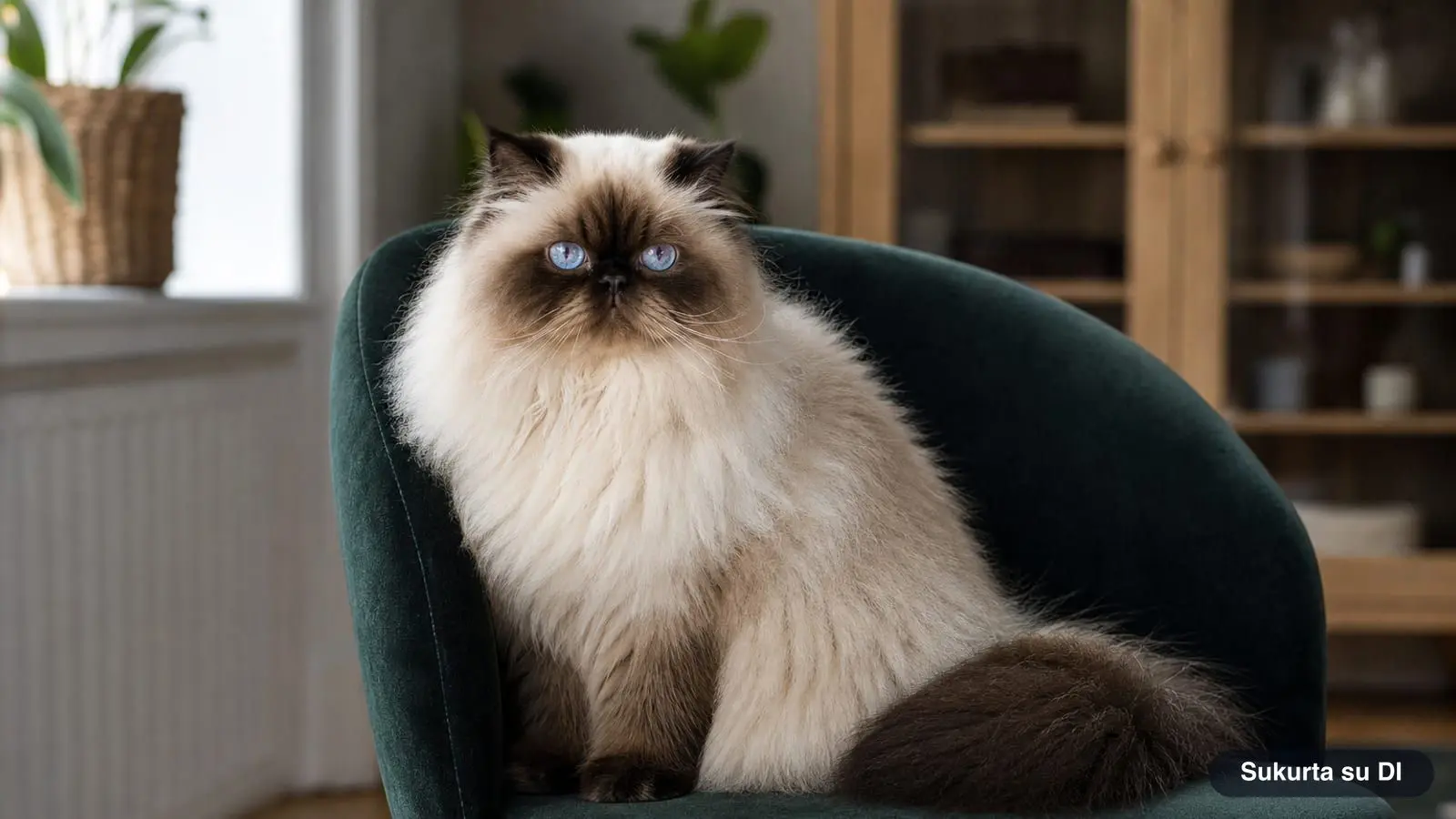
- Himalayan – A Persian Body with Siamese Points
- History: From a Harvard Lab to Merging with Persians
- Temperament: A Calm Blue-Eyed Persian
- Famous Himalayan Cats
- Health: The Consequences of Brachycephaly
- Care: Daily Combing and Eye Cleaning
- Himalayan, Persian, and Birman Cats
- How to Choose a Himalayan Kitten
This article is part of the 77.today cat breeds guide, prepared by the 77.today editors from the sources listed at the end.
The Himalayan is a Persian dressed in Siamese colors: a long, fluffy cream coat with dark points on the face, ears, legs, and tail, plus large blue eyes set in a round face. The name comes from other animals with similar markings, like the Himalayan rabbit. In Europe, this cat is often called the colorpoint Persian. In this cat breed guide profile, you will find their history, registry status, temperament, and care needs.
| Origin | US and UK, Persian × Siamese |
|---|---|
| Status | CFA, GCCF – Persian color; TICA – Persian group; FIFe – colorpoint Persian; ACFA – separate breed |
| Body | medium to large, cobby, short legs |
| Head | round, massive, flat face |
| Coat | long, dense, with ear and toe tufts |
| Pattern | dark points (colorpoint) |
| Eyes | large, round, blue |
| Temperament | calm, gentle, like a Persian |
| Grooming | daily |
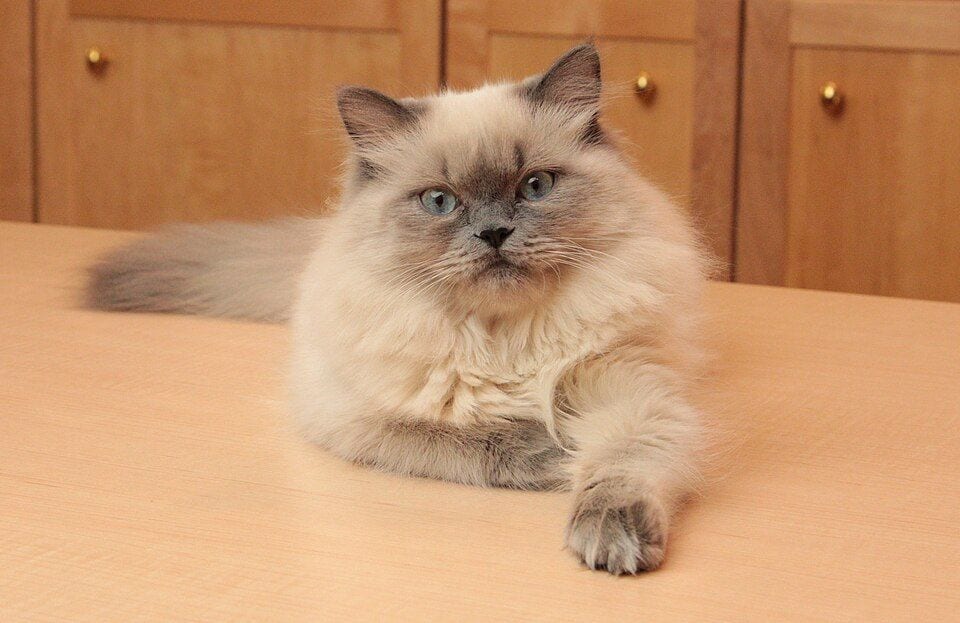
Himalayan – A Persian Body with Siamese Points
In type, build, and coat, the Himalayan is a Persian: medium to large, with a cobby body, short legs, a massive round head, a round face, a thick neck, and a short, snub nose. The ears are small, round-tipped, and tilted slightly forward. The eyes are large, round, and set wide apart. The coat is long and dense all over the body, with tufts in the ears and between the toes. They only inherited the dark point colors and blue eyes from the Siamese—a Himalayan looks nothing like the slender, tubular Siamese type.
Most point colors are allowed: seal, blue, chocolate, lilac, red, cream, as well as tabby (lynx) and tortoiseshell. Only mink and sepia variations, typical of the Tonkinese and Burmese, are prohibited. Through Himalayan lines, solid chocolate and lilac colors were also introduced from the Siamese into the Persian breed.
History: From a Harvard Lab to Merging with Persians
In the 1930s, crosses between Persian and Siamese cats were conducted at Harvard University, with the results published in the Journal of Heredity in 1936. However, cat organizations did not recognize the new breed at the time. In the UK, Brian Stirling-Webb developed the breed independently for ten years, and in 1955, the GCCF recognized it as the Longhair Colourpoint. In the US, several breeders worked on the cat, including Jean Mill (who later created the Bengal cat), and the CFA recognized the breed in late 1957.
Early breeders aimed for dark points on a longhaired cat, so they constantly outcrossed to Persians. In the 1960s, some breeders reintroduced Siamese blood, resulting in cats with a less Persian-like type. However, by the 1980s, the breed was brought back to the Persian standard, and in 1984, the CFA merged them with Persians as a color division. In CFA registrations, Persians with Himalayan ancestry are given registration numbers starting with a 3, so breeders can easily identify which cats might carry the pointed gene.
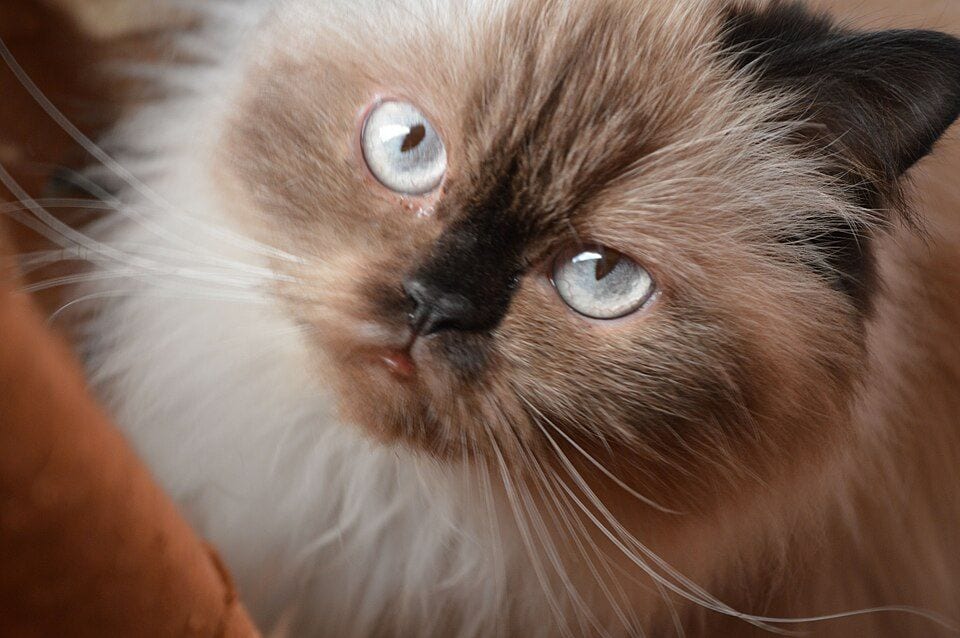
Temperament: A Calm Blue-Eyed Persian
Because Himalayans are regularly bred with Persians, their temperament is identical: they are calm, gentle, and love a quiet environment and affection. They are undemanding and relatively inactive. They prefer keeping their paws on the floor rather than climbing, get along well with children and other pets, and will simply walk away from loud noises. They enjoy playing but usually need a little encouragement. This is the perfect cat for a peaceful home and owners who have time for daily grooming.
Famous Himalayan Cats
Himalayans frequently appear in pop culture. In the movie Homeward Bound: The Incredible Journey (1993) and its sequel, one of the main characters is a Himalayan named Sassy. The comedy trilogy Meet the Parents features a flat-faced pointed cat named Mr. Jinx. In 2014, a Himalayan-Persian mix named Colonel Meow entered the Guinness World Records for having the longest fur on a cat. Additionally, Martha Stewart's Himalayans, famously named after composers, regularly appeared on her television shows and in her magazine.
Health: The Consequences of Brachycephaly
- Respiratory tract and eyes. Like Persians, Himalayans are brachycephalic (flat-faced), making them prone to respiratory infections, excessive tearing, corneal abrasions, ulcers, and corneal sequestra.
- Polycystic kidney disease (PKD). This is hereditary; breeding cats must have a PKD1 DNA test.
- Asthma. Himalayans are more susceptible to feline asthma.
- Hip dysplasia. In a University of Missouri study, it was found in 4 out of 16 x-rayed Himalayans, compared to an average of 6.6% across all cats.
- Skin conditions. They have a predisposition to dermatophytosis (ringworm), seborrhea, and idiopathic facial dermatitis, a condition described exclusively in Persians and Himalayans.
Because of the severe health risks associated with extreme flat faces, many veterinarians and animal welfare advocates strongly advise against breeding cats with exaggerated brachycephalic features. When looking for a Himalayan, it is highly recommended to seek out breeders who focus on a more moderate, traditional face type (often called a "doll-face") with open nostrils to ensure the cat can breathe comfortably.
Care: Daily Combing and Eye Cleaning
- Coat. Comb their long, dense fur daily with a steel greyhound comb; bathe them occasionally, but only after a thorough comb-out.
- Eyes and face. Wipe the corners of their eyes and facial folds daily with a soft, damp cloth to prevent tear staining and infection.
- Heat. Short-nosed cats are sensitive to heat and need a cool, air-conditioned space during the summer.
- Groomer. Many owners regularly use professional cat groomers to keep the coat manageable.
Himalayan, Persian, and Birman Cats
| Trait | Himalayan | Persian | Birman |
|---|---|---|---|
| Pattern | dark points | many colors | points with white paws |
| Eyes | blue | copper, green, blue, etc. | blue |
| Face | flat | flat | medium length |
| Grooming | daily | daily | once a week |
How to Choose a Himalayan Kitten
In the US, look for reputable breeders registered with the CFA or TICA, where Himalayans are often classified under the Persian breed group. Always ask to see negative PKD1 DNA test results for both parents. When visiting, evaluate the parents' face shapes and breathing, and ask about any history of skin or eye problems in their lines. Kittens are born almost entirely white, with their point colors developing over several weeks. Responsible breeders typically keep kittens until they are 12 to 16 weeks old to ensure they are fully weaned and socialized. As always, ensure your new kitten is microchipped and registered with your local vet, and check any local ordinances or housing rules regarding pets.
For more information on the parent breeds, check out our Persian and Siamese profiles. If you love the pointed, longhaired look but want a cat with lower grooming needs, read our guide to the Birman.
Frequently asked questions
Is the Himalayan a separate breed?
It depends on the registry. The CFA and GCCF consider the Himalayan a color variation of the Persian, while TICA places them in the Persian breed group, and the ACFA recognizes them as a distinct breed. FIFe registers them as colorpoint Persians, and the WCF groups them with other pointed breeds.
How does a Himalayan differ from a Siamese?
The Himalayan only inherited the dark color points and blue eyes from the Siamese. Everything else—the cobby body, short legs, massive round head, flat face, and long, dense coat—comes from the Persian. They look nothing like the slender, tubular Siamese.
What colors do Himalayan cats come in?
Most point colors are accepted, including seal, blue, chocolate, lilac, red, cream, tabby (lynx), and tortoiseshell. Only mink and sepia variations are prohibited. All pointed Himalayans have blue eyes.
Do Himalayans have the same health issues as Persians?
Yes. Because they are brachycephalic, they are more prone to respiratory infections, excessive tearing, corneal ulcers, corneal sequestra, polycystic kidney disease (PKD), asthma, fungal skin infections, and idiopathic facial dermatitis, which is unique to Persians and Himalayans.
How much grooming does a Himalayan cat need?
A lot, just like a Persian. Their long, dense coat requires daily combing, their eye corners need regular wiping, and they need occasional baths. Many owners rely on professional groomers to help maintain their coat.
Sources
- Wikipedia: Himalayan cat
- Wikipedia: Persian cat
- FIFe: Persian (including colorpoint) breed standard
- CFA: Persian (Himalayan division) breed standard
- Wikipedia: Brachycephaly
- FIFe Breeding & Registration Rules
- Wikimedia Commons: Six-month-old blue point Himalayan kitten
- Wikimedia Commons: Chocolate point flat-faced Himalayan cat
Log in to comment
No comments yet. Be the first.