Somali Cat: Temperament, Colors, Care & Health
- The Somali originated from Abyssinian cats: long-haired kittens appeared in Abyssinian litters due to a recessive long-hair gene.
- US breeder Evelyn Mague named the breed after Somalia, the neighboring country of Abyssinia (modern-day Ethiopia).
- The CFA granted the breed championship status in 1979, and it was recognized in Europe in 1982.
- The semi-long coat is ticked, with multiple bands of color on each hair; the most common colors are ruddy, sorrel, blue, and fawn.
- Like Abyssinians, the breed is prone to pyruvate kinase (PK) deficiency and retinal degeneration (rdAc), which can be identified through genetic testing.
This article is part of the 77.today cat breeds guide, prepared by the 77.today editors from the sources listed at the end.
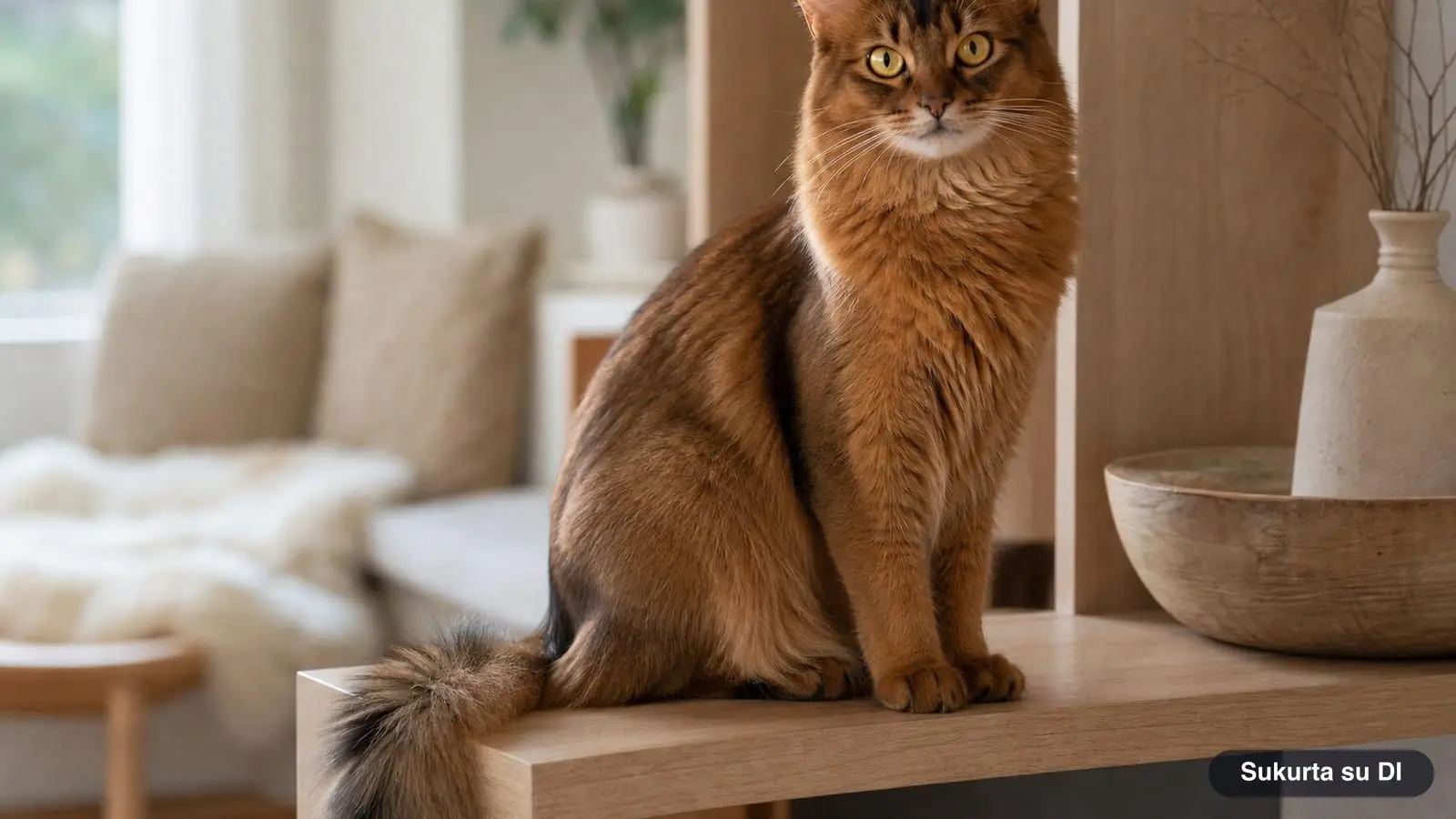
Imagine an Abyssinian with a fluffy ruff, a silky semi-long coat, and a spectacular bushy tail—that is the Somali. Thanks to its slender figure, large pointed ears, glowing ruddy coat, and a tail it carries high, it is often called the fox cat. In this cat breed guide profile, you will discover how this breed came to be, its temperament, the colors Somalis come in, and how to care for them.
| Origin | North America (US and Canada), from long-haired Abyssinian kittens |
|---|---|
| Recognition | CFA registration in 1976, championship status in 1979; in Europe in 1982; FIFe, TICA |
| Size | Medium to large, muscular |
| Coat | Semi-long, soft, ticked; longer on the ruff, belly, breeches, and tail |
| Colors | Ruddy, sorrel, blue, fawn, and their silver varieties; others in some registries |
| Eyes | Almond-shaped, ranging from bright green to copper |
| Activity level | Very high |
| Grooming | Brush once a week |
| Hereditary diseases | PK deficiency, retinal degeneration (rdAc) |
The Somali: An Abyssinian with a Long-Hair Gene
Exactly how the long-hair gene entered the Abyssinian gene pool remains unknown. The CFA notes estimates that only a dozen or so Abyssinians survived after World War II, and many litters of that era included cats of unknown ancestry—which is likely when the gene was introduced. In the 1940s, British breeder Janet Robertson exported Abyssinian kittens to Australia, New Zealand, and North America, and long-haired or fuzzy kittens would occasionally appear in their descendants' litters. The first known long-haired Abyssinian, Raby Chuffa of Selene, appeared in North America in 1953.
Most breeders were embarrassed by these kittens and quickly gave them away as pets, but a few stubborn enthusiasts began breeding them. In the mid-1960s, US breeder Evelyn Mague, who owned a long-haired Abyssinian named George, named the breed the Somali—after Somalia, the neighboring country of Abyssinia (modern-day Ethiopia). In Canada, the breed was developed by Ken McGill and Don Richings. The CFA began registering Somalis in 1976, granted them championship status in 1979, and the breed was recognized in Europe in 1982, achieving acceptance in most global organizations by 1991.
A Ticked Coat with Multiple Bands of Color
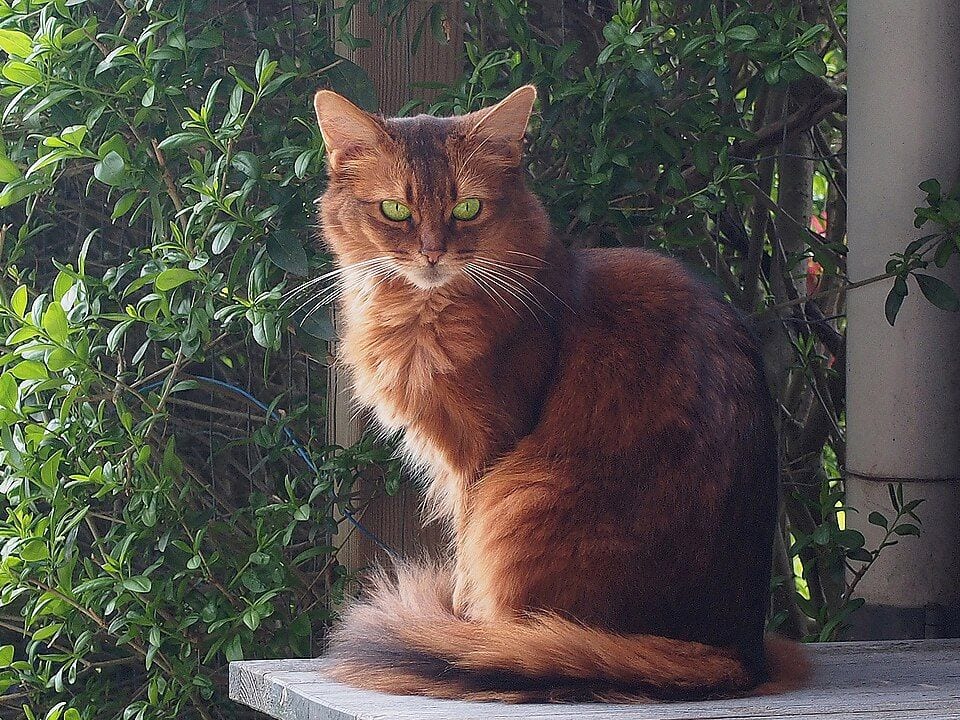
The Somali's coat is ticked, just like the Abyssinian's: each hair has several bands of color, giving the coat a glowing, wild appearance. The semi-long, fine, and soft coat is longest on the ruff, belly, and 'breeches,' and is most impressive on the bushy tail. Kittens are born dark, and their coat lightens as they grow; it is often noted that their final color only settles at around two years of age.
A total of 28 Somali colors have been described, though registries do not recognize all of them. All major organizations recognize the four main colors: ruddy (golden brown with black ticking), sorrel (cinnamon), blue, and fawn. Most also accept their silver varieties, while some recognize chocolate, lilac, red, cream, and tortoiseshell variants. The head is a modified wedge with rounded contours, the ears are large, and the almond-shaped eyes range from bright green to rich copper.
Temperament: Active, Bold, and Inventive
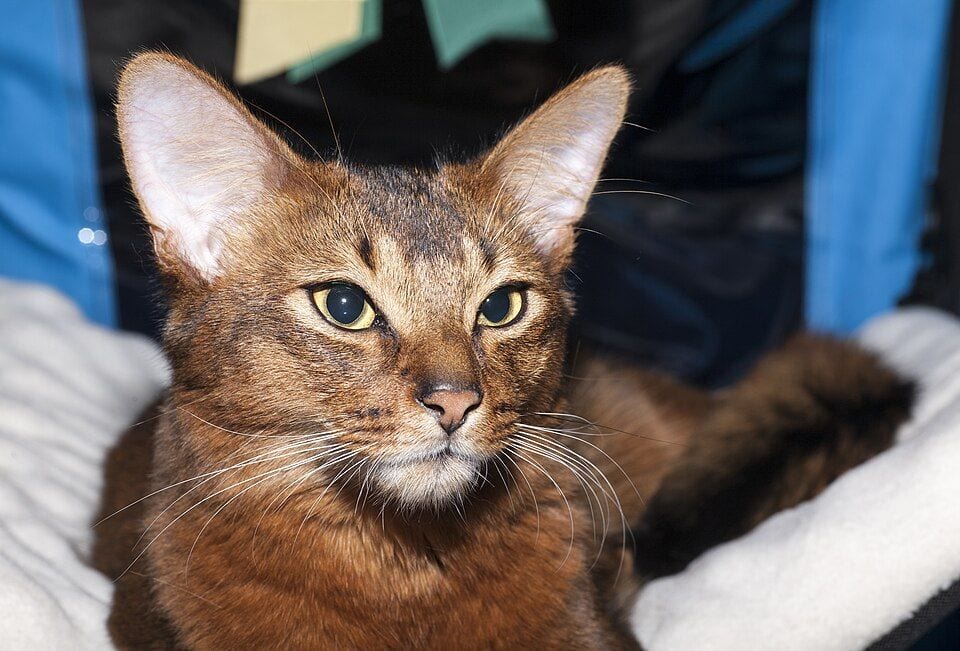
The CFA describes Somalis as active, curious, and bold. A closed cabinet is a challenge to them, and some even learn how to open doors. Given enough toys, they can entertain themselves for hours, but they are happiest when playing with a human or another pet. They show affection by head-bumping, kneading with their paws, and occasionally rearranging their owner's hair.
Many Somalis are fascinated by water—they might even turn on the faucet to watch the drips. They follow their owners from room to room, adapting to their moods: purring at your feet while you work, and exploding with energy the moment you move. Somalis communicate more through body language than with their voices. They absolutely cannot stand being left alone, get along well with children, other cats, and dogs, but they can sometimes be a little jealous.
Health: The Same Tests as Abyssinians
- Pyruvate kinase (PK) deficiency. The Somali is one of the breeds more frequently affected by this condition; the disease, which causes anemia, is caused by a recessive mutation in the PKLR gene.
- Hereditary retinal degeneration. This is caused by the rdAc mutation, which is also common in Abyssinians and Siamese cats; it eventually leads to blindness.
- Renal amyloidosis. There is no genetic test for this, so the CFA advises asking the breeder if it has appeared in their lines.
The CFA notes that thanks to genetic testing, breeders can now easily eliminate carriers of the diseases that cause anemia and blindness.
Care: Long-Haired but Tangle-Free
- Coat. Despite their longer hair, Somalis are not difficult to groom: their coat rarely mats, and brushing once a week is usually enough. If the coat becomes oily and clumps near the tail or back, an occasional bath is beneficial.
- Activity. Tall cat trees, puzzle toys, feather wands, and daily active play are essential.
- Companionship. A second cat or a dog is highly recommended if the house is empty for long periods.
- Teeth. Just like with Abyssinians, regular dental care is highly beneficial.
Somali, Abyssinian, and Balinese Cats
| Trait | Somali | Abyssinian | Balinese |
|---|---|---|---|
| Coat | Semi-long, ticked | Short, ticked | Semi-long, colorpoint |
| Origin | Long-haired Abyssinians | Great Britain | Long-haired Siamese |
| Temperament | Very active, communicates via body language | Very active, quiet | Active, vocal |
| FIFe kittens in 2025 | 257 | 934 | 73 |
How to Choose a Somali Kitten
There are relatively few Somali breeders, so, as the CFA notes, you may have to wait for a kitten. Always ask for the PK deficiency and rdAc test results for both parents, and inquire about any history of amyloidosis in their lines. Do not be alarmed if the kitten is darker than its parents—the coat will lighten and settle into its final color over a couple of years. Reputable breeders associated with organizations like the CFA or TICA typically do not let kittens go to their new homes until they are at least 14 to 16 weeks old. This ensures they are properly socialized and fully vaccinated. When looking for a kitten, avoid pet stores and puppy or kitten mills. Always ensure your new pet is microchipped and registered with your local vet, as local ordinances regarding pet registration can vary by city and state. For more general tips on finding a reputable breeder or adopting through a breed rescue, check out the beginning of our cat breed guide.
You can find its short-haired relative in the Abyssinian profile, and another active semi-longhair in the Balinese description.
Frequently asked questions
How does the Somali differ from the Abyssinian?
Primarily in coat length. The Somali has two copies of the recessive long-hair gene, giving it a semi-long coat with a ruff, longer hair on the belly and 'breeches,' and a full, bushy tail. Their body type, ticked pattern, colors, and temperament are very similar.
Why is the Somali called the fox cat?
Because of its slender figure, large pointed ears, ruddy ticked coat, and bushy tail held high. The CFA notes that the Somali moves quickly on its toes, much like a fox chasing its prey.
Is the Somali cat hard to groom?
Not at all. According to the CFA, their coat rarely mats, so brushing once a week is usually enough. Some cats may have oilier coats that clump near the base of the tail and back, in which case an occasional bath is helpful.
What colors do Somali cats come in?
All major registries recognize four main colors: ruddy (golden brown with black ticking), sorrel (cinnamon), blue, and fawn. Most also accept their silver varieties, and some recognize chocolate, lilac, red, cream, and tortoiseshell.
Is a Somali cat suitable for an apartment?
Yes, as long as it gets enough activity. This is a highly energetic and curious breed that needs tall cat trees, toys, and daily interactive play with humans or other pets. They do not like being left alone.
Log in to comment
No comments yet. Be the first.