Pixie-bob Cat: Size, Temperament, Care & Health
- Carol Ann Brewer started breeding the Pixie-bob in Washington state in the 1980s; the foundation cat, Pixie, was born in 1986.
- Brewer believed the foundation cats were descendants of wild bobcats, but 1996 DNA testing reportedly found no bobcat markers.
- Pixie-bobs are considered fully domestic cats; TICA granted them championship status in 1998, while FIFe does not recognize the breed.
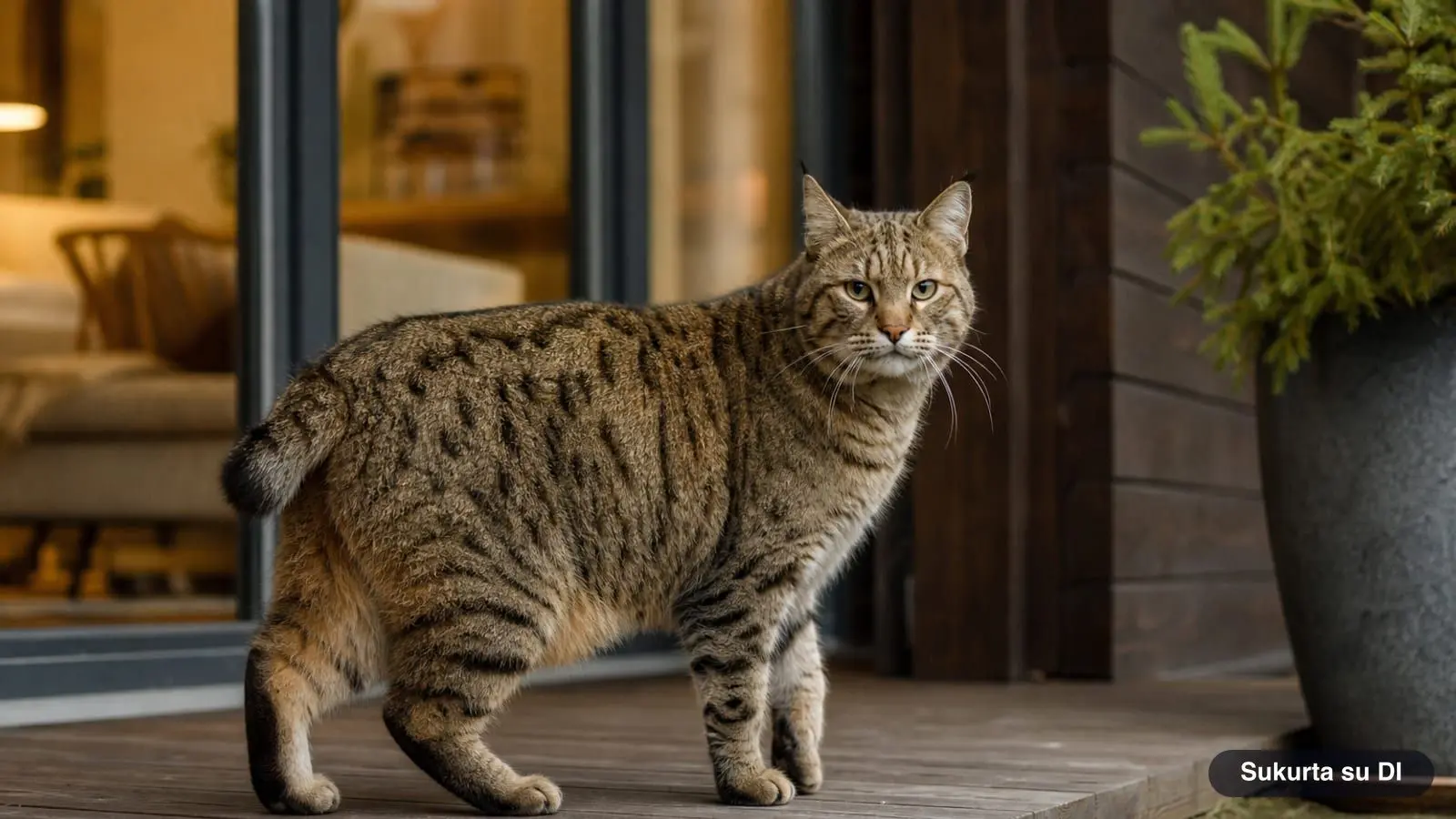
- Distinctive features include a spotted tabby coat, short tail, pear-shaped head, heavy brow, and frequent polydactylism (extra toes).
- They typically weigh up to 11 lbs and grow until 4 years of age; they "talk" with chirps and chatters rather than meowing.
This article is part of the 77.today cat breeds guide, prepared by the 77.today editors from the sources listed at the end.
The Pixie-bob is a cat that resembles a small wild bobcat: a spotted tabby coat with reddish tones, a short tail, a pear-shaped head, a heavy brow, lynx tips on the ears, and often extra toes on the paws. The breed's creator believed her cats were sired by wild bobcats, but today Pixie-bobs are considered fully domestic cats. In our cat breed directory, you will find the history of the Pixie-bob—including all the "legend" confusion—as well as their appearance, temperament, and health.
| Origin | US, Washington state (Cascade Mountains) |
|---|---|
| Recognition | TICA (exhibition 1993, championship 1998), ACFA; FIFe does not recognize |
| Weight | usually up to ~11 lbs; males are larger |
| Body | large, muscular |
| Head | pear-shaped, heavy brow, broad muzzle |
| Coat | short (longhaired varieties exist), spotted tabby |
| Tail | short – from ~2 inches to the hock |
| Eyes | triangular; kittens have blue eyes, later turning green or gold |
| Special trait | frequent polydactylism |
The Pixie-bob and the "Legend Cat" History
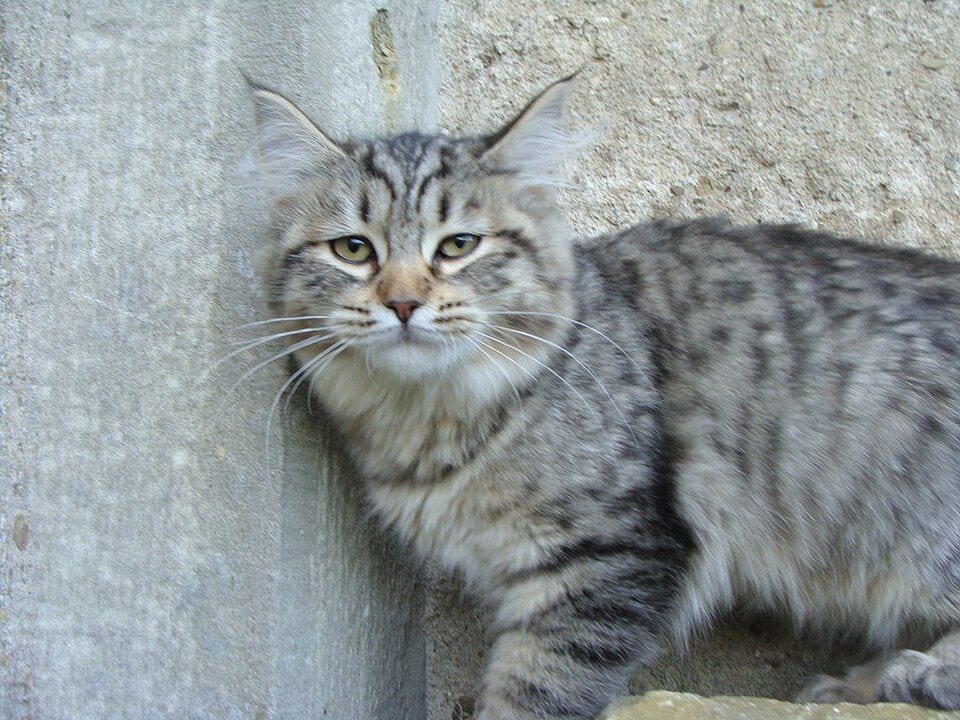
In the spring of 1985, Carol Ann Brewer acquired an unusual spotted male cat with a short tail and extra toes near Mount Baker in Washington state. In January 1986, she took in another male, Keba, a very large, bobtailed cat rumored to have been sired by a bobcat. Even while starving, he weighed 17 lbs and reached her knees. Keba mated with a neighbor's black spotted cat, and the resulting litter born in April 1986 included a female kitten named Pixie. Brewer kept her and started a breeding program a year later.
Over the next few years, Brewer introduced 23 cats from the Cascade Mountains area into her program. She believed these cats were the offspring of natural matings between wild bobcats and domestic cats, and she registered the trademark "Legend Cat." However, it is reported that DNA testing in 1996 found no bobcat markers, though the raw data is not publicly available. As a result, Pixie-bobs are considered fully domestic cats for registration, ownership, import, and export purposes. In 1999, Frank Ditto attempted to patent the breed, but the US Patent Office rejected the application. TICA allowed Pixie-bobs in shows starting in 1993 and granted them championship status in 1998.
Appearance: A Bobcat in the House
The most important feature of the Pixie-bob is its pear-shaped head. The muzzle is large, the whisker pads are round, the nose leather is brick red, the brow is heavy, and the eyes are triangular with white hair and black skin surrounding them. The ears have lynx tufts and heavy furnishings, and the lips are black. Kittens have blue eyes that turn green or gold after a few months. Some whiskers are black at the base and white for the rest of their length.
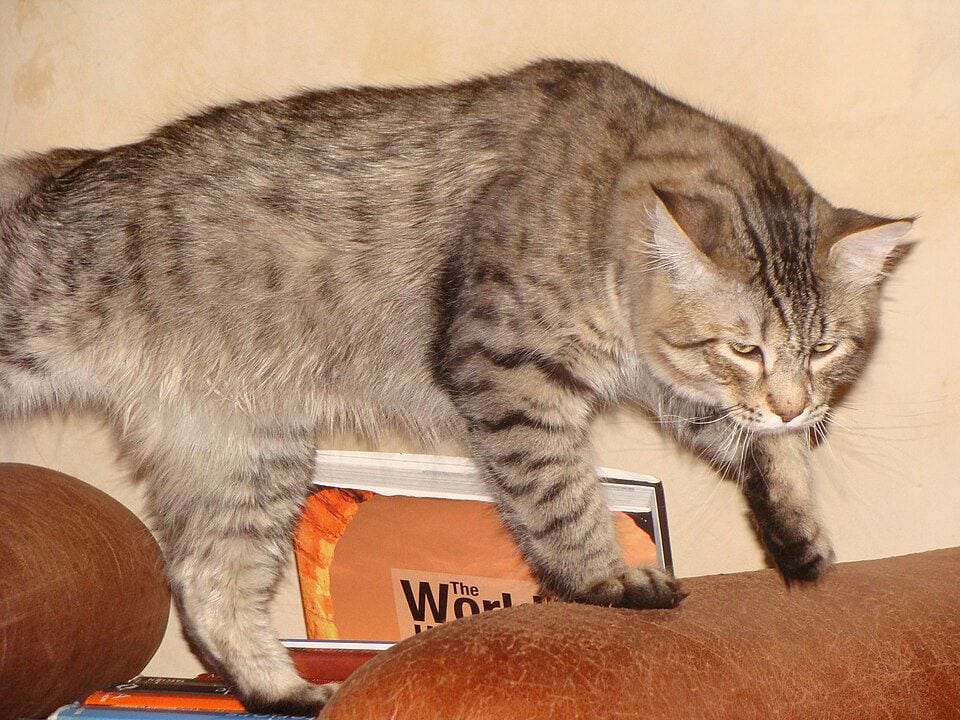
The coat is usually short (though longhaired versions exist) and features a brown spotted tabby pattern with reddish, apricot, and peach tones. The bottom of the paws is usually black. The tail is short—ranging from about 2 inches to the length of the hock joint when the leg is extended. Many Pixie-bobs have extra toes. While an average domestic cat weighs around 8 lbs, Pixie-bobs are somewhat larger, though they typically do not exceed 11 lbs. Males are generally larger than females, and the breed continues to grow until four years of age.
Temperament: Social, Intelligent, and "Dog-Like"
Pixie-bobs are described as highly intelligent, social, active, and brave, and they enjoy playing with other animals. Most are friendly with both their owners and strangers, wanting to be in the same room as their people and following them around the house. They head-butt for affection, play fetch, can usually be leash-trained, and are said to understand certain words. Instead of meowing, Pixie-bobs "talk" with chirps, chatters, and growls, and they rarely or never meow.
Health: A Genetically Diverse Breed
Because the breed was frequently outcrossed with "legend cats," Pixie-bobs are genetically diverse and not prone to diseases caused by inbreeding. Breeders compile health information in the PawPeds database. A few conditions have been noted:
- Cryptorchidism – Only a few cases have been recorded since the breed's inception.
- Dystocia (difficult birth) and cystic endometrial hyperplasia – Affects a small percentage of cats, which are then removed from breeding programs.
- Hypertrophic cardiomyopathy (HCM) – A few cases have occurred, some in cats outcrossed with Bengals or Maine Coons; annual echocardiograms are recommended for breeding cats.
- Blocked tear ducts.
Care
- Coat. Shorthaired cats only need a weekly brushing; longhaired cats require more frequent grooming.
- Nails. Cats with extra toes should have their nails checked more often, as they can become ingrown.
- Activity. Fetch games, walks on a harness, and interactive toys.
- Weight. For a large cat, moderate portions and plenty of exercise are key.
Bobtailed Breeds: Pixie-bob, American Bobtail, and Manx
| Trait | Pixie-bob | American Bobtail | Manx |
|---|---|---|---|
| Tail | short, to the hock | short, about one-third normal length | from none to long |
| Origin | US, Washington | US | Isle of Man |
| Special trait | polydactylism, pear-shaped head | wild appearance | high hind legs |
| FIFe | not recognized | not recognized | recognized |
Daily Life with a Pixie-bob
The Pixie-bob is a cat that loves to be close by and participate in family life, so they do best in homes where someone is often around. Because the breed matures slowly, a young Pixie-bob remains playful and curious for a long time—they need sturdy climbing trees, toys they can fetch, and daily interactive play. Many owners train them to walk on a harness, and quiet walks in the yard or garden help burn off energy. Pixie-bobs generally get along well with children and dogs, especially if introduced as kittens.
What to Know Before Getting a Pixie-bob
Pixie-bobs are relatively rare, and since FIFe does not recognize the breed, they are typically registered with TICA or the ACFA in the US. When looking for a kitten, ask the breeder what pedigree papers will be provided. Request echocardiogram results for the parents and check the family's health history in the PawPeds database. Don't fall for marketing hype about "wild" bobcat blood—the Pixie-bob is a fully domestic cat. As with any pet, ensure your new kitten is microchipped and registered with your vet, and check your local city or state ordinances regarding cats that resemble wild hybrids. You can read more about finding a reputable breeder in our guide introduction.
You can find other bobtailed breeds in the profiles for the Kurilian Bobtail, American Bobtail, and Manx.
Frequently asked questions
Does the Pixie-bob have wild bobcat blood?
Breed founder Carol Ann Brewer believed her cats came from natural matings between bobcats and domestic cats. However, 1996 DNA tests reportedly found no bobcat markers (though raw data isn't public). Pixie-bobs are registered, owned, and imported as fully domestic cats.
How many toes does a Pixie-bob have?
Many Pixie-bobs have extra toes (polydactylism). This is a permitted and common trait in the breed, caused by a harmless dominant mutation.
How long is a Pixie-bob's tail?
The tail is usually short, ranging from about 2 inches to the length of the hock joint when the leg is extended. It is currently unknown if their short-tail gene is related to those of other bobtailed breeds.
How much does a Pixie-bob weigh?
Pixie-bobs typically average up to 11 lbs, though some breeders raise larger, heavier cats. Males are usually larger than females, and the breed continues to grow until four years of age.
What is the Pixie-bob's temperament like?
Pixie-bobs are described as highly intelligent, social, active, and brave. They love playing with other animals. Most will follow their owners around the house, head-butt for affection, play fetch, and can be leash-trained. Instead of meowing, they usually chirp and chitter.
Log in to comment
No comments yet. Be the first.