Lykoi Cat: Temperament, Size, Care & Health
- The Lykoi originated from a natural mutation causing a rare, patchy coat; the first cats were found in Virginia in 2010 and Tennessee in 2011.
- The first intentionally bred Lykoi kitten, Daciana, was born on September 14, 2011; the mutation is recessive.
- The name comes from the Greek word "lykos" for wolf, reflecting the breed's famous "werewolf" appearance.
- Their roan coat is a mix of white and solid-colored hairs with no undercoat; it periodically sheds and regrows.
- The breed was granted preliminary recognition by the FIFe in 2023, championship status by the CFA in 2023, and by TICA in 2017.
This article is part of the 77.today cat breeds guide, prepared by the 77.today editors from the sources listed at the end.
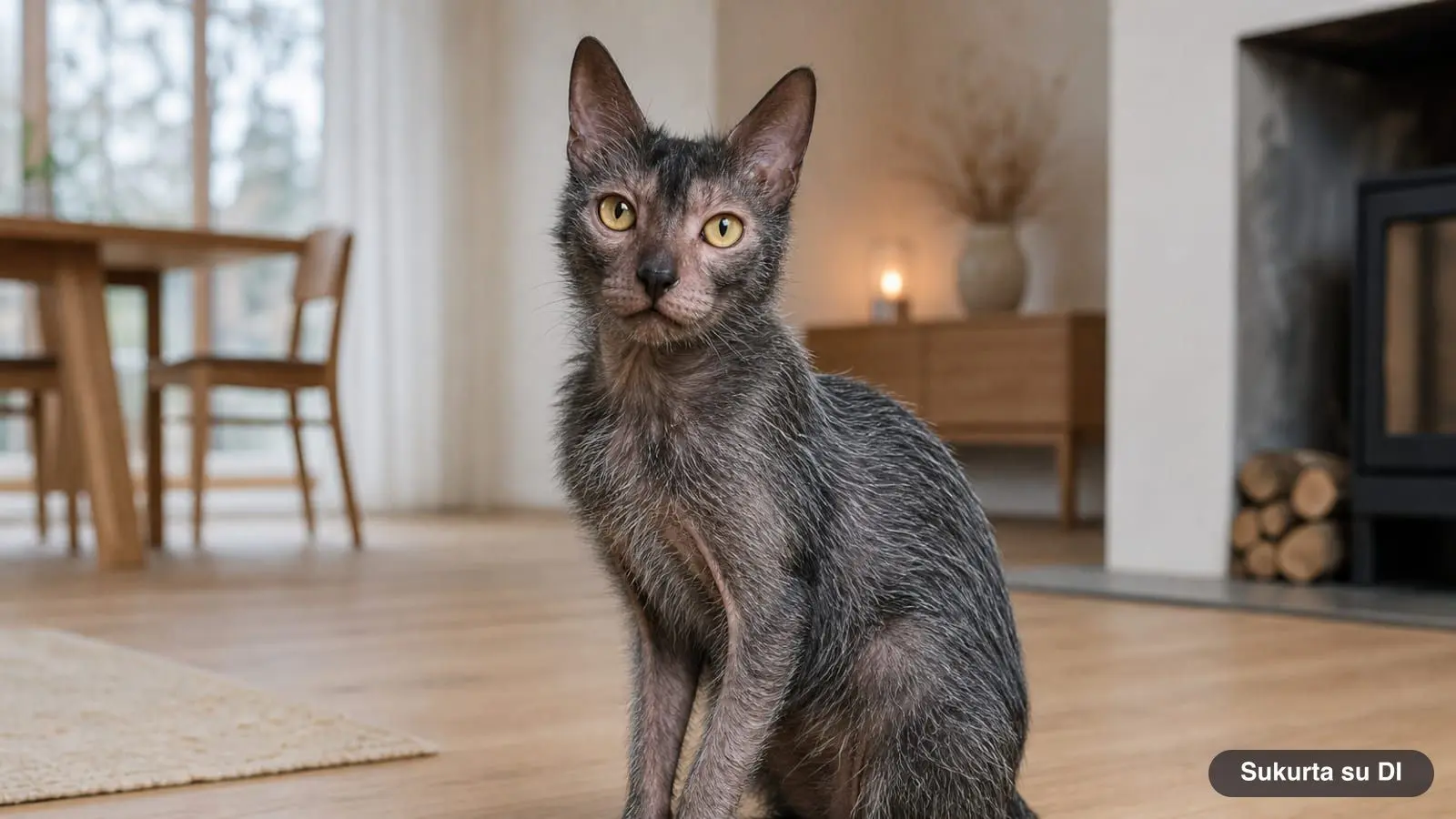
The Lykoi is a cat that is hard to forget. Its sparse coat is a mix of white and solid-colored hairs, giving it a somewhat scruffy appearance, while the skin around its eyes, nose, and legs is nearly hairless. This "mask" earned the breed the nickname of the werewolf cat, and the name itself comes from the Greek word "lykos" for wolf. However, the CFA emphasizes that the Lykoi is not a designer breed or a hybrid, but the result of a natural mutation. In this profile from our cat breeds catalog, you will find the Lykoi's history, coat characteristics, health risks, and temperament.
| Origin | USA: Virginia (2010) and Tennessee (2011), natural mutation |
|---|---|
| Recognition | TICA championship status in 2017; CFA registered in 2018, championship status in 2023; FIFe - preliminary since 2023 |
| Body | lean, muscular, graceful |
| Head | wedge-shaped, high-set ears, leathery nose |
| Coat | sparse, roan, no undercoat |
| Color | any, most commonly black roan |
| Eyes | large, bright, walnut-shaped |
| Inheritance | recessive |
| Temperament | active, curious, hunter |
A natural mutation causes the Lykoi's coat
In 2010, Patti Thomas rescued two unusual shorthaired cats from a shelter in Virginia, and in 2011, veterinarian Johnny Gobble found another similar pair in Tennessee. At first, the cats looked so unusual that a disease was suspected. Before proceeding with breeding, extensive health and genetic testing was conducted in collaboration with geneticist Dr. Leslie Lyons and UC Davis. To prove it was a genetic trait, Gobble paired two unrelated cats, and on September 14, 2011, the first intentionally bred Lykoi kitten, Daciana, was born.
It turned out that the mutation is recessive and unrelated to other known coat mutations--the Lykoi does not have the KRT71 gene alterations that cause the hairlessness of the Sphynx or the curls of the Devon Rex. Because the mother of one litter was a black domestic cat, the Lykoi was widely outcrossed with black domestic shorthairs to avoid inbreeding. By 2020, 16 distinct lines from Canada, France, and the US had been identified, along with at least four mutation variants. Lykoi cats still occasionally pop up in feral cat populations.
A sparse roan coat and periodic shedding
The breed standard requires a roan coat--a mix of amelanistic (white) and solid-colored hairs. Any color is allowed, but black is the most common. The Lykoi is the only known cat breed with this roan pattern. The coat lacks an undercoat and looks coarse, but according to the CFA, it is surprisingly soft and silky to the touch. The most defining feature is the nearly hairless "mask" around the eyes, nose, and muzzle, as well as sparse hair on the legs and paws.
Kittens are born with a normal coat, and the roan pattern emerges within a week or two. Later, each cat follows its own coat cycle: throughout its life, it can range from nearly hairless to almost fully coated, and will lose most of its coat at least once. Owners often refer to this as "wolfing out." Shedding is influenced by genetics, hormones, climate, and age: younger cats, those living in colder climates, and pregnant females tend to have more hair. The body is lean, muscular, and graceful, with a wedge-shaped head, high-set ears, and large, bright eyes.
Health: Skin requires attention
- Temperature and sun. Like other hairless cats, the Lykoi is sensitive to cold, heat, and sun: they can get sunburned and have a higher risk of skin cancer. The CFA advises limiting sun exposure, considering pet-safe sunscreen, and keeping the cat warm.
- Follicle inflammation. One study found some degree of lymphocytic inflammation in the hair follicles of all tested Lykoi, which contributes to the sparse coat; the condition resembles a constant allergic reaction.
- Oily skin, cysts, and blackheads. The Lykoi has a larger surface area of sebaceous glands, so the skin needs to be wiped down and occasionally bathed. The breed is highly prone to cysts and blackheads.
- Ingrown hairs can occur during shedding periods.
Whether these issues are purely cosmetic is a matter of debate: breeders argue they do not bother the cats, while animal welfare advocates claim they diminish the quality of life. Attempts to "breed out" the skin problems simultaneously weaken the characteristic mask and roan coat, as they are all caused by the exact same mutation.
Temperament: A hunter that craves attention
The CFA describes the Lykoi as a highly active and curious cat that often prefers hunting over cuddling, yet still craves human attention and actively seeks it out. They are incredibly fun to watch during playtime: they will patiently stalk a toy or even their owner before suddenly pouncing. In new situations, the Lykoi can be cautious at first, but they quickly warm up and become loyal companions. They have a wide vocal vocabulary--chirps, trills, purrs, and meows--but usually only vocalize loudly when they feel neglected. The FIFe notes that the Lykoi is friendly, non-confrontational, and very affectionate with its owners.
Care: Skin, ears, and a warm home
- Coat and skin. Lacking an undercoat, the Lykoi sheds very little, except during its heavy shedding cycles. Wipe the skin down regularly, and if it becomes oily, bathe the cat using a feline-safe shampoo.
- Ears and toes. These areas quickly become greasy, so they require more frequent cleaning.
- Warmth. Provide a warm home, a heated bed, and a safe spot away from direct sunlight.
- Activity. Hunting games and toys they can chase.
Lykoi, Sphynx, and Devon Rex
| Trait | Lykoi | Sphynx | Devon Rex |
|---|---|---|---|
| Coat | sparse, roan, cyclical | hairless or peach fuzz | curly |
| Gene | separate recessive mutation | KRT71 (recessive) | KRT71 (recessive) |
| Origin | USA, 2010–2011 | Canada, 1966 | England, 1959–1960 |
| FIFe kittens in 2025 | 49 | 1,767 | 4,471 |
What to know before getting a Lykoi
There are still relatively few Lykoi breeders, so you may have to wait for a kitten. When evaluating a reputable breeder, ask to see the parents' skin condition--checking for excessive cysts, inflammation, or itching--and inquire about how they maintain genetic diversity. Keep in mind that the cat's appearance will change throughout its life along with its coat cycles. Most major registries, such as the CFA and TICA, recommend that kittens stay with their mother until they are at least 12 to 14 weeks old. We discussed the importance of microchipping and registering your cat with your local vet in the beginning of our guide.
You can find other hairless or sparsely coated breeds in our Sphynx and Peterbald profiles.
Frequently asked questions
Why is the Lykoi called a werewolf cat?
Because of its nearly hairless "mask" around the eyes and nose, combined with a sparse, roan coat of mixed white and colored hairs that resembles a werewolf. The name Lykoi itself comes from the Greek word "lykos," meaning wolf.
Is the Lykoi's coat always sparse?
No. The Lykoi periodically sheds and regrows its coat. Throughout its life, the cat can range from nearly hairless to almost fully coated. Kittens are born with a normal coat, and the roan pattern emerges within a week or two. Owners often call this process "wolfing out."
Are Lykoi cats healthy?
Lykoi are sensitive to temperature and sun, much like other hairless breeds. One study found some degree of lymphocytic inflammation in the hair follicles of all tested Lykoi, and the breed is prone to cysts and blackheads. Breeders consider these mostly cosmetic issues, while some animal welfare advocates argue they affect quality of life.
Is the Lykoi related to the Sphynx?
No. DNA testing confirmed that the Lykoi does not have the KRT71 gene mutations responsible for the hairlessness of the Sphynx or the curly coats of the Devon Rex and Selkirk Rex. The Lykoi's coat is the result of a separate, natural mutation.
What is the Lykoi's temperament like?
The CFA describes the Lykoi as highly active and curious, often preferring to hunt rather than cuddle, though they still crave human attention. They can be cautious in new situations at first but quickly adapt to become loyal companions. The FIFe describes them as friendly, affectionate, and "dog-like" cats.
Log in to comment
No comments yet. Be the first.